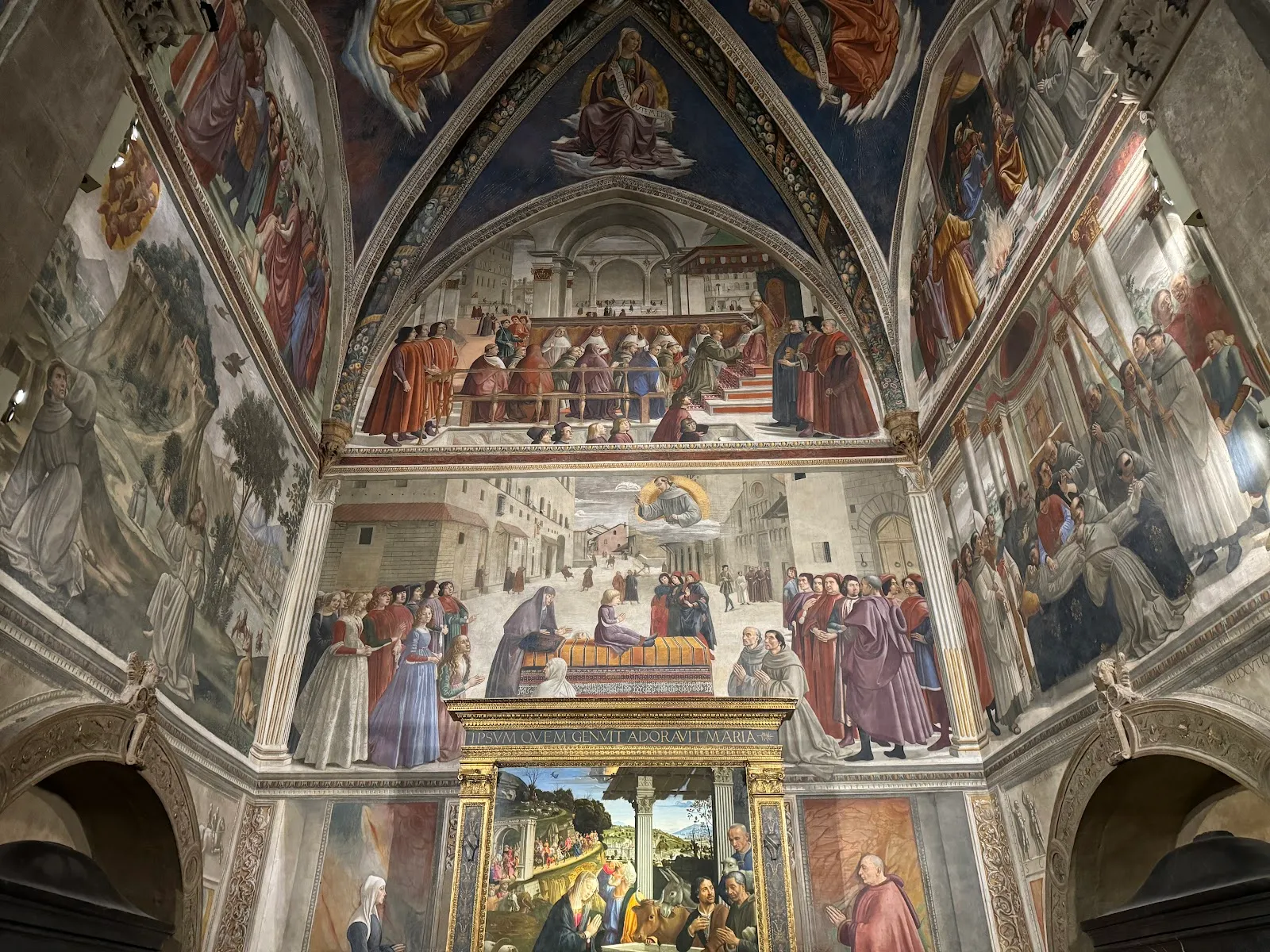
Set on Piazza di Santa Maria Novella, beside Florence’s main railway station, this Dominican basilica brings Gothic architecture together with early Renaissance design. Its green-and-white marble façade is a landmark in its own right; inside, look for Masaccio’s Trinity, Giotto’s crucifix and frescoes by Domenico Ghirlandaio. The visit also extends into the former convent, with cloisters and museum spaces that add context to the church’s art and monastic history. It is a rewarding stop for art lovers and a quieter place to pause between Florence’s busier sights.
A Dominican church in Florence
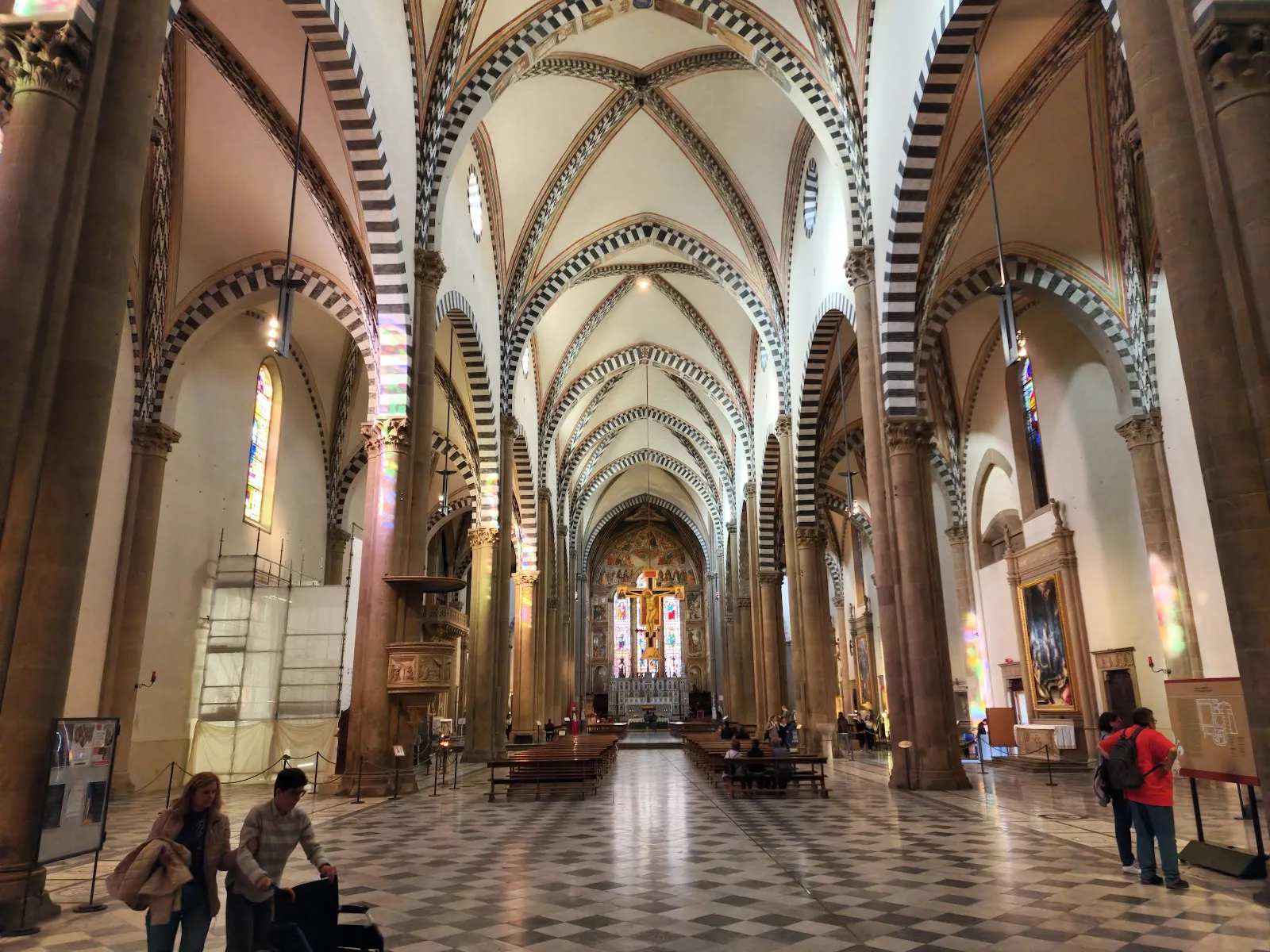
The basilica was founded by the Dominican order in the 13th century. Its construction and decoration developed over time, bringing together Gothic forms and Renaissance ideas. That layered history is visible in the contrast between the medieval structure and the more classically ordered details of the façade.
The church stands on the piazza that shares its name, close to Florence’s main railway station. The station takes its name from the basilica, so the church is an easy landmark to find when arriving in the city by train.
The marble façade and church interior
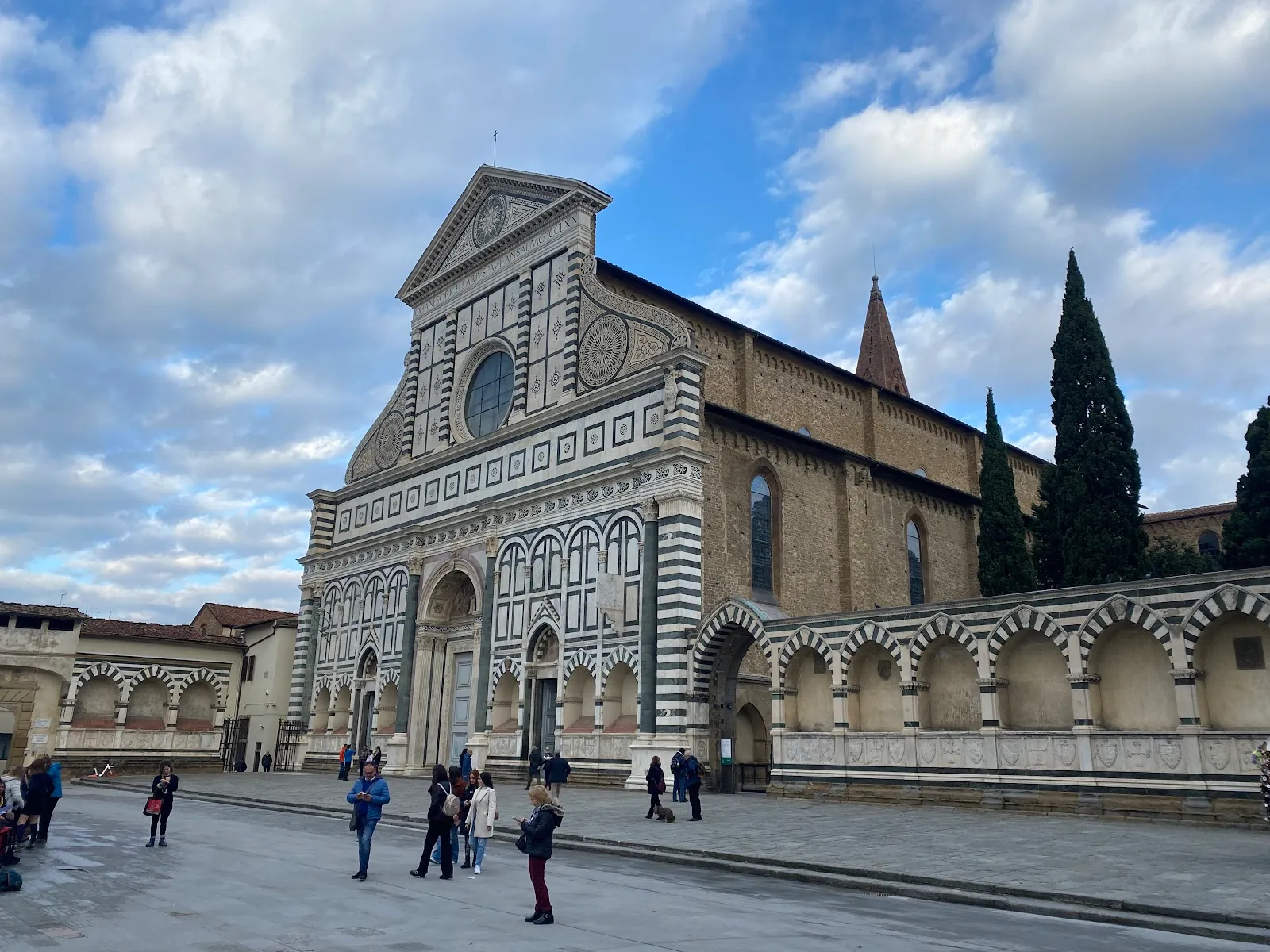
The façade uses white and green marble in a carefully balanced geometric design. Leon Battista Alberti shaped its upper section and main entrance, adapting classical architectural details to the existing medieval church. From the piazza, take a moment to look at how the patterns and proportions fit together before going inside.
The interior holds works by several leading Florentine artists. Masaccio’s Trinity is noted for its use of perspective, while Giotto’s crucifix is another major work to seek out. Frescoes by Domenico Ghirlandaio fill the Tornabuoni Chapel. Together, the paintings and architectural details make the church a substantial visit for anyone interested in Renaissance art.
The convent, cloisters and museum
The basilica belongs to a larger former monastic complex. Its rooms and cloisters help explain how the Dominican community organized daily life, from prayer in the church to shared meals, meetings and study. The refectory, Chapter room and library each had a place in that routine, while the cloister offered a quieter space within the complex.
The museum areas preserve further artworks and architectural details, so leave time for more than the main church. A glass panel in the floor reveals archaeological remains beneath the basilica, including traces of an earlier church and its flooring. Look for it as you explore; it gives a glimpse of the site’s history before the present building.
FAQ
Where is the Basilica of Santa Maria Novella?
It is on Piazza di Santa Maria Novella in Florence, beside the city’s main railway station.
What artworks should I look for inside?
Look for Masaccio’s Trinity, Giotto’s crucifix and frescoes by Domenico Ghirlandaio in the Tornabuoni Chapel.
Are there cloisters and a museum to visit?
Yes. The former convent includes cloisters and museum spaces, as well as rooms connected with the Dominican community’s daily life.
Is the basilica wheelchair accessible?
The entrance and restrooms are wheelchair accessible.