On the east side of Tiananmen Square, the National Museum of China traces the country’s past through ancient objects, art and exhibitions on modern history. Its galleries span prehistoric finds to contemporary developments, with bronzes, jade, ceramics and sculpture among the collections. The basement history exhibition is a useful place to start, but the museum is too large to cover in one visit. Choose a few areas that interest you, and bring your passport for entry. General admission is free; some exhibitions may require a separate ticket.
A museum beside Tiananmen Square
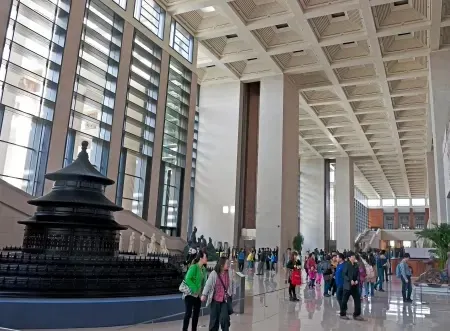
The National Museum of China stands on the east side of Tiananmen Square, opposite the Great Hall of the People. Its location makes it easy to combine a museum visit with time on the square, though the museum itself can take several hours to explore.
The institution was formed by joining the National Museum of Chinese History and the Museum of the Chinese Revolution. Its displays bring together Chinese history, art and cultural objects, from early archaeological finds to material connected with more recent history. The building has five floors above ground and two below, with galleries spread across a very large complex.
Choose a route through the collections
There is more to see than most people can cover in one visit. Rather than trying to walk through every gallery, decide which periods or subjects matter most to you. The permanent displays include Ancient China and The Road to Rejuvenation, alongside thematic and temporary exhibitions. International exhibitions are also held at the museum.
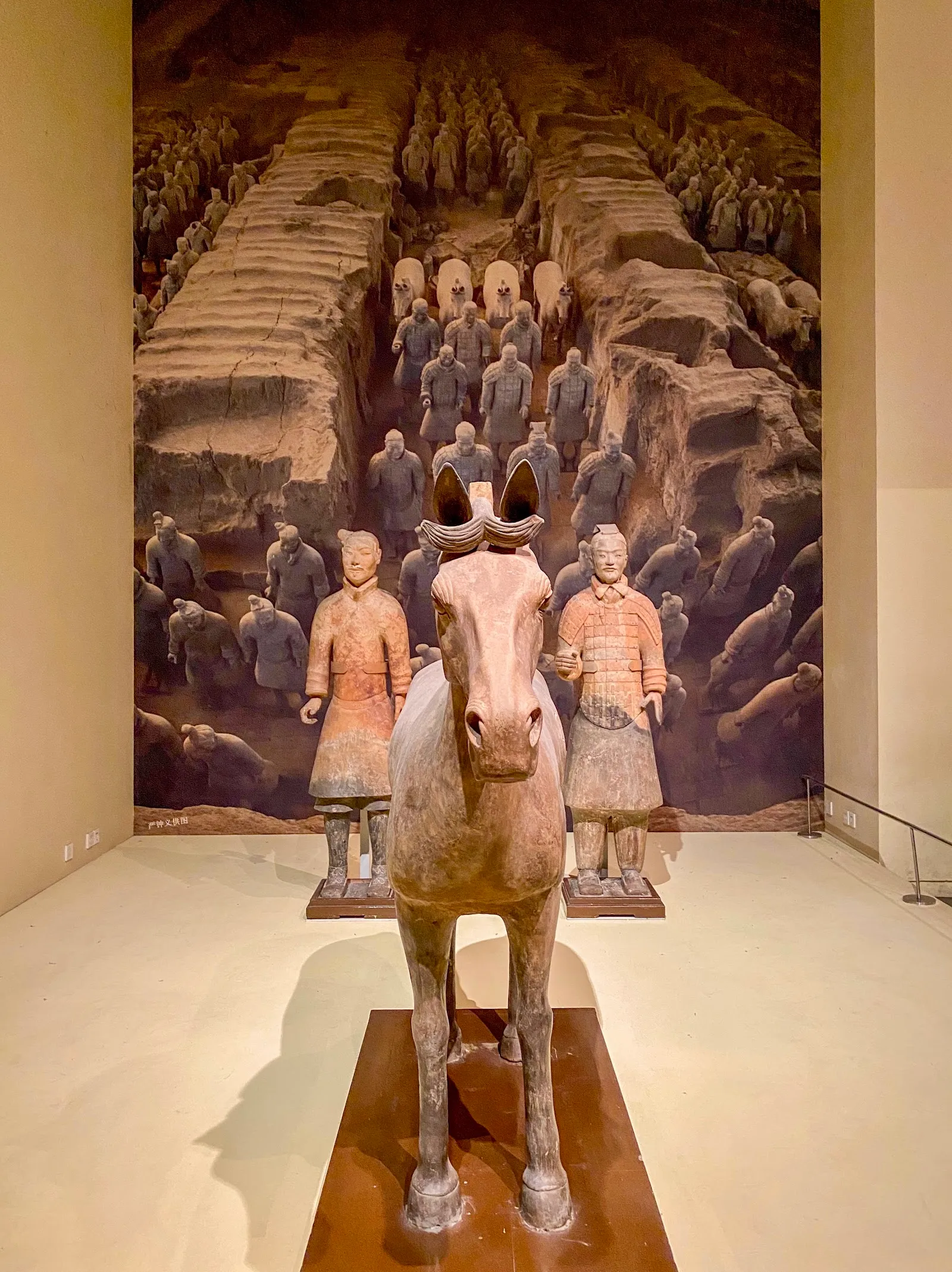
The basement exhibition on China’s history is a strong starting point if you want an overview. Elsewhere, the collections include bronze vessels, jade, ceramics, sculpture, calligraphy and painting. Standout objects mentioned among the holdings include the Houmuwu Ding, the Four Ram Zun and jade burial suits. Displays also bring together artifacts from different parts of China, including terracotta figures, Sanxingdui masks and objects associated with the Summer Palace.
Objects from early China
The Ancient China galleries cover a long span, from prehistoric remains through the late Qing dynasty. Their displays include ceramics, jade and bronze, as well as works in calligraphy and other traditional art forms. The range helps put individual objects in context across different periods, rather than presenting the collection as a single era.
Bronze vessels are among the notable pieces. The Houmuwu Ding, also known as the Simuwu Ding, is a large Shang-dynasty ritual vessel. The Four Ram Zun is another prominent bronze object. Jade burial suits offer a different view of burial customs and craftsmanship. Focus on the sections that interest you: the size of the museum makes a complete tour difficult in a single day.
Planning your visit
General admission is free, but reservations are recommended because demand can be high. The museum website and WeChat are listed options for booking; plan ahead rather than expecting to arrange entry at the door. Some special exhibitions may have separate ticket requirements, so check the details for the displays you want to see.
Bring your passport, which is needed for entry. Head to the museum’s north-side entrance rather than the security entrance serving Tiananmen Square. English translations and audio guides are available in most areas, which can help you follow the displays. The galleries involve plenty of walking, so allow time for rests. You can also bring snacks, as food inside may be expensive.
FAQ
Is the National Museum of China free to enter?
General admission is free. Some special exhibitions may require a separate ticket.
Do I need to reserve a ticket?
Booking ahead is recommended because demand can be high. The museum website and WeChat are listed booking options.
Do I need a passport to visit?
Yes. Bring your passport for entry.
How long should I spend at the museum?
Allow around 2 to 3 hours for a focused visit. The museum is large, so choose the galleries you most want to see.