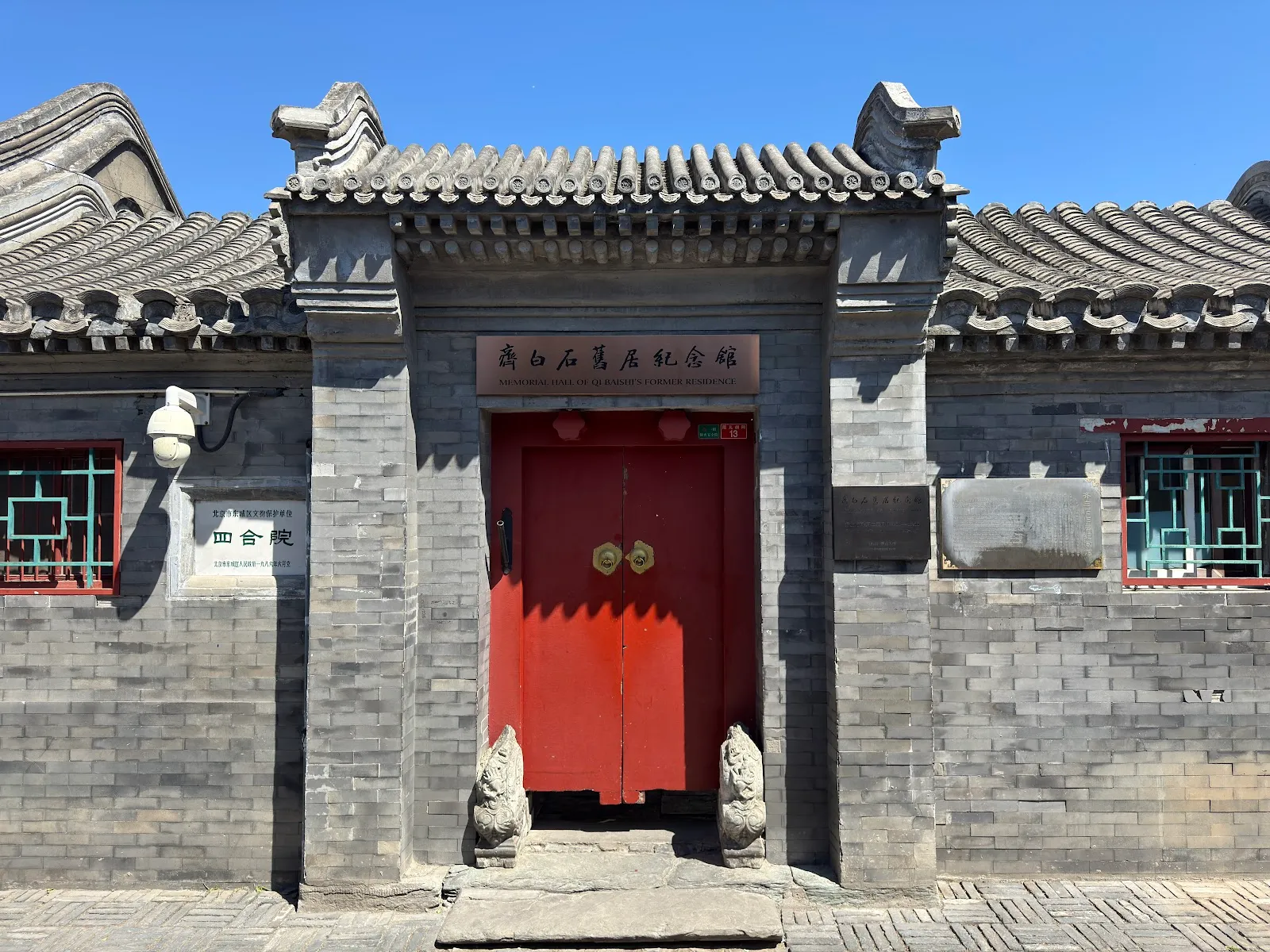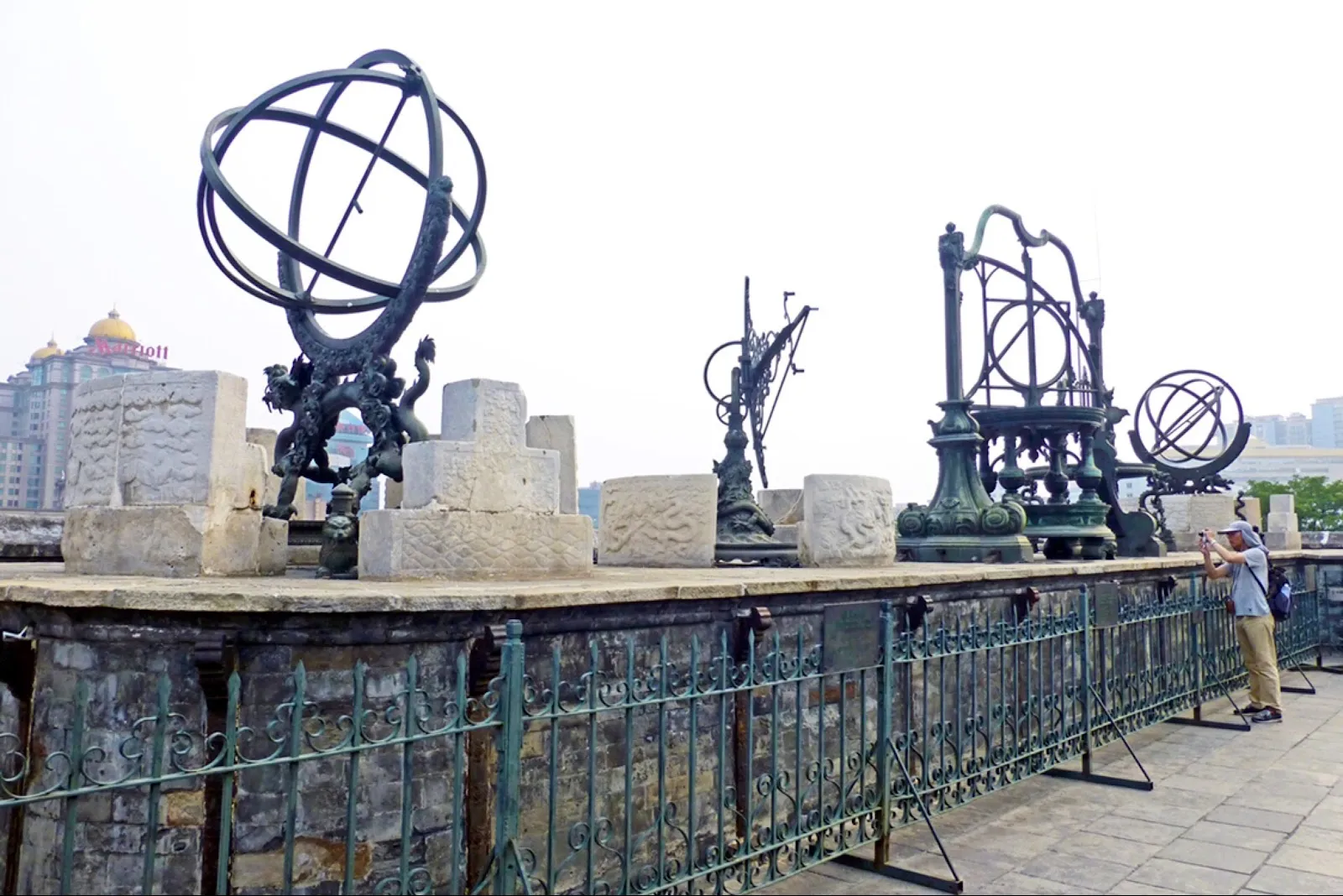
Beijing Ancient Observatory stands near Jianguomen in eastern Beijing, with a history stretching back to its construction in 1442. Its stone platform holds large bronze astronomical instruments from the Ming and Qing periods, including armillary spheres and celestial globes. Inside, exhibitions trace the development of Chinese astronomy and the tools once used to record the heavens. Take time to explore the courtyard and climb to the instrument platform; the site also fits a walk toward the nearby Tonghui River and Qingfeng Park.
An observatory built in 1442
The observatory was completed in 1442 during the Ming dynasty. It later served as the imperial observatory under the Ming and Qing dynasties, and astronomical work continued here until 1929. Its long working history gives the site a distinctive place in the story of Chinese astronomy.
The observatory sits near Jianguomen, in eastern Beijing. The stone tower and its platform form the focus of the visit, with exhibition rooms and a courtyard around them.
Bronze instruments on the platform
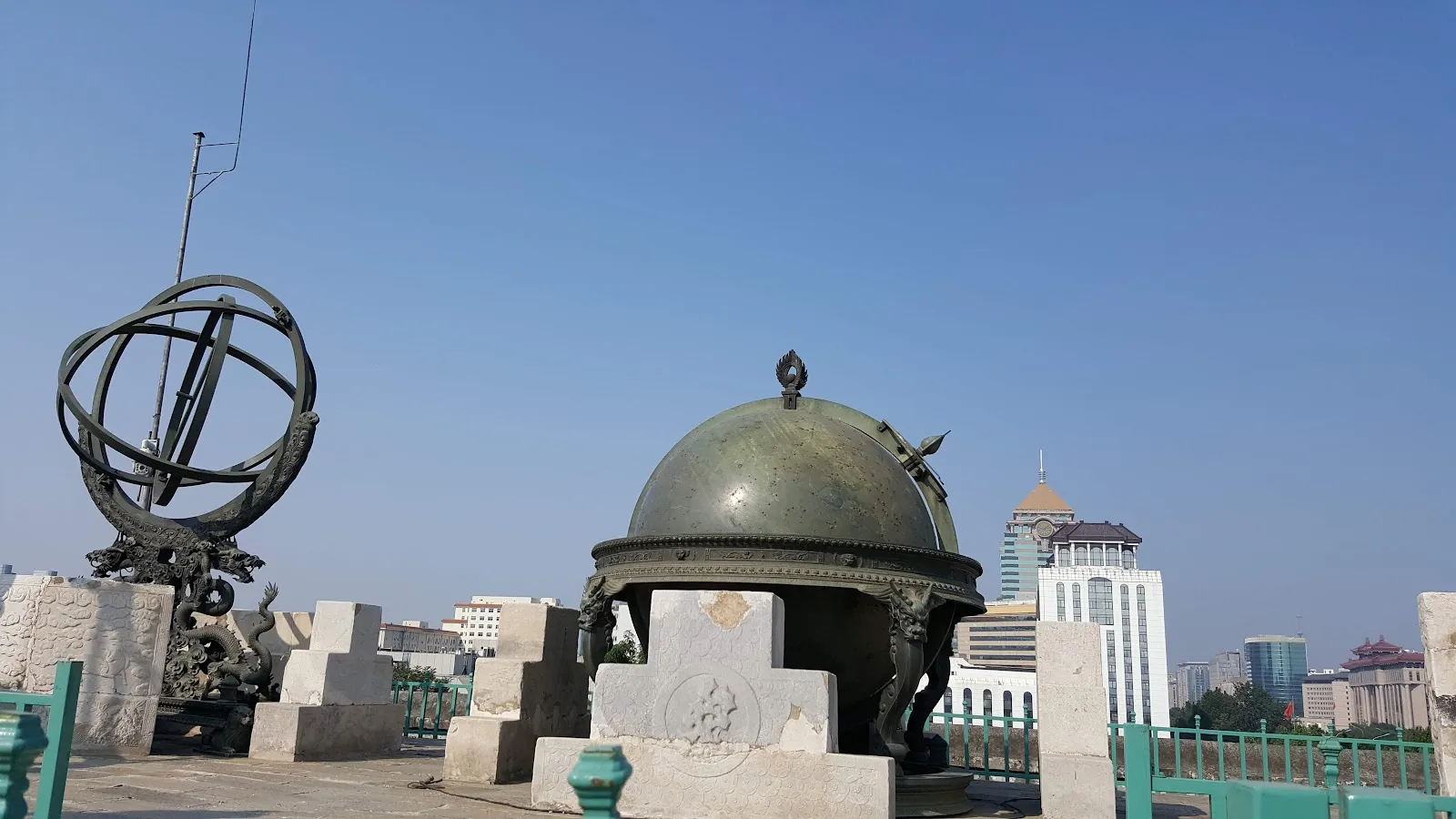
The upper platform displays large bronze instruments used to observe and describe the sky. Among them are armillary spheres and celestial globes, including instruments made during the Qing dynasty. Some of the equipment was designed by the Jesuit missionary Ferdinand Verbiest.
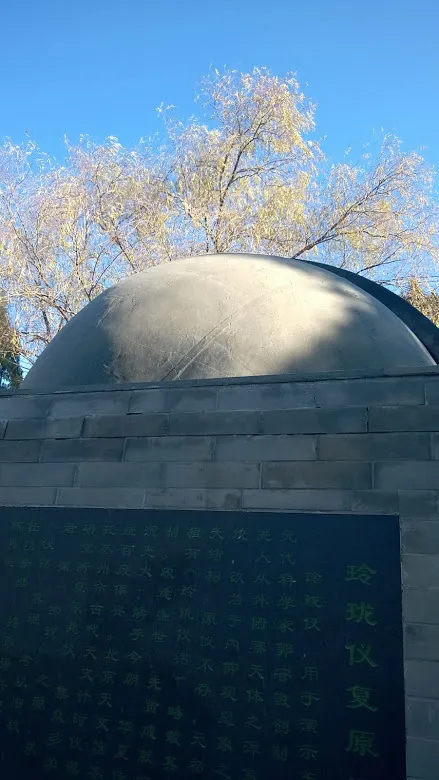
The collection also includes a celestial globe dating to 1673 and an 18th-century armillary globe that represents the planets known at the time. These pre-telescope instruments show how observers mapped celestial bodies before modern optical equipment.
Exhibitions on astronomy and timekeeping
Exhibition halls explain the development of astronomy in China and the instruments used to study the heavens. Displays cover historical tools for timekeeping and records of constellations. Descriptions of the instruments and their uses are available in Chinese and English.
The courtyard and rooms add context to the objects on the platform. Visitors can move between the indoor displays and the outdoor instruments at their own pace.
Planning a visit
Set aside at least 45 minutes for a focused look, or allow up to a few hours to see the exhibitions and grounds without rushing. The platform is reached by a stone staircase, so expect a climb to view the instruments up close.
Jianguomen metro station is directly accessible from the site. For a longer outing, the observatory can be paired with a walk along the Tonghui River toward Qingfeng Park. Check current access conditions before travelling, as some areas have been reported closed.
FAQ
When was Beijing Ancient Observatory built?
It was completed in 1442 during the Ming dynasty.
What can you see at Beijing Ancient Observatory?
The platform displays historic bronze astronomical instruments, including armillary spheres and celestial globes. Exhibition halls cover Chinese astronomy, timekeeping and constellation records.
How long should I spend at Beijing Ancient Observatory?
A focused visit can take about 45 minutes. Allow up to 2 or 3 hours to explore the exhibitions and grounds at a slower pace.
How do you get to Beijing Ancient Observatory?
The observatory is near Jianguomen and is directly accessible from Jianguomen metro station.