Giac Lam Buddhist Temple, at 565 Lạc Long Quân in Ho Chi Minh City, is a historic pagoda founded in 1744 and set within quiet garden grounds. Walk among the shrines, statues and trees, then look for the Bodhi tree gifted by a Sri Lankan monk in 1953 and the white statue of Avalokiteshvara nearby. The seven-storey stupa is a landmark of the complex, while the main hall’s Buddhist images and decorated surfaces reward a slower look. It is a place of worship, so dress modestly and move respectfully.
A pagoda founded in 1744
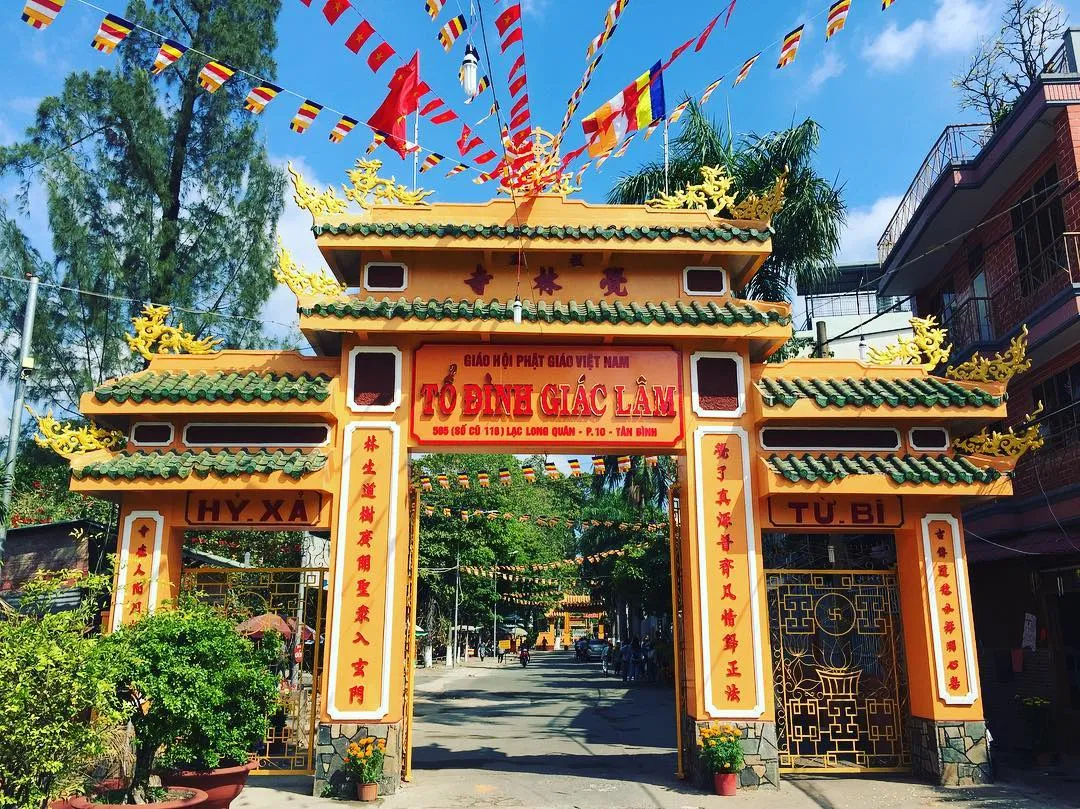
Giac Lam Pagoda was founded in the spring of 1744 by Lý Thụy Long, an immigrant from Minh Huong. It was first called Cam Son, after Cam Son hill. More than 30 years later, Master Vien Quang became its abbot and the pagoda took the name Giac Lam.
The temple became a place for teaching monks in southern Vietnam and for copying and engraving Buddhist scriptures. It is considered one of the oldest pagodas in Ho Chi Minh City. Its name is rendered as “Feel the Woods Temple,” a fitting reference to the grounds and their trees.
The grounds and the Bodhi tree
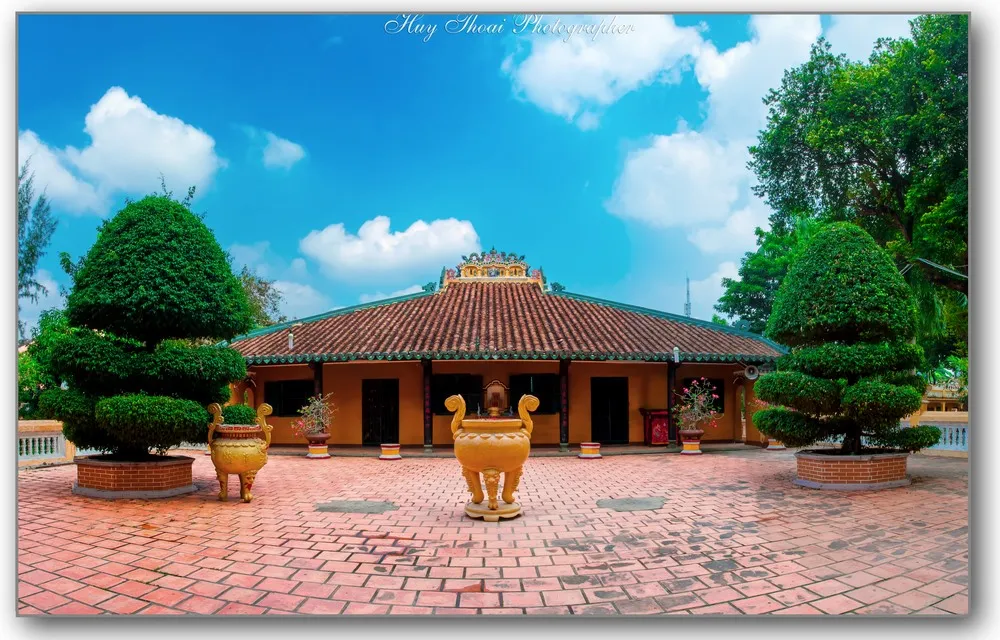
The walled grounds contain gardens, shrines, monuments and several temple buildings. Near the entrance, a Bodhi tree shades a white statue of Avalokiteshvara, the bodhisattva associated with compassion. A Sri Lankan monk gave the tree to the pagoda in 1953. The Bodhi tree is sacred to Buddhists.
Take time to notice the grounds as well as the main buildings. The pagoda is surrounded by the urban area of Ho Chi Minh City, but its garden setting offers a quieter place to walk. Visitors come to pray, while others explore the architecture and statues. Keep your voice and behaviour respectful around people worshipping.
The stupa and temple buildings
The seven-storey stupa is one of the most prominent structures in the complex. Its design brings together Vietnamese, Khmer and Cham influences. The stupa is associated with relics of the Buddha, and visitors who can go to the upper levels may find views across the city.
The pagoda’s main buildings are arranged in a plan shaped like the Chinese character for “three.” The three areas are the main hall, the patriarchs’ hall and the dining hall. The main shrine contains images of Amitabha Buddha, Shakyamuni Buddha, Maitreya Bodhisattva, Samantabhadra Bodhisattva and Avalokiteshvara. Wooden pillars bear red-and-gold Chinese characters, and ceramic plates decorate parts of the walls, roofs, arches and main hall.
How to visit with respect
Giac Lam is an active Buddhist place of worship, not only a historic site. People visit to pray and take part in religious life, so dress with shoulders and knees covered and give worshippers room. You can light incense as part of a visit, or simply walk through the grounds and observe the buildings and statues.
There is no entry fee, though parking is charged. The temple is at 565 Lạc Long Quân, away from the usual central tourist area, so allow time for the journey as well as your visit. The grounds, halls and stupa each have details to see; a slower walk gives you time to notice them without disturbing those who are there to worship.
FAQ
Is there an entry fee for Giac Lam Buddhist Temple?
There is no entry fee. Parking has a charge.
What should I wear to Giac Lam Buddhist Temple?
Cover your shoulders and knees as a courtesy when visiting this place of worship.
What should I see at Giac Lam Buddhist Temple?
Look for the Bodhi tree, the white statue of Avalokiteshvara, the main hall’s Buddhist statues and the seven-storey stupa.
When was Giac Lam Buddhist Temple founded?
It was founded in 1744, first under the name Cam Son.