
At the southern tip of San Diego’s Point Loma Peninsula, Cabrillo National Monument pairs views across San Diego Bay and the Pacific with a look at the area’s history and coastal wildlife. The site commemorates Juan Rodríguez Cabrillo’s 1542 arrival at San Diego Bay. Visit the Old Point Loma Lighthouse and its museum, see the Cabrillo statue, or follow a trail above the shoreline. At low tide, the pools below the cliffs reveal sea life; in winter, the overlooks are a place to watch for migrating gray whales.
The 1542 landing and the monument
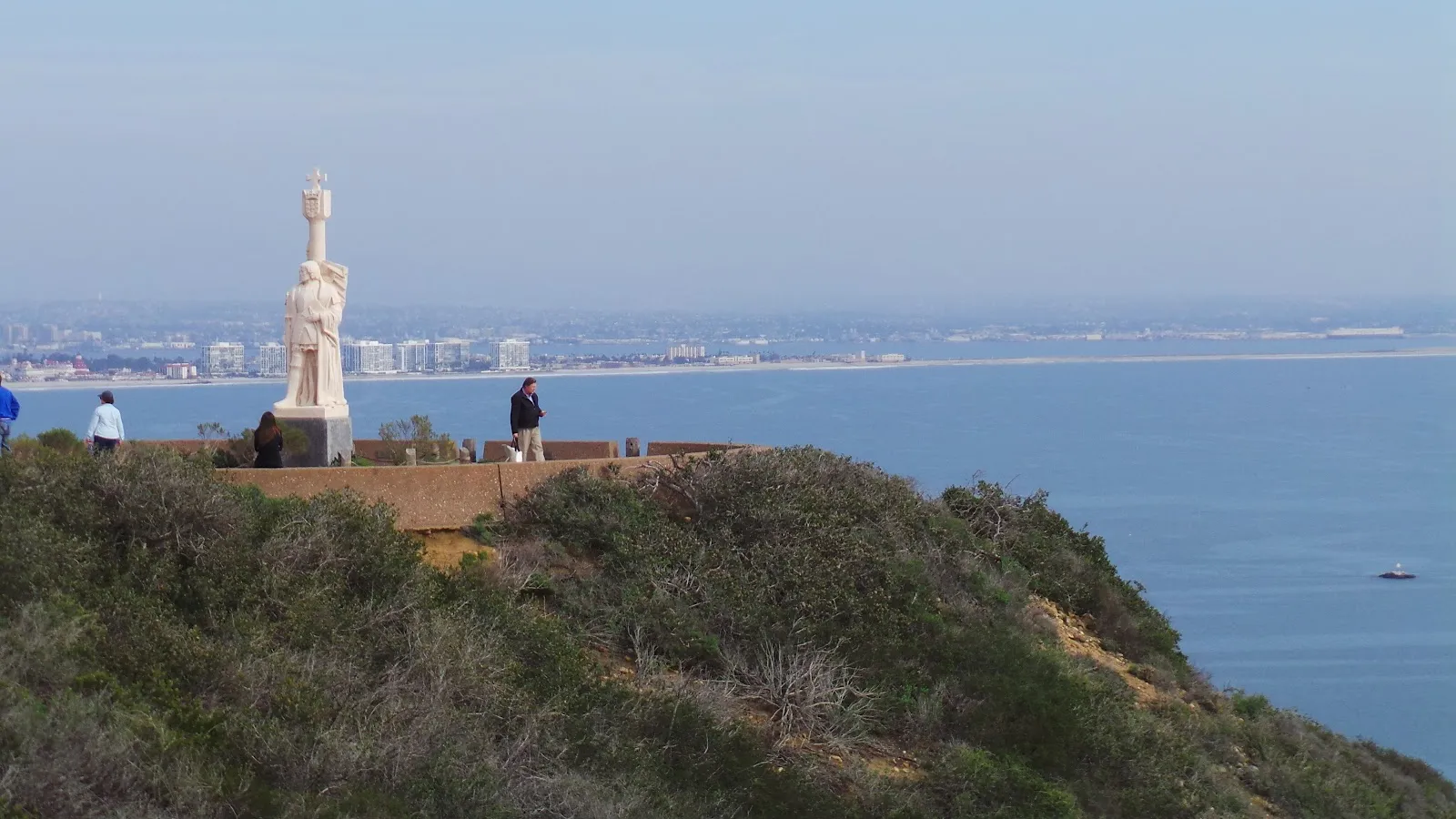
Cabrillo National Monument commemorates Juan Rodríguez Cabrillo’s arrival at San Diego Bay in 1542. His expedition was the first European expedition to explore what is now the West Coast of the United States. The site sits at the southern end of the Point Loma Peninsula, where the views take in San Diego Bay on one side and the Pacific on the other.
A statue of Cabrillo stands near the entrance. The Visitor Center has exhibits and films about the expedition and the area’s history. It’s a useful first stop if you want context before walking the trails or visiting the lighthouse.
Old Point Loma Lighthouse
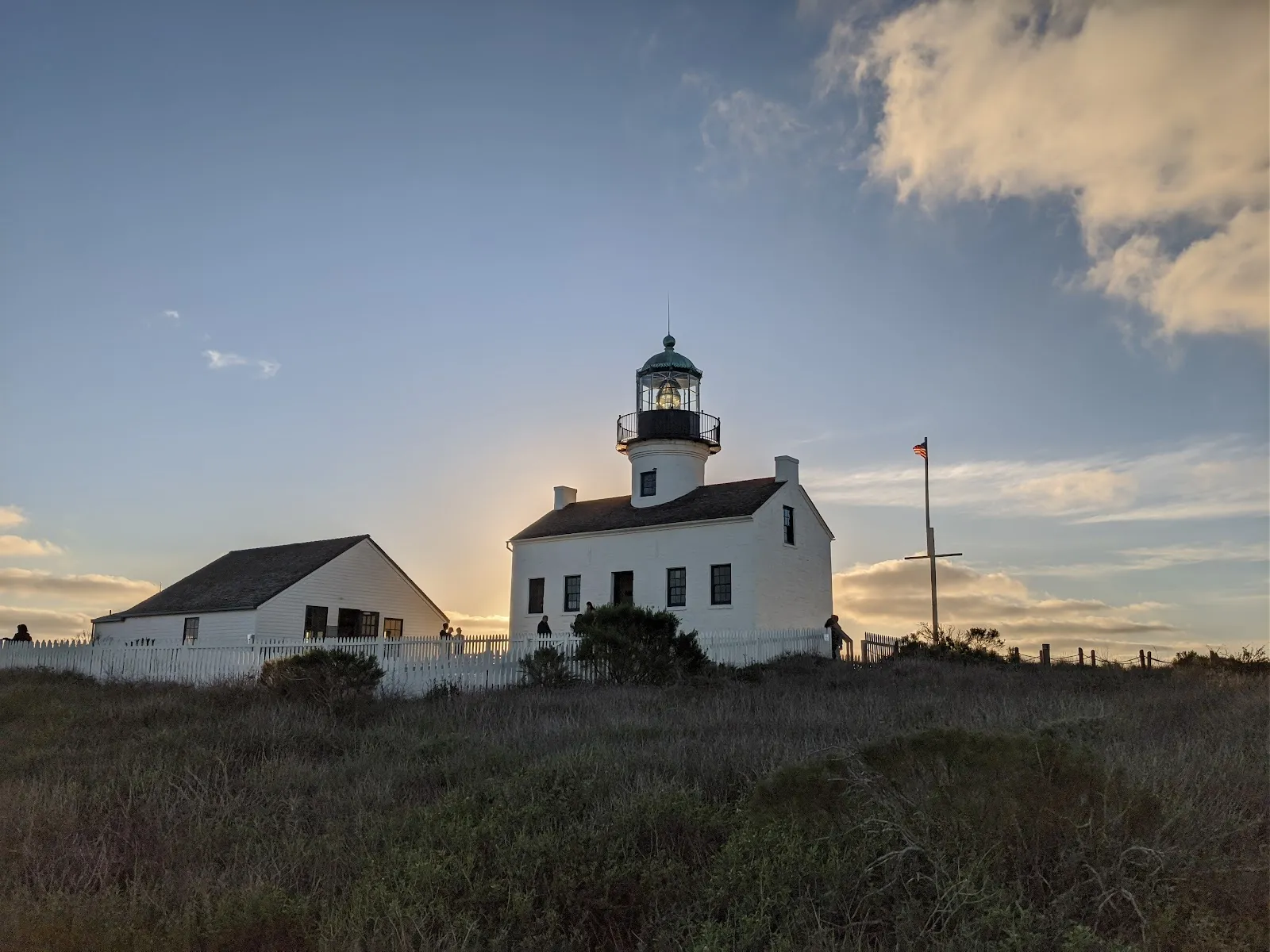
The restored Old Point Loma Lighthouse is now a museum. Its small rooms show furnishings, toys and other belongings from the lighthouse keeper’s family, alongside equipment connected with lighthouse work. The exhibits offer a glimpse into the building’s former domestic life as well as its maritime role.
A later lighthouse replaced the original in 1891. The old building was also used to store artillery and other military equipment during World War II. Its position above the coastline makes it a convenient stop between the Visitor Center and the park’s overlooks.
Trails, tide pools and seasonal wildlife
Walking trails and lookouts provide different angles on the coastline, bay and city. The two-mile Bayside Trail crosses the peninsula’s coastal scrub and offers views over the bay. Bring water and snacks if you plan to spend time hiking; benches along the route provide places to rest.
Below the cliffs, the rocky tide pools support animals including mussels, limpets, snails, crabs and sea anemones. Check tide times before visiting. Fall and winter are useful seasons to look for a daytime low tide, when more of the pools are exposed. Take care around the shoreline and observe the marine life without disturbing it.
Gray whales pass the western overlooks during their winter migration. The Whale Overlook and the area around the lighthouse provide places to scan the water. Binoculars can help with spotting whales, and a limited number are available at the Visitor Center during whale season.
FAQ
What is Cabrillo National Monument known for?
It commemorates Juan Rodríguez Cabrillo’s 1542 arrival at San Diego Bay. The site also has a historic lighthouse, coastal trails, tide pools and views over the bay and Pacific.
When should I visit the tide pools?
Check the tide schedule and plan for low tide. Fall and winter are useful seasons for daytime low tides that expose more of the pools.
Can you watch whales at Cabrillo National Monument?
Gray whales pass the western overlooks during their winter migration. Binoculars can help you spot them.
How long should I plan for a visit?
Allow about 1 to 3 hours for the Visitor Center, lighthouse and a walk. Add time if you plan to hike or explore the tide pools.


