Wrigley Field, at 1060 W Addison St in Chicago’s Wrigleyville neighborhood, has been home to the Cubs since 1916. The ballpark opened in 1914 and is known for its ivy-covered outfield, red entrance marquee and manually operated scoreboard. Come for a game to experience the crowd and the neighborhood’s game-day energy, or book a guided tour for a closer look at the stadium, including areas such as the dugout and clubhouses. It’s a worthwhile stop even if baseball isn’t your main reason for visiting Chicago.
A ballpark opened in 1914
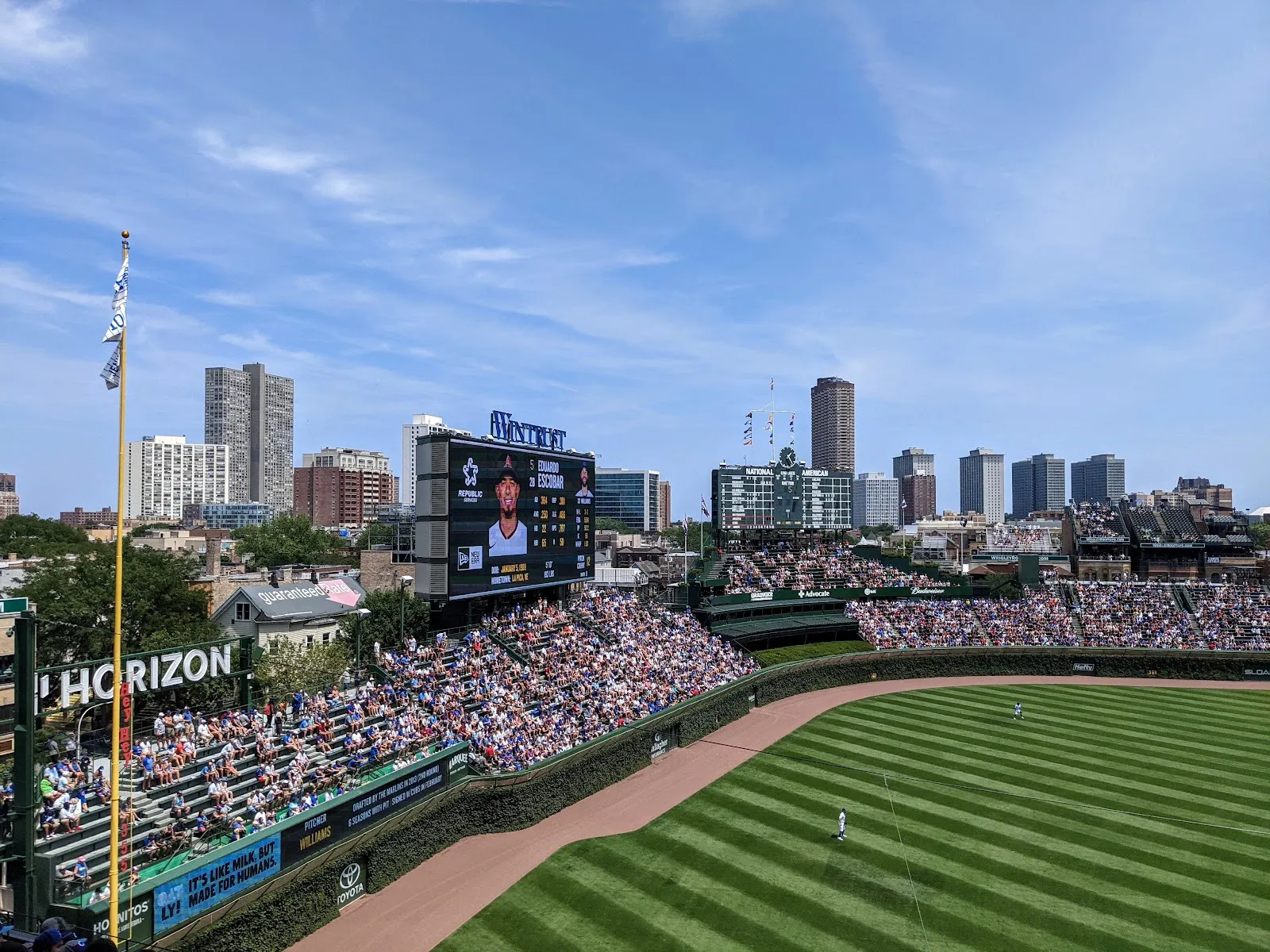
Wrigley Field began as Weeghman Park in 1914. The Cubs played their first game here in 1916, and the grounds took the Wrigley name in 1926. The ballpark is among Major League Baseball’s oldest still in use, and its long association with the Cubs gives a visit a distinctly local focus.
The Cubs’ history is part of the place’s appeal, but you do not need to follow baseball closely to notice its defining details. The brick exterior, ivy on the outfield walls and manually operated scoreboard preserve a different feel from a stadium built around digital displays. The red marquee above the entrance is another familiar landmark, often photographed from outside.
Details to look for inside
At a game, take time to look beyond the field. The ivy-covered outfield wall and the traditional scoreboard are among the features that distinguish Wrigley from newer ballparks. Stadium changes over the years have added lights, expanded the bleachers and brought in video boards, while leaving these older elements in place.
The crowd is part of the experience. Cubs supporters fill the stands, and the seventh-inning stretch includes the traditional singing of “Take Me Out to the Ballgame.” A game also brings a lively scene to the surrounding residential streets, where bars and restaurants draw fans before and after play. On some views of the field, older stadium layouts can mean obstructed sightlines, so check the seat details when choosing tickets.
Taking a guided tour
A guided tour is a good option when the Cubs are not playing at home or when you want to see parts of the stadium that are not open to ordinary ticket holders. Tours can include the dugout and clubhouses, with the route and access depending on the visit. The two-hour tour gives time to walk through the ballpark and hear about Cubs history and the stadium’s architecture.
Comfortable shoes are useful for walking around the grounds. Tour availability varies by date, so check the team’s website for current dates and ticket information before planning your visit. If you are visiting on a game day, book ahead; tickets for games and tours can sell out.
Wrigley Field sits within Wrigleyville rather than in a large, isolated sports complex. Public transportation is a practical way to get there, as parking near the stadium can be difficult and there is no large stadium car park. Before leaving, take a look at the marquee and the ballpark’s brick exterior, then explore the nearby bars and restaurants if you want to extend your visit.
FAQ
How long does a Wrigley Field tour take?
A guided tour takes about two hours.
Can you visit Wrigley Field without going to a game?
Yes. Guided tours are available on certain dates, including outside the game schedule. Check the Cubs’ website for tour dates.
What can you see on a Wrigley Field tour?
Tours can include areas such as the dugout and clubhouses. Access depends on the tour.
How do you get to Wrigley Field?
The stadium is at 1060 W Addison St in Wrigleyville. Public transportation can help you avoid parking hassles; there is no large stadium parking lot.