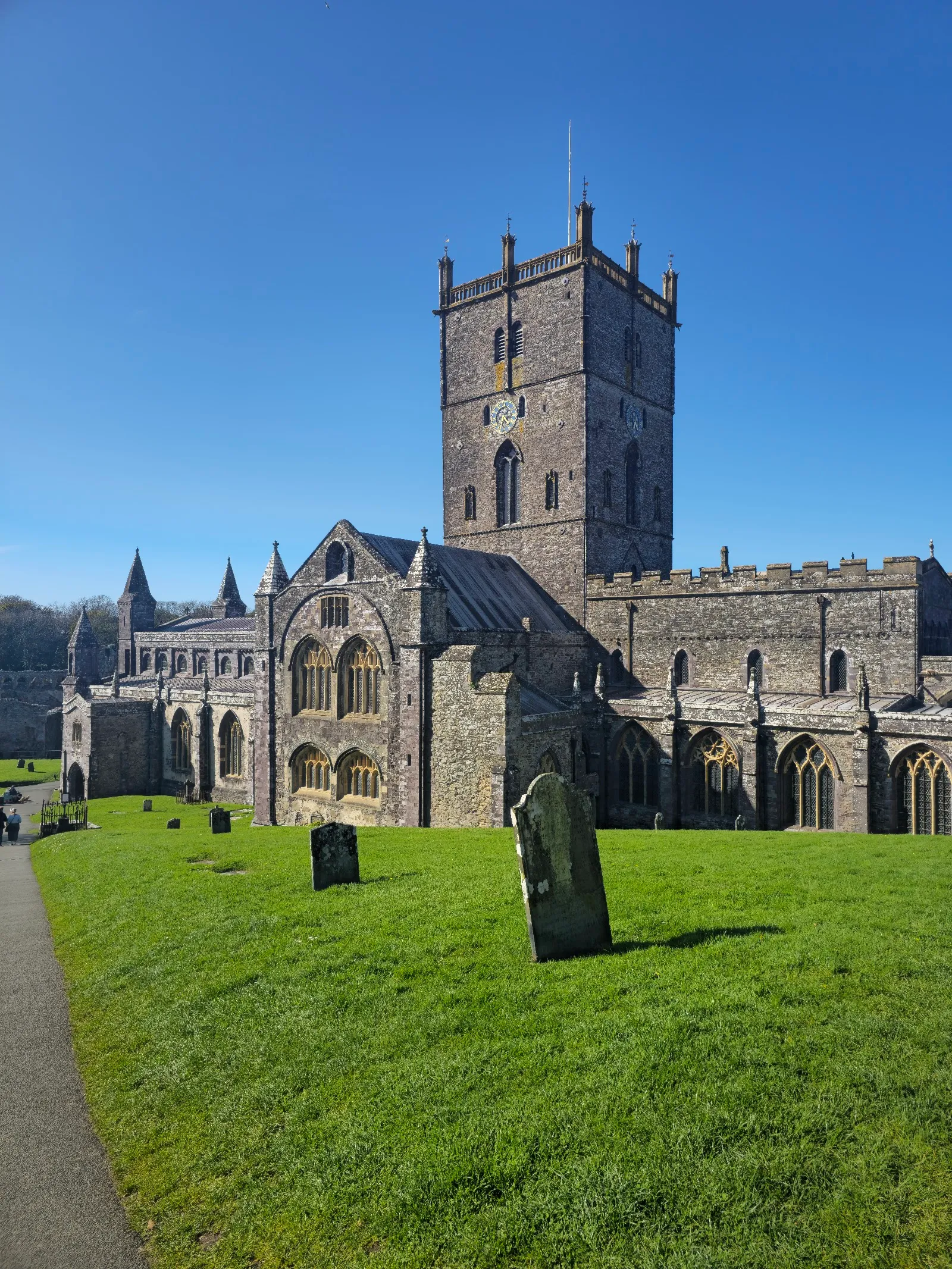
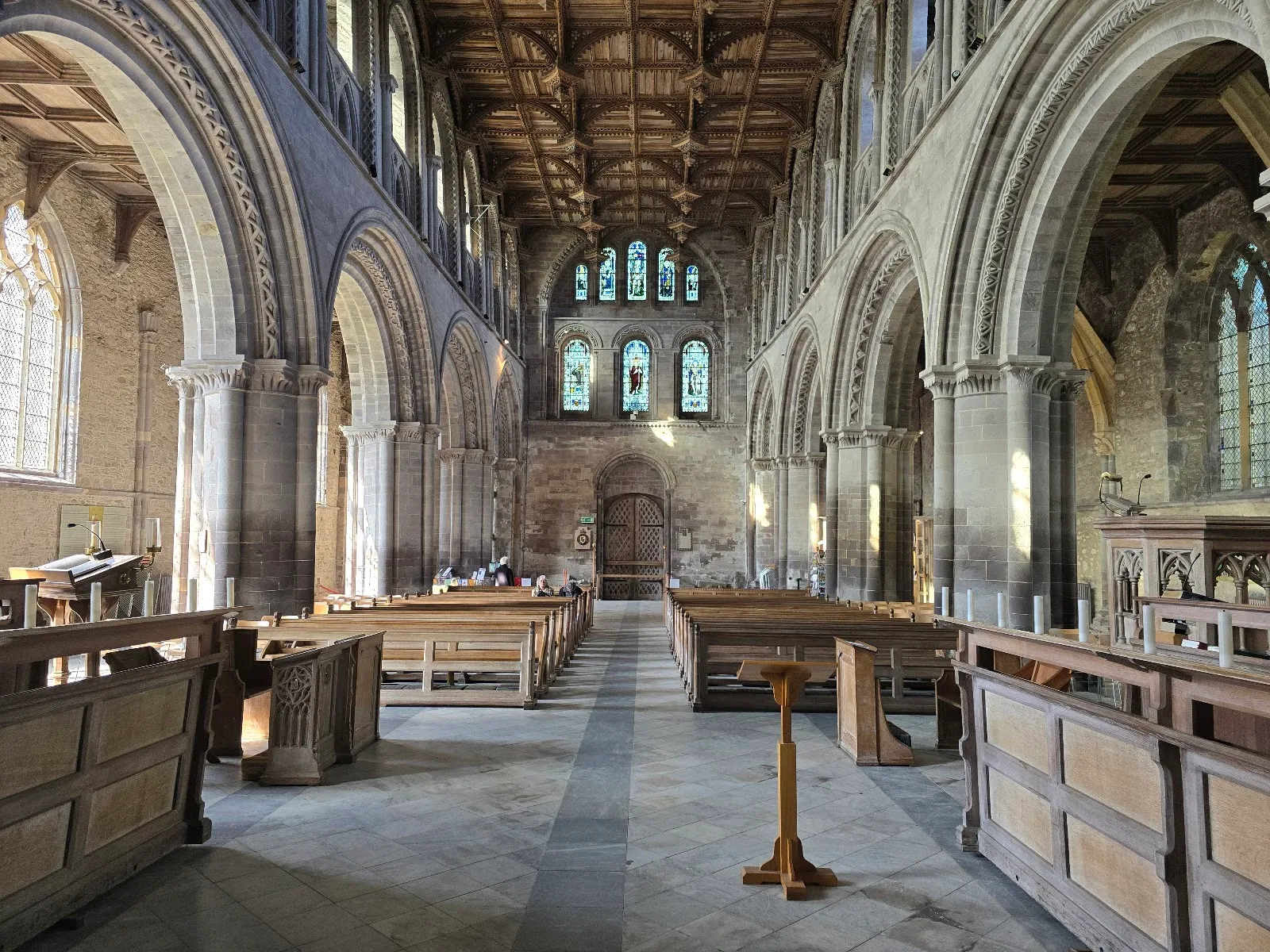
St Davids Cathedral sits below the streets of St Davids, Wales, in a sheltered valley beside the River Alun. A church has stood on this site since the sixth century, and the present cathedral took shape from the late 12th century. Inside, look up at the carved oak nave ceiling, explore the chapels and treasury, and find the shrine of St David, Wales’s patron saint. The Bishop’s Palace ruins stand next door, so you can pair the cathedral with a walk around the medieval site and its grounds.
A cathedral in a sheltered valley
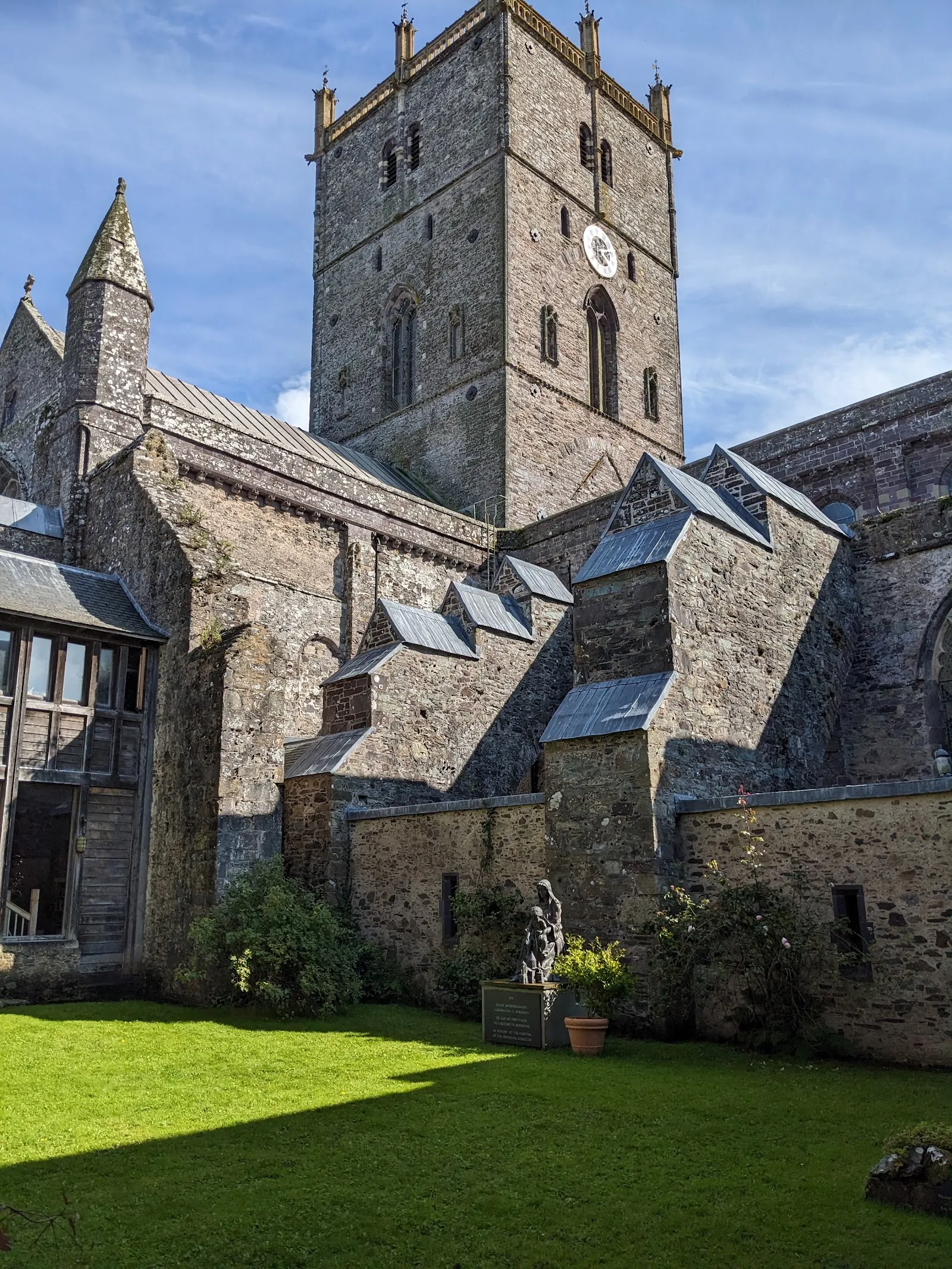
The cathedral stands in a hollow below the surrounding streets of St Davids, close to the River Alun. Its position gives the building a different approach from the usual hilltop setting: visitors descend into the valley before the cathedral and its grounds come into view. The site has been a place of Christian worship since the sixth century, when St David founded a monastic community here.
St David, known in Welsh as Dewi Sant, became the patron saint of Wales. His shrine made the cathedral an important destination for pilgrims in the Middle Ages. Pope Calixtus II declared in the 12th century that two pilgrimages to St Davids were equivalent to one to Rome, and three to one to Jerusalem. The cathedral remains an active place of worship, with regular services.
How the present building took shape
Construction of the cathedral that stands today began around 1180 to 1182, on the site of earlier religious buildings. Much of the main structure is in the Transitional Norman style and was built from purple Cambrian sandstone. Additions followed over the next three and a half centuries, giving the building a mix of architectural details.
The cathedral suffered damage during the Reformation and the English Civil Wars. Extensive restoration took place in the 19th century, and the building has continued to be repaired. Look for the contrast between old stonework and visible repair work as you move through the interior. The sloping floor is another detail to notice alongside the arches and carved woodwork.
Inside the cathedral and around the grounds
Inside, the oak nave ceiling draws the eye upward. Stained glass, chapels and carved details give you plenty to look at as you explore, while the treasury contains historic objects. The shrine of St David remains a place of reflection and pilgrimage. Information displays and guided tours can help explain the cathedral’s history and the objects on view.
Outside, take time to walk around the grounds, where a stream and small stone bridge sit among the cathedral buildings. The medieval Bishop’s Palace is adjacent to the cathedral. Its substantial ruins give a sense of the site’s former scale and were once used to house bishops and receive important guests. Visiting both makes it easier to understand how religious life and the work of the clergy were organised here.
FAQ
Is there an entry fee for St Davids Cathedral?
Entry is free, and donations are welcomed. Lighting a candle has a charge.
How long should I allow for a visit?
About an hour is a useful amount of time to explore the cathedral and grounds.
Is the cathedral accessible for visitors with mobility difficulties?
The cathedral has a wheelchair-accessible entrance and restroom. The route from the city centre includes steep slopes; the approach from Merrivale car park is gentler.
Can I visit the Bishop’s Palace as well?
Yes. The palace ruins are beside the cathedral, so you can include them in the same visit. The palace has a separate entry charge.