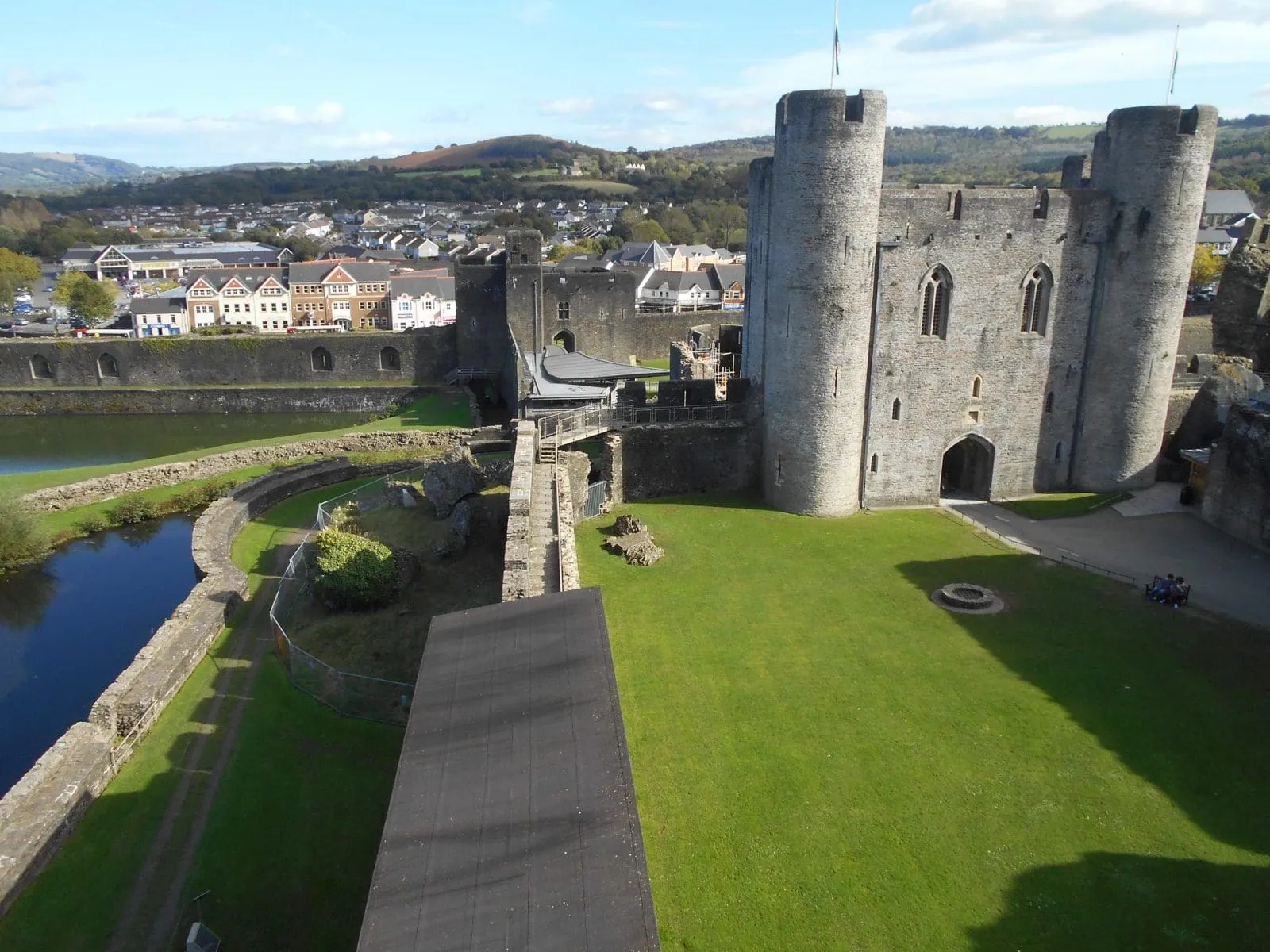
Caerphilly Castle is a 13th-century fortress in Caerphilly, just outside Cardiff. It is the largest castle in Wales and the second largest in Britain after Windsor. Massive walls, square towers and gatehouses stand within an artificial lake that served as a moat, and the castle's reflection in the water is one of its best views. A self-guided route with audio and video explains the castle's history from room to room. Plan time for the grounds as well as the interior.
Building the castle from 1268
A Roman fort is believed to have stood near the present fortifications, so the site had long been strategically important.
The castle's origins lie in the Anglo-Norman expansion into South Wales in the 1260s. Gilbert de Clare, known as Red Gilbert, began building it in Glamorgan to take land from the independent Welsh nobility. The Welsh leader Llywelyn ap Gruffydd confronted him, and the Welsh burnt the castle in 1270. De Clare rebuilt it and used it to hold the rich lands of south Wales.
Water defences and the layout
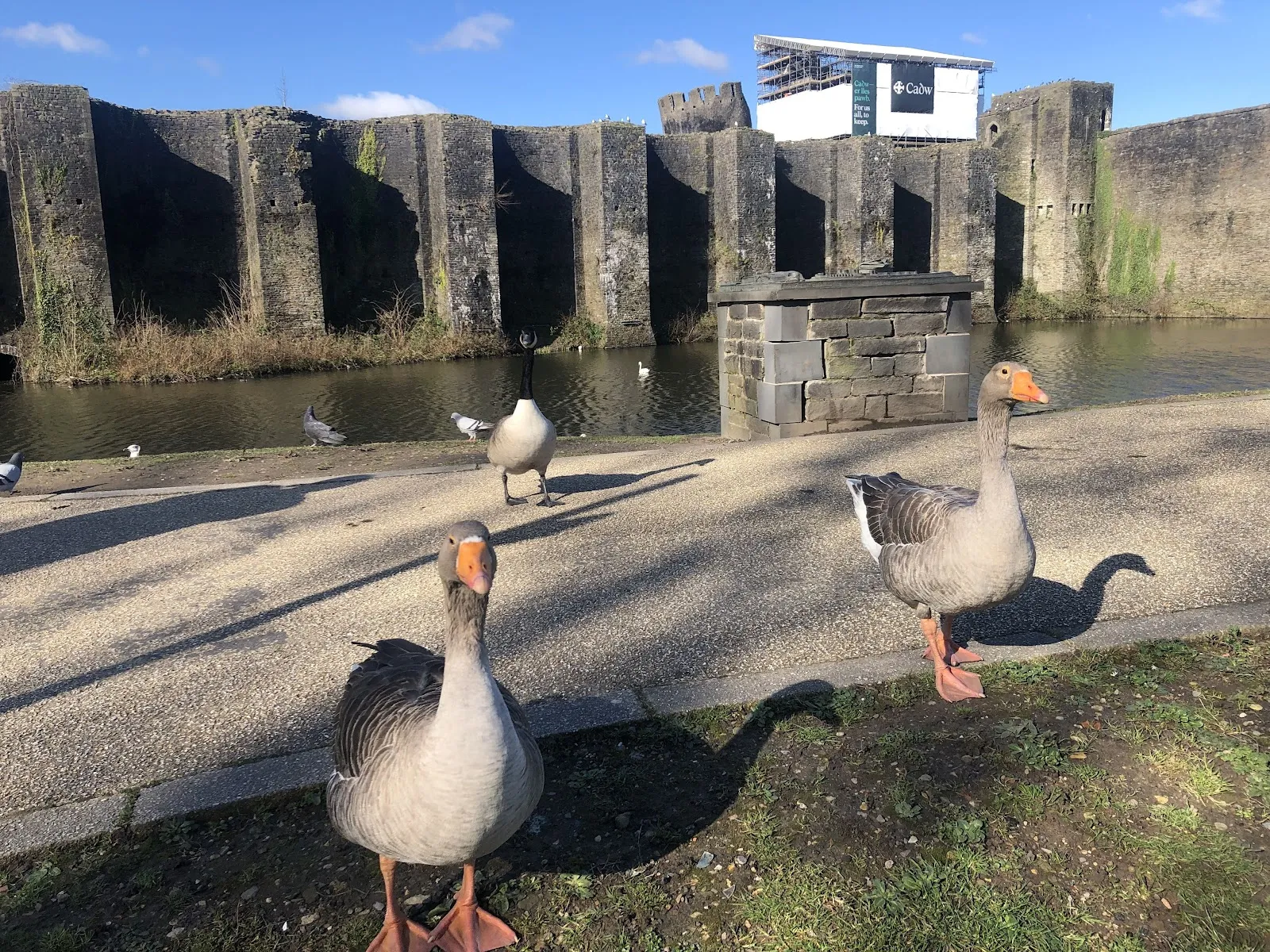
The castle was built on marshy ground and surrounded by a large artificial lake. Its concentric walls and square towers sit inside that water. Drawbridges across the water were raised during an attack.
The inner walls and towers are enclosed by the middle ward, and beyond that stands an outer ring of defences. The historian Allen Brown described the castle's water defence as the most extensive in Britain, which gives the site its distinct look from every side.
Restoration and the rooms inside
The castle was restored through the 20th century. The 4th Marquis of Bute continued the restoration started by his father, working from 1928 to 1939. A six-metre statue of him stands on the site.
Inside, an interactive video explains the castle in the first room, and the route is signed as a story. Wooden replica siege engines show how the castle was attacked. The old dining room is largely modern because it is being refurbished, but it still shows how the room looked a few hundred years ago. Toilets are available inside. The gift shop is small but has a fair range of souvenirs.
In the 14th century, court sessions were held in the gatehouse until a new building was ordered after an attack on the court in 1316.
The grounds and the dragons
The grounds are spacious. A circular walk around the castle takes about half an hour, and the lake gives plenty of places to stop and look.
The grounds include red and white dragon figures, and there is a story behind them that families often enjoy hearing. The walk around the castle is easy to combine with a visit to the town centre.
FAQ
Is there an entry fee?
Yes, admission is charged. National Trust members and Cadw members get in free. Check the Cadw website for current prices.
How long do you need?
Allow about 1.5 to 2 hours for the castle itself. Plan more time if you also want to walk the grounds.
Is the castle wheelchair accessible?
The entrance and toilets are wheelchair accessible. The wheelchair route covers the ground floor only, since the rest is reached by narrow, steep stairs.
Where do I park?
There is a paid car park opposite the castle. Town centre car parks can fill up, and a park and ride option is about an 11-minute walk away.