On Curetes Street in Ephesus, near Selçuk in İzmir, the Temple of Hadrian is a well-preserved Roman monument dedicated to Emperor Hadrian. Its curved arch rests above four Corinthian columns, and carved friezes show figures and episodes linked to the foundation of Ephesus. Look for the relief of Tyche on the facade and the figure of Medusa above the doorway. The friezes on site are copies; the originals are displayed at the Ephesus Museum.
A temple on Curetes Street
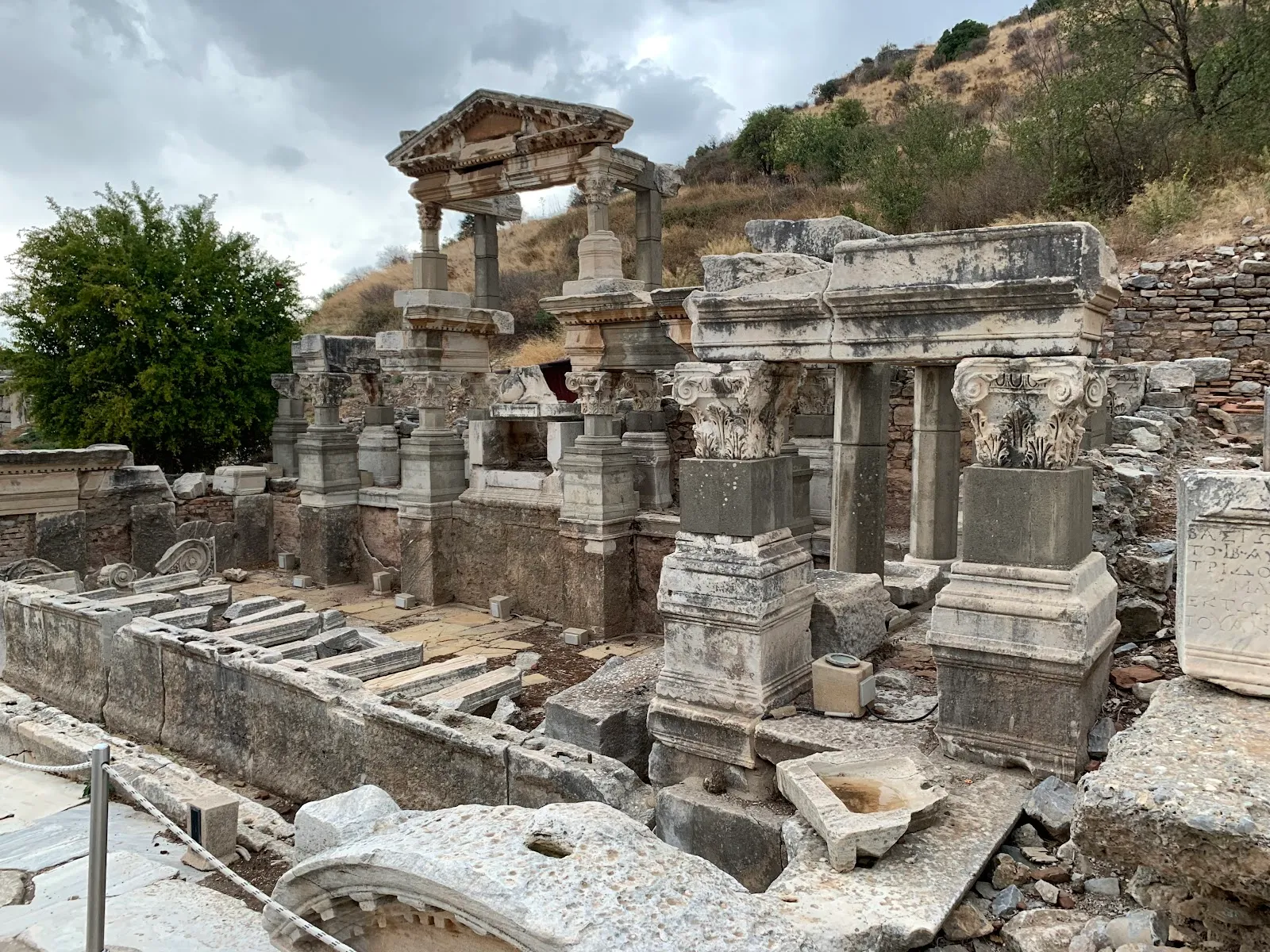
The Temple of Hadrian stands along Curetes Street in Ephesus, among the best-preserved structures on this part of the ancient city. It was built before 138 CE by P. Quintilius and dedicated to Emperor Hadrian, who visited Ephesus in 128 CE. Its position on a major street puts the facade directly in view as you walk through the site.
The building is remembered for its compact facade and its carved decoration. Four Corinthian columns support a curved arch, while square columns frame the sides. Above the doorway, a human figure, probably Medusa, appears amid acanthus-leaf ornament. The remaining structure gives you a close look at architectural details that can be easy to miss when moving through the wider archaeological site.
Reading the facade and friezes
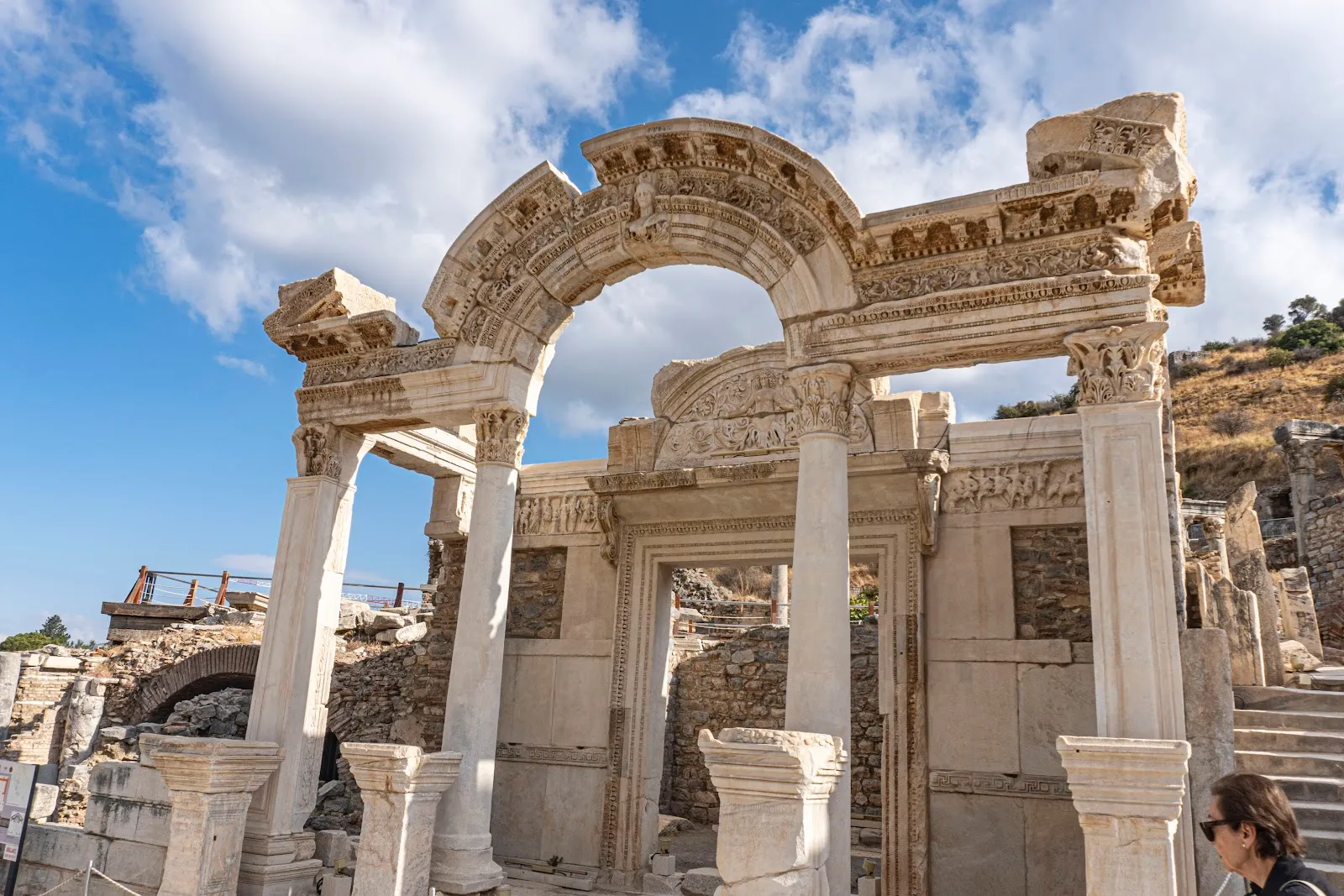
Look for the relief of Tyche, the goddess of victory, set in the middle of the arch. The carved panels inside the temple depict episodes associated with the foundation of Ephesus. One shows Androklos shooting a boar; other scenes include Dionysus in a ceremonial procession and the Amazons.
A further frieze contains several figures, including Apollo, Athena, Androkles and Herakles, as well as the wife and son of Theodosius. These carvings reward a slow look: take in each panel separately, then notice how the scenes and figures sit within the decorated facade. The panels visible at the temple today are copies, not the originals.
The originals at the Ephesus Museum
The original friezes from the Temple of Hadrian are displayed at the Ephesus Museum. Visiting both places lets you see the temple’s architectural setting on Curetes Street and then examine the original carved panels in the museum. The temple also has a pedestal in front bearing inscriptions. It served as the base for statues of four emperors: Diocletian, Maximian, Constantius I and Galerius. The original statues have not been found.
Hadrian belonged to the group later called the Five Good Emperors, alongside Nerva, Trajan, Antoninus Pius and Marcus Aurelius. The term was coined by political philosopher Niccolò Machiavelli in 1532. At the temple, the connection to Hadrian is expressed through its dedication, while the surviving architectural details and friezes offer the clearest things to look for during a visit.
FAQ
Where is the Temple of Hadrian?
It is on Curetes Street in the ancient city of Ephesus, at Atatürk, Selçuk, İzmir.
What should I look for at the Temple of Hadrian?
Look for the curved arch, Corinthian columns, the relief of Tyche and the carved figure above the doorway. The friezes show scenes linked to the foundation of Ephesus.
Are the friezes at the temple original?
No. The friezes visible at the temple are copies; the originals are displayed at the Ephesus Museum.
When is a good time to visit?
Early morning or late afternoon brings softer light and fewer crowds.