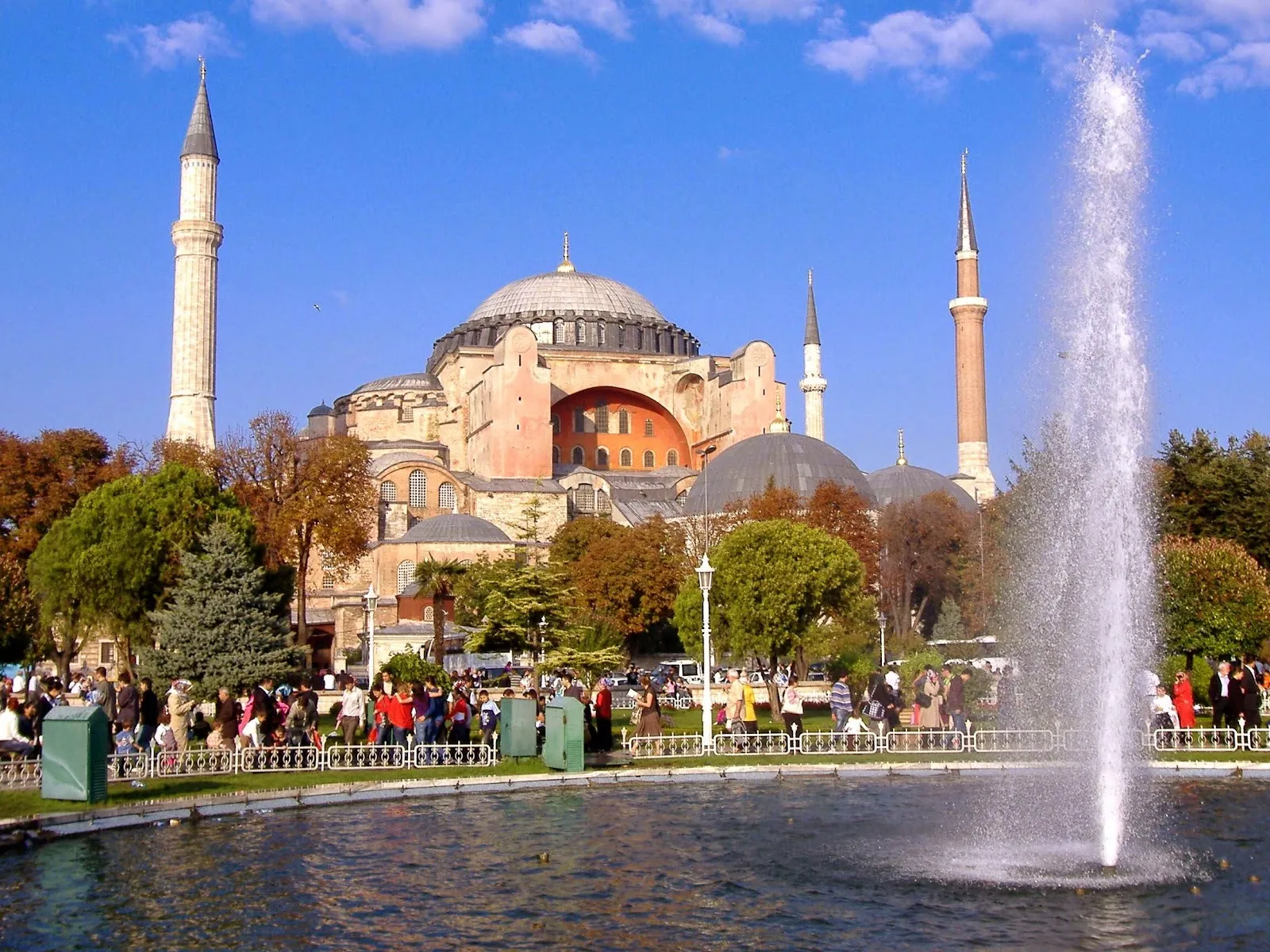
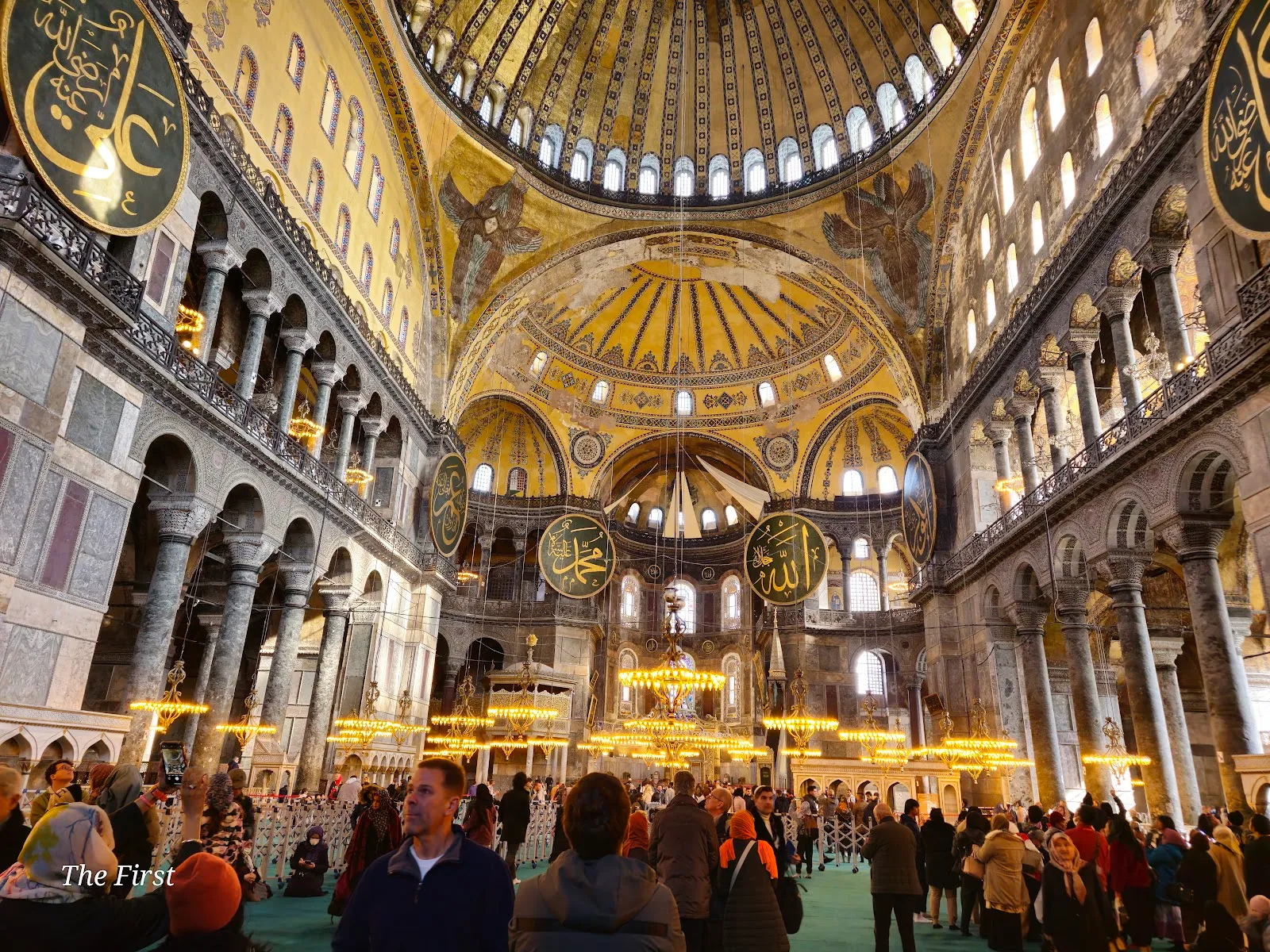
Hagia Sophia Grand Mosque stands in Sultanahmet, Istanbul, with a vast central dome above marble columns, Byzantine mosaics and Islamic calligraphy. Built as a cathedral in the 6th century, it later served as a mosque and a museum before returning to mosque use in 2020. Look up to take in the scale of the interior, then notice how Christian imagery and Islamic features share the building. It is an active place of worship, so plan your visit around prayer access and follow the mosque’s clothing guidance.
From cathedral to mosque
Hagia Sophia was built in the 6th century under the Byzantine emperor Justinian I, with construction completed in 537. It served as a cathedral for centuries before the Ottoman conquest of Constantinople in 1453, when it became a mosque. In 1935 it was turned into a museum; in 2020 it returned to mosque use.
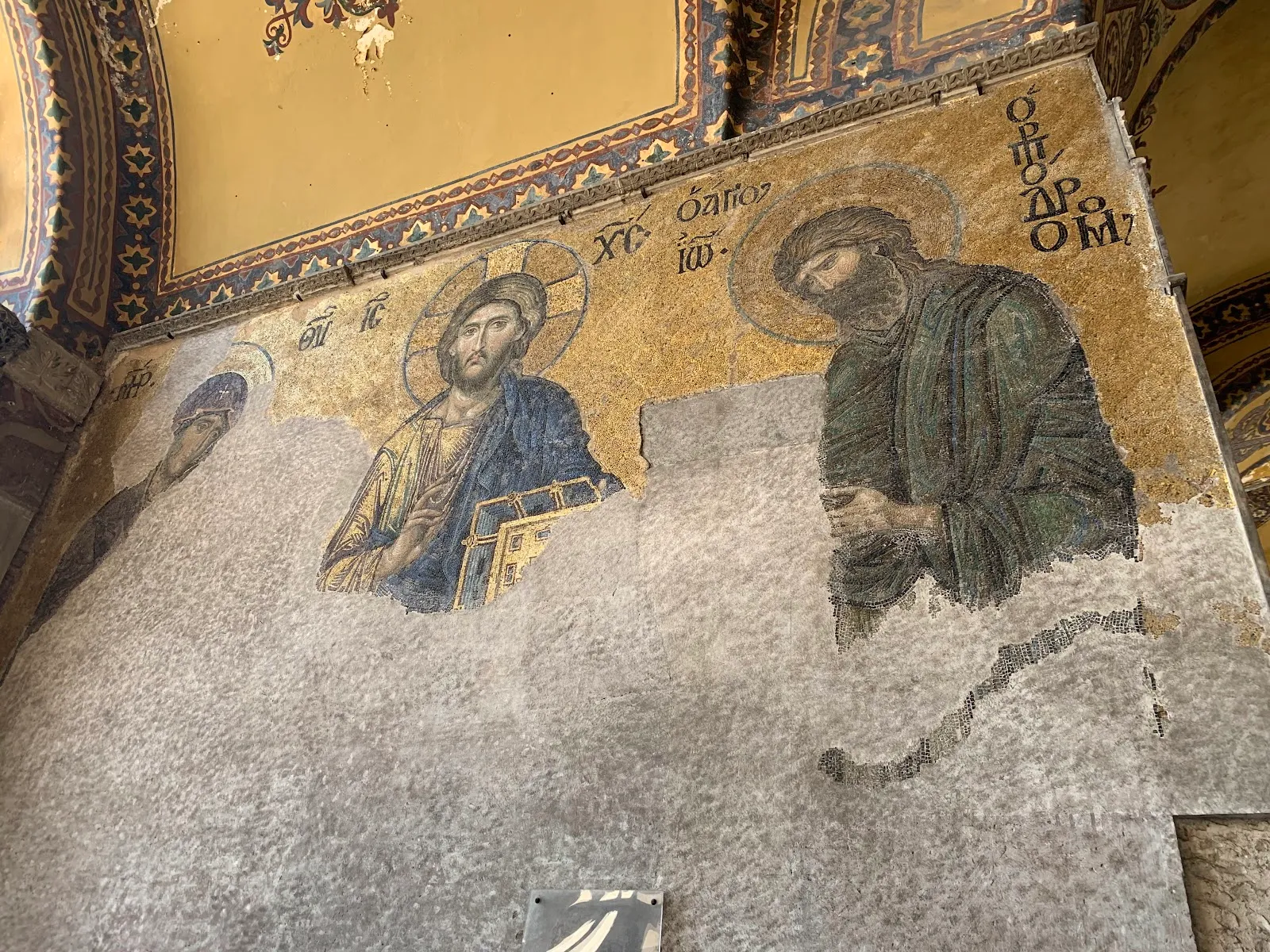
Those changes are visible in the building’s religious and artistic layers. Byzantine mosaics sit alongside Islamic calligraphy, reflecting its different periods of worship. Hagia Sophia is an active mosque today, so access and what you can see may depend on the areas open to visitors.
The dome and interior
The central dome is the defining feature of Hagia Sophia’s interior. Its scale and the way it rises above the columns make the building’s architecture easier to appreciate from inside than from the surrounding square. The design is associated with Byzantine architecture and influenced later Ottoman mosque building.
Look for the mosaics and calligraphy as you move through the interior. Some Christian imagery has been covered or is not accessible in certain areas, so you may not be able to see every part of the decoration. The building’s history is present in the contrast between these works and its continuing role as a place of Muslim worship.
Planning a respectful visit
Hagia Sophia is in Sultanahmet, opposite the Blue Mosque. Because it remains an active place of worship, dress respectfully and follow on-site instructions. Some areas are restricted to Turkish nationals, so check access arrangements before you visit.
Queues can build up, and advance ticket purchase is recommended in the supplied visitor information. A visit around 18:00 is suggested as a time when lines may be shorter. The listed address is Ayasofya Meydanı No:1 in Fatih.
FAQ
Is Hagia Sophia a mosque or a museum?
It is currently an active mosque. The building served as a museum from 1935 until it returned to mosque use in 2020.
What should I look for inside Hagia Sophia?
Look up at the central dome and notice the Byzantine mosaics and Islamic calligraphy. Access to some areas and images may be limited.
How long should I plan for a visit?
Allow about 1 to 2 hours to explore the building.
When is a quieter time to visit?
Around 18:00 is suggested as a time when queues may be shorter.


