Wat Ratchanatdaram Worawihan is a Buddhist temple in Bangkok’s Phra Nakhon district, best known for Loha Prasat, the seven-storey Metal Castle. Its 37 metal spires represent virtues associated with the path to enlightenment. You can walk through the building, read Buddhist teachings and reflections on its walls, and take in views across Bangkok’s historic district from the upper level. The temple was commissioned by King Rama III for his granddaughter. It is a quieter stop than some of Bangkok’s better-known temples, with another hall and its murals to see nearby.
Loha Prasat and its 37 spires
The centrepiece of Wat Ratchanatdaram is Loha Prasat, a name that means “metal castle” or “iron monastery.” Its seven-storey form rises above the surrounding temple buildings, crowned by 37 metal spires. The number refers to the 37 Bodhipakkhiya Dharma, Buddhist qualities associated with the path to enlightenment.
The structure is reported to be 36 metres high. Its design draws on earlier metal-castle temples in India and Sri Lanka, both of which no longer survive. Loha Prasat is described as the only remaining temple of this kind. The spires and tiered form give the building a markedly different profile from Bangkok’s more familiar temple roofs.
A royal commission, completed over time
King Rama III commissioned the temple in 1846 for his granddaughter, Princess Somanass Wattanawadi. Construction of Loha Prasat began during his reign but was not finished then. Work resumed under King Rama IX in 1960, and the building was opened to the public in 2007.
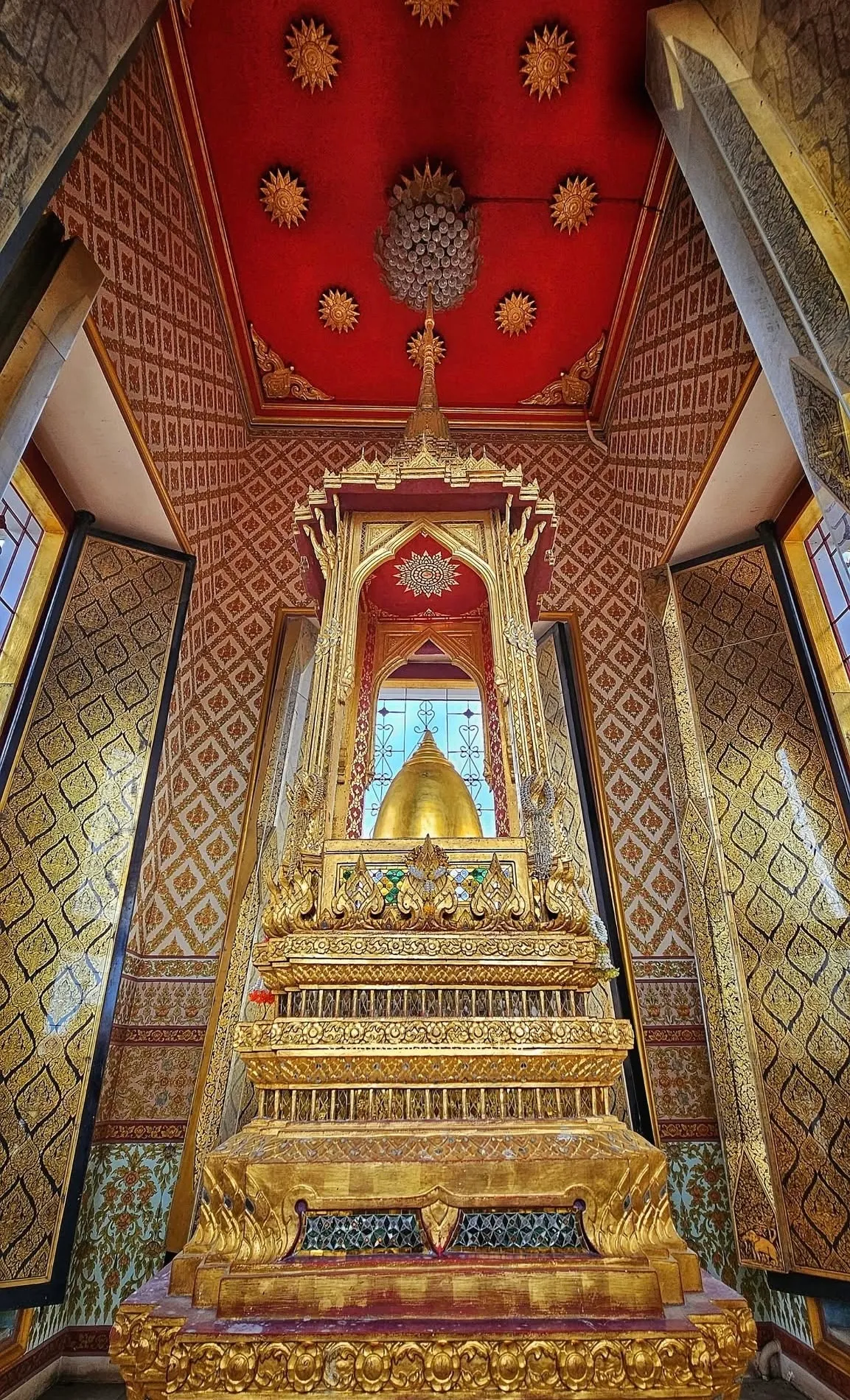
A Buddha relic was enshrined in the uppermost spire in 1995. The structure’s history is therefore tied both to its royal commission and to its Buddhist purpose. The name Wat Ratchanatdaram is translated as “Temple of the Royal Niece.”
Inside the building
The interior is arranged across seven levels. As you move through it, light enters from the sides, while the walls carry Buddhist teachings, meditation guidance and short reflections. The walk through the building gives you time to pause and read, as well as to look at the structure from within.
At the highest level, visitors can walk around the floor and look out over Bangkok’s historic district. The views provide a different perspective on the surrounding temples and city. The Buddha relic is enshrined in the topmost spire.
Other buildings in the temple grounds
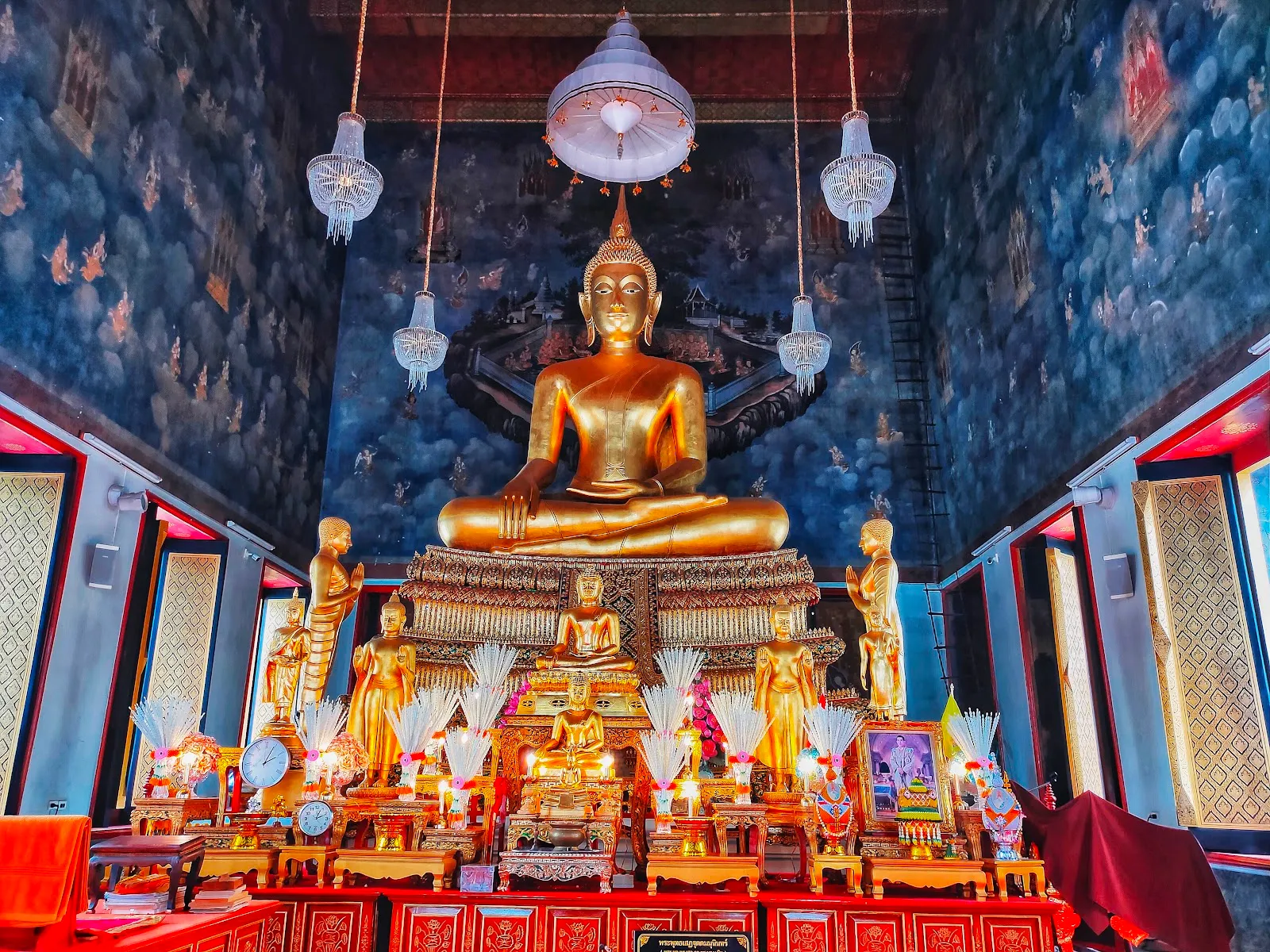
Wihan Phra Chutithamnarasop stands beside Loha Prasat. It houses the Buddha image Phra Phuttha Chuthamnarasop, shown in a subdued posture. Its murals have floral motifs, a detail worth taking time to see after exploring the Metal Castle.
The temple is at 2 Maha Chai Road in Phra Nakhon. It is close to Wat Saket and within walking distance of Khaosan Road, so you can include it alongside other stops in Bangkok’s historic district. The grounds are described as a peaceful place to walk and pause; visitors who want to explore the interior should check the listed entry fee before going.
FAQ
What is Loha Prasat?
Loha Prasat means “metal castle” or “iron monastery.” It is the seven-storey structure at Wat Ratchanatdaram, topped by 37 spires.
What do the 37 spires represent?
They refer to the 37 Bodhipakkhiya Dharma, Buddhist qualities associated with the path to enlightenment.
How much is entry to Loha Prasat?
The listed entry fee for foreign visitors is 20 baht.
How long should I spend at Wat Ratchanatdaram?
Allow 1 to 2 hours to explore Loha Prasat, take in the upper-level views and visit Wihan Phra Chutithamnarasop.