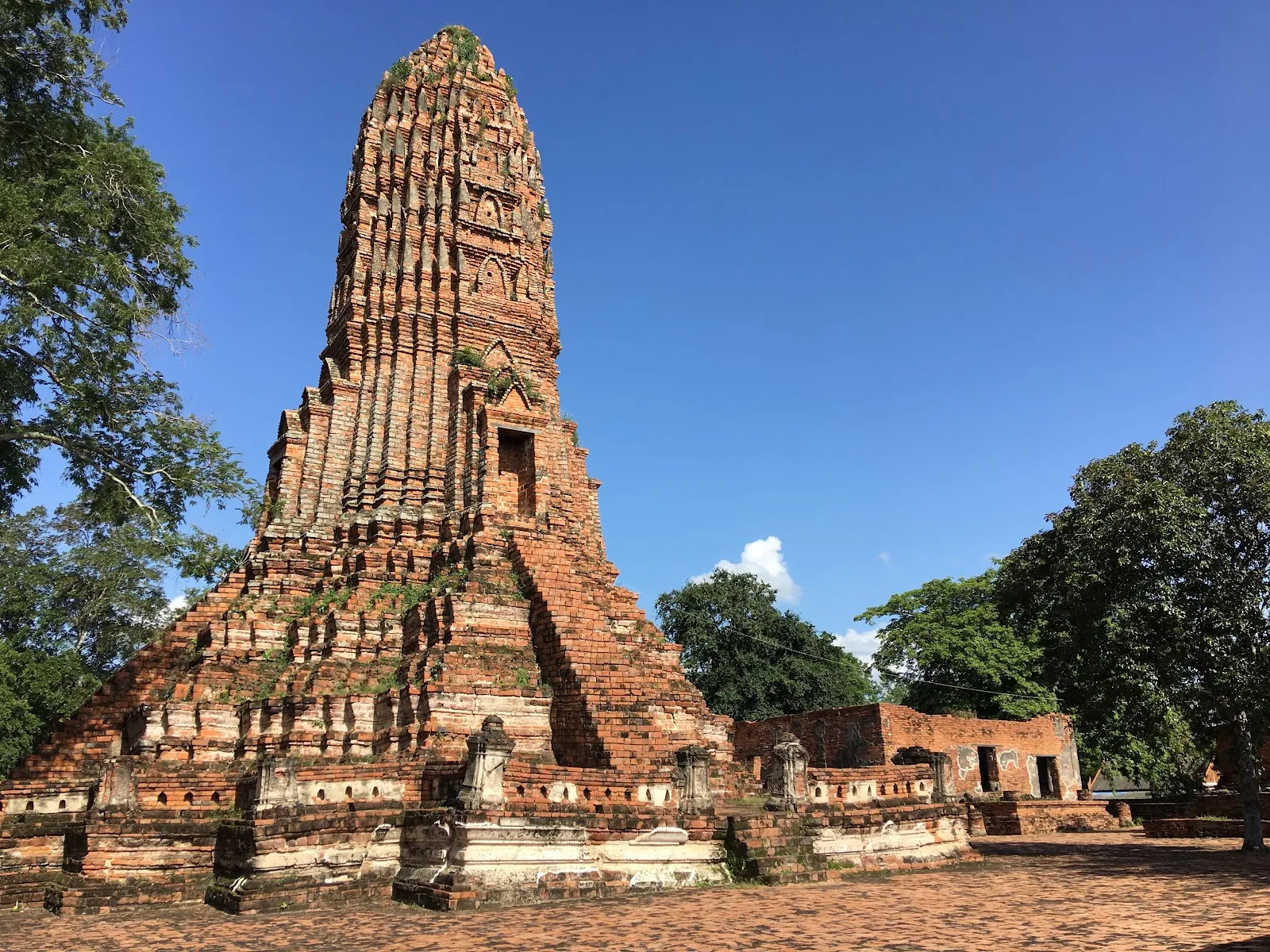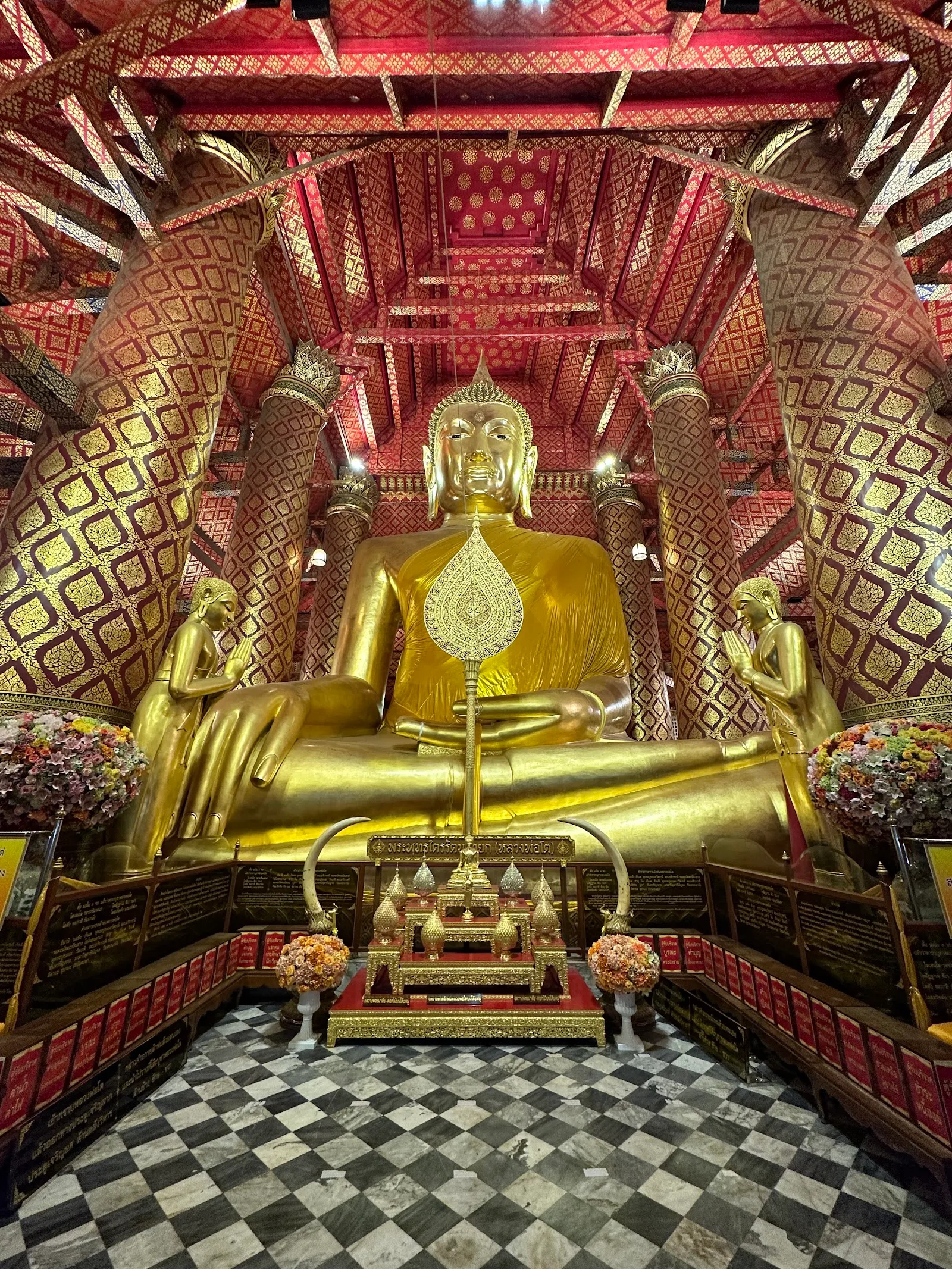
Wat Phanan Choeng Worawihan is a working Buddhist monastery on the riverbank at the southeast edge of Ayutthaya, across the water from the old city island. Its centre is Luang Pho To, a gilded seated Buddha about 19 metres high, revered above all by people who travel by water. The temple is traditionally dated to 1324, before Ayutthaya became the capital. Come for the great image in its hall, the Thai and Chinese details around the grounds, and the pier where visitors feed the fish. Take off your shoes at the main hall and dress modestly.
Luang Pho To, the great seated Buddha
The main image is a gilded Buddha seated in the posture of subduing Mara. It stands about 19 metres high and 14 metres wide. Thai worshippers call it Luang Pho To. Chinese devotees know it as Sam Po Hut Kong and honour it as a protector of seafarers. That link to the water explains why many visitors arrive with offerings.
The image was first built without a hall around it, so it could be seen from far off along the river. Today it sits inside a tall hall, and its size is striking in the enclosed space. The Buddha is draped in saffron robes. Visitors who time it well may see the ceremony in which the robe is changed.
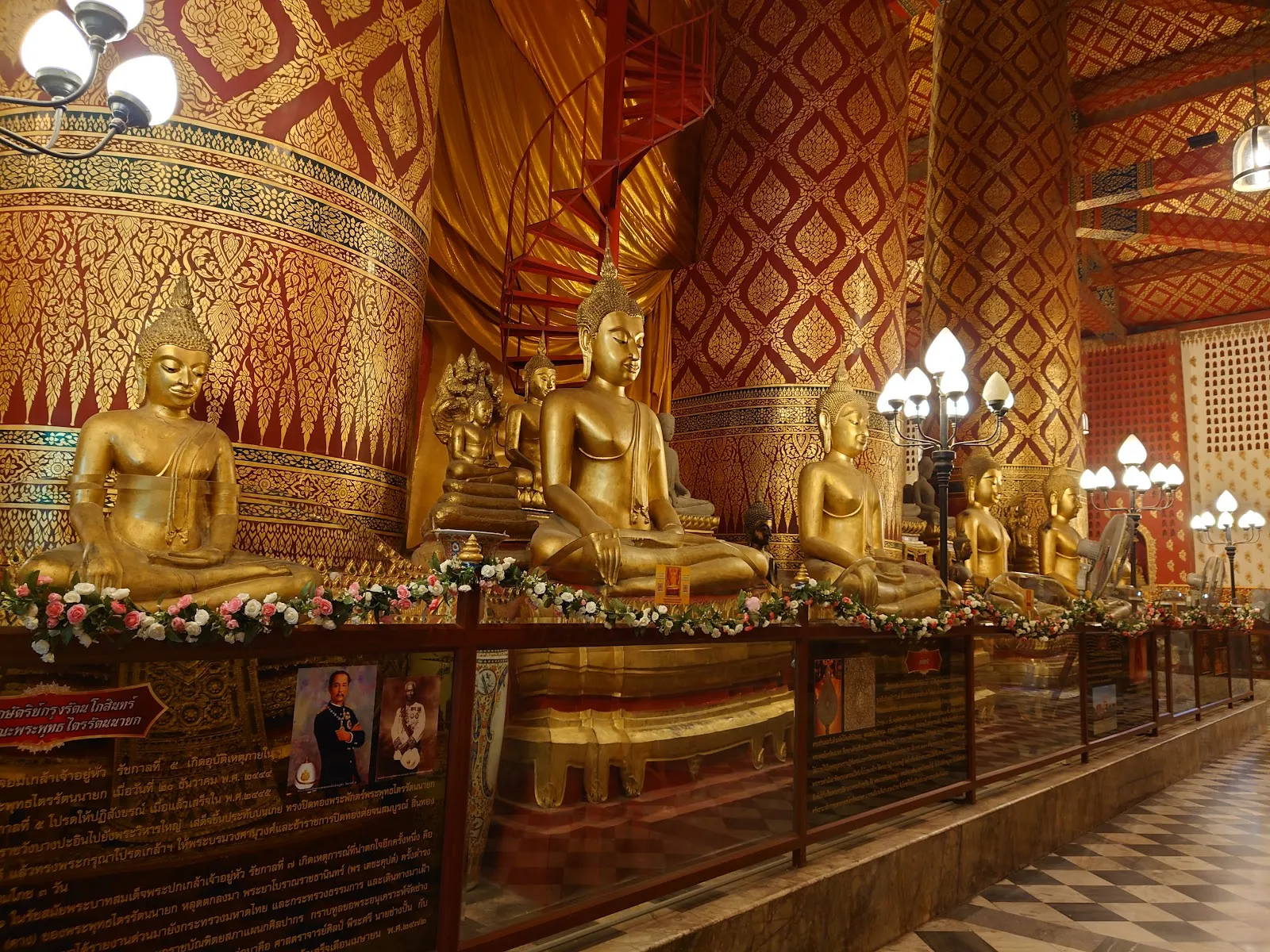
Small Buddha images line the walls of the hall, and devotees can donate to have one placed there. One account puts the donation at about 500 baht.
A temple older than Ayutthaya
The temple is traditionally dated to 1324, about 26 years before Ayutthaya was founded as a capital. No record of its construction survives, so the earliest history rests on tradition. One account says the Chinese admiral Zheng He visited in 1407, which is part of why the temple is popular with Chinese visitors.
A story tells that the image shed tears in 1767, when Burmese forces took Ayutthaya. Most of the city was left in ruins, but this temple kept its Buddha and its worshippers.
The buildings have been repaired many times over the centuries, including a large restoration under King Rama IV in 1854. That is why the temple looks newer than its age. Unlike the ruined sites on the island, it is a living monastery.
The halls and the riverfront
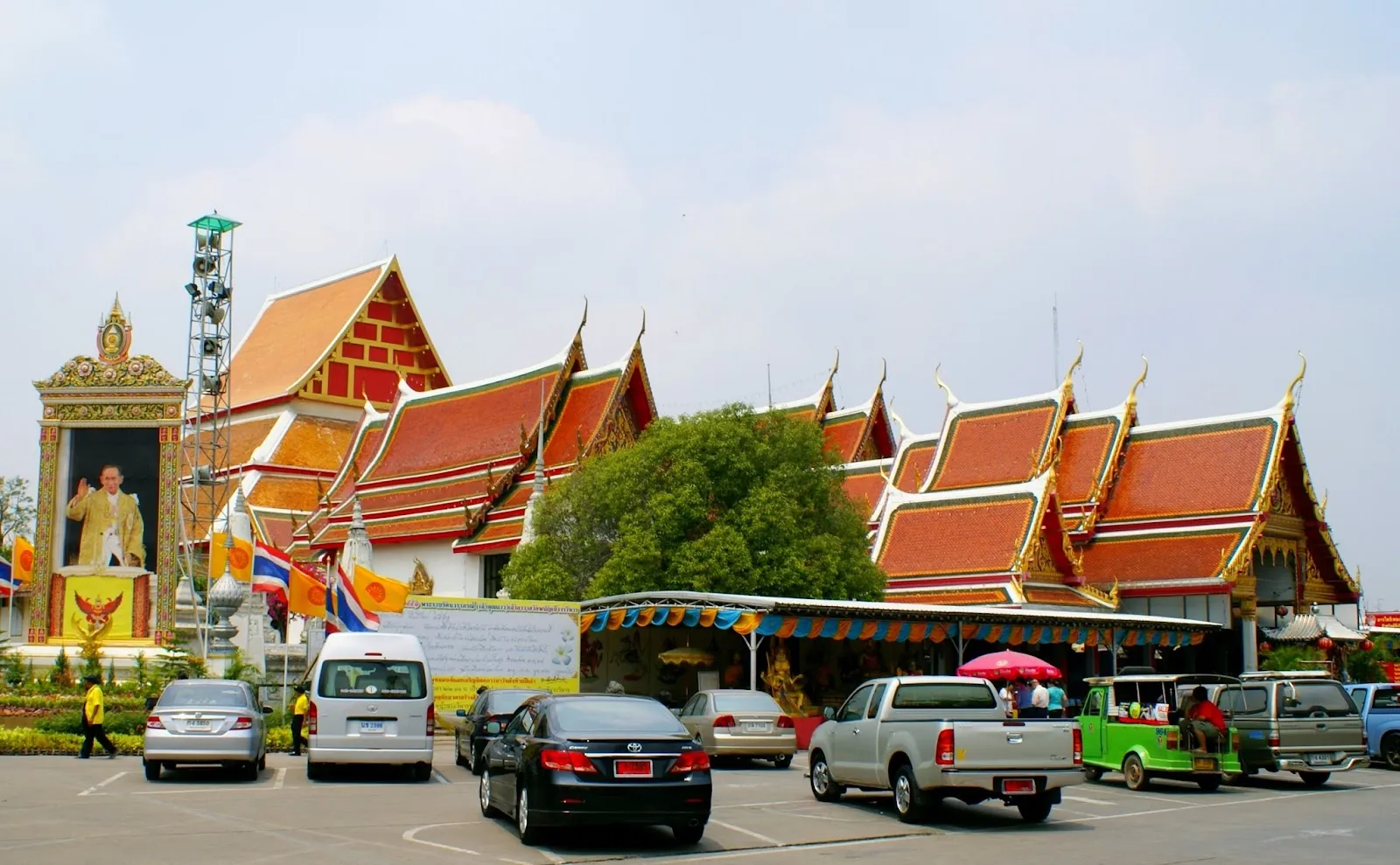
Beyond the main hall, walk through the other halls. Two smaller wihans have wooden panelling worth a look, and there are galleries with further Buddha images. Chinese-style architecture runs along the riverfront, and the grounds are wide, clean and kept up.
The pier is where most people stop to feed the fish. Large catfish gather at the water's edge and fight for the food thrown to them. They are regarded as holy by worshippers at the temple, so fishing here is not appropriate. Vendors sell fish food nearby.
Merit-making ceremonies take place beneath the Buddha, and the main hall is often full of people chanting and bringing offerings. If you come during a ceremony, keep your voice low and stay out of the way of worshippers.
Getting there and visiting with respect
From the old city island, a short ferry crosses the river to the temple. There is also a large parking lot. The entrance, restrooms and parking are wheelchair accessible. The temple appears on many Ayutthaya day tours and boat trips, and some combine it with Wat Yai Chai Mongkhon or Wat Chaiwatthanaram.
This is an active temple, so the usual customs apply. Dress modestly, remove your shoes before the main Buddha hall, and keep to the walkways during prayers. Many pairs of shoes are left outside, so expect a crowd at the door on busy days.
FAQ
What is Wat Phanan Choeng known for?
It is known for Luang Pho To, a gilded seated Buddha about 19 metres high. The temple is traditionally dated to 1324, before Ayutthaya became the capital.
What should I wear to Wat Phanan Choeng?
Dress modestly, with shoulders and knees covered, as at other Thai temples. You must take off your shoes before entering the main Buddha hall.
How do you get to Wat Phanan Choeng from the old city?
A short ferry crosses the river from the old city island. The temple also has a large parking lot, and it is included in many Ayutthaya day tours and boat trips.
How long do you need at Wat Phanan Choeng?
Allow 45 to 90 minutes. That is enough for the main hall, the other halls and the riverfront pier.
Can you feed the fish at Wat Phanan Choeng?
Yes. Fish food is sold near the river, and visitors feed the large catfish from the pier. The fish are regarded as holy, so do not fish here.