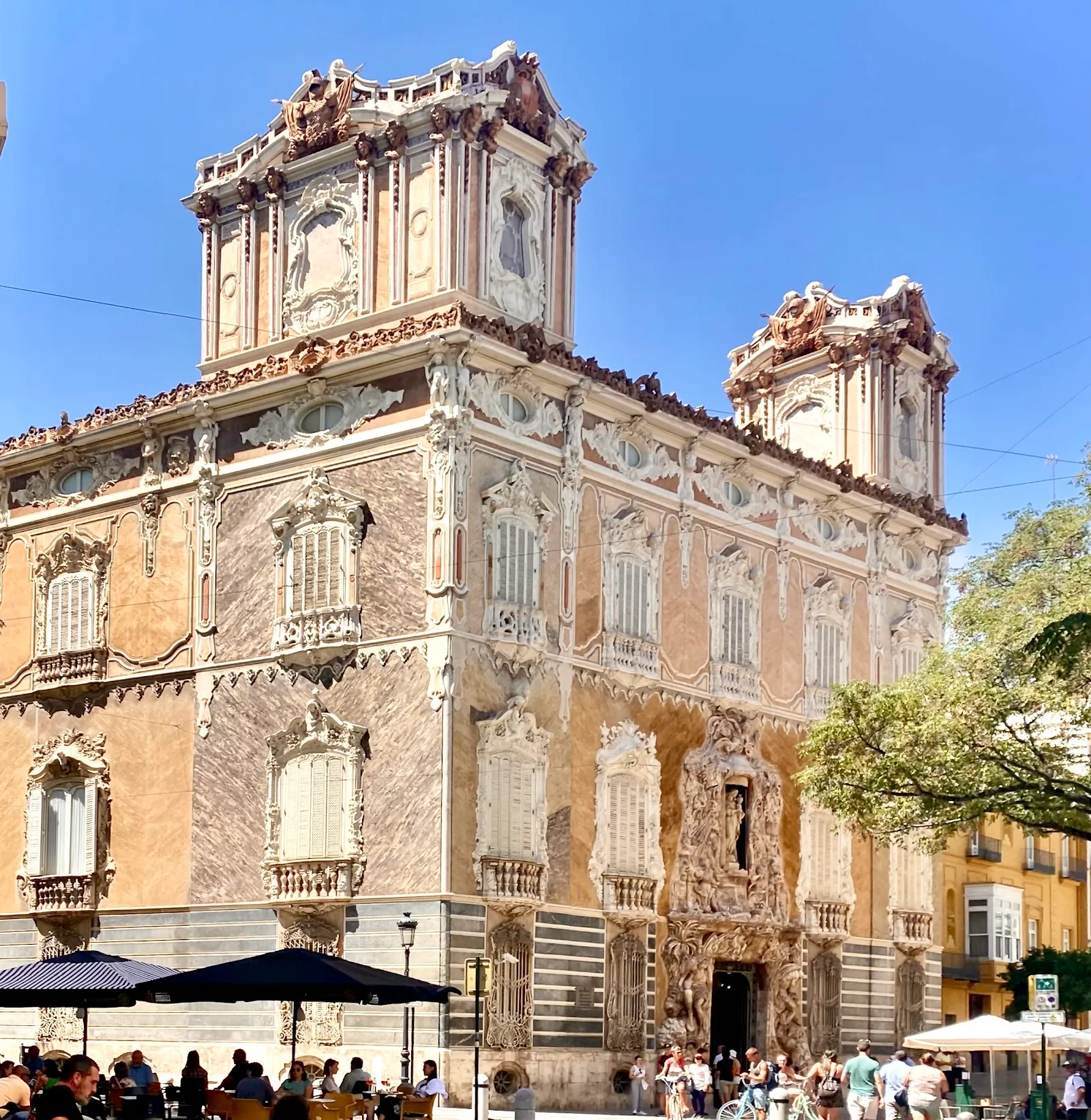
The National Museum of Ceramics and Decorative Arts is housed in the Palacio del Marqués de Dos Aguas in Valencia’s Ciutat Vella. Its ornate Rococo rooms are part of the visit, alongside ceramics from different periods and traditional Valencian tiles. Look for the palace’s elaborate alabaster entrance, historic rooms and collection of carriages. Information cards in several languages help you follow the displays. The museum has permanent and temporary exhibitions, though which rooms are open can change during renovation work.
A palace as part of the collection

The museum occupies the Palacio del Marqués de Dos Aguas, a building with a history reaching back to the 15th century. It was renovated in 1740 in the Rococo style. The palace is not simply a setting for the collection: its rooms and decorative details are a major part of what you see inside.
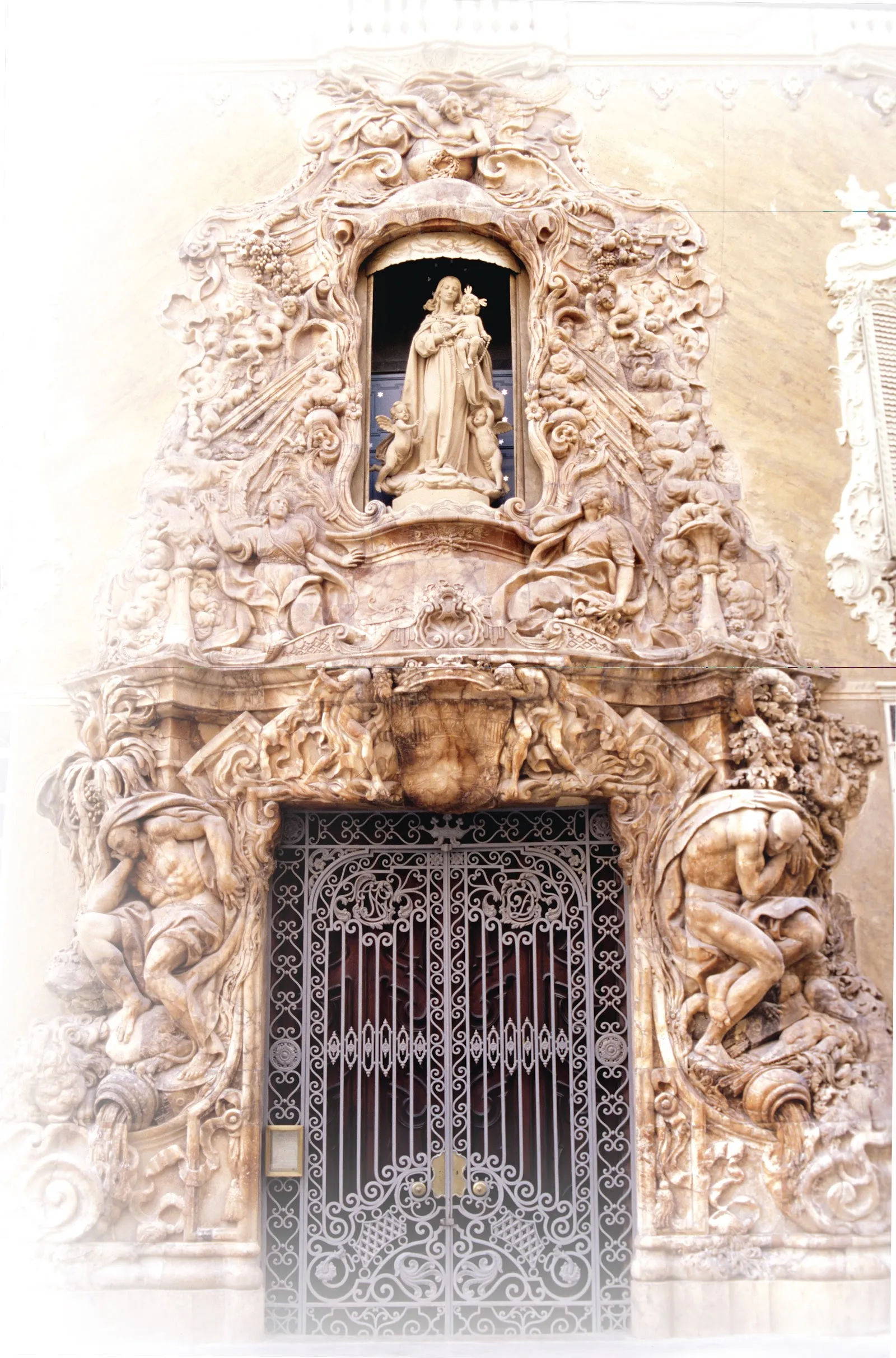
The alabaster entrance is especially elaborate. A statue of the Virgin Mary stands above it, with jugs on either side pouring streams that symbolize the Júcar and Turia rivers. The façade’s curling forms make it worth looking at closely before entering.
Rococo rooms and historic objects
Inside, ornate stucco, decorative panels and elaborate upholstery give the palace rooms a strong visual presence. The displays place ceramics alongside interiors that show how wealth and status were expressed in a historic home. The contrast between the richly decorated rooms and the objects displayed in them is part of the experience.
The collection includes ceramics from different periods and styles, as well as decorative arts such as glassware and jewellery. A hand-painted carriage is among the objects to look for. Historical and modern works appear alongside one another in parts of the museum, bringing different approaches to ceramics into view.
Ceramics from different eras
The displays cover a long history of ceramic work, including medieval pieces and works from later periods. Traditional Valencian ceramics and tiles made at the Royal Ceramics Factory in Alcora are among the highlights. The museum also includes modern ceramics, with works that show how the medium continued beyond its older forms.
A Valencian kitchen is another detail to look for in the displays. The collection’s range makes it useful to take your time rather than focus only on the palace rooms. Information cards in several languages provide context throughout the galleries, although the connection between some explanatory material and the individual pottery pieces can take a little effort to follow.
Planning your visit
The museum has permanent and temporary exhibitions, but renovation work has affected access to some rooms at times. Check current visitor information before setting aside time for particular galleries. The available route may not include every floor or display during works.
Sunday admission is free, and online ticket booking is suggested for busy periods. Plan for a visit of around two to three hours if you want time for both the palace interiors and the collections. A lift has sometimes been unavailable, so visitors who need step-free access between floors should check its current status before arriving.
FAQ
Where is the National Museum of Ceramics in Valencia?
It is inside the Palacio del Marqués de Dos Aguas at C. del Poeta Querol, 2, in Ciutat Vella.
Is admission free on Sundays?
The information provided states that admission is free on Sundays.
How long should I allow for a visit?
Allow around two to three hours to explore the palace and collections.
What can I see at the museum?
The displays include ceramics from different periods, traditional Valencian tiles, decorative arts and a hand-painted carriage. The palace’s Rococo rooms are also part of the visit.