Beside Seville Cathedral, the Archivo de Indias brings Spain’s colonial-era records into a former merchants’ exchange. The archive holds millions of pages on the Spanish Empire in the Americas and the Philippines, with maps, letters and other documents shown in exhibitions. The Renaissance building is a draw in its own right: look up at the vaulted ceilings and take in the rooms, then catch views of the cathedral from the upper-floor windows. Entry is free, so it fits easily into a visit to the nearby cathedral or Alcázar.
From merchants’ exchange to royal archive
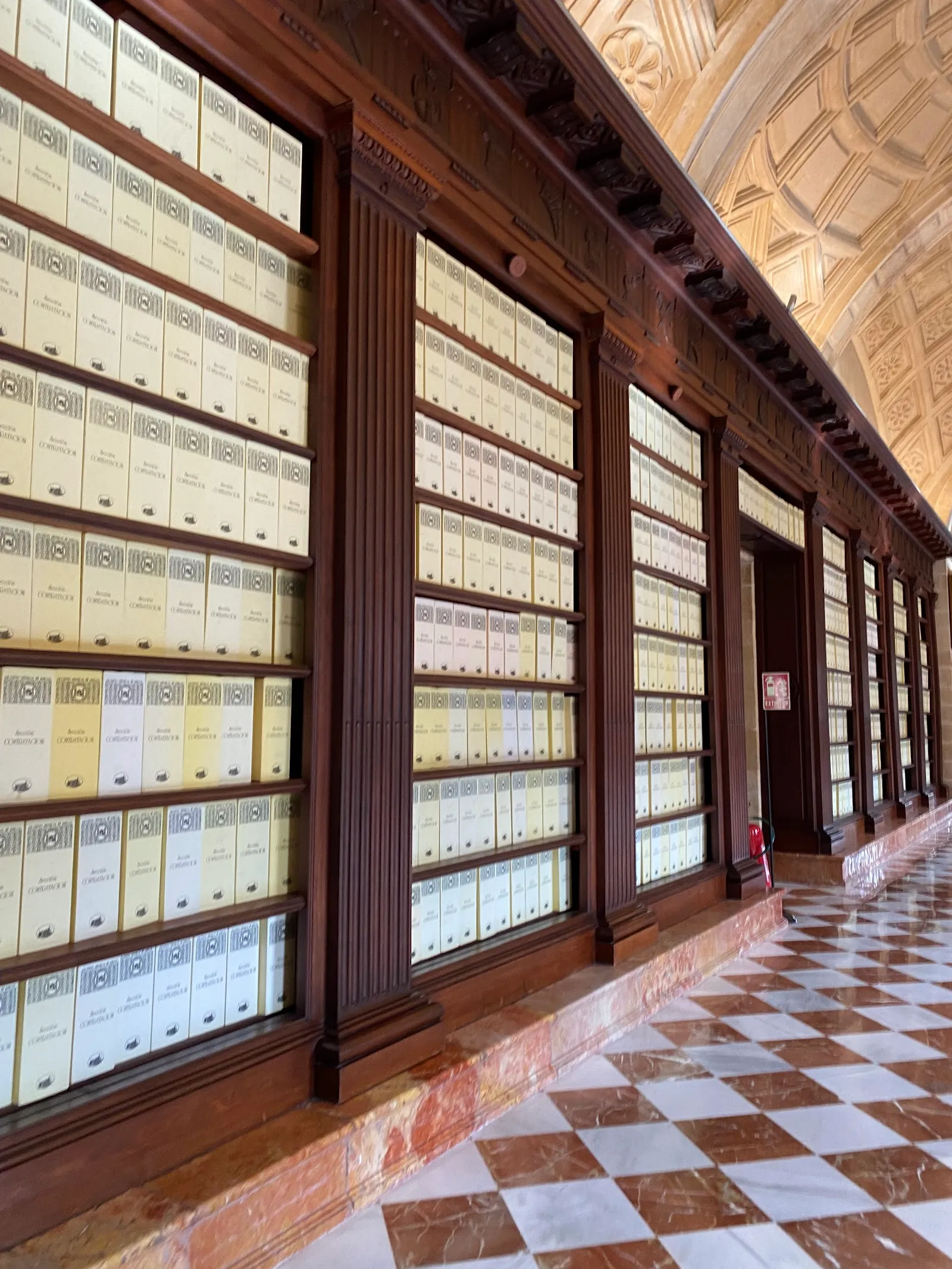
The Archivo de Indias is housed in the Casa Lonja de Mercaderes, a Renaissance building originally used as Seville’s merchants’ exchange. Its design is attributed to Juan de Herrera. The building was constructed in the late 16th and early 17th centuries, when Seville was a centre of trade with the Americas.
In 1785, Charles III ordered that records concerning Spain’s overseas territories be brought together in one archive. Before that, documents were held in several places, including Seville, Valladolid, Madrid and Cádiz. The archive’s purpose was to gather administrative records connected with the Spanish Empire. Today, the collection documents the history of Spain’s territories in the Americas and the Philippines.
Documents, maps and exhibitions
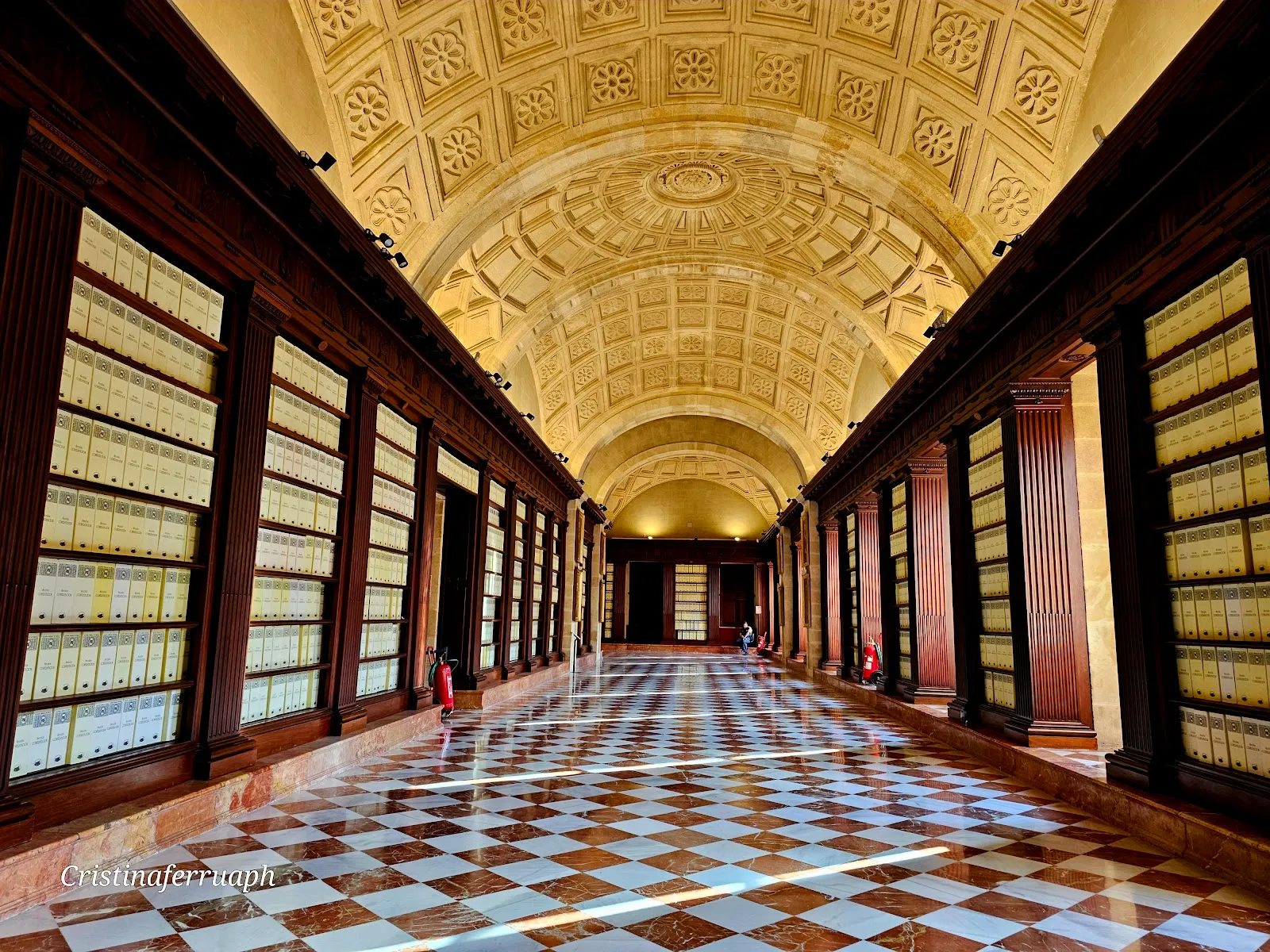
The archive contains tens of millions of pages of historical material, including letters, maps, drawings and records of trade and administration. Exhibitions display selected documents and offer a way to explore the collection without trying to take in its full scale. Some materials relate to figures such as Christopher Columbus, Hernán Cortés and Francisco Pizarro.
Among the items connected with the archive is an original copy of the 1494 Treaty of Tordesillas, which divided newly encountered lands in the Americas between Spain and Portugal. Exhibitions can also include maps of the Spanish Empire and documents related to the exploration and governance of Spain’s overseas territories. What is on display can include temporary exhibitions as well as the permanent collection.
The building and its setting
The former exchange is worth seeing for its interior as well as its archival displays. Inside, rooms with vaulted ceilings and other architectural details give a sense of the building’s formal Renaissance design. A black-and-white checkerboard floor is also noted among the interior features. From upstairs, windows look out towards Seville Cathedral and the Alcázar.
The archive stands beside the cathedral in Seville’s historic centre, making it easy to include alongside the city’s nearby landmarks. Its free entry and compact visit make it a useful change of pace if the cathedral area feels crowded. Allow for a security scan when entering, and check the current opening hours before setting out.
FAQ
Is entry to the Archivo de Indias free?
Yes. Entry is free.
How long does a visit take?
Around 30 minutes is enough for a short visit to the rooms and exhibitions.
What can you see inside the Archivo de Indias?
Exhibitions include historical documents and maps relating to Spain’s overseas territories in the Americas and the Philippines. The building’s Renaissance interiors are also part of the visit.
Where is the Archivo de Indias?
It is beside Seville Cathedral in the city’s historic centre, close to the Real Alcázar.