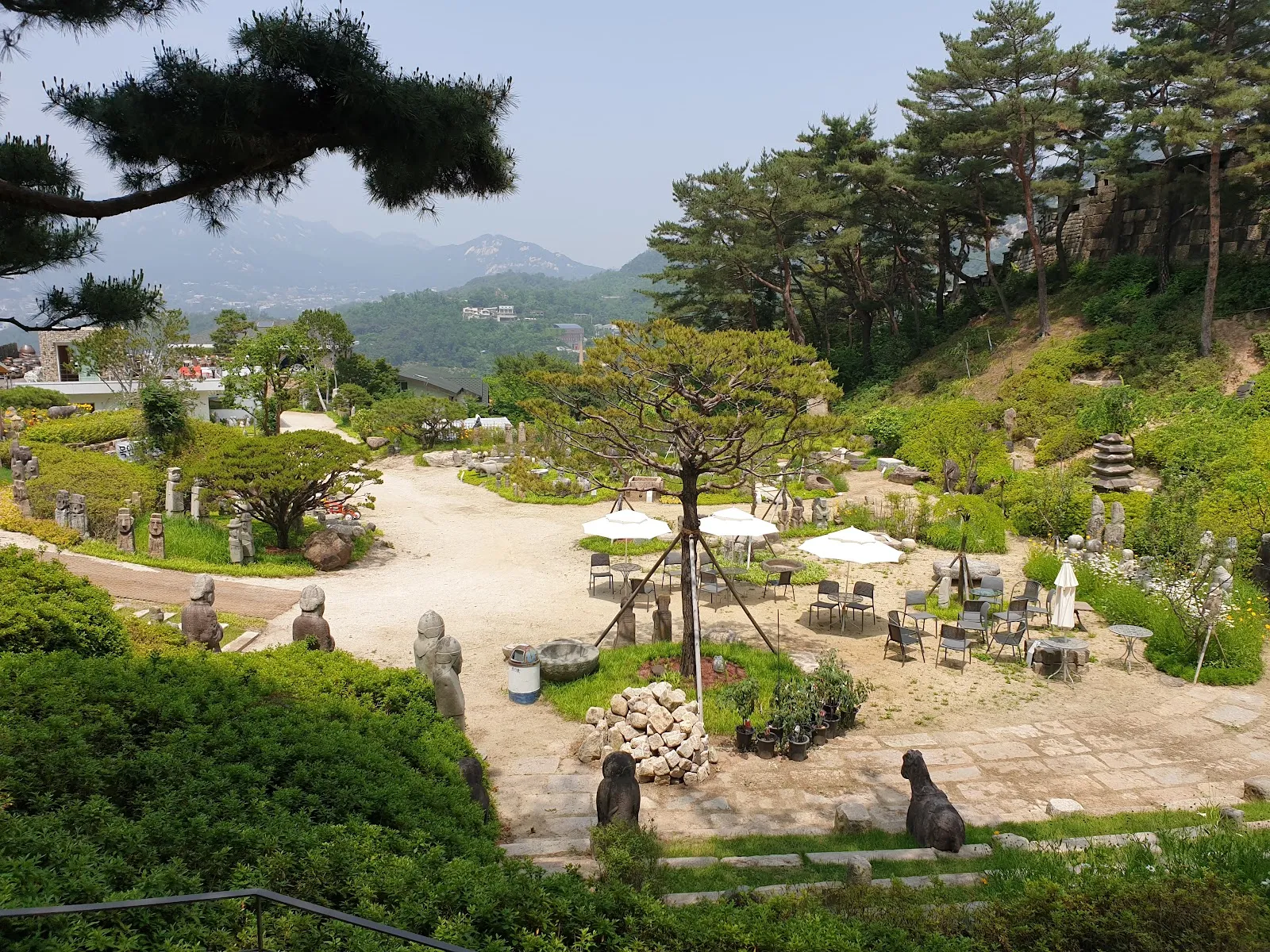
Gyeongbokgung Palace is Seoul’s largest royal palace, at 161 Sajik-ro in Jongno District. Built in 1395 as the main palace of the Joseon dynasty, it has broad courtyards, decorated halls, gardens and mountain views. Watch for the changing of the guard at the main gate, then walk farther into the grounds to see quieter corners and traditional architecture. You can also visit the National Palace Museum of Korea and the National Folk Museum within the complex. Wearing a hanbok qualifies you for free admission; otherwise, the entrance fee is KRW 3,000.
The Joseon dynasty’s main palace
Gyeongbokgung was built in 1395, soon after the Joseon dynasty established its capital in Seoul, then known as Hanyang. It was the dynasty’s main palace and a centre of royal and government life. Its name is commonly translated as “Palace Greatly Blessed by Heaven.”
The palace was badly damaged during the Japanese invasion in the 1590s and remained in disrepair for about 270 years. Reconstruction began in 1867, during the reign of King Gojong. The complex was damaged again during Japan’s occupation of Korea in the early 20th century, and many buildings now on the grounds were restored in more recent decades. The site’s present-day appearance brings together historic structures and later restoration.
Halls, courtyards and gardens
This is a palace complex, not a single building. Its grounds include gates, ceremonial halls, courtyards, pavilions and gardens. The scale becomes clearer as you move beyond the main entrance: large open spaces give way to quieter sections, including the area around Gyotaejeon and Amisan.
Look up at the painted beams and rooflines, and take time to notice the stone paths and garden details. The palace’s layout reflects Confucian principles, with distinct spaces for public and private functions. Mountains frame views across the grounds, especially near the main gate, where the palace architecture and natural backdrop come together.
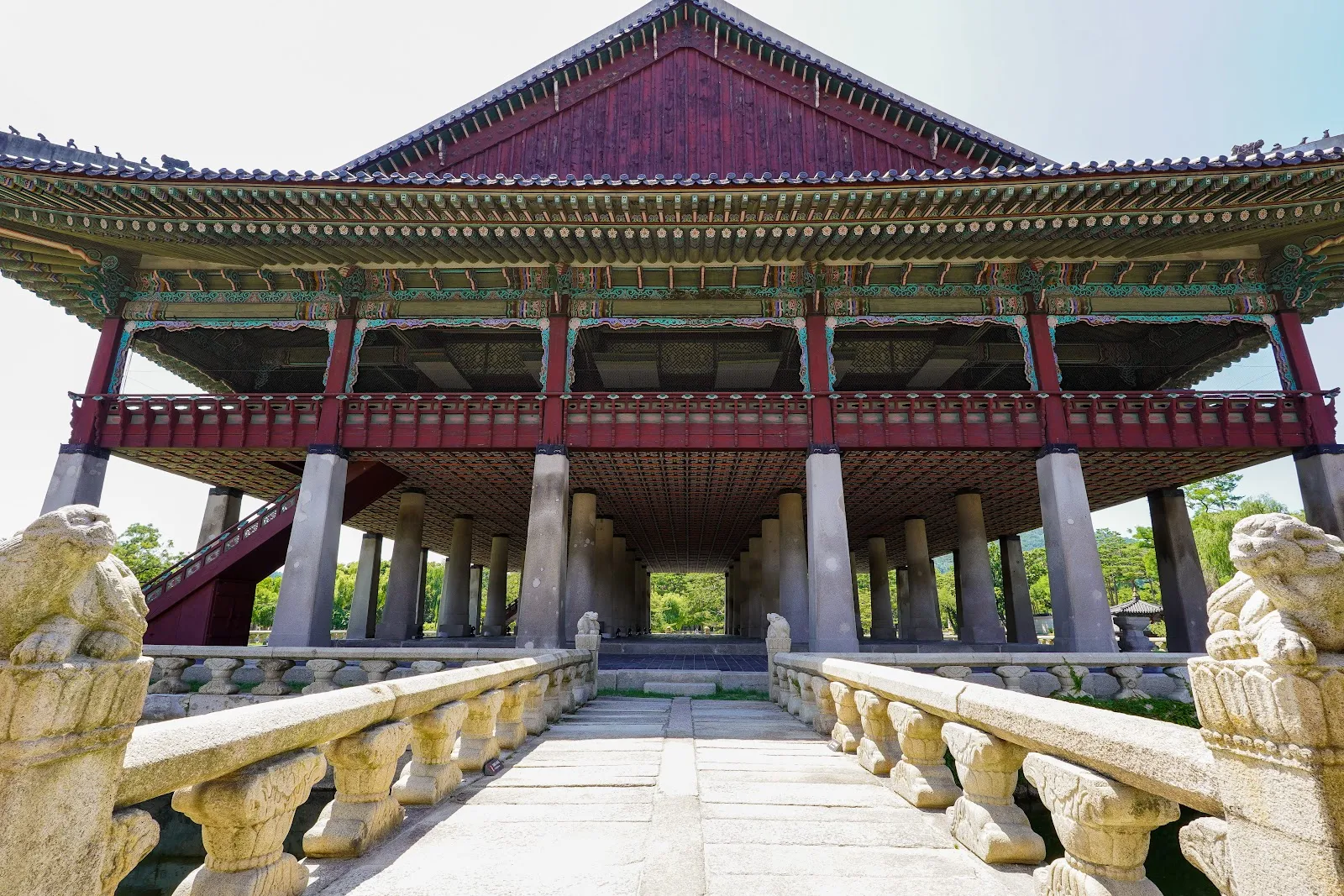
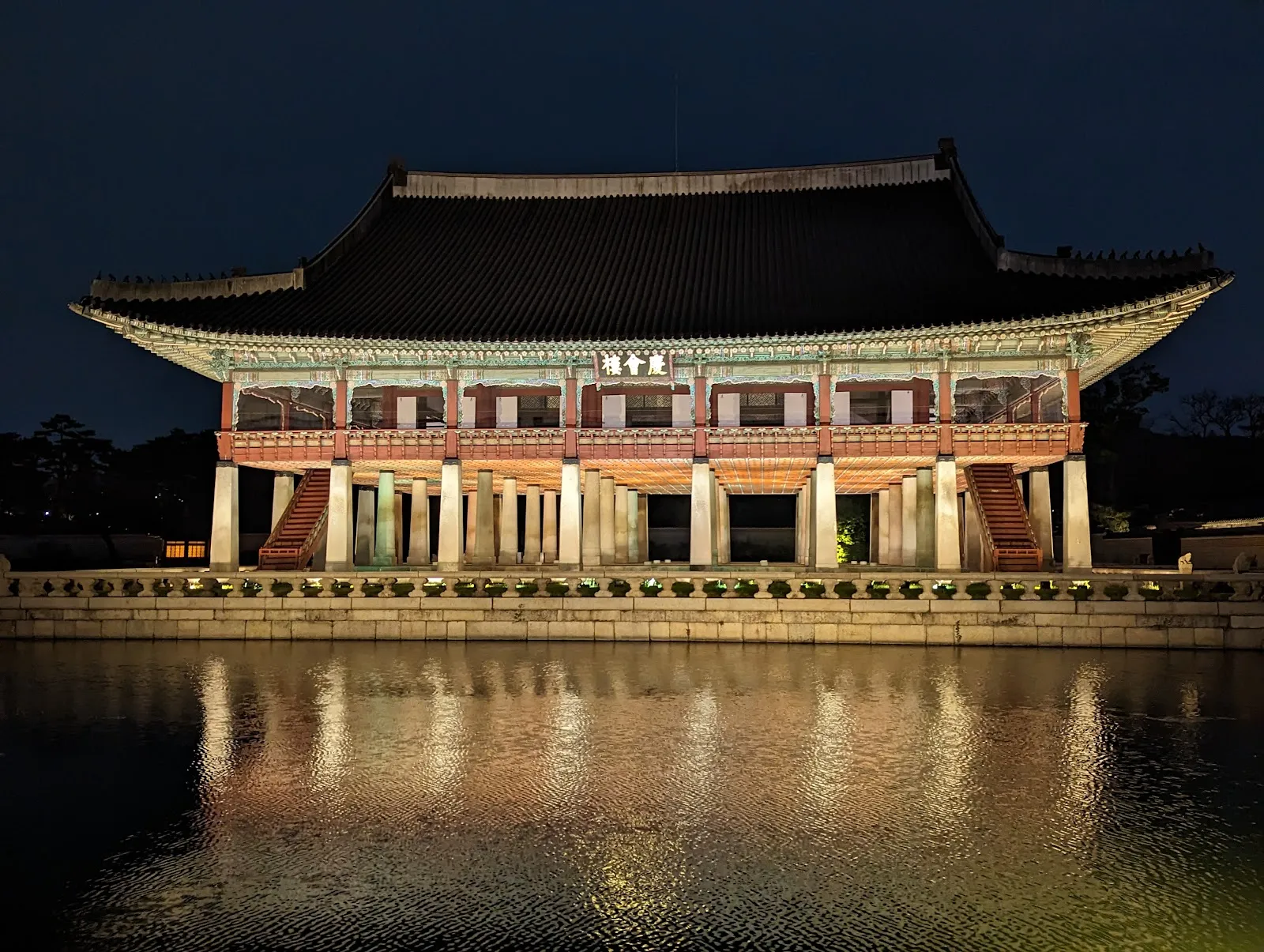
Gyeonghoeru Pavilion and Hyangwonjeong Pond are among the complex’s notable features. The banquet pavilion sits beside an artificial lake, while the pond and its pavilion offer a quieter setting away from the broad ceremonial spaces. The National Palace Museum of Korea and the National Folk Museum of Korea are also within the palace grounds.
The guard ceremony and planning your visit
The changing of the guard takes place at Gwanghwamun, the palace’s main gate. The ceremony is a colourful display of traditional dress and choreographed movement. Its schedule is not consistent across the information available, so check the current timetable before planning your arrival around it.
Arriving early can help you see the grounds before they grow busier. If you want to watch the ceremony, check where it takes place and arrive ahead of time to choose a viewing spot. Afterward, head into the palace rather than staying only near the entrance; the complex has plenty to explore beyond the busiest photo areas.
A complete hanbok, including a modernized version, qualifies for free admission. Otherwise, the listed entrance fee is KRW 3,000. A map can help you navigate the large grounds, and a guided tour can add context to the buildings and the palace’s history. Plan for substantial walking over paths that can be uneven, and bring water and snacks, as options inside may be limited or crowded.
FAQ
How much does it cost to enter Gyeongbokgung Palace?
The entrance fee is KRW 3,000. Visitors wearing a complete traditional or modernized hanbok can enter for free.
How long should I spend at Gyeongbokgung Palace?
Allow about 3 to 5 hours to walk through the extensive grounds and explore the palace buildings.
Can I see the changing of the guard?
The ceremony takes place at Gwanghwamun Gate. Check the current schedule before your visit, as ceremony times vary across available information.
What should I bring for a visit?
Wear comfortable shoes for extensive walking on sometimes uneven paths. Bring water and snacks, as options inside may be limited or crowded.