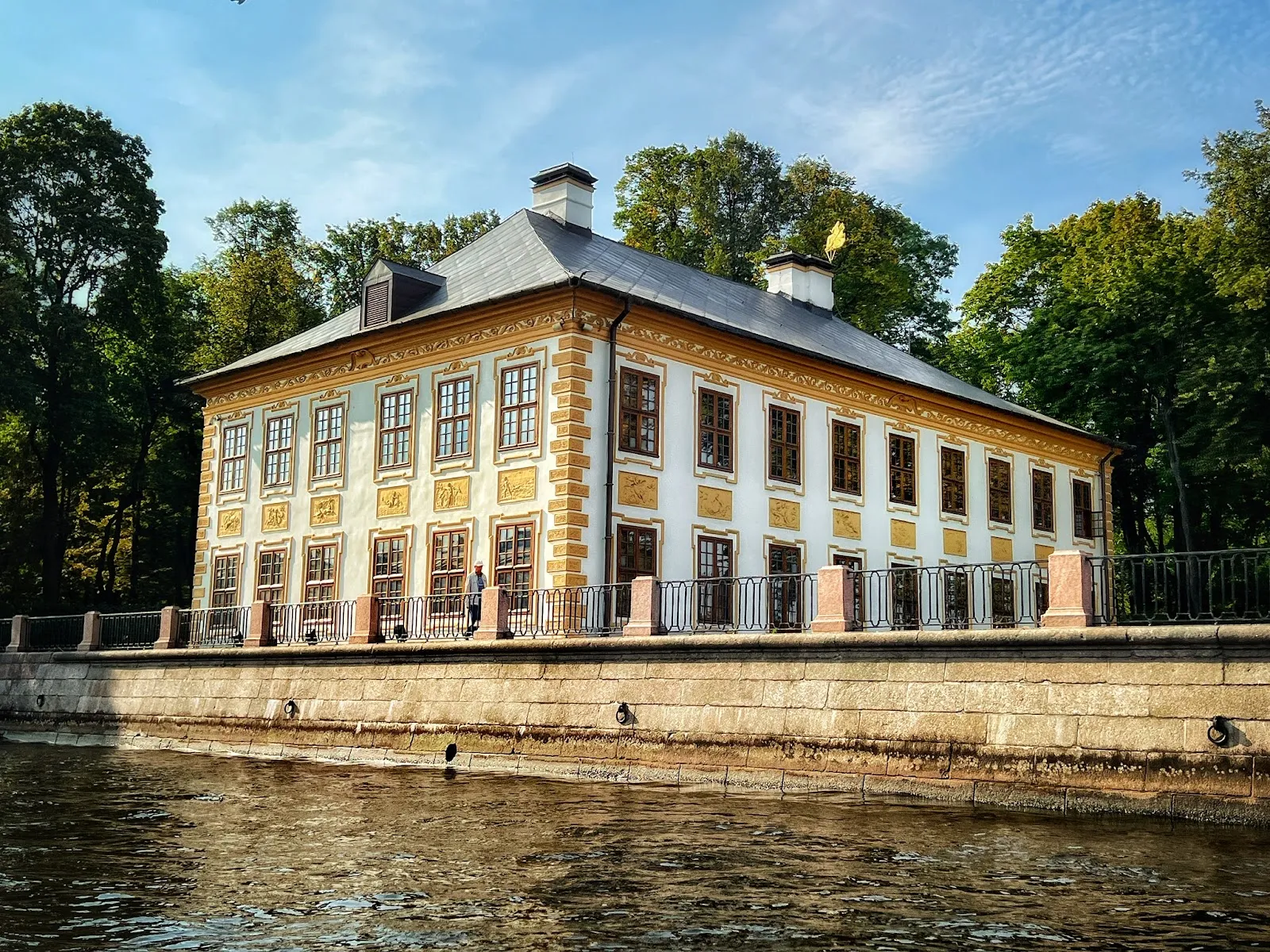
Built between 1710 and 1714 in the Summer Garden, the Summer Palace of Peter the Great was the first palace built in St Petersburg. Its compact, Dutch-style exterior is a striking contrast to the city’s grander imperial residences. Inside, seven rooms preserve carved wood, Dutch tiles and painted ceilings. The palace stood on an island bordered by rivers and canals, and a walk through the surrounding garden adds fountains and leafy paths to the visit. A boat tour gives you a different view of the building from the water.
Peter the Great’s first palace
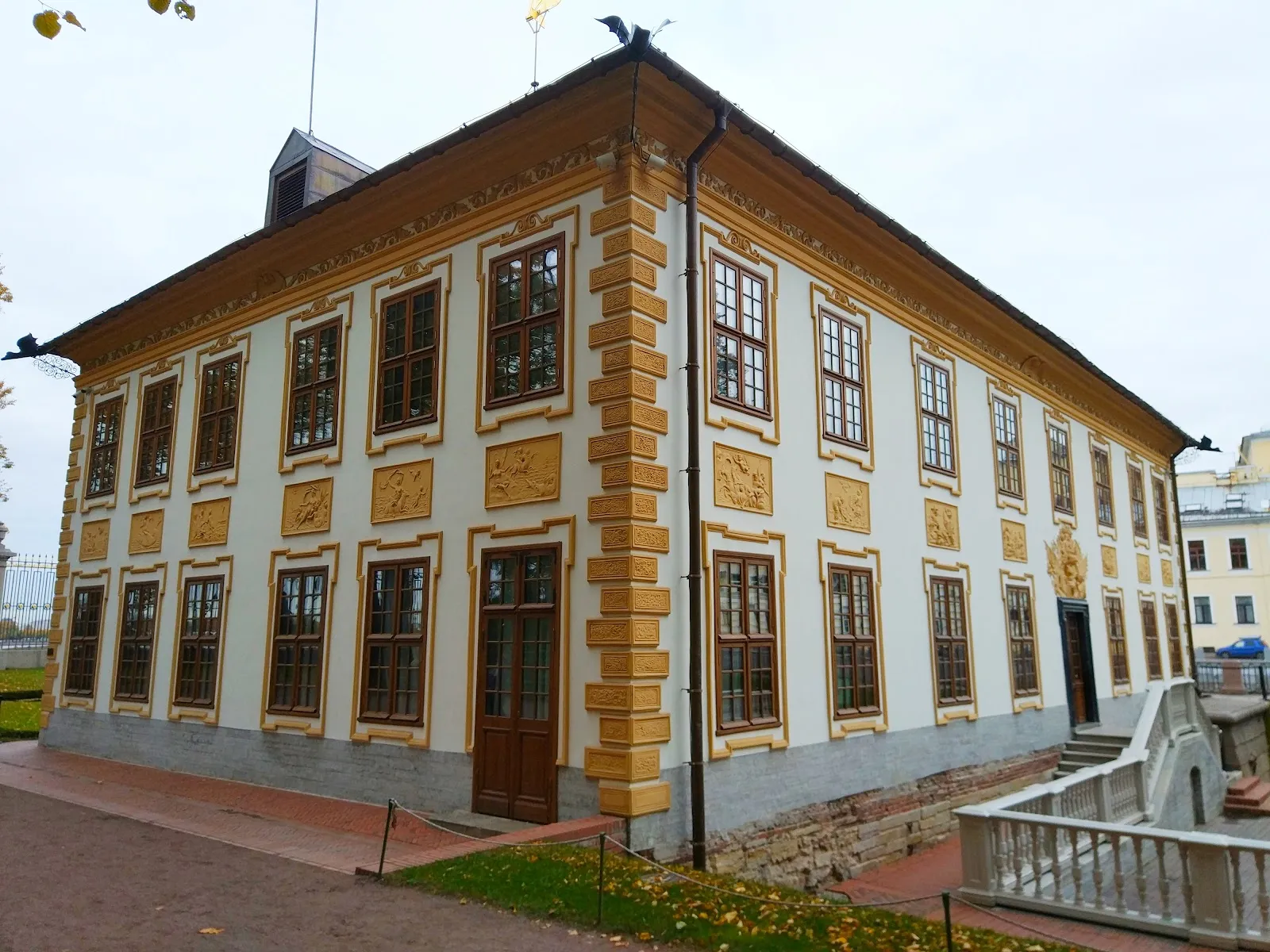
The Summer Palace was built between 1710 and 1714 in the northeast corner of the Summer Garden. Its position on an island was shaped by the Fontanka and Moyka rivers, the Swan Canal and the Neva. The palace was the first built in St Petersburg.
Peter the Great lived here with his second wife, Catherine I, and their children. Peter occupied the first floor; Catherine and the children lived on the second. The family used the residence until Peter’s death in 1725. Its small scale sets it apart from the larger palaces that followed in the city.
Seven rooms and a Dutch-style exterior
The building has two storeys and a relatively simple exterior. Inside, seven rooms are finished with carved wood and Dutch tiles, with painted ceilings overhead. The contrast between the plain appearance outside and the decorated rooms gives the palace a domestic scale compared with St Petersburg’s more elaborate imperial residences.
The Summer Palace has undergone restoration since the devastation of the Second World War. Its preserved details and compact layout make the visit a focused look at Peter’s residence rather than a tour of a sprawling palace.
The palace and the Summer Garden
The palace stands within the Summer Garden, where paths, trees and fountains surround the building. The garden’s fountains are noted for operating without electricity. Set aside time to explore outside as well as inside; the grounds give context to the palace’s island setting.
A canal boat tour is another way to see the building. From the water, you can look back at the palace from different angles and take in its place among the rivers and canals. Tickets in advance are recommended, and the palace is closed on Tuesdays.
FAQ
When was the Summer Palace of Peter the Great built?
It was built between 1710 and 1714 in the Summer Garden. It was the first palace built in St Petersburg.
Who lived in the Summer Palace?
Peter the Great lived there with his second wife, Catherine I, and their children. Peter used the first floor, while Catherine and the children occupied the second.
What can you see inside the Summer Palace?
The palace has seven rooms with carved wood, Dutch tiles and painted ceilings.
Is the Summer Palace of Peter the Great closed on any day?
Yes. It is closed on Tuesdays.