Planifier un voyage
Langue: Français
Planificateur de voyagePlanifiez votre voyage sur une carte

Destinations incontournables

EnglishDeutschFrançaisEspañolPortuguêsPortuguês (BR)Italiano
Avis aux voyageurs · RussieLes gouvernements déconseillent tout voyage à Russie.Les conseils dépendent de votre passeport. Consultez ceux de votre propre gouvernement avant de réserver.Conseils officiels
Zones signalées
  • Tchétchénie · éviter tout voyage · Irlande, Nouvelle-Zélande, États-Unis
  • Crimée · éviter tout voyage · Allemagne, Nouvelle-Zélande, États-Unis
  • Daghestan · éviter tout voyage · Irlande, Nouvelle-Zélande
  • Donetsk · éviter tout voyage · Allemagne, États-Unis
  • Ingouchie · éviter tout voyage · Irlande, Nouvelle-Zélande
  • Kherson · éviter tout voyage · Allemagne, États-Unis
  • Louhansk · éviter tout voyage · Allemagne, États-Unis
  • Kraï de Stavropol (parties orientale et méridionale) · éviter tout voyage · Irlande, Nouvelle-Zélande
  • Zaporijjia · éviter tout voyage · Allemagne, États-Unis
  • Kabardino-Balkarie · éviter les voyages non essentiels · Irlande, Nouvelle-Zélande
  • Karatchaï-Tcherkessie · éviter les voyages non essentiels · Irlande, Nouvelle-Zélande
  • Ossétie du Nord · éviter les voyages non essentiels · Irlande, Nouvelle-Zélande

Également signalé par un seul gouvernement : Belgorod (Irlande), Briansk (Irlande), Krasnodar (Irlande), Koursk (Irlande), Caucase du Nord (États-Unis), Rostov-sur-le-Don (Irlande), Voronej (Irlande)

GouvernementConseilsMis à jourLire les conseils
Royaume-Uni (FCDO)Advises against all travel to Russia–Lire les conseils
États-Unis (State Dept)Do not travel to Russia for any reason29 déc. 2025Lire les conseils
Canada (Affaires mondiales)Avoid all travel–Lire les conseils
Allemagne (Auswärtiges Amt)Vor Reisen in die Russische Föderation wird gewarnt (Reisewarnung)21 oct. 2026Lire les conseils
Nouvelle-Zélande (SafeTravel)Do not travel to Russia (level 4 of 4)–Lire les conseils
Irlande (ministère des Affaires étrangères)Do Not Travel–Lire les conseils
France (ministère de l'Europe et des Affaires étrangères)Formellement déconseillé : l'ensemble du territoire de la Russie–Lire les conseils

Vérifié quotidiennement d'après les conseils publiés par les gouvernements ; dernière vérification le 3 nov. 2026.RoamLedger résume les conseils officiels ; il ne s'agit pas de conseils émanant d'un gouvernement.

Piskaryovskoye Memorial Cemetery
Parc

Piskaryovskoye Memorial Cemetery

Piskaryovskoye Memorial Cemetery in St Petersburg commemorates those who died during the Siege of Leningrad.

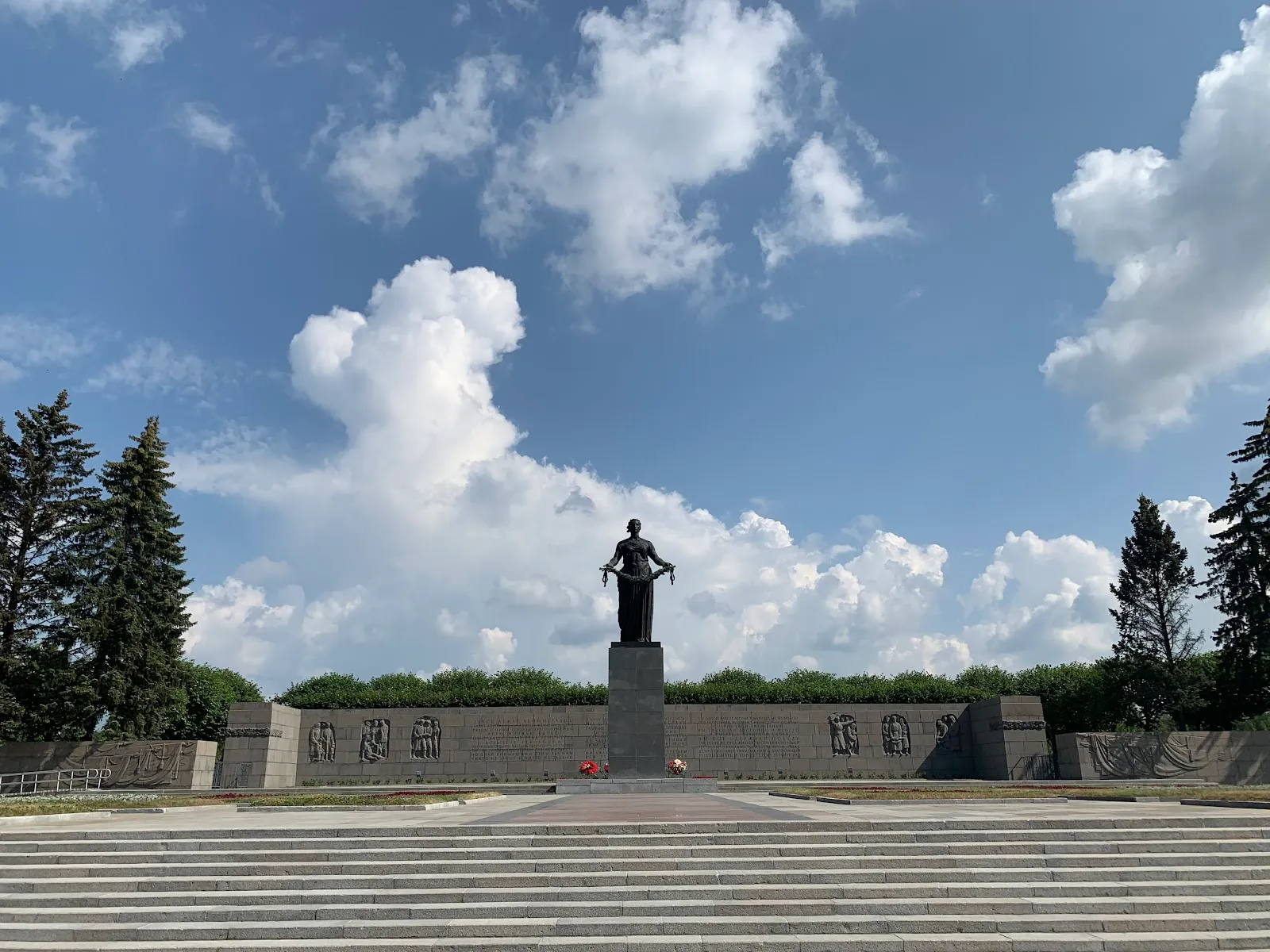
Piskaryovskoye Memorial Cemetery in St Petersburg commemorates those who died during the Siege of Leningrad. Its 186 mass graves hold more than 400,000 civilians and 70,000 soldiers. Walk the grounds to see the eternal flame and the central bronze figure of Mother Motherland. The cemetery is a place for quiet remembrance; take time to read about the siege before you visit.

A memorial to the siege
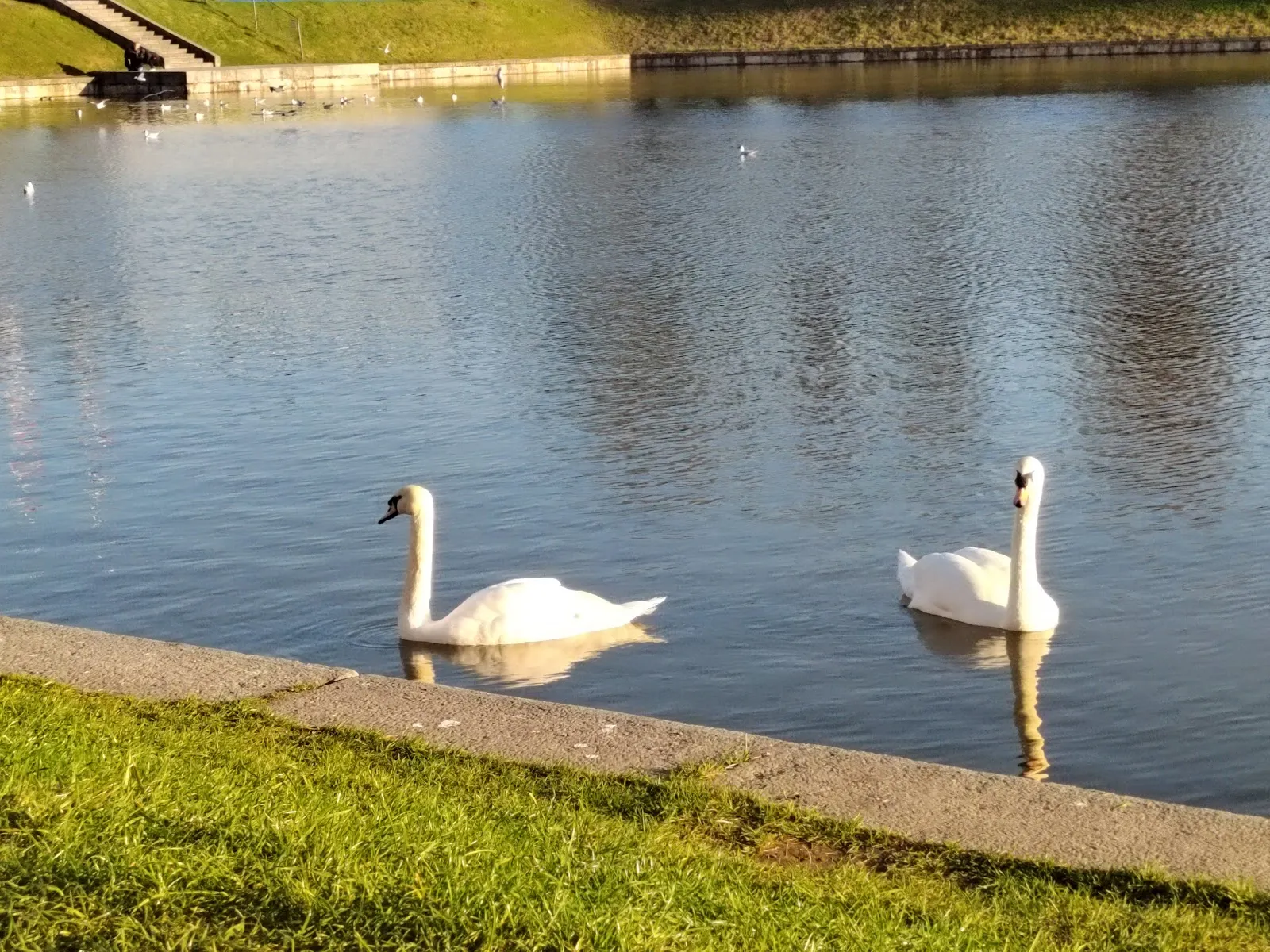
Piskaryovskoye Memorial Cemetery

Piskaryovskoye Memorial Cemetery commemorates the people who died during the Siege of Leningrad in the Second World War. The complex was designed by Alexander Vasiliev and Yevgeniy Levinson and opened on May 9, 1960.

Its 186 mass graves contain about 420,000 civilians and 70,000 soldiers of the Leningrad Front. The burial plots are marked with dates of death between 1941 and 1944, rather than individual names. The scale of the cemetery gives a sense of the human cost of the siege.

The eternal flame and central monument
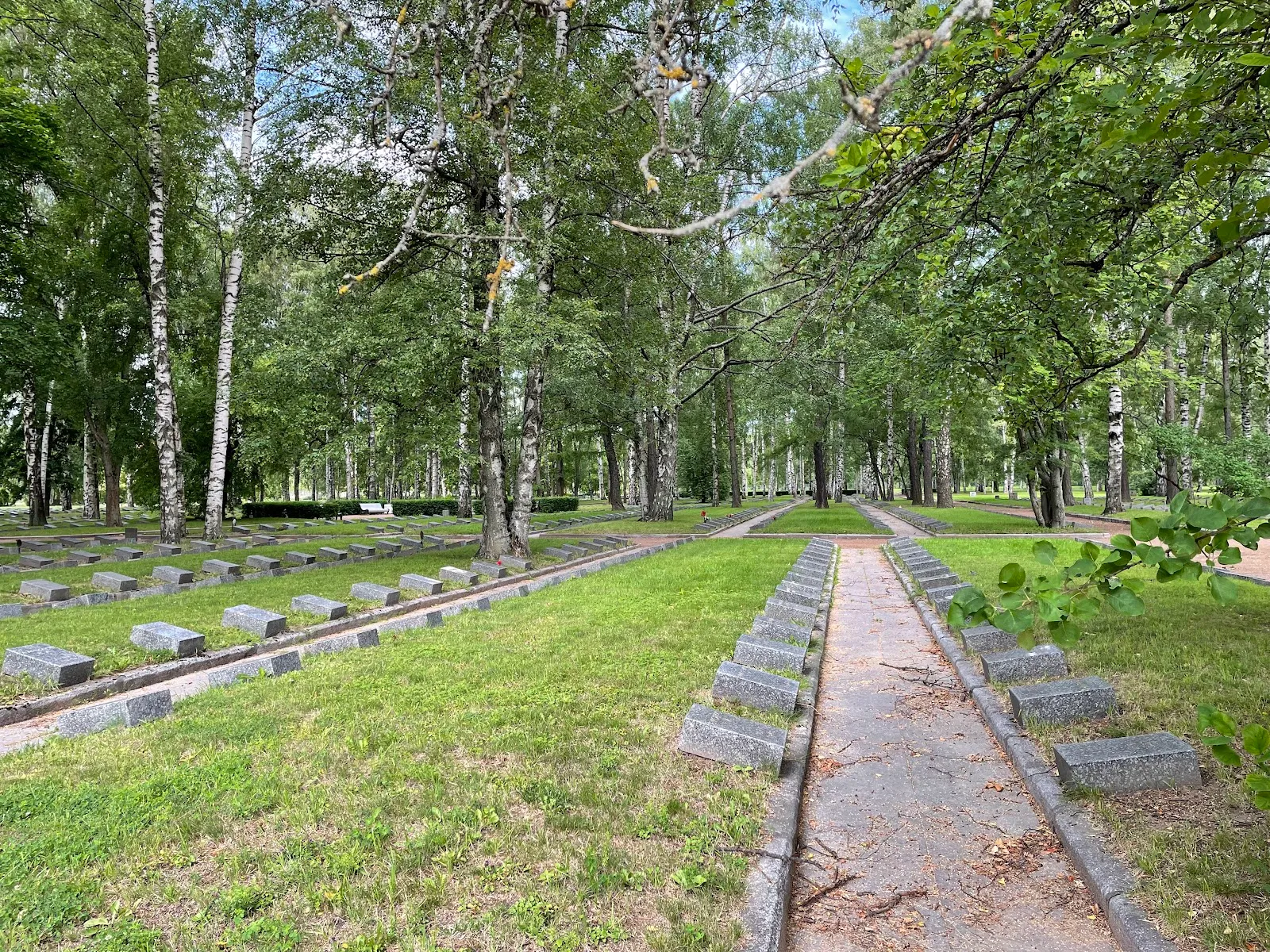
Piskaryovskoye Memorial Cemetery

An eternal flame burns near the entrance. At the centre of the memorial's design is a bronze figure representing Mother Motherland, created by sculptors Vera Isaeva and Robert Taurit.

A marble plaque records the bombardment and loss of life in Leningrad between September 4, 1941, and January 22, 1944. It states that 107,158 air bombs were dropped and 148,478 shells fired. The plaque also records 16,744 people killed by the attacks, 33,782 wounded and 641,803 who died of starvation.

FAQ

What does Piskaryovskoye Memorial Cemetery commemorate?

It commemorates those who died during the Siege of Leningrad in the Second World War. Its mass graves hold civilians and soldiers.

What can you see at the memorial cemetery?

The grounds include 186 mass graves, an eternal flame near the entrance and a central bronze figure representing Mother Motherland. A marble plaque records details of the siege and its toll.

Where is Piskaryovskoye Memorial Cemetery?

It is at Prospekt Nepokoronnykh, 72, in St Petersburg.

Autres incontournables à Saint-Pétersbourg

Tout explorer