Planifier un voyage
Langue: Français
Planificateur de voyagePlanifiez votre voyage sur une carte

Destinations incontournables

EnglishDeutschFrançaisEspañolPortuguêsPortuguês (BR)Italiano
Avis aux voyageurs · RussieLes gouvernements déconseillent tout voyage à Russie.Les conseils dépendent de votre passeport. Consultez ceux de votre propre gouvernement avant de réserver.Conseils officiels
Zones signalées
  • Tchétchénie · éviter tout voyage · Irlande, Nouvelle-Zélande, États-Unis
  • Crimée · éviter tout voyage · Allemagne, Nouvelle-Zélande, États-Unis
  • Daghestan · éviter tout voyage · Irlande, Nouvelle-Zélande
  • Donetsk · éviter tout voyage · Allemagne, États-Unis
  • Ingouchie · éviter tout voyage · Irlande, Nouvelle-Zélande
  • Kherson · éviter tout voyage · Allemagne, États-Unis
  • Louhansk · éviter tout voyage · Allemagne, États-Unis
  • Kraï de Stavropol (parties orientale et méridionale) · éviter tout voyage · Irlande, Nouvelle-Zélande
  • Zaporijjia · éviter tout voyage · Allemagne, États-Unis
  • Kabardino-Balkarie · éviter les voyages non essentiels · Irlande, Nouvelle-Zélande
  • Karatchaï-Tcherkessie · éviter les voyages non essentiels · Irlande, Nouvelle-Zélande
  • Ossétie du Nord · éviter les voyages non essentiels · Irlande, Nouvelle-Zélande

Également signalé par un seul gouvernement : Belgorod (Irlande), Briansk (Irlande), Krasnodar (Irlande), Koursk (Irlande), Caucase du Nord (États-Unis), Rostov-sur-le-Don (Irlande), Voronej (Irlande)

GouvernementConseilsMis à jourLire les conseils
Royaume-Uni (FCDO)Advises against all travel to Russia–Lire les conseils
États-Unis (State Dept)Do not travel to Russia for any reason29 déc. 2025Lire les conseils
Canada (Affaires mondiales)Avoid all travel–Lire les conseils
Allemagne (Auswärtiges Amt)Vor Reisen in die Russische Föderation wird gewarnt (Reisewarnung)21 oct. 2026Lire les conseils
Nouvelle-Zélande (SafeTravel)Do not travel to Russia (level 4 of 4)–Lire les conseils
Irlande (ministère des Affaires étrangères)Do Not Travel–Lire les conseils
France (ministère de l'Europe et des Affaires étrangères)Formellement déconseillé : l'ensemble du territoire de la Russie–Lire les conseils

Vérifié quotidiennement d'après les conseils publiés par les gouvernements ; dernière vérification le 3 nov. 2026.RoamLedger résume les conseils officiels ; il ne s'agit pas de conseils émanant d'un gouvernement.

Lomonosov bridge
Pont

Lomonosov bridge

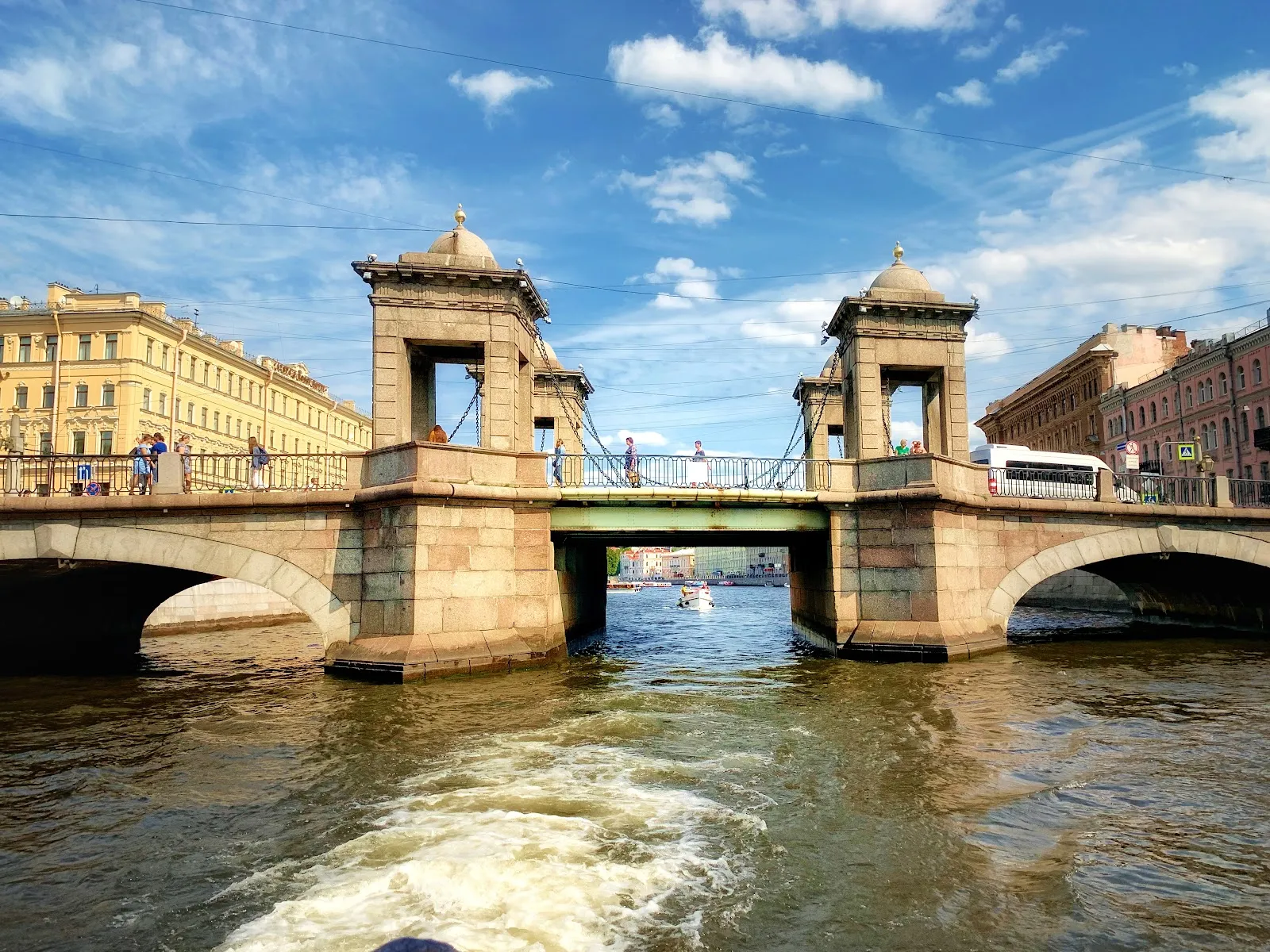
Lomonosov Bridge crosses the Fontanka River in St Petersburg, near Lomonosova Square.

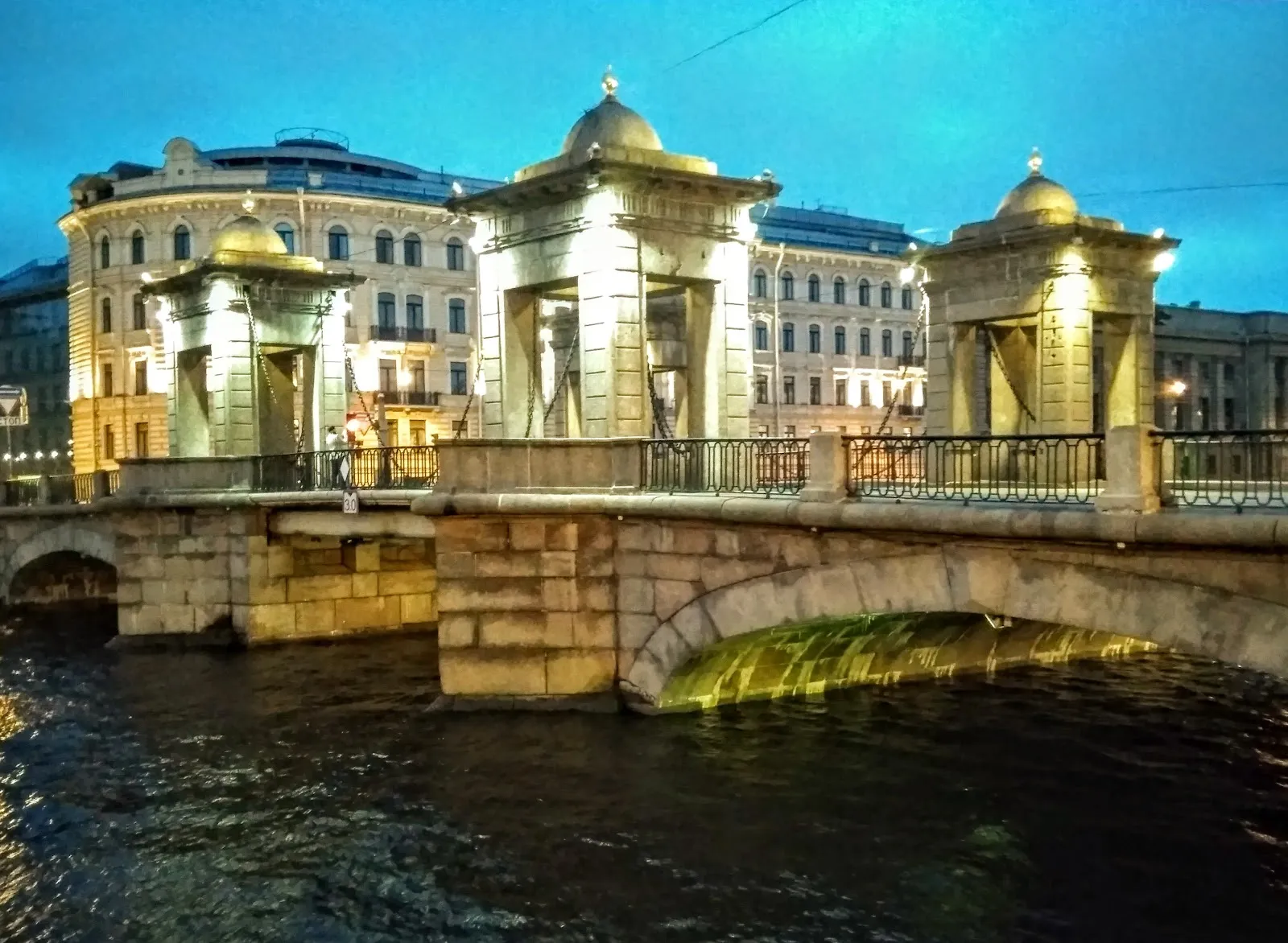
Lomonosov Bridge crosses the Fontanka River in St Petersburg, near Lomonosova Square. Built in stone between 1785 and 1787 to a design by French architect Jean-Rodolphe Perronet, it keeps the four corner towers that once housed the drawbridge mechanism. Look for their domed tops and the decorative obelisks and lamps added in the early 20th century. The bridge is a quieter stop than some nearby landmarks, with views along the river and toward the blue domes of Trinity Izmailovsky Cathedral.

A stone crossing on the Fontanka
Lomonosov bridge
Lomonosov bridge

Lomonosov Bridge was built between 1785 and 1787, replacing an earlier wooden crossing. French architect Jean-Rodolphe Perronet designed the stone bridge. It was originally known as Catherine Bridge and later as Chernyshev Bridge, after Count Grigory Chernyshev. Its current name honours scientist and writer Mikhail Lomonosov; the change took place in 1948.

The bridge is about 63 metres long and nearly 15 metres wide. It carries pedestrians and vehicles across the Fontanka, at the point where the river meets Lomonosov Street.

The towers and the former drawbridge
Lomonosov bridge
Lomonosov bridge

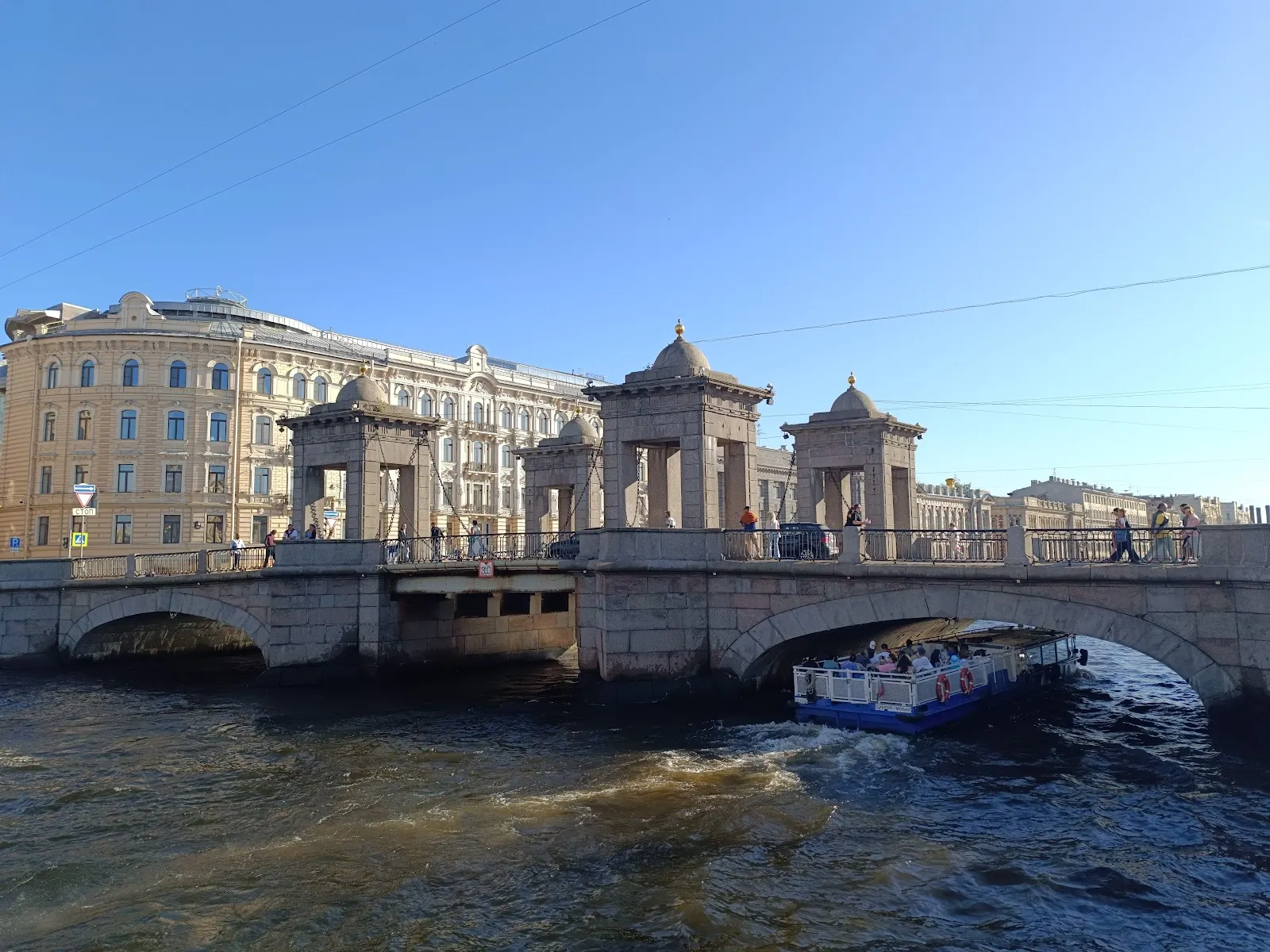
Four square pavilions stand at the bridge’s corners, each topped with a domed cap. They once housed the machinery for raising the bridge. The crossing no longer opens for river traffic, but the towers preserve the outline of its earlier drawbridge design. Small decorative obelisks and lamp posts were added at the bridge ends in the early 20th century.

From the bridge, look along the Fontanka and toward the blue domes of Trinity Izmailovsky Cathedral. Anichkov Bridge is another historic crossing nearby, roughly 300 metres away.

FAQ

When was Lomonosov Bridge built?

The stone bridge was built between 1785 and 1787.

Does Lomonosov Bridge still open for boats?

No. It was originally a drawbridge, but it no longer opens for river traffic.

What can you see from Lomonosov Bridge?

You can look along the Fontanka River and toward the blue domes of Trinity Izmailovsky Cathedral.

Autres incontournables à Saint-Pétersbourg

Tout explorer