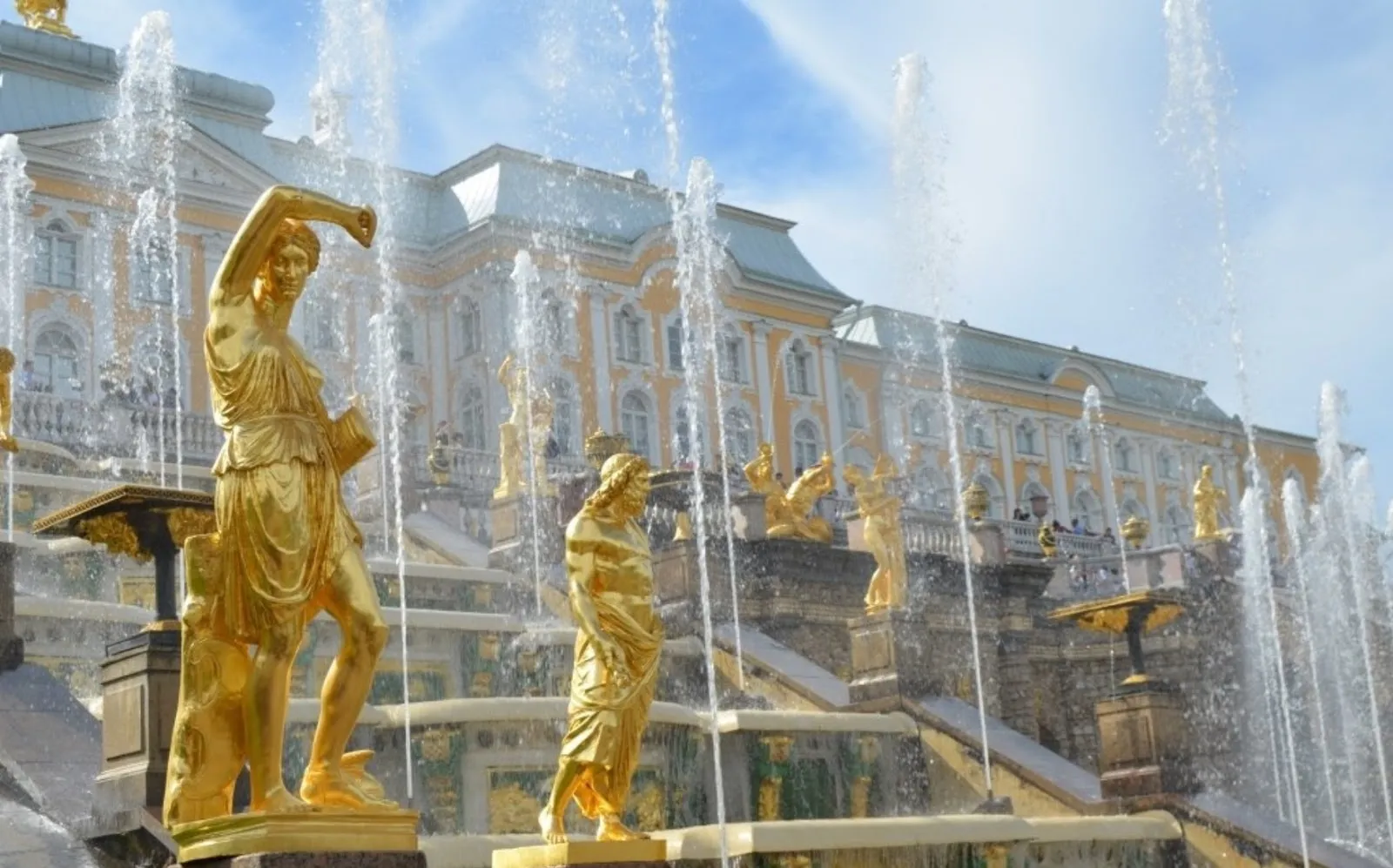
The Grand Cascade is the fountain ensemble in front of Peterhof Palace, in the Lower Park of St Petersburg’s Peterhof estate. Its stairways, waterfalls, 64 fountains and gilded statues lead down towards the Marine Canal, which runs towards the Gulf of Finland. At the centre, Samson wrestles a lion, a scene associated with Russia’s victory over Sweden in the Great Northern War. The fountains use water pressure created by the park’s elevation, so you can watch the display without pumps. Allow time to explore the two-storey grotto beneath the cascade, which houses a small fountain-history museum.
A cascade built for Peterhof Palace
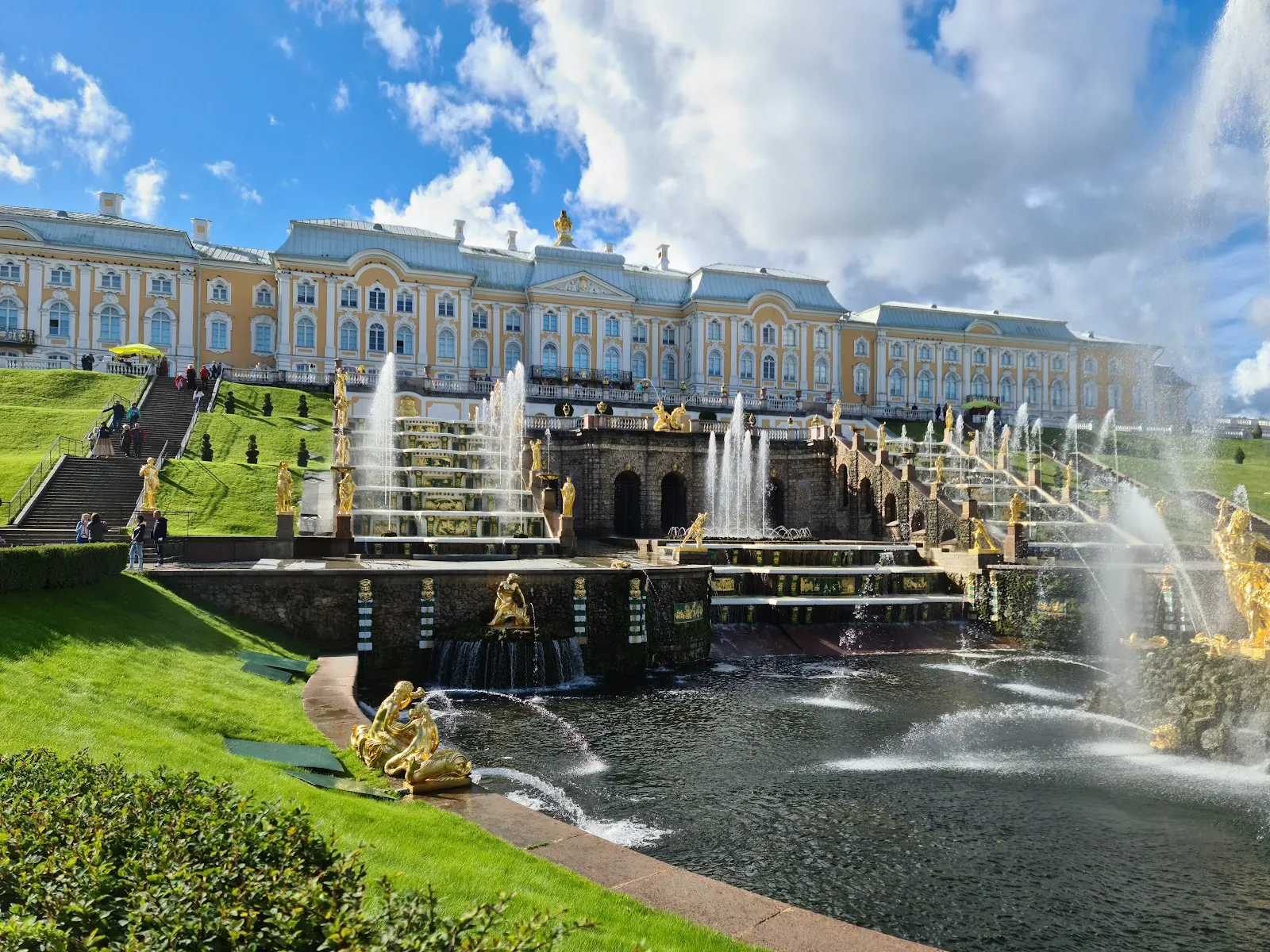
The Grand Cascade was conceived as part of the approach from the Gulf of Finland to the royal residence. Peter I initiated the idea, and the cascade was built alongside the palace, forming a single composition with it. The fountains were ceremonially started in August 1723.
Set below the palace, the cascade leads from its northern side towards the Marine Canal. Its stepped terraces, water and sculpture make the space a focal point of the Lower Park. The canal continues from the foot of the cascade towards the Gulf of Finland.
Samson and the fountains
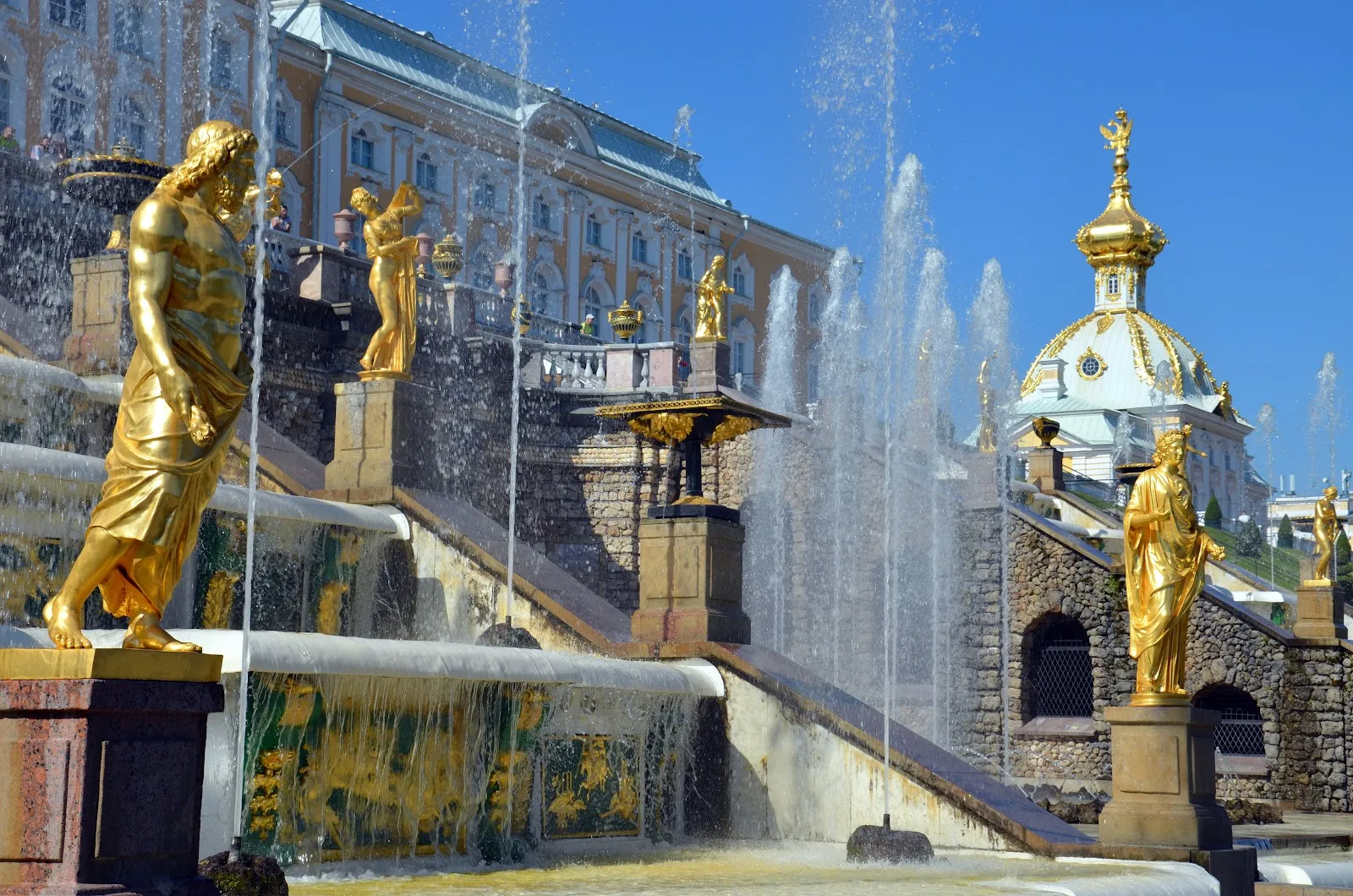
At the centre of the semicircular pool, Samson pulls open a lion’s jaws. The scene represents Russia’s victory over Sweden in the Great Northern War. Around it, gilded figures and other sculptures sit among the fountains, stairways and waterfalls.
The cascade is part of Peterhof’s wider water system. The difference in elevation supplies pressure to many of the Lower Garden fountains, allowing water to flow without pumps. The Samson Fountain uses a separate aqueduct, more than four kilometres long, to bring water from a higher source. Water from the fountains then feeds into the canal.
Inside the grotto
The cascade includes a man-made grotto of two levels, built from hewn brown stone. A small museum inside traces the history of Peterhof’s fountains and displays related exhibits. The grotto gives you another way to explore the engineering behind the water display, beyond viewing it from the terraces.
The Lower Park contains more sights than the cascade alone, including other fountains and garden paths. The Grand Palace, Upper Gardens and Sea Channel are also part of the Peterhof ensemble. If you have limited time, decide which areas matter most before your visit; the estate has more to see than one stop can cover.
FAQ
Where is the Grand Cascade?
It stands in front of Peterhof Palace in the Lower Park at Peterhof, near St Petersburg. The cascade descends towards the Marine Canal and the Gulf of Finland.
What is the Samson Fountain?
It is the central fountain, showing Samson opening a lion’s jaws. The scene represents Russia’s victory over Sweden in the Great Northern War.
Does the Grand Cascade have a museum?
Yes. A small fountain-history museum is inside the two-storey grotto beneath the cascade.
Do you need a ticket to see the fountains?
Access to the fountains requires entry to the Lower Park. The supplied information does not give an admission price.