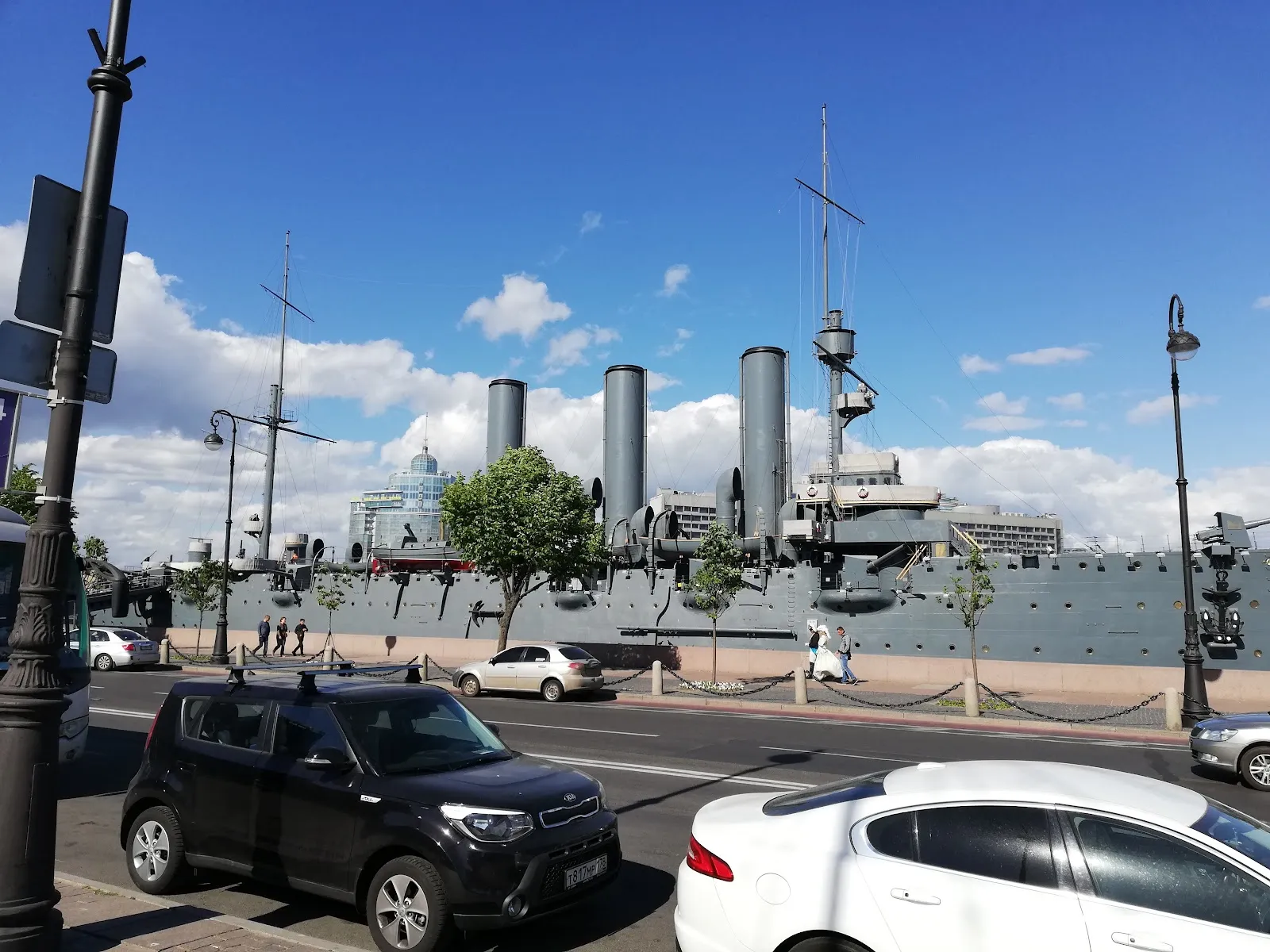
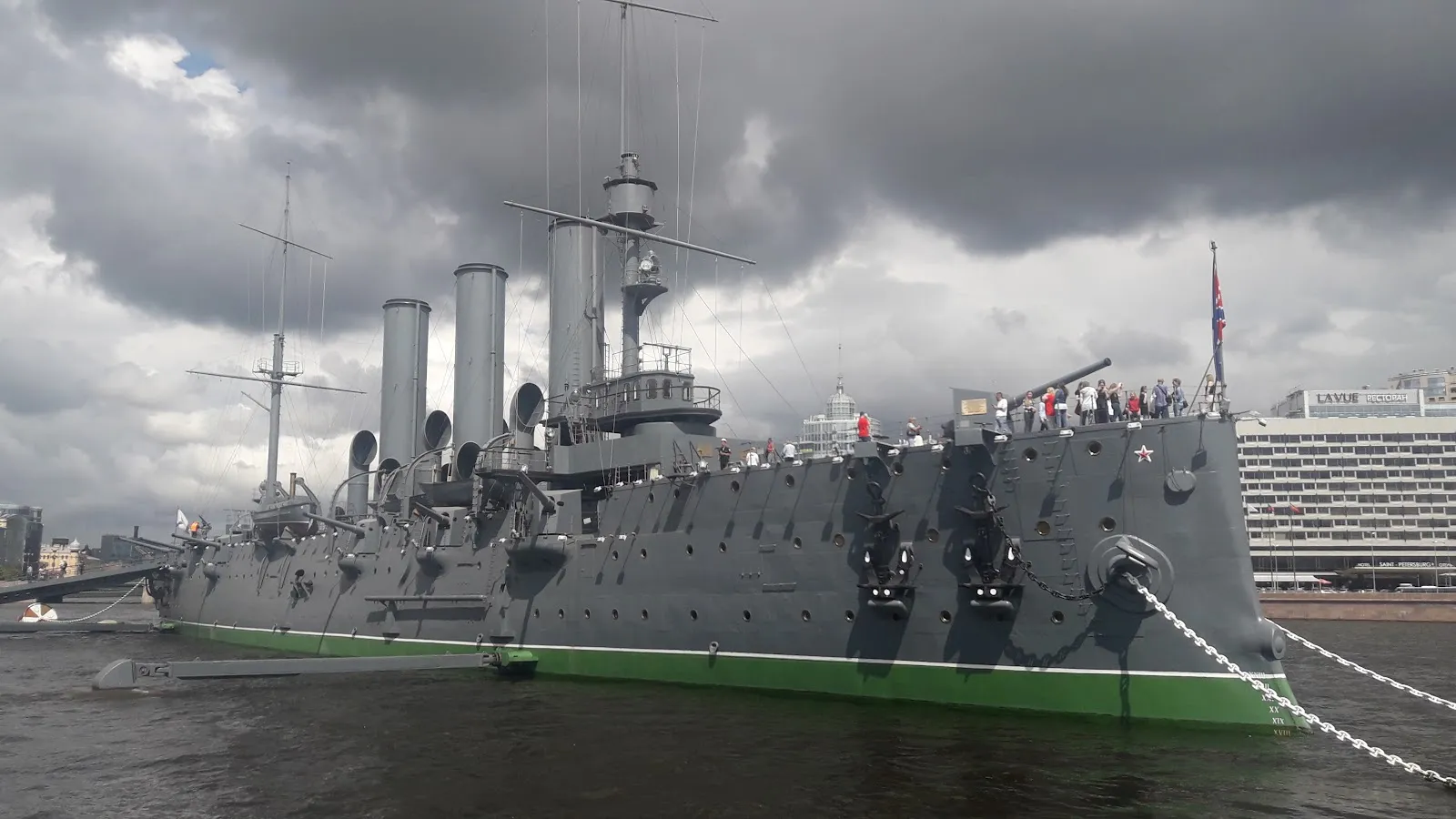
Moored on the Neva at Petrogradskaya Embankment, the Cruiser Aurora is a naval museum aboard a preserved Russian warship. Its history reaches from the Russo-Japanese War and the Battle of Tsushima to the blank cannon shot associated with the 1917 Bolshevik Revolution. Inside, exhibits trace sailors’ lives through their work spaces and everyday objects, including eating utensils. Allow time to explore the ship’s corridors and deck; sunset is a good moment for photographs. English explanations inside are limited, so bring a translation app or guidebook.
A warship tied to major events
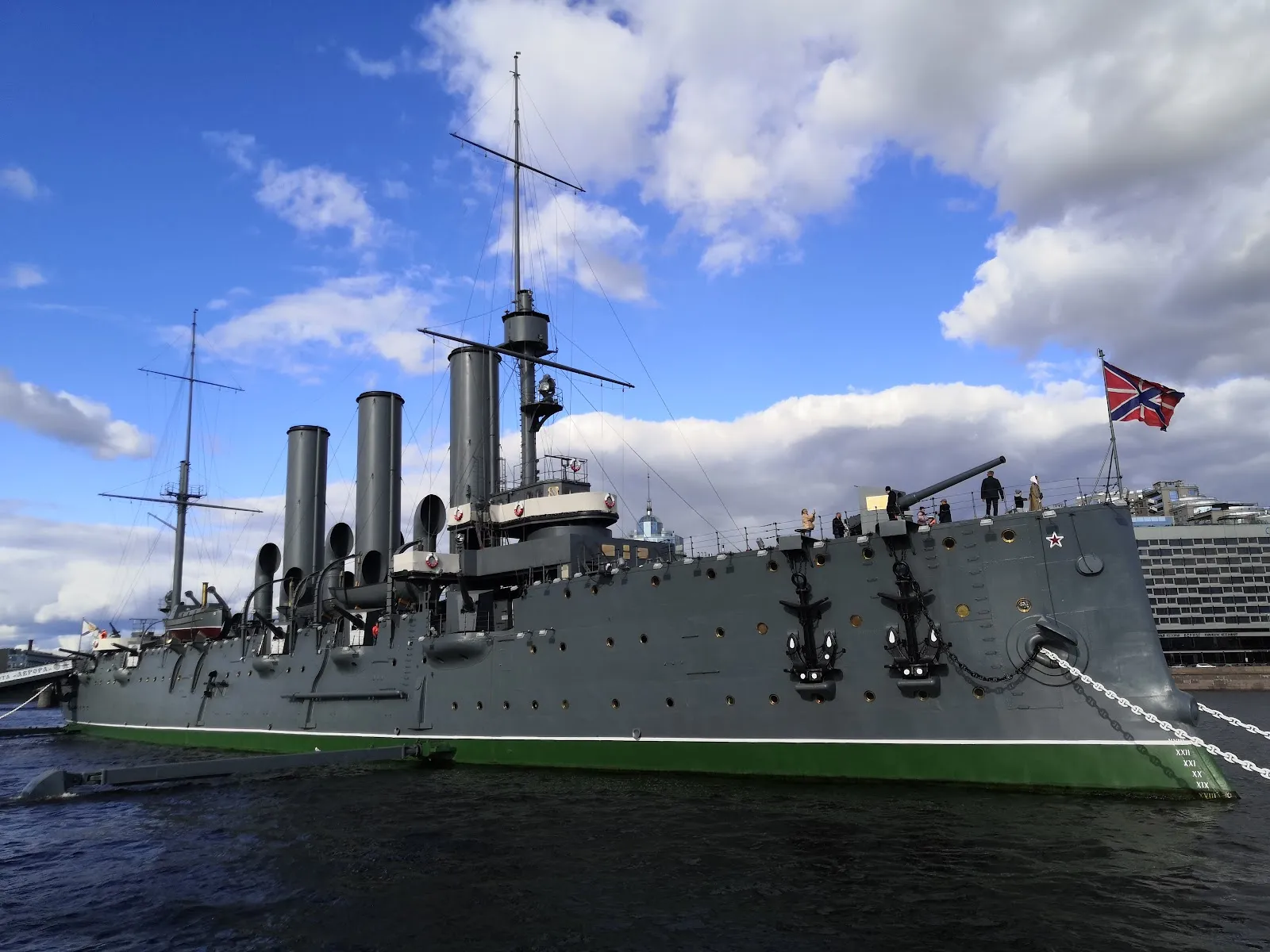
Built in St Petersburg between 1897 and 1900, the Aurora joined Russia’s Baltic Fleet in 1903. It served in the Russo-Japanese War and survived the Battle of Tsushima in 1905. Today, permanently moored on the Neva, it preserves a part of Russian naval history in the city where it was built.
The ship is closely associated with the 1917 Bolshevik Revolution. A blank shot fired from its cannon became a signal connected with the assault on the Winter Palace. The event gave the Aurora a place in the story of the revolution, and visitors can see the ship itself rather than only read about it in a museum gallery.
Inside the museum ship
The exhibits give a glimpse of life aboard a naval vessel. You can pass through the ship’s corridors and see spaces where sailors worked and lived, along with practical objects such as the utensils they used to eat. The displays also cover the Aurora’s naval history and its role in significant events.
The vessel is well preserved, with its upkeep visible in the clean interior and maintained surfaces. The visit is a walk through the ship rather than an interactive exhibition. If you want more context for individual displays, a guided tour is an option. English explanations are limited, so a translation app or guidebook can help you follow the information on board.
The Aurora through the 20th century
The ship’s story continued after 1917. During the siege of Leningrad, it was moored at Lomonosov and came under shelling and bombing. It was badly damaged, then raised and taken for repairs in July 1944.
The Aurora later became a museum ship, preserving its connection to the Russian Navy and the revolution. Photographs aboard record public figures who visited, including Yuri Gagarin and Fidel Castro. Take time to look around the deck as well as the interior: at sunset, the ship and the river make a strong setting for photographs.
FAQ
How long do you need to visit the Cruiser Aurora?
Allow about 30 to 60 minutes to walk around the ship. A guided visit or a closer look at the exhibits can take longer.
Is there an entry fee for the Cruiser Aurora?
Yes. Admission to the museum ship is paid. The supplied information does not establish a single current ticket price.
Are the exhibits explained in English?
English explanations inside are limited. Bring a translation app or guidebook, or consider a guided tour for more context.
Is the Cruiser Aurora accessible for visitors with limited mobility?
The ship has stairs and narrow passages, which can make a visit difficult for some visitors with limited mobility.