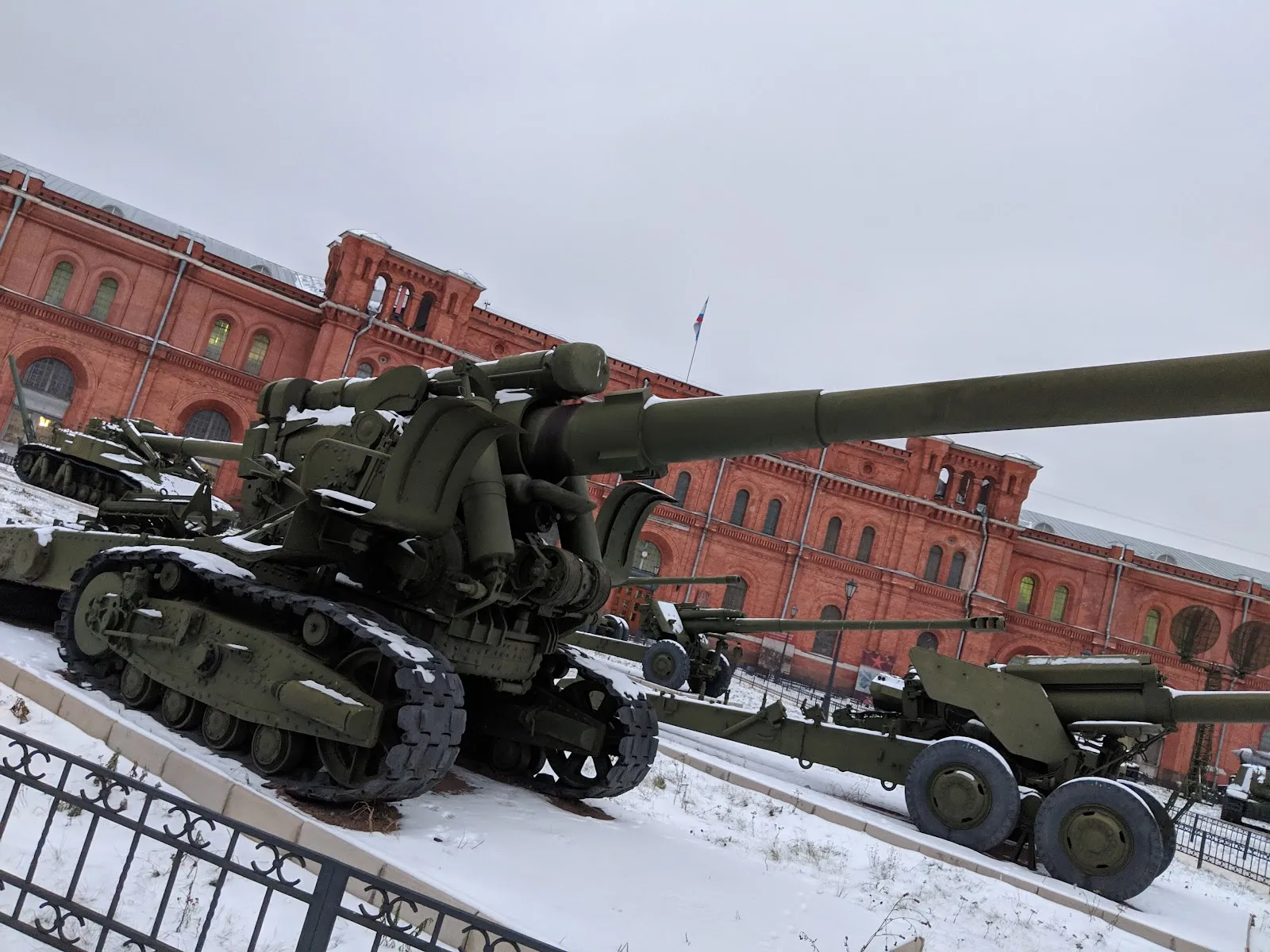
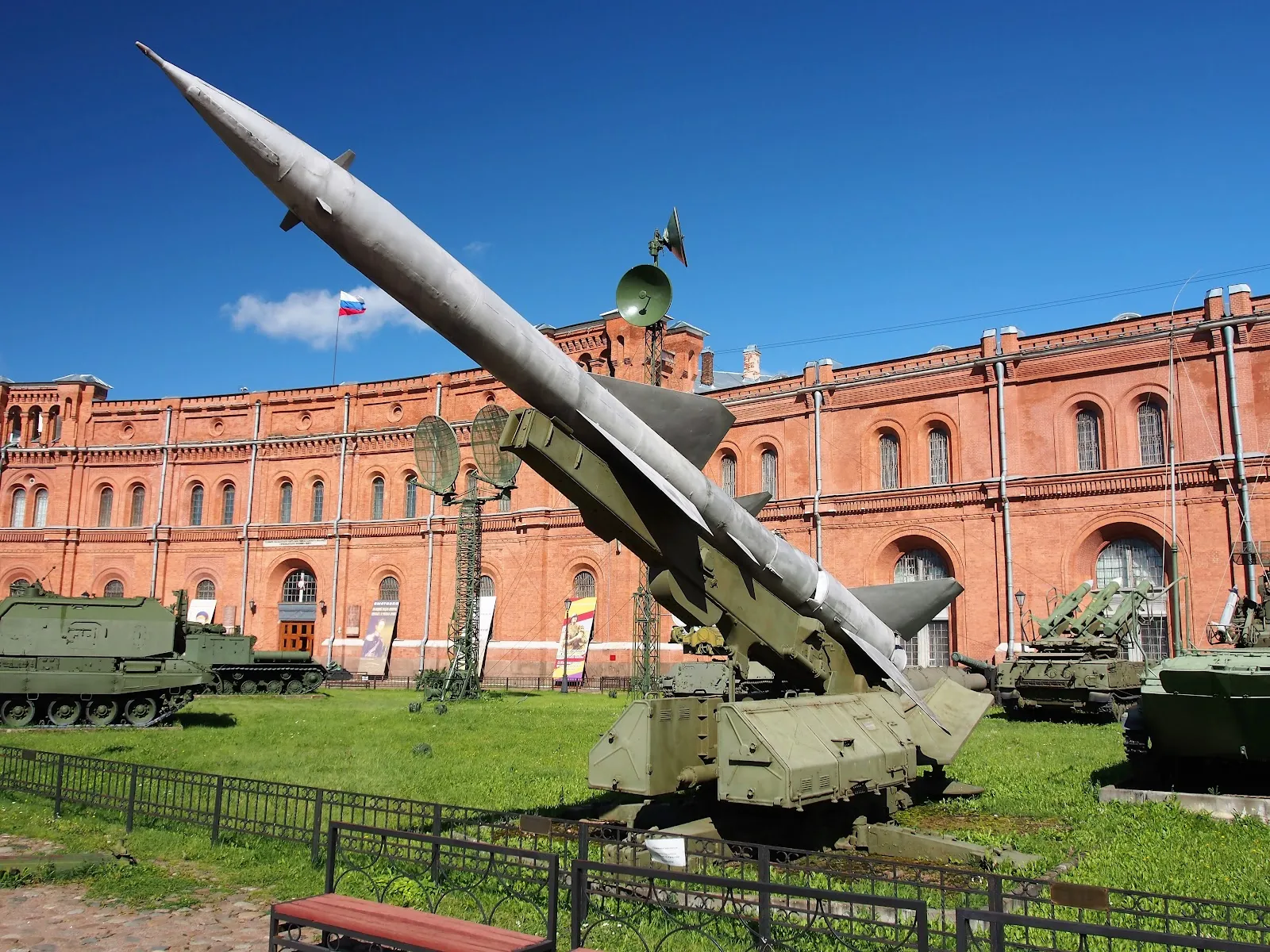
The Military-Historical Museum of Artillery, Engineer and Signal Corps is in Aleksandrovsky Park, St Petersburg, near Gorkovskaya metro station. Its collection ranges from early weapons and artillery to military vehicles, communications equipment, uniforms and medals. Start outside with the guns and vehicles, then head upstairs for displays on the Kalashnikov, World War II and the Cold War. The Winter War exhibition includes Finnish weapons. Allow several hours: the museum is large, and most labels are in Russian.
A collection beyond artillery
The museum’s history reaches back to 1703, when a storehouse for military trophies and artillery pieces was established at the Peter and Paul Fortress under Peter I. The collection now covers many parts of military history, not only guns: visitors can see weapons, vehicles, uniforms, banners, medals and communications equipment.
The displays span different periods, from archaeological finds and early weapons to equipment from the Russian Empire and Soviet era. The museum also holds archival documents and examples of military technology. Its scale is a reason to plan a focused visit rather than expect to read every display in one pass.
Start in the courtyard, then go upstairs
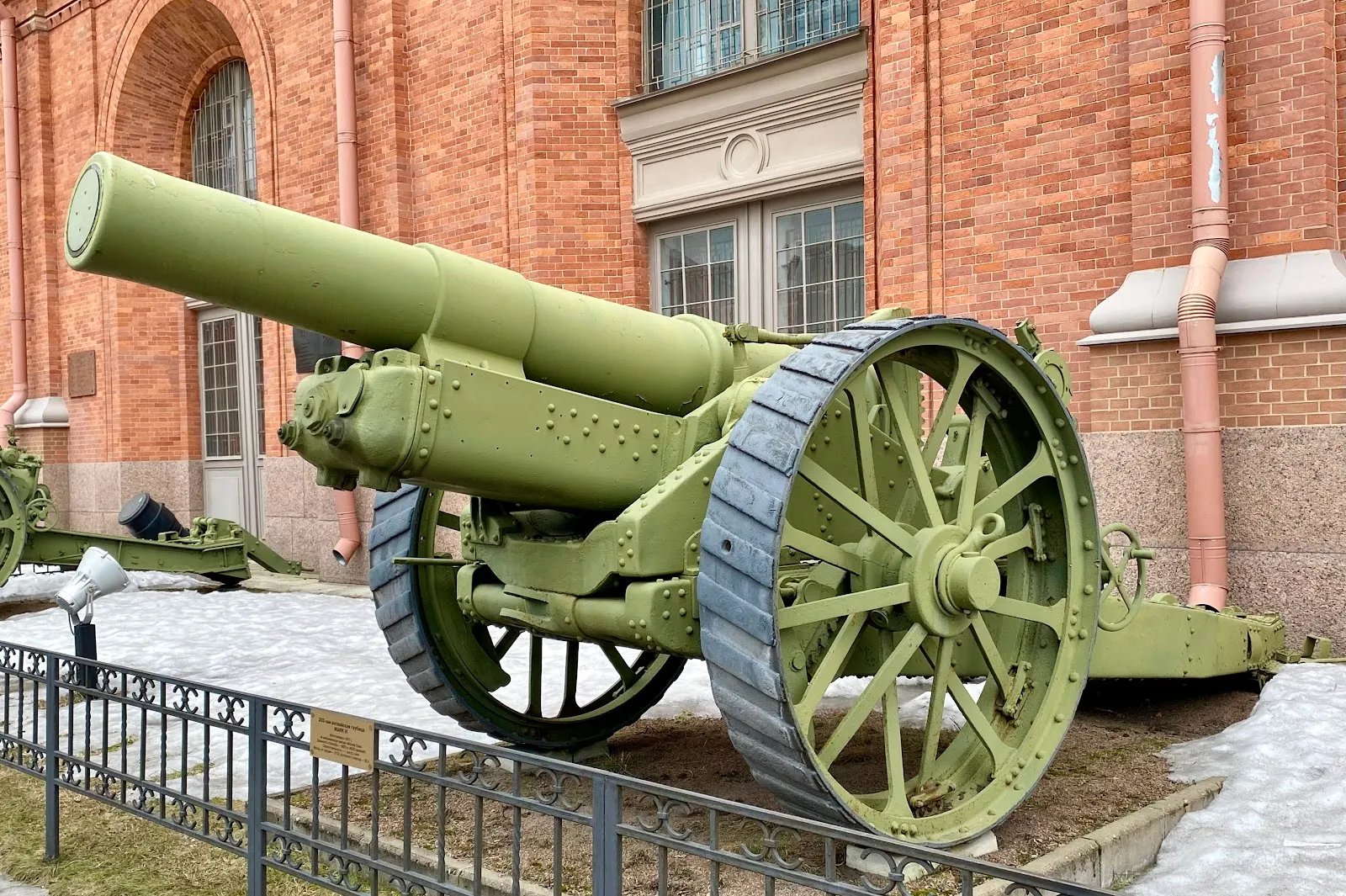
Artillery pieces and military vehicles are displayed outdoors in the courtyard. Take a look around before entering, but leave time for the indoor exhibits. The upper floors include rooms devoted to particular periods and subjects, among them World War II and the Cold War. One exhibition follows the development of Kalashnikov firearms, with examples from across Mikhail Kalashnikov’s career.
The World War II displays include weapons and military hardware. Another section covers the Winter War, with Finnish weapons, photographs and other material connected with the Finnish and Soviet sides. These specialist rooms give the collection more range than its name alone suggests.
What to expect inside
The museum brings together artillery, firearms and edged weapons alongside engineering and communications material. Uniforms, awards and military banners add context to the equipment, while models and archaeological finds extend the collection into earlier periods. Displays also cover the 1812 war, including personal weapons associated with Napoleon Bonaparte.
Some exhibits invite a closer look at how military equipment works. One interactive activity lets visitors take apart and reassemble an AK-74 rifle. The museum also has detailed displays of mechanical military engineering. Most explanatory text is in Russian, which can make the exhibits harder to follow if you do not read the language; the objects themselves remain visible throughout.
Plan your visit
The museum is at 7 Aleksandrovsky Park, across the canal from the Peter and Paul Fortress. Gorkovskaya is the nearest metro station named in the visit information. The museum is closed on Mondays and Tuesdays and open Wednesday through Sunday.
Allow two to four hours, depending on how closely you explore the rooms. If your time is limited, see the courtyard, then prioritize the upper-floor displays and the exhibitions that match your interests. The museum has a wheelchair-accessible entrance and elevator. Check its website for current visit details before setting out.
FAQ
Where is the Artillery Museum in St Petersburg?
It is at 7 Aleksandrovsky Park, across the canal from the Peter and Paul Fortress. Gorkovskaya is the nearest metro station named in the visit information.
How long should I spend at the Artillery Museum?
Allow about two to four hours. The collection is large, so the time needed depends on how closely you explore the indoor displays.
What can you see at the Artillery Museum?
The collection includes artillery, firearms, military vehicles, uniforms, medals and communications equipment. Displays include Kalashnikov firearms, World War II and Cold War material, and a Winter War exhibition.
Is the Artillery Museum accessible for wheelchair users?
The museum has a wheelchair-accessible entrance and elevator.