Planifier un voyage
Langue: Français
Planificateur de voyagePlanifiez votre voyage sur une carte

Destinations incontournables

EnglishDeutschFrançaisEspañolPortuguêsPortuguês (BR)Italiano
Avis aux voyageurs · RussieLes gouvernements déconseillent tout voyage à Russie.Les conseils dépendent de votre passeport. Consultez ceux de votre propre gouvernement avant de réserver.Conseils officiels
Zones signalées
  • Tchétchénie · éviter tout voyage · Irlande, Nouvelle-Zélande, États-Unis
  • Crimée · éviter tout voyage · Allemagne, Nouvelle-Zélande, États-Unis
  • Daghestan · éviter tout voyage · Irlande, Nouvelle-Zélande
  • Donetsk · éviter tout voyage · Allemagne, États-Unis
  • Ingouchie · éviter tout voyage · Irlande, Nouvelle-Zélande
  • Kherson · éviter tout voyage · Allemagne, États-Unis
  • Louhansk · éviter tout voyage · Allemagne, États-Unis
  • Kraï de Stavropol (parties orientale et méridionale) · éviter tout voyage · Irlande, Nouvelle-Zélande
  • Zaporijjia · éviter tout voyage · Allemagne, États-Unis
  • Kabardino-Balkarie · éviter les voyages non essentiels · Irlande, Nouvelle-Zélande
  • Karatchaï-Tcherkessie · éviter les voyages non essentiels · Irlande, Nouvelle-Zélande
  • Ossétie du Nord · éviter les voyages non essentiels · Irlande, Nouvelle-Zélande

Également signalé par un seul gouvernement : Belgorod (Irlande), Briansk (Irlande), Krasnodar (Irlande), Koursk (Irlande), Caucase du Nord (États-Unis), Rostov-sur-le-Don (Irlande), Voronej (Irlande)

GouvernementConseilsMis à jourLire les conseils
Royaume-Uni (FCDO)Advises against all travel to Russia–Lire les conseils
États-Unis (State Dept)Do not travel to Russia for any reason29 déc. 2025Lire les conseils
Canada (Affaires mondiales)Avoid all travel–Lire les conseils
Allemagne (Auswärtiges Amt)Vor Reisen in die Russische Föderation wird gewarnt (Reisewarnung)21 oct. 2026Lire les conseils
Nouvelle-Zélande (SafeTravel)Do not travel to Russia (level 4 of 4)–Lire les conseils
Irlande (ministère des Affaires étrangères)Do Not Travel–Lire les conseils
France (ministère de l'Europe et des Affaires étrangères)Formellement déconseillé : l'ensemble du territoire de la Russie–Lire les conseils

Vérifié quotidiennement d'après les conseils publiés par les gouvernements ; dernière vérification le 3 nov. 2026.RoamLedger résume les conseils officiels ; il ne s'agit pas de conseils émanant d'un gouvernement.

Tserkov' Svyatitelya Nikolaya V Khamovnikakh
Église

Tserkov' Svyatitelya Nikolaya V Khamovnikakh

St.

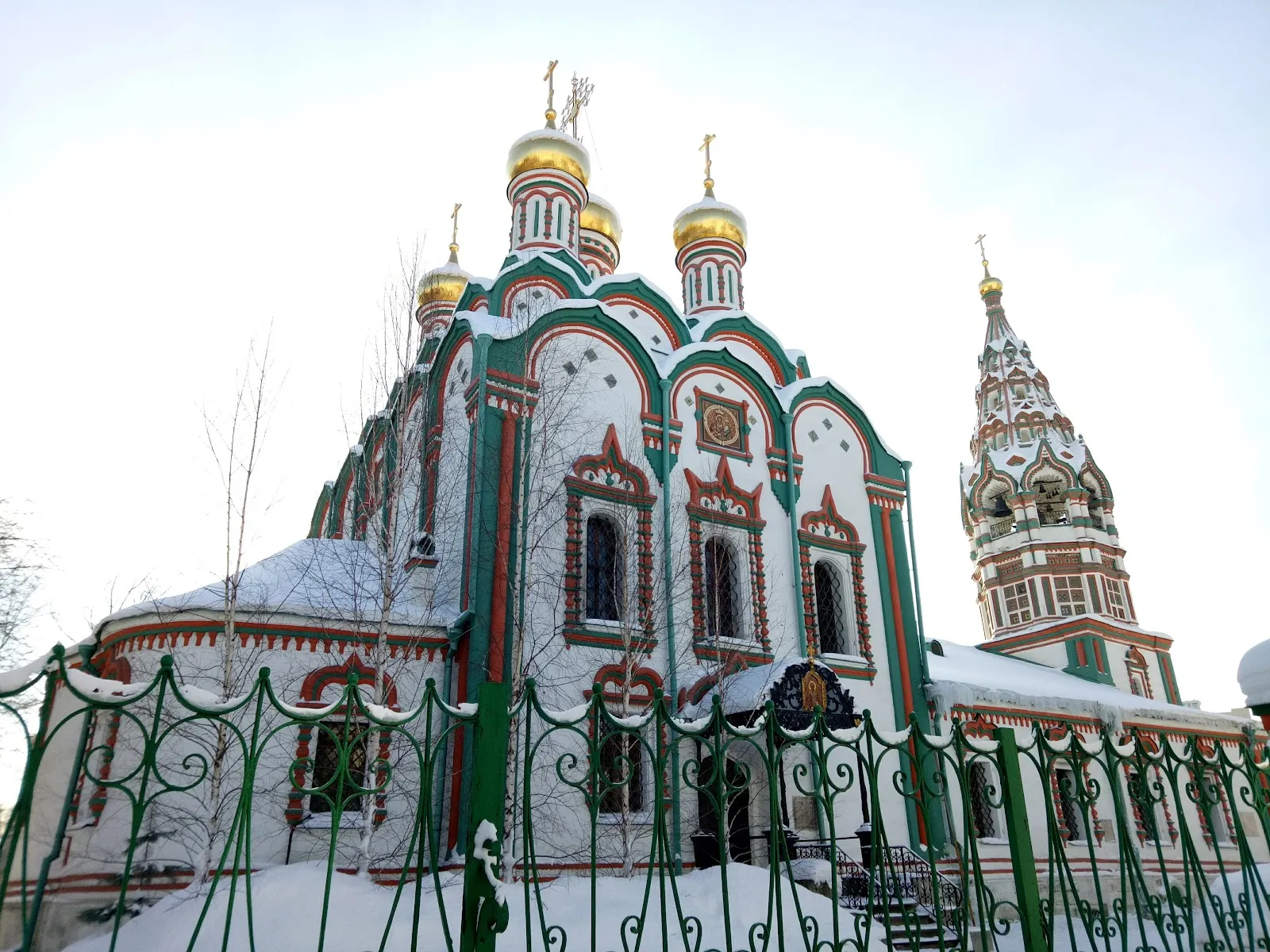
St. Nicholas Church in Khamovniki stands on Ulitsa L'va Tolstogo, near the former home of Leo Tolstoy, who worshipped here. Its five domes, vivid exterior and late Moscow Baroque details make it one of the area’s most distinctive Orthodox churches. The present building was consecrated in 1682, with a bell tower and refectory added later. Inside, look for the revered icon of the Mother of God known as “Surety for Sinners,” along with 17th-century icons of Saint Alexis and the Hodegetria of Smolensk.

A church built in the 17th century
Tserkov' Svyatitelya Nikolaya V Khamovnikakh

A wooden church on this site was first recorded in 1625. A stone church followed, and the present building was begun on a nearby plot on May 21, 1679, during the reign of Tsar Fyodor Alekseyevich. The main church was consecrated on June 25, 1682.

The five-domed structure is an example of late Moscow Baroque architecture. Its refectory and bell tower were added later, by 1694. A northern chapel was established in the refectory in 1757, initially dedicated to Saint Dmitry of Rostov. It was rededicated in 1872 in honour of the icon of the Mother of God “Surety for Sinners.”

Icons and restoration
Tserkov' Svyatitelya Nikolaya V Khamovnikakh

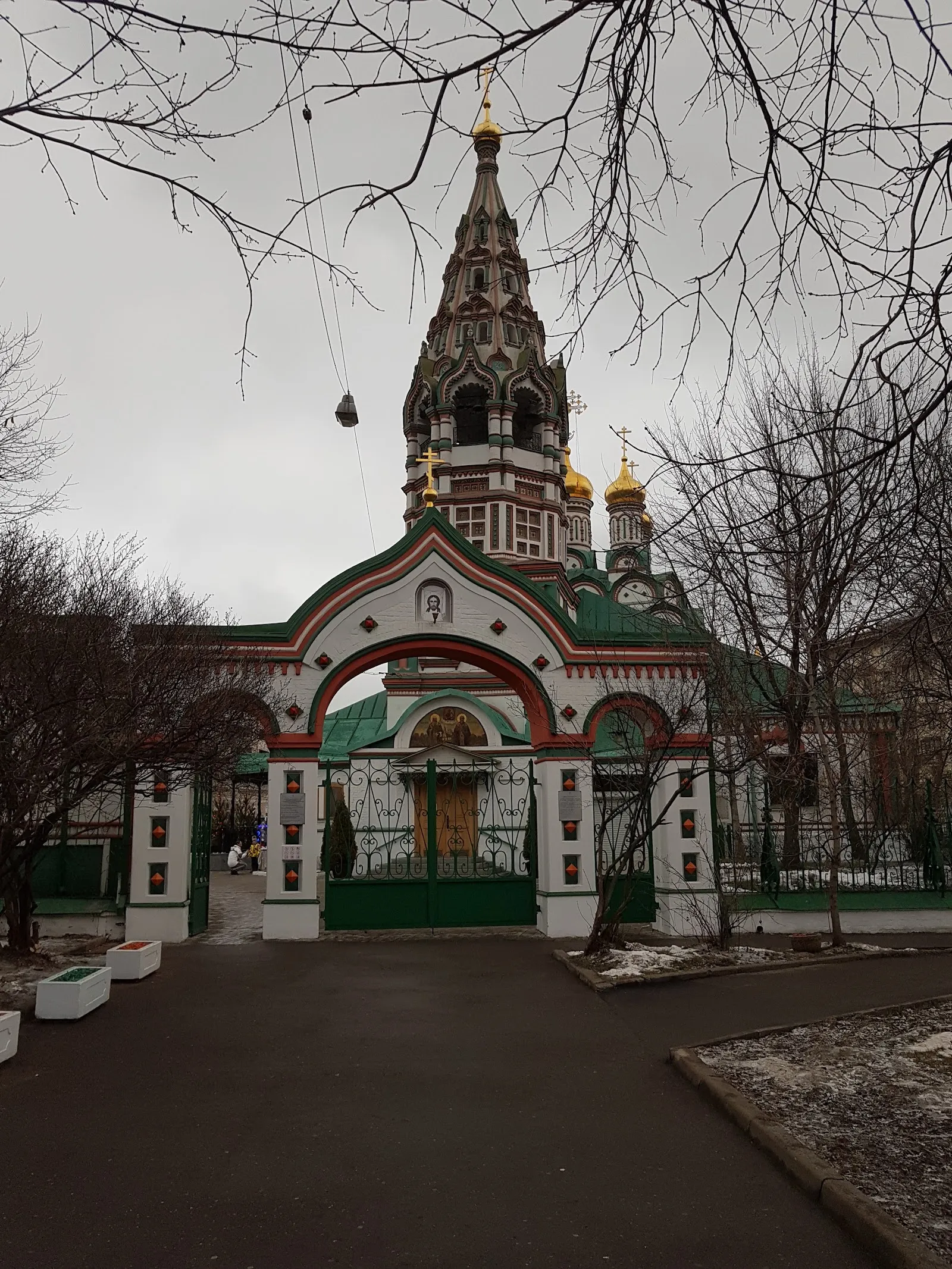
The church’s most important relic is the icon of the Mother of God “Surety for Sinners,” acquired in 1848. Inside, you can also see 17th-century icons of Saint Alexis and the Hodegetria of Smolensk.

The interior suffered severe damage during the Napoleonic invasion, and restoration continued until 1849. Later restoration work took place in 1896, 1949 and 1972. The church remained open through the years after 1917, though its largest bell was lost. That bell was returned to the tower in 1992.

Tolstoy’s parish church

Leo Tolstoy was among the church’s notable parishioners. He lived nearby, and the church remains a natural stop when visiting his former estate. Its position on Ulitsa L'va Tolstogo makes it easy to appreciate the exterior before going inside to see the icons and architectural details.

FAQ

When was St. Nicholas Church in Khamovniki built?

The present church was begun in 1679, and its main building was consecrated in 1682. The bell tower and refectory were added later.

What can you see inside the church?

Look for the icon of the Mother of God “Surety for Sinners,” as well as 17th-century icons of Saint Alexis and the Hodegetria of Smolensk.

Was Leo Tolstoy connected to the church?

Yes. Tolstoy was a parishioner and lived nearby.

Can you take photographs inside?

Photography restrictions apply in Orthodox churches. Check the rules at the church before taking pictures.

Autres incontournables à Moscou

Tout explorer