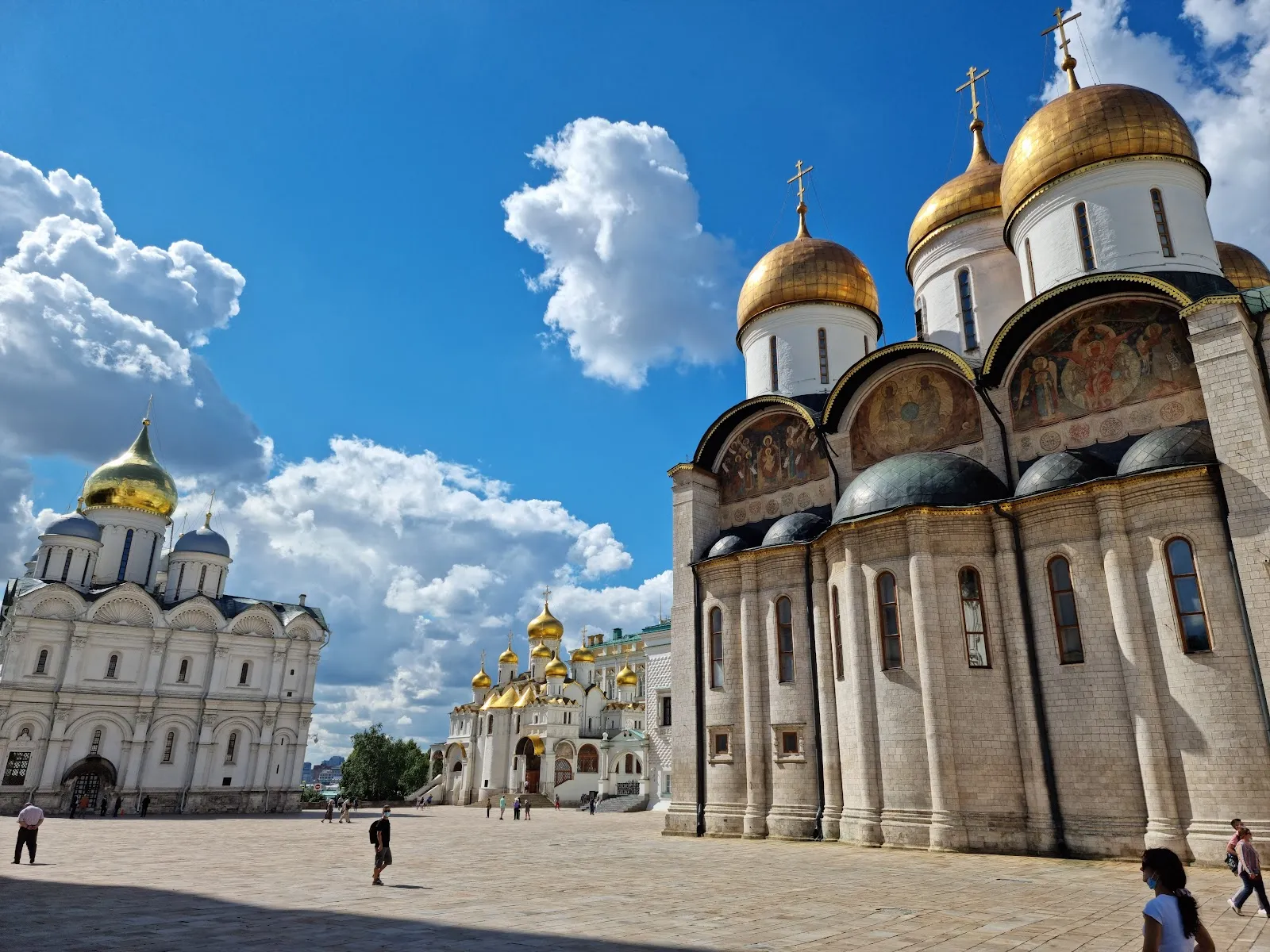
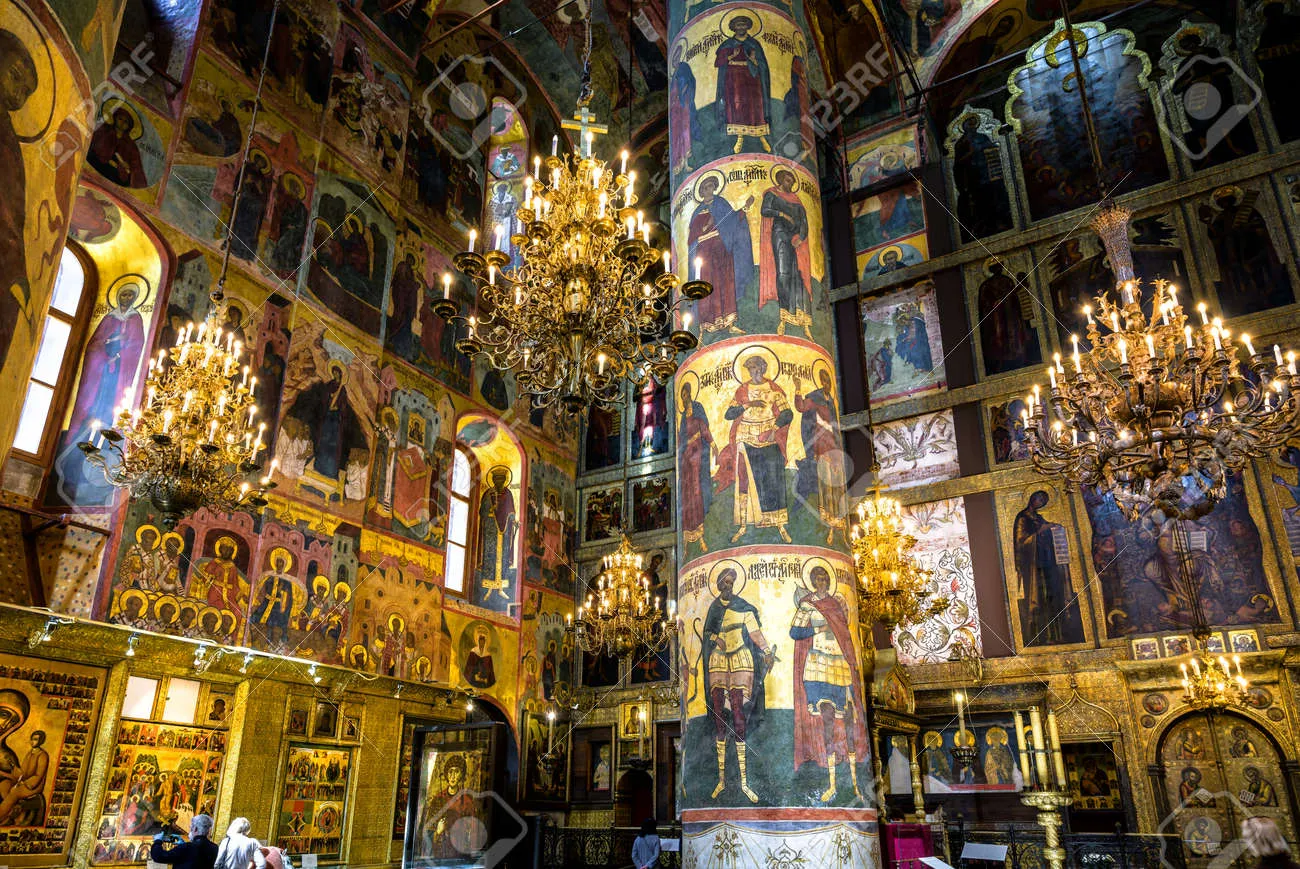
Dormition Cathedral, also called the Assumption Cathedral, stands inside the Moscow Kremlin. Italian architect Aristotele Fioravanti built it between 1475 and 1479, and its white stone walls and five golden domes make it easy to recognize. For centuries, it was the principal church of the Russian state: tsars were crowned here and patriarchs took office. Inside, look for frescoes, painted icons, a 15th-century iconostasis, historic chandeliers and ceremonial thrones. Multilingual information sheets help explain the details as you explore.
Built for the Kremlin
Italian architect Aristotele Fioravanti oversaw construction from 1475 to 1479. The cathedral’s white stone exterior and five golden domes distinguish it among the buildings of the Moscow Kremlin. It is also one of Moscow’s oldest buildings to retain its original appearance.
Before this cathedral was built, a wooden church stood at the site, with evidence pointing to the 12th or 13th century. The present building became the principal church of the Russian state and the setting for major religious and royal ceremonies.
Inside the cathedral
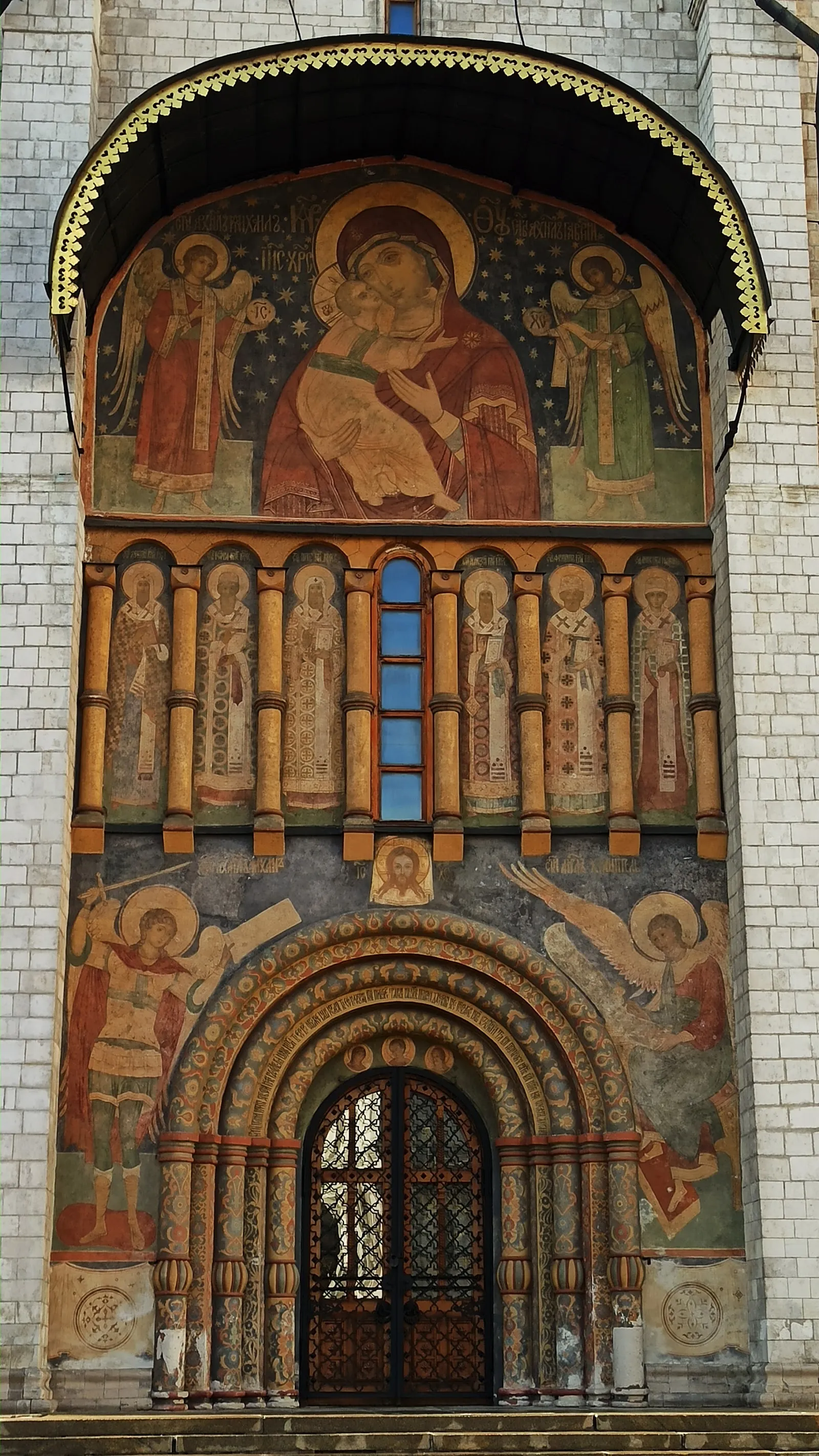
The interior holds frescoes, painted icons, historic chandeliers and ceremonial thrones. The 15th-century iconostasis is one of the key details to look for. Multilingual information sheets help visitors identify features and understand what they are seeing.
The cathedral’s role extended beyond worship. Russian tsars were crowned here, and patriarchs took office within its walls. A guided tour can add context to the building’s history and its place in state ceremonies.
FAQ
Where is Dormition Cathedral?
It is inside the Moscow Kremlin.
When was Dormition Cathedral built?
Italian architect Aristotele Fioravanti built it between 1475 and 1479.
What should I look for inside Dormition Cathedral?
Look for the 15th-century iconostasis, frescoes, painted icons, historic chandeliers and ceremonial thrones.
When is a good time to visit?
Go early in the day to avoid the busiest crowds.