The Central Armed Forces Museum on Ulitsa Sovetskoy Armii in Moscow traces the history of the Russian and Soviet military through weapons, uniforms, documents, flags and military equipment. Its collection ranges from daggers and swords to tanks and cannons, with exhibits on the army, navy and air force. Look for the Victory Flag, raised over the Reichstag in 1945, and the wreckage of a U2 aircraft. Much of the display text is in Russian, so an audio guide or translation app can help you follow the exhibits.
A collection spanning military history
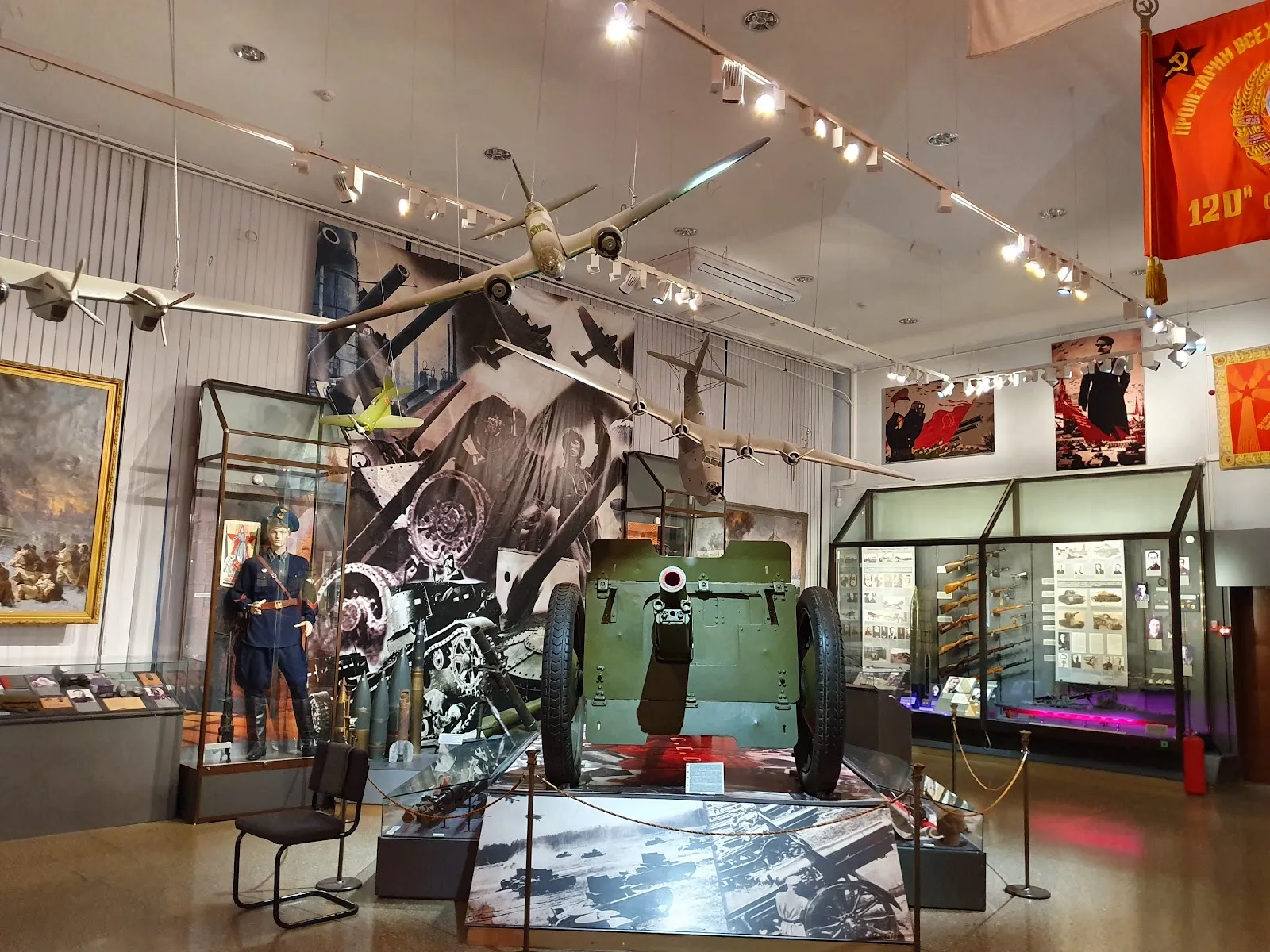
The museum documents the development of the Russian and Soviet armed forces through objects rather than a single type of display. Weapons, uniforms, photographs and documents sit alongside large pieces of military equipment. The collection includes daggers, swords, rifles, machine guns, cannons and tanks, giving the exhibits a wide range of scale and detail.
The displays cover the Russian army and fleet, including the civil war of 1918 to 1922, as well as later periods. Military history enthusiasts can follow changes in equipment and uniforms across the collection. Displays also include captured German standards and other wartime objects.
The Victory Flag and wartime exhibits
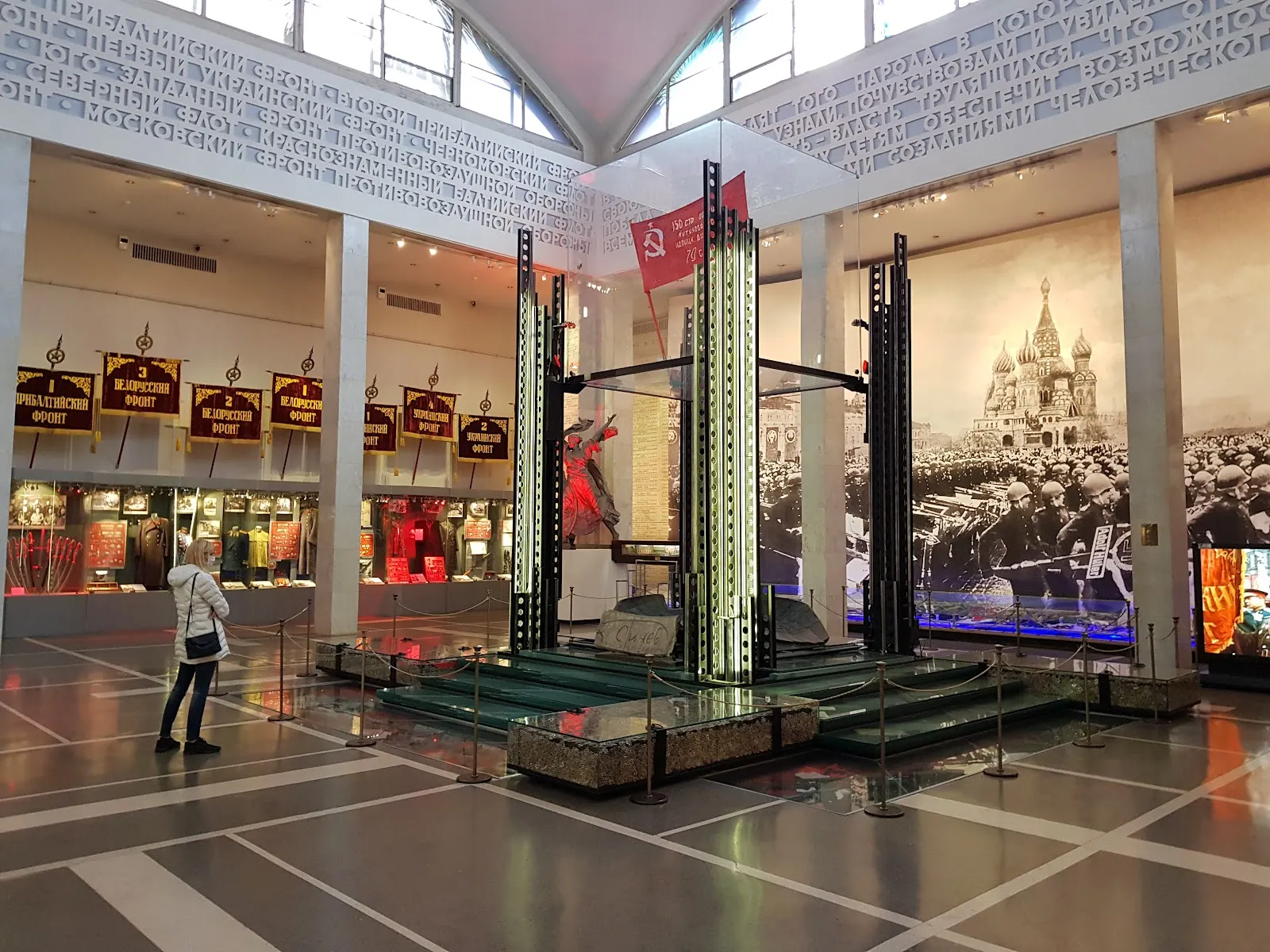
A key object to look for is the original Soviet Victory Flag, raised over the Reichstag in Berlin in 1945. The museum also holds the wreckage of a U2 aircraft. These objects sit within a collection that devotes substantial attention to the Great Patriotic War, the name used in Russia for the Soviet Union’s war against Nazi Germany.
The wartime displays bring together weapons, flags and other artifacts. They offer a way to explore the conflict through the objects associated with the Soviet military, rather than through equipment alone.
Following the displays
Most exhibit captions are in Russian, which can make it harder to understand the details if you do not read the language. Audio guides provide additional information, and a translation app can help with written captions. A printed English guide is also available for the battle halls.
The museum is at Ulitsa Sovetskoy Armii, 2. It has a wheelchair-accessible entrance, elevator and restroom. Admission is charged, and booking tickets in advance is recommended.
FAQ
What can you see at the Central Armed Forces Museum?
The collection includes weapons, uniforms, documents, flags and military equipment, with displays on the army, navy and air force. Notable objects include the Victory Flag and U2 wreckage.
Is the Victory Flag at the museum?
Yes. The museum displays the original Soviet flag raised over the Reichstag in Berlin in 1945.
Are the exhibits in English?
Most captions are in Russian. Audio guides, a translation app or a printed English guide for the battle halls can help.
Does the museum charge admission?
Yes, admission is charged. Tickets are recommended in advance.