On Doha’s Corniche, the Museum of Islamic Art occupies a purpose-built island and brings together art from across the Muslim world. I. M. Pei’s geometric limestone building is part of the visit: look for its spacious galleries, central atrium and views of the city skyline. The collection spans centuries and includes ceramics, metalwork, textiles, jewellery and manuscripts from three continents. Allow two to three hours to explore the displays at an unhurried pace, then take in the waterfront setting outside.
A geometric landmark on the Corniche
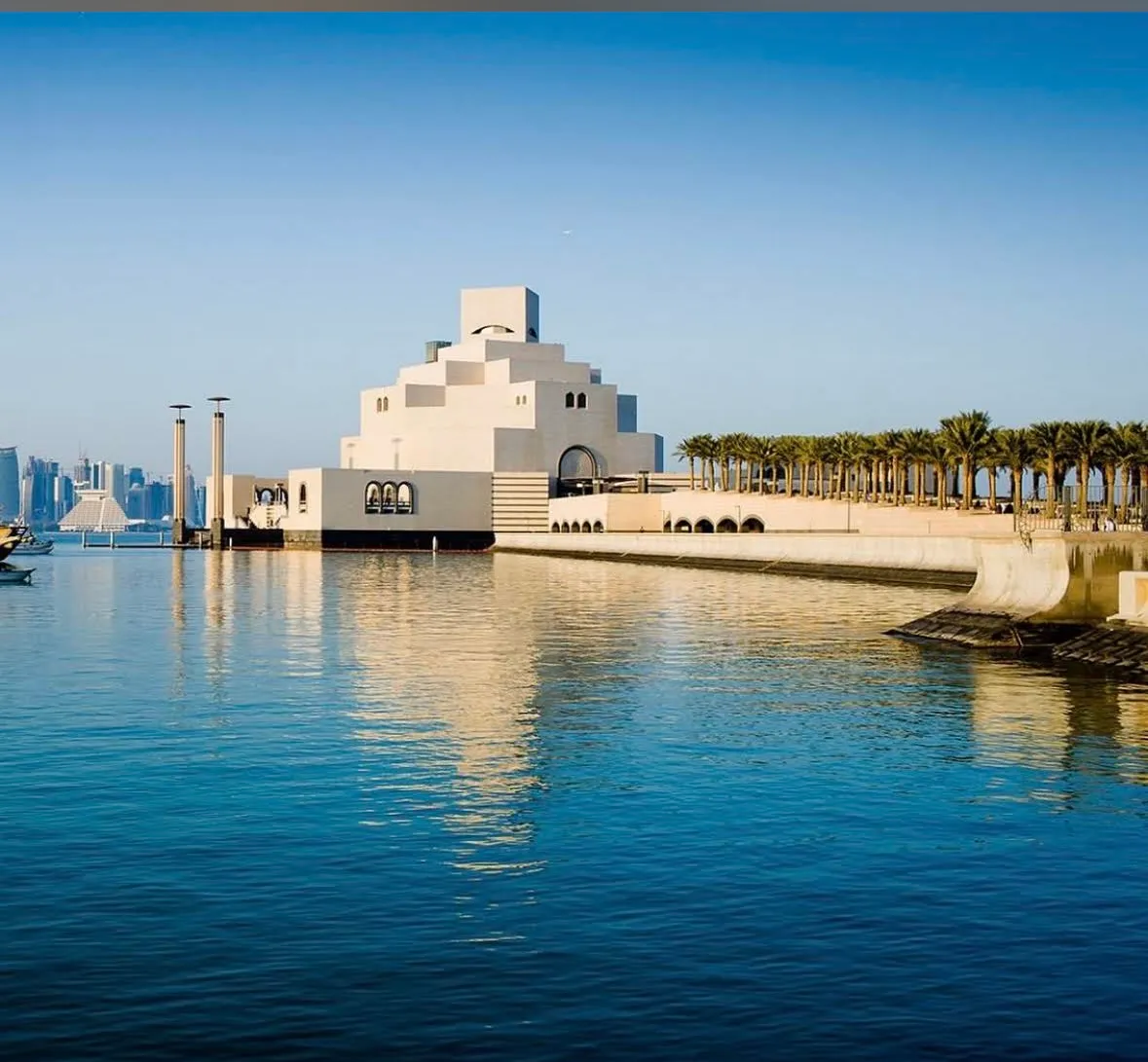
The Museum of Islamic Art opened in 2008 on a purpose-built island along Doha’s waterfront. Architect I. M. Pei designed the building, whose pale limestone exterior is formed from large geometric shapes. The museum’s position apart from surrounding buildings was chosen for the project, and the structure has become one of Doha’s recognizable landmarks.
The design draws on traditional Islamic architecture while using a modern geometric form. Inside, a central atrium and a striking double staircase make the building itself part of the visit. Light enters the open spaces, and the galleries are arranged to let visitors explore the collection at their own pace.
Art across centuries and regions
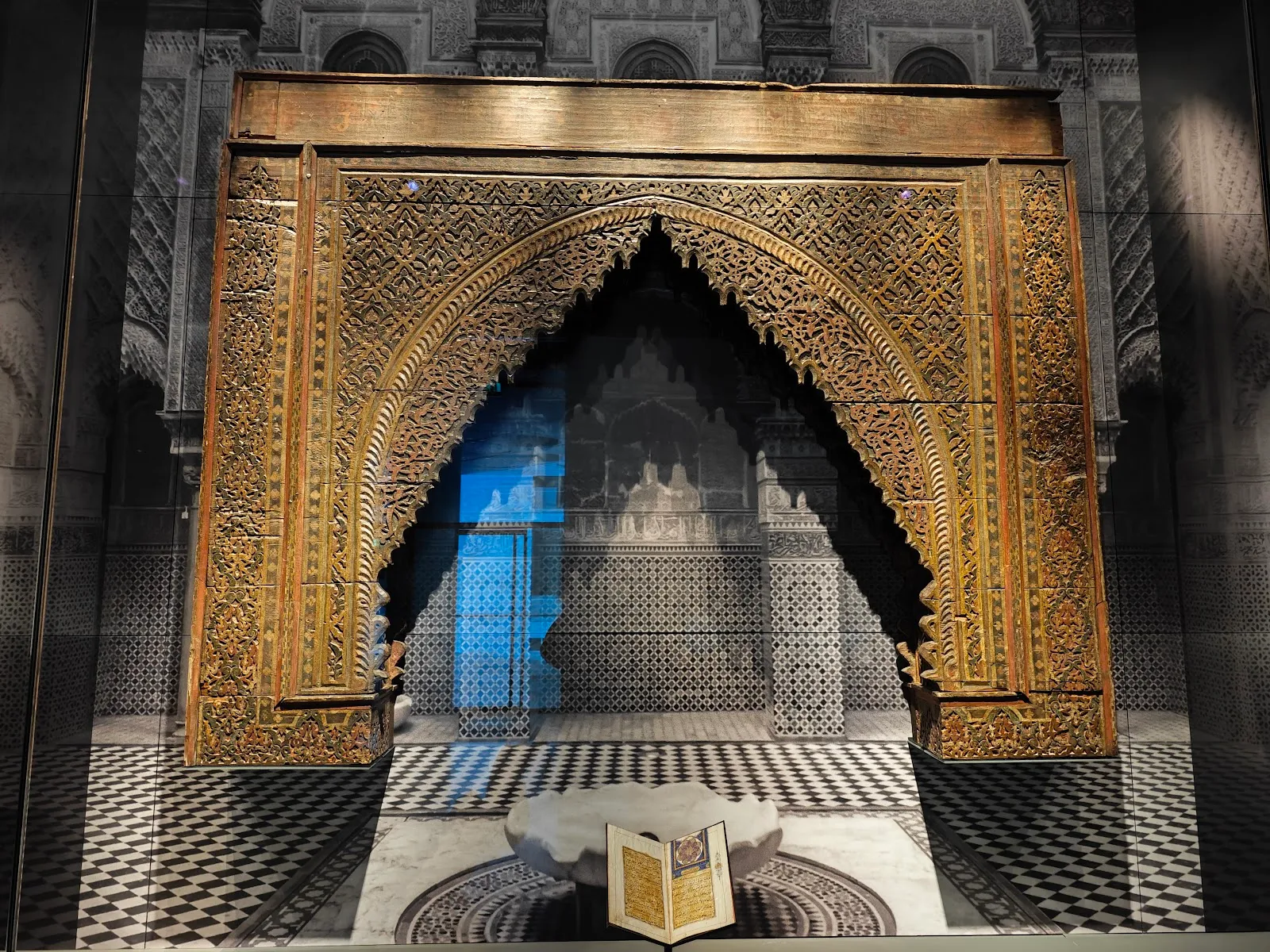
The collection spans around 1,400 years and includes works from three continents. Galleries bring together objects from places such as Egypt, Iran, Turkey, India and Central Asia. Rather than focusing on a single medium, the displays range from ceramics, glass and metalwork to textiles, jewellery, woodwork and manuscripts.
The objects give a sense of the range of artistic traditions represented across the Islamic world. Look for finely worked materials and detailed decoration as you move between the galleries. The displays also include art connected with everyday life, religion, trade and science, offering more than one way into the collection.
A restored reception room from 19th-century Damascus is among the museum’s notable displays. The room was taken apart into 427 pieces and reassembled in the museum. It offers a change of scale from individual objects, with the chance to see an interior presented as a complete space.
Planning time for the galleries
The museum is large enough to reward a few hours, especially if you want to read the object descriptions and visit more than one floor. Two to three hours is a useful allowance for the galleries; add time if you plan to stop for a meal or spend longer outside.
The museum has restaurants on two floors, so you can pause during your visit. A light jacket can be useful inside, where the temperature may feel cool. Advance ticket arrangements are recommended, so check the museum’s current information before you go.
Outside, the island setting gives views across the water towards Doha’s skyline. The museum grounds and surrounding waterfront make a quieter counterpoint to the galleries, and the city view is especially appealing as daylight fades.
FAQ
How long should I spend at the Museum of Islamic Art?
Allow around two to three hours to explore the galleries without rushing.
What can I see in the museum?
The collection spans around 1,400 years and includes ceramics, glass, metalwork, textiles, jewellery, woodwork and manuscripts from three continents.
Is advance booking recommended?
Yes. Advance tickets are recommended, so check the museum’s current ticket information before your visit.
Are there places to eat inside the museum?
Yes. The museum has restaurants on two floors.