Porto Cathedral, or Sé do Porto, is a Roman Catholic cathedral on Terreiro da Sé in Porto’s historic centre. Its stone exterior has a fortress-like look, while the building brings together Romanesque, Gothic and Baroque work from different periods. Inside, look for the rose window and silver altarpiece; the Gothic cloister is lined with blue-and-white azulejos showing religious scenes. The cathedral square and cloister also give you views across Porto towards the Douro. Come for the architecture, the tilework or a quiet pause above the old town.
A cathedral built across several centuries
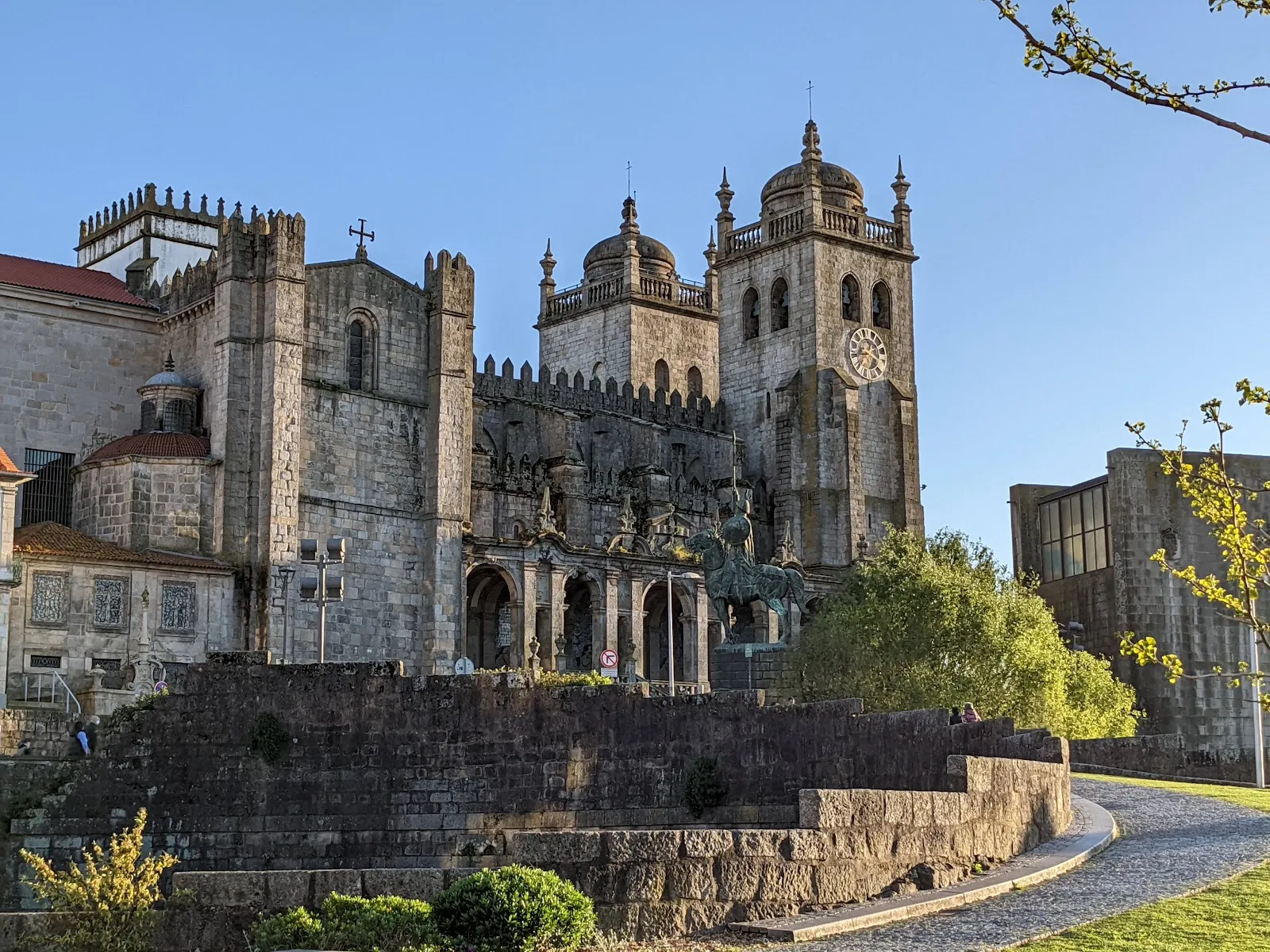
Porto Cathedral stands in the city’s historic centre, on the high ground above the Douro. Known locally as Sé do Porto, it is one of the city’s oldest religious buildings. Construction began in the 12th century and continued into the 13th. Later changes added Gothic and Baroque elements, so the building records several phases of design rather than a single finished style.
The cathedral’s sturdy stone exterior gives it a fortified appearance. Its main architectural character is Romanesque, with later additions visible in the Gothic cloister and Baroque decoration. The 18th century brought substantial changes, including work associated with Italian architect Nicolau Nasoni. The result is a building where the layers of history are part of what to look for.
Details inside the cathedral
Inside, the rose window is one of the notable features to seek out. The cathedral also contains a silver altarpiece in the Chapel of the Holy Sacrament, an example of Baroque silverwork. The interior has a quieter, more restrained feel than the ornate details suggest from outside; take time to notice the stonework and the shift between architectural periods.
The building has also been part of important moments in Portuguese history. Prince Henry the Navigator was baptised here, and King John I married Philippa of Lancaster at the cathedral in 1387. These events connect the church to the city’s religious life and to the history of its royal relationships.
Azulejos in the Gothic cloister
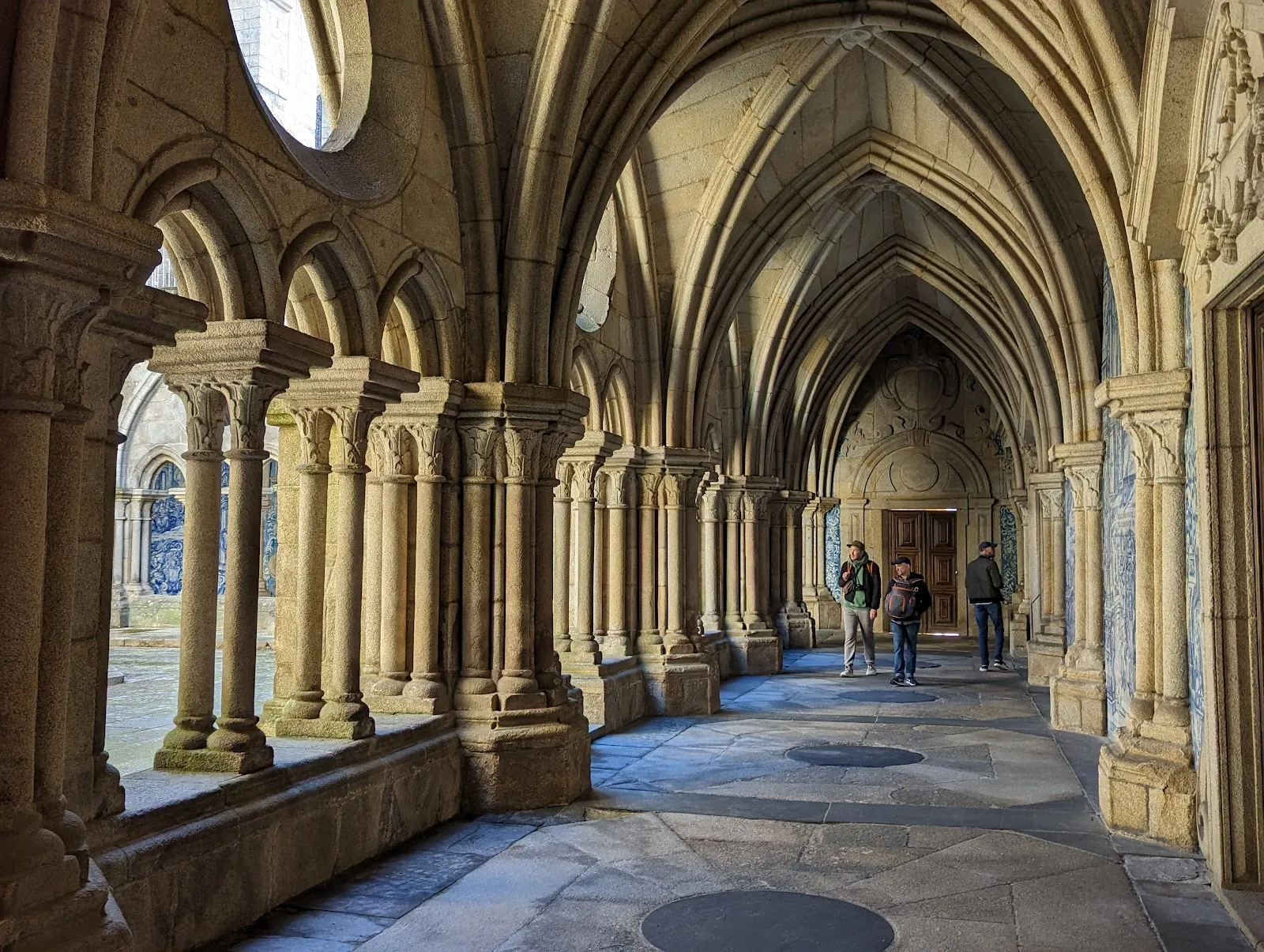
The cloister, added in the Gothic period, is one of the cathedral’s most distinctive spaces. Its galleries and walls are decorated with blue-and-white azulejos. The panels include religious scenes, among them depictions connected with the life of the Virgin Mary. Look closely at the tiled surfaces as you walk through the cloister rather than treating it only as a passage between rooms.
The cloister and its upper walkways also open onto views of the city. From the cathedral precinct, Porto’s rooftops and the Douro come into view below. The square outside is another place to pause for a broad look across the old town.
Planning your visit
The cathedral is at Terreiro da Sé, in Porto’s historic centre. The surrounding streets are steep, so the approach on foot can involve an uphill walk. São Bento station is nearby, making the cathedral easy to combine with a visit to the station or a walk through the old town.
Visit early if you want a quieter atmosphere indoors. Set aside time for the cathedral and cloister, and consider the tower if you want a higher viewpoint. The tower’s views are attractive, though the viewpoint at Clérigos Tower is higher. The cathedral also sits close to Dom Luís I Bridge, so either landmark can fit into the same walk.
FAQ
Where is Porto Cathedral?
It is at Terreiro da Sé in Porto’s historic centre, on high ground above the Douro. São Bento station is nearby.
What should I see inside Porto Cathedral?
Look for the rose window and the silver altarpiece in the Chapel of the Holy Sacrament. The Gothic cloister is decorated with blue-and-white azulejos.
Can you climb the tower at Porto Cathedral?
Yes. The tower can be climbed for views over Porto, though Clérigos Tower has a higher viewpoint.
When is a good time to visit Porto Cathedral?
Early morning is a good choice for a quieter visit inside.