In Porto’s Miragaia district, the Parish Church of São Pedro de Miragaia is a small historic church with Romanesque roots and richly decorated Rococo details. Look for the blue-and-white azulejo tiles outside, then step in to see the main altar’s early 16th-century painting of the descent of the Holy Spirit, flanked by Saint John the Baptist and Saint Paul. Its connection to the Douro’s fishing community adds context to its dedication to Saint Peter, the patron saint of fishermen.
A church shaped by Miragaia
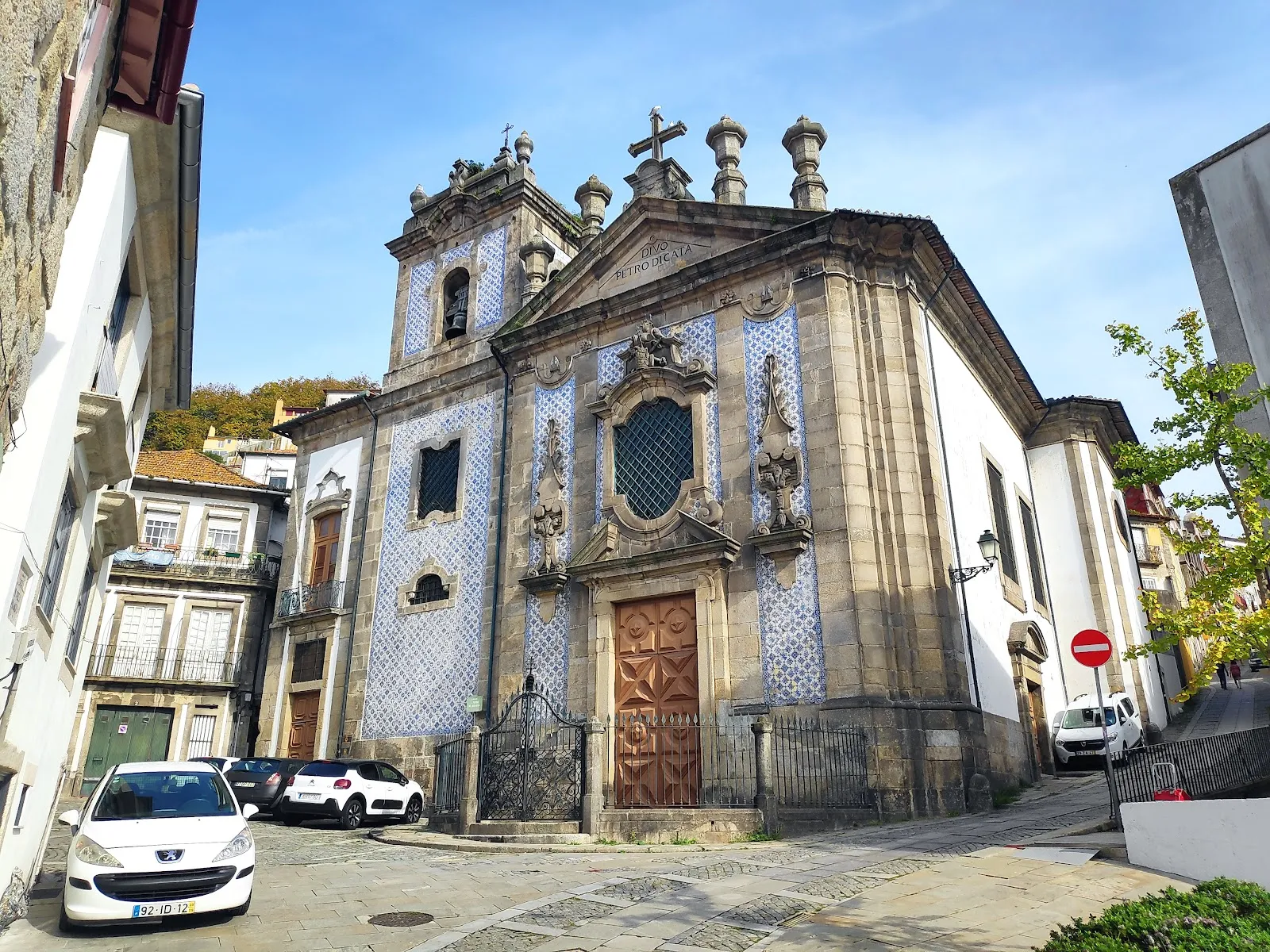
São Pedro de Miragaia is linked to the Douro-side fishing community that lived in this part of Porto. Its dedication is to Saint Peter, the patron saint of fishermen. Miragaia is among the city’s oldest inhabited districts and was once a poor fishing village.
The church has medieval, Romanesque roots, though later rebuilding and decoration changed its appearance. Its present form is associated with an 18th-century rebuilding that used stone and building elements from the demolished Monchique convent.
The altar painting and azulejos
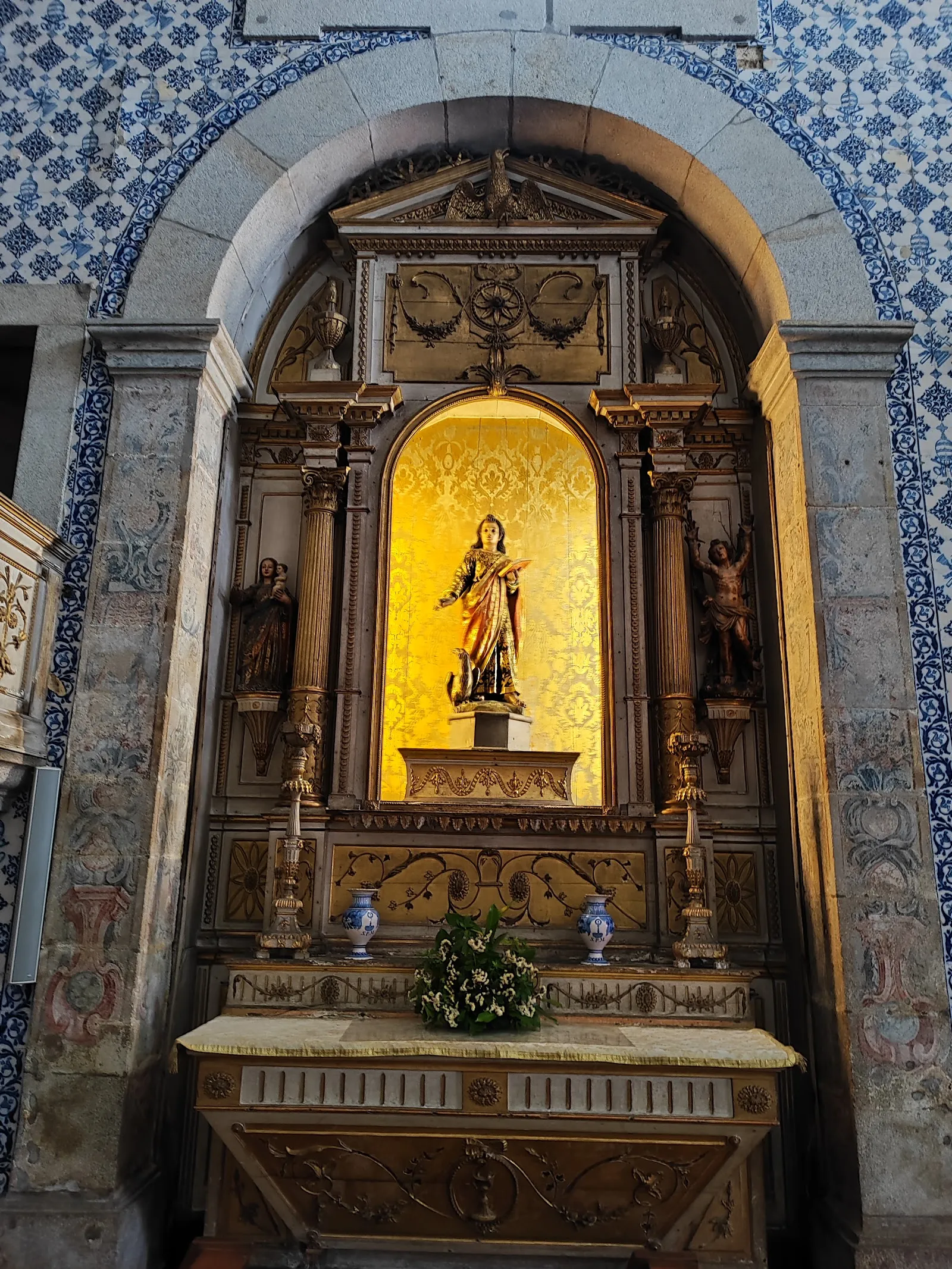
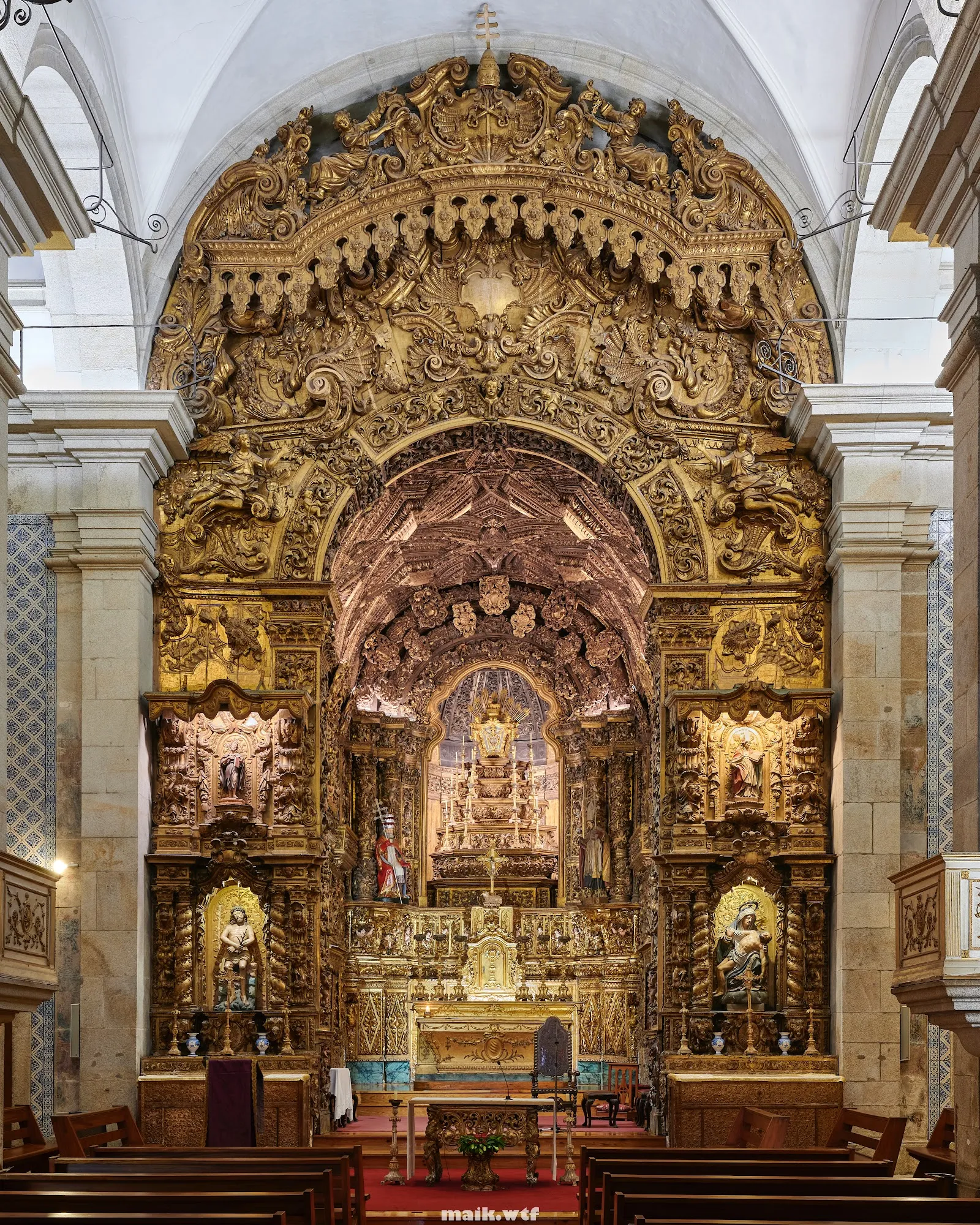
The main altar holds a painting made between 1512 and 1517 by an unknown artist. It depicts the descent of the Holy Spirit, with Saint John the Baptist and Saint Paul beside the central scene. The work predates the church’s later Rococo decoration.
Outside, blue-and-white Portuguese azulejo tiles cover parts of the church. Inside, look closely at the Rococo ornament, especially around the apse and altar.
FAQ
What is the main artwork inside São Pedro de Miragaia Church?
The main altar has an early 16th-century painting of the descent of the Holy Spirit, flanked by Saint John the Baptist and Saint Paul.
What architectural styles can you see at the church?
The church has Romanesque origins and later Rococo decoration.
Why is the church dedicated to Saint Peter?
The church is tied to Miragaia’s fishing community, and Saint Peter is the patron saint of fishermen.