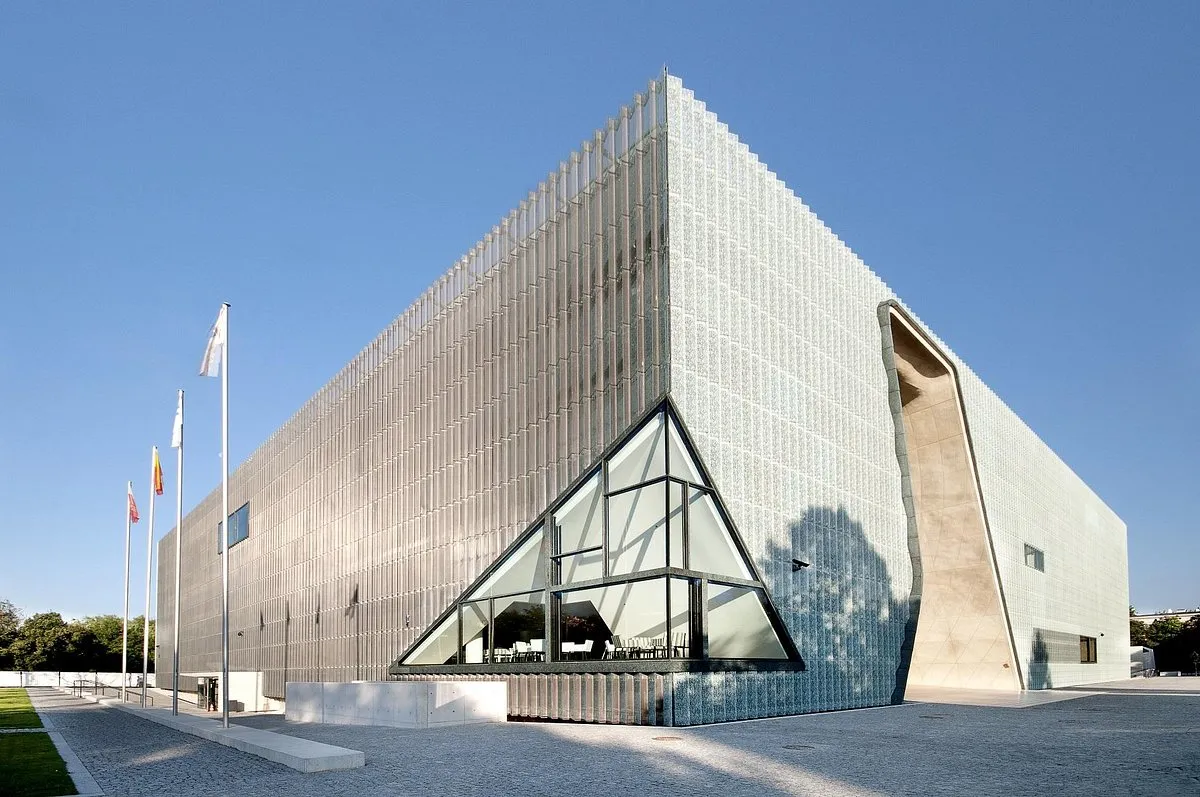
On Mordechaja Anielewicza Street in Warsaw’s Muranów district, the POLIN Museum traces a thousand years of Jewish life in Poland, from early settlement to the present. Its permanent exhibition spans eight galleries, combining historical objects, multimedia displays and interactive elements. The story includes cultural life and contributions as well as persecution and the Holocaust, presented with care and emotional force. The glass, copper and concrete building, designed by Finnish architect Rainer Mahlamäki, is worth looking at closely. Allow about three hours to explore, and longer if you want to watch the films.
A thousand years of Jewish life
The permanent exhibition follows Jewish life in Poland across a millennium, from the earliest settlement through changing periods of community life and culture to the present. Its scope reaches beyond the Holocaust: the galleries also present the history, experiences and contributions of Jewish people in Poland over many centuries.
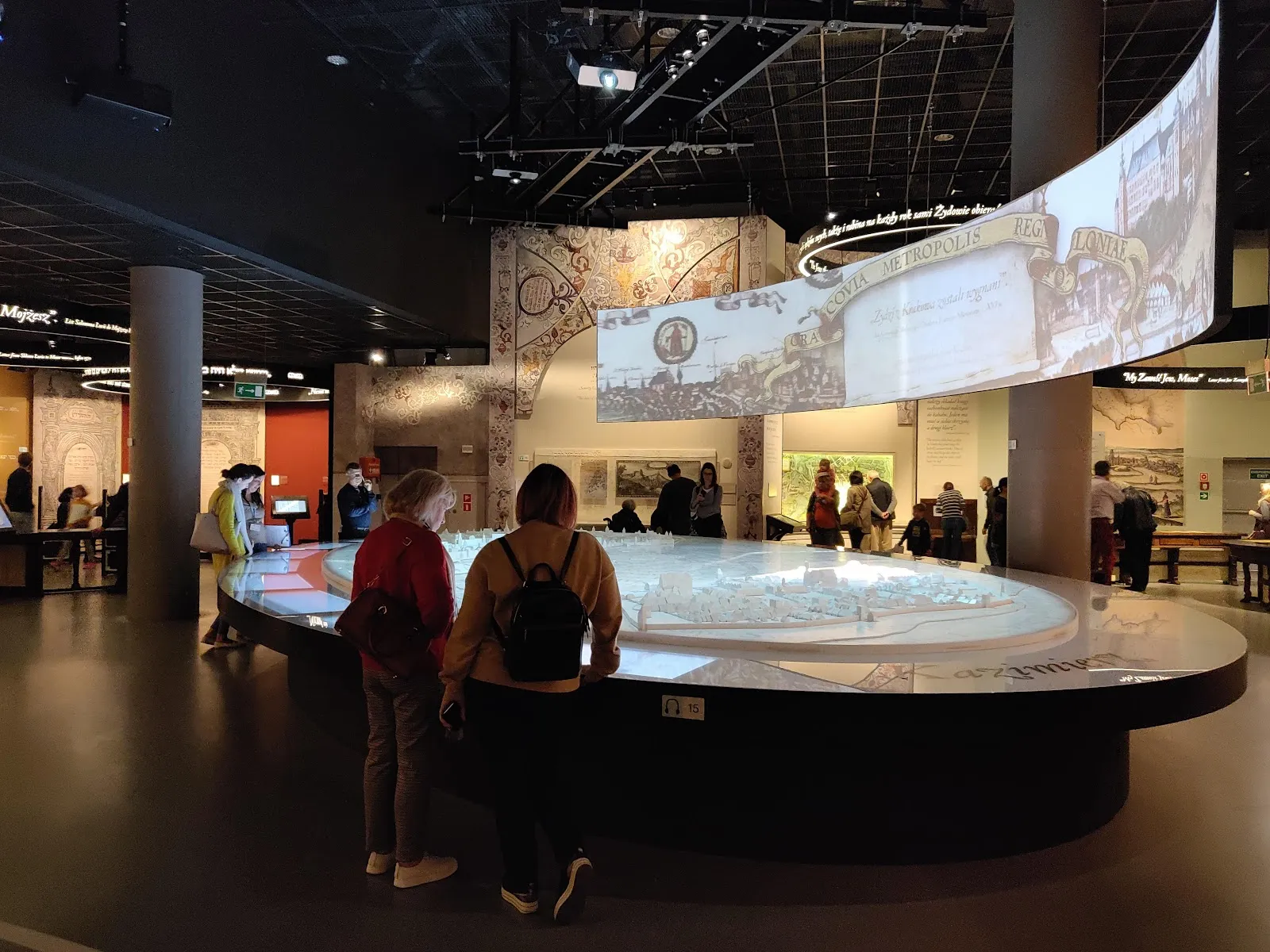
The exhibition is arranged across eight galleries and uses multimedia, historical material and interactive displays to help tell that story. You can move through different periods and settings, encountering personal accounts alongside broader historical context. The result is an extensive visit, so a quick walk-through will leave much unseen.
Stories told through places and objects
Reconstructed parts of historic synagogues offer a sense of the buildings and spaces that shaped Jewish religious life. One especially detailed reconstruction recreates the interior roof of the wooden synagogue of Gwoździec, built around 1640 and destroyed during the Second World War.
Other displays use interactive maps, photographs, films and digital elements. An interactive model of Kraków and its Jewish neighbourhood of Kazimierz brings a particular place into view, while the wider exhibition moves between different eras and locations. Some activities invite visitors to engage directly with the displays, including printing coats of arms on paper.
The galleries also address the persecution and destruction of Jewish communities during the war. This part of the exhibition is emotionally demanding, set within a broader account of Jewish history rather than presented as its only chapter.
The building and its setting
Finnish architect Rainer Mahlamäki designed the museum building, completed in 2013. Glass, copper and concrete shape its exterior and interior, with a striking entrance and a central space often described as a concrete canyon. The architecture gives the visit a strong sense of place before you reach the galleries.
The museum stands in Muranów, an area closely tied to pre-war Jewish Warsaw and later enclosed within the Warsaw Ghetto. The Monument to the Ghetto Heroes is opposite the building. The setting connects the museum’s account of Jewish life in Poland with the history of Warsaw’s Jewish community and the events of the Second World War.
Planning time inside
The exhibition covers a lot of material, and visitors who try to read and explore every display may need longer than three hours. Films add to the time required. An audio guide is available free of charge in several languages, and its commentary changes as you move between rooms.
The on-site restaurant, Warsze, provides a place to stop during a long visit. Thursday admission is free, though that can bring larger crowds. Advance ticket purchase is recommended, so check the museum’s official website when planning your visit.
FAQ
How long should you spend at the POLIN Museum?
Plan for about three hours to explore the exhibition. Watching the films or reading more of the displays can make the visit longer.
Is admission free on Thursdays?
Yes. Admission is free on Thursdays, though the museum can be busier that day.
Does the museum have an audio guide?
Yes. A free audio guide is available in several languages, with commentary that changes as you move through the rooms.
What does the permanent exhibition cover?
It traces a thousand years of Jewish life in Poland across eight galleries, including cultural history, the Holocaust and the period after the war.