
Biomuseo is a natural history museum on Panama City’s Amador Causeway, near the Pacific entrance to the Panama Canal. Frank Gehry’s brightly colored, angular building is a draw in its own right; inside, interactive galleries explain Panama’s biodiversity and how the isthmus connected North and South America. Follow the winding path between eight pavilions, where exhibits cover the region’s ecological history, human presence and the effects of the land bridge on species. The indoor-outdoor layout and hands-on displays make this a good stop for families and science-minded travelers.
A building shaped by its subject
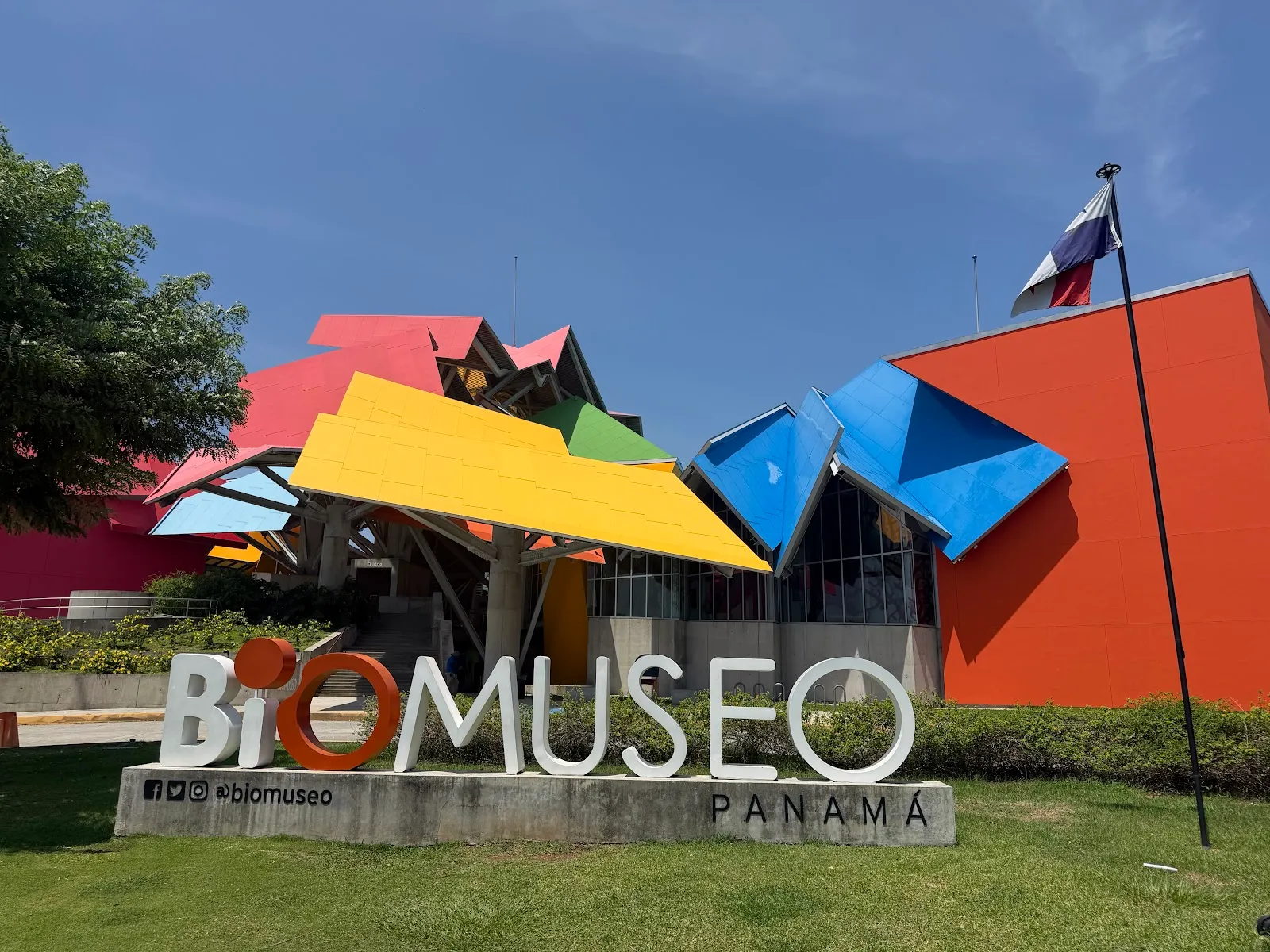
Biomuseo stands on the Amador Causeway, near the Pacific entrance to the Panama Canal. Architect Frank Gehry designed the building, whose brightly colored, irregular roof forms make it easy to spot from the water and from parts of Panama City. It was his first project in Latin America.
The architecture sets up the museum’s subject: Panama’s natural history. The colors and shapes recall the variety of the country’s plant and animal life, while the building’s position beside the canal places it close to the geography that shaped the exhibits. Take time to look at the exterior before going inside; the design is a major part of the visit.
How the isthmus changed life
The galleries follow the story of Panama as a biological connection between North and South America. When the isthmus emerged from the sea, it created a route for species to move between the continents and separated the Atlantic and Pacific. The museum explains how that geological change affected biodiversity across the region.
Exhibits also cover the ecosystems found in Panama, the presence of humans through time and the ways people have affected the environment. Large visuals, multimedia presentations and hands-on activities make the material accessible to visitors who prefer exploring to reading display text alone. Animal figures and examples of local species help bring the ecological story into focus.
Making your way through the galleries
The museum’s eight pavilions are connected by a winding path, with indoor and outdoor spaces along the route. The galleries combine interactive displays with visual storytelling, so allow time to stop at activities rather than treating the visit as a quick walk-through. The subject moves from the formation of the isthmus to the species and ecological relationships that followed.
Guided tours are available for a closer explanation of the exhibits. Staff can assist in English and Spanish, and tours are also available for visitors with visual impairments. The site has wheelchair-accessible entrances, restrooms and parking. A café and restrooms are on site, and the museum is family-friendly.
Planning a visit on the Causeway
Set aside around 1.5 to 2 hours for the museum. It can become busier later in the day, so an early arrival or a weekday visit can make it easier to explore at your own pace. The museum is closed on Mondays and has shorter visiting hours than many city attractions, so check its current schedule before setting out. Advance ticket purchase is recommended.
The Amador Causeway also makes the building an easy stop to pair with time outdoors. The museum’s path and setting give you views toward the Panama Canal, while the colorful exterior is worth seeing even before you enter. Bring a refillable bottle, with places to top it up inside.
FAQ
How long do you need at Biomuseo?
Plan for about 1.5 to 2 hours to explore the galleries and connected pavilions.
What is Biomuseo about?
The museum explains Panama’s natural history, biodiversity and the ecological effects of the isthmus connecting North and South America.
Is Biomuseo suitable for children?
Yes. The museum is family-friendly and has interactive displays and hands-on activities.
Is Biomuseo wheelchair accessible?
The museum has a wheelchair-accessible entrance, restrooms and parking.
Should you buy Biomuseo tickets in advance?
Advance ticket purchase is recommended.


