Koutoubia is Marrakech’s largest mosque, built in the 12th century under Almohad rule. Its minaret, about 77 metres high, is one of the city’s clearest landmarks and can help you find your way around the medina. Non-Muslims cannot enter the mosque, but you can admire its geometric details and decorative arches from outside, then take a quiet break in the surrounding gardens. The mosque is close to Jemaa el-Fnaa, making it easy to include on a walk through the old city.
A landmark beside the old medina
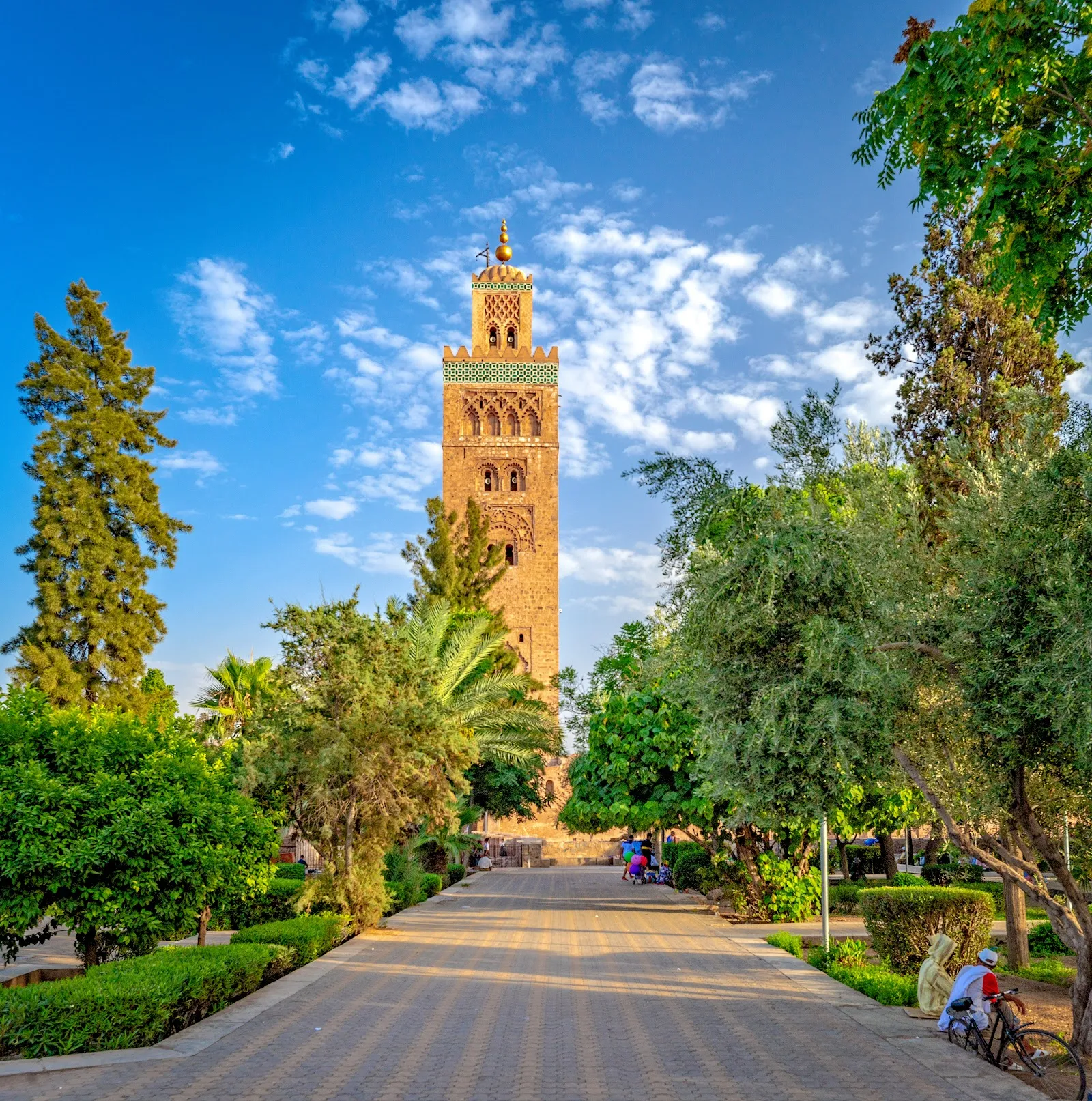
Koutoubia stands close to Jemaa el-Fnaa, near the south-western side of Marrakech’s medina. Its minaret rises above the surrounding buildings and is visible from many parts of the city. That makes it a useful point of reference when walking through the old town, as well as a landmark to look for from rooftops and nearby streets.
The mosque dates to the 12th century and was built under Almohad rule. It is the largest mosque in Marrakech and remains an active place of worship. Its name is linked to the booksellers who once traded in the area. The surrounding gardens and open grounds give you space to pause between visits to the medina’s crowded streets.
Reading the minaret’s design
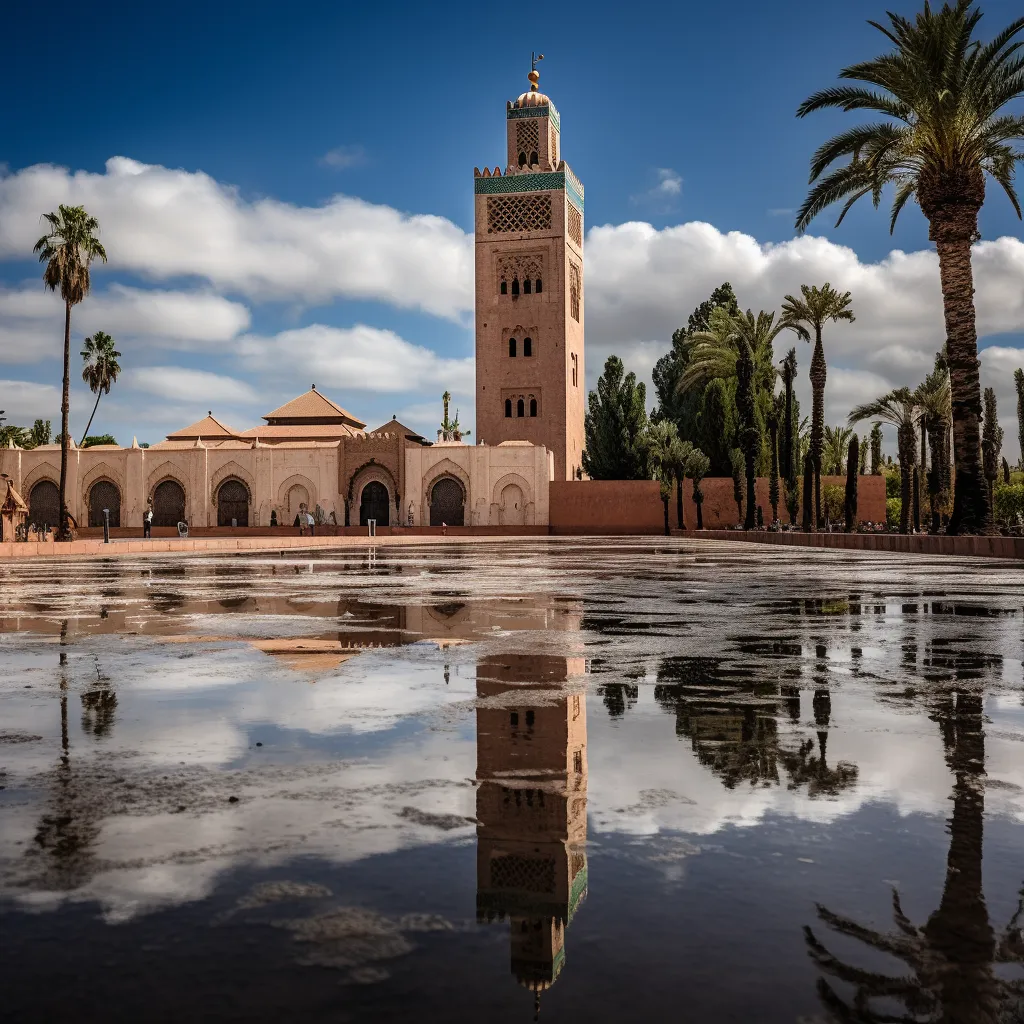
The minaret is the most visible part of the complex. It is about 77 metres high, with a spire and metal orbs at the top. Look closely at its exterior for geometric patterns, decorative arches, curved windows and bands of ceramic detail. The exterior decoration is concentrated on the tower, while the mosque’s broader Almohad design is more restrained.
The tower’s height makes it a practical guide across Marrakech, where it stands out above the low-rise medina. It has also served as an architectural model for other well-known towers, including Seville’s Giralda and the Hassan Tower in Rabat.
Visiting respectfully
The mosque is open to Muslim worshippers, but non-Muslims cannot enter. You can still appreciate its architecture from the surrounding grounds and gardens. Treat the site as a place of worship: dress with care, keep a respectful distance from prayer, and avoid disrupting people who are there to pray.
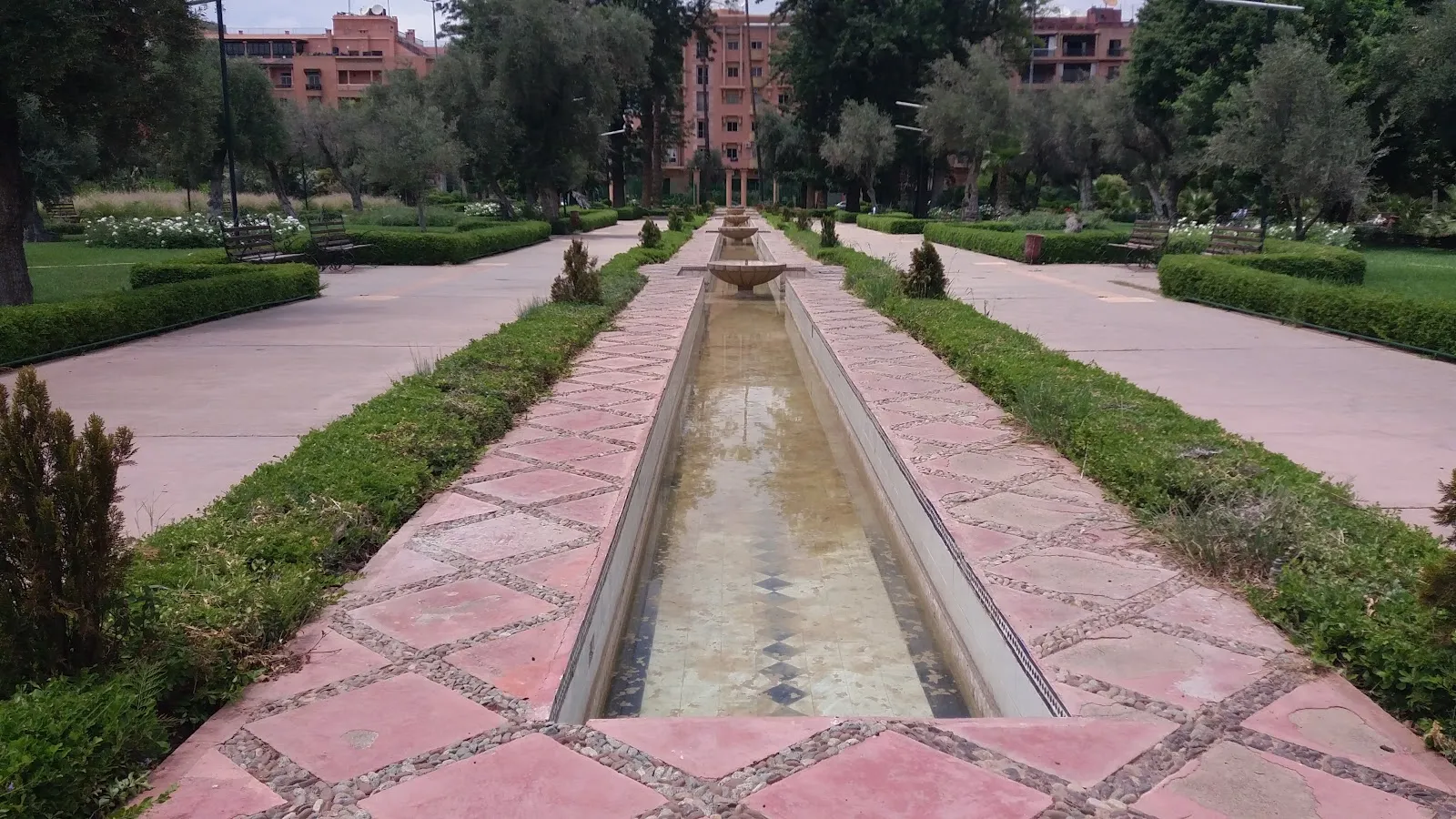
The gardens are a place to walk or take a seat, with views back towards the minaret. Early morning and late afternoon are suggested times to visit for better light and fewer crowds. If you are photographing the building, the exterior and gardens provide views without entering the mosque. Nearby vendors may approach; a polite refusal is enough if you do not wish to engage.
FAQ
Can non-Muslims enter Koutoubia Mosque?
No. Non-Muslims cannot enter the mosque, but can view its exterior and visit the surrounding gardens.
What is Koutoubia known for?
It is Marrakech’s largest mosque and is known for its 12th-century minaret, about 77 metres high, and its Almohad architectural details.
Where is Koutoubia in Marrakech?
The mosque is beside the medina, close to Jemaa el-Fnaa.
When is a good time to visit Koutoubia?
Early morning or late afternoon is suggested for fewer crowds and softer light.