Jardin Majorelle is a botanical garden in Marrakech’s Gueliz district, known for its cobalt-blue buildings and plants gathered from around the world. French painter Jacques Majorelle developed the garden over more than 40 years; Yves Saint Laurent and Pierre Bergé later bought and restored it. Follow the paths past cacti, palms, bamboo, pools and water lilies, and look for the striking 1930s Cubist villa. The garden also has a museum of North African arts and crafts, and the Yves Saint Laurent Museum is nearby.
A garden shaped by Jacques Majorelle
French painter Jacques Majorelle began developing the garden in the 1920s. The work continued for more than 40 years, turning the grounds into a botanical collection as well as a designed landscape. Majorelle brought together plants from different parts of the world, including cacti, palms, bamboo and banana trees.
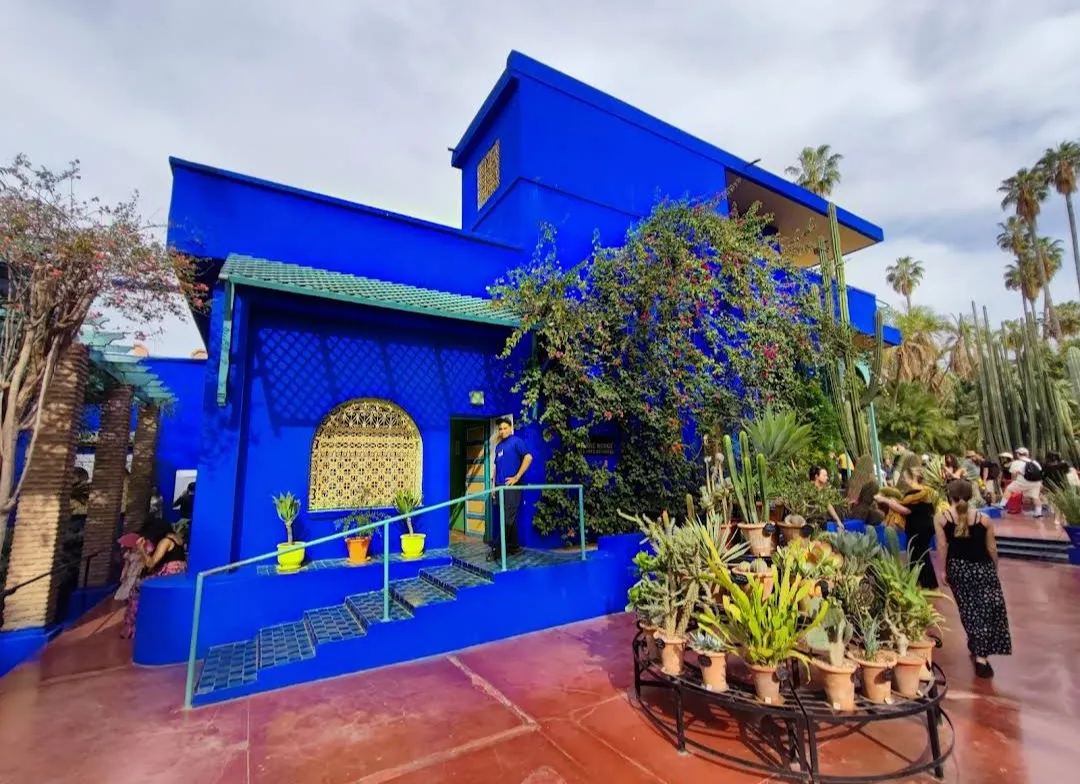
The bold blue used on buildings and pots gives the garden its distinctive character. Yellow details add another strong colour against the leaves and flowers. Paths wind through planted areas at different levels, with pools and water features along the way. Water lilies and lotus flowers appear in some of the ponds.
The villa and the garden’s collections
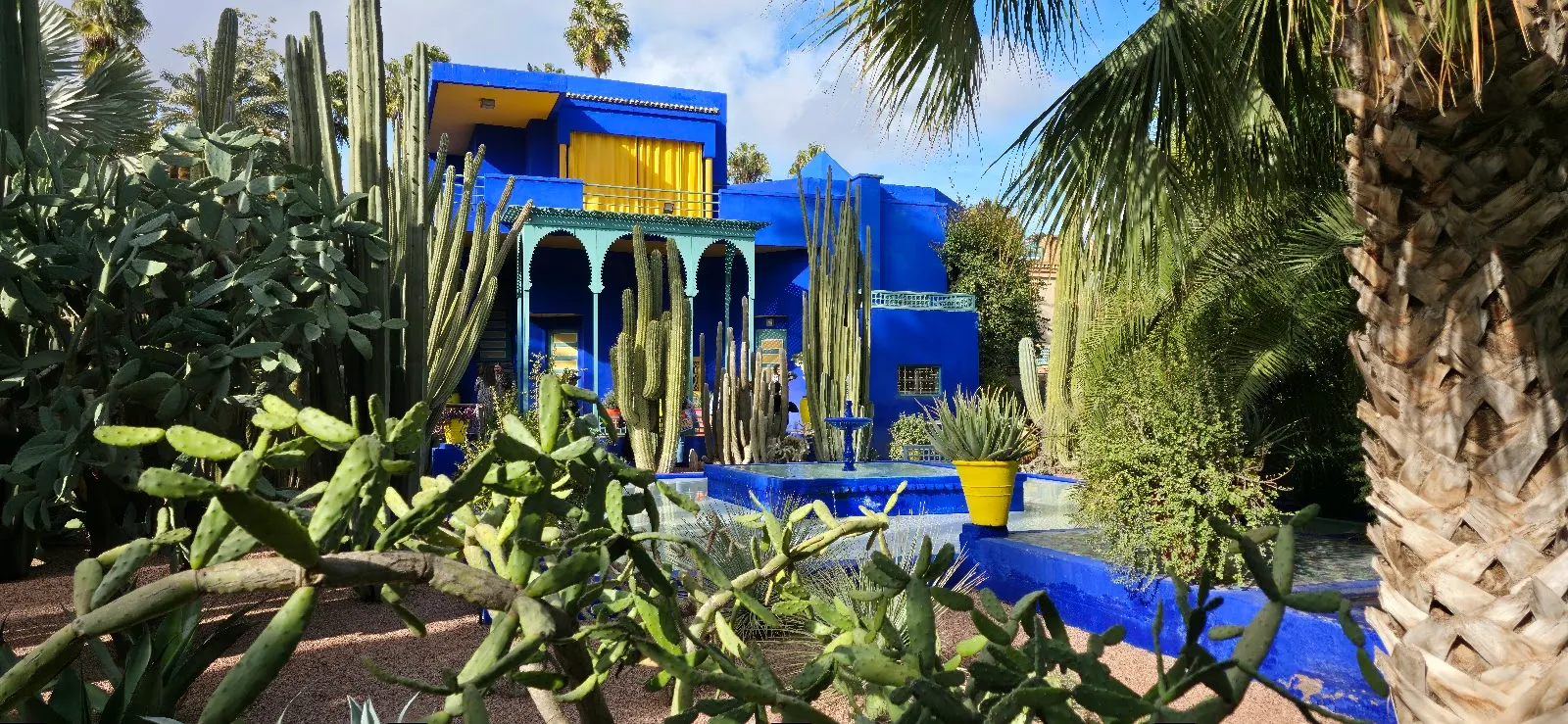
Look for the 1930s Cubist villa, designed by French architect Paul Sinoir. Its clean lines sit among the garden’s vivid colours and dense planting. The building and its setting draw on both Art Deco and Moorish influences.
A museum in the garden presents North African arts and crafts, including textiles, pottery and jewellery. The collection connects the site’s architecture and plants with regional artistic traditions. There is also a courtyard café and a small shop focused on books and photography. Nearby, the Yves Saint Laurent Museum gives visitors a separate place to explore the designer’s work.
From preservation to public visits
After Majorelle’s death, the garden fell into disrepair. Yves Saint Laurent and Pierre Bergé bought the property in 1980 to preserve it, restoring the grounds and keeping them open to the public. Their care helped save the site from a proposed development.
The garden lies outside the medina, in the Gueliz district, on Rue Yves St Laurent. Its quieter paths and shaded areas provide a change of pace from the city’s busier streets. The setting is popular, so the entrance can involve a wait. Advance booking and arriving close to your assigned time can help you plan the visit; early morning and late afternoon are the suggested times for a calmer walk.
FAQ
Who created Jardin Majorelle?
French painter Jacques Majorelle developed the garden over more than 40 years, beginning in the 1920s.
What can you see inside Jardin Majorelle?
The garden has more than 300 plant species, including cacti and palms, along with blue buildings, pools and a 1930s Cubist villa. A museum displays North African arts and crafts.
When is the best time to visit Jardin Majorelle?
Go early in the morning or later in the afternoon for a quieter visit.
Should you book Jardin Majorelle tickets in advance?
Advance booking is advised. Arrive close to your assigned time, as queues can form at the entrance.