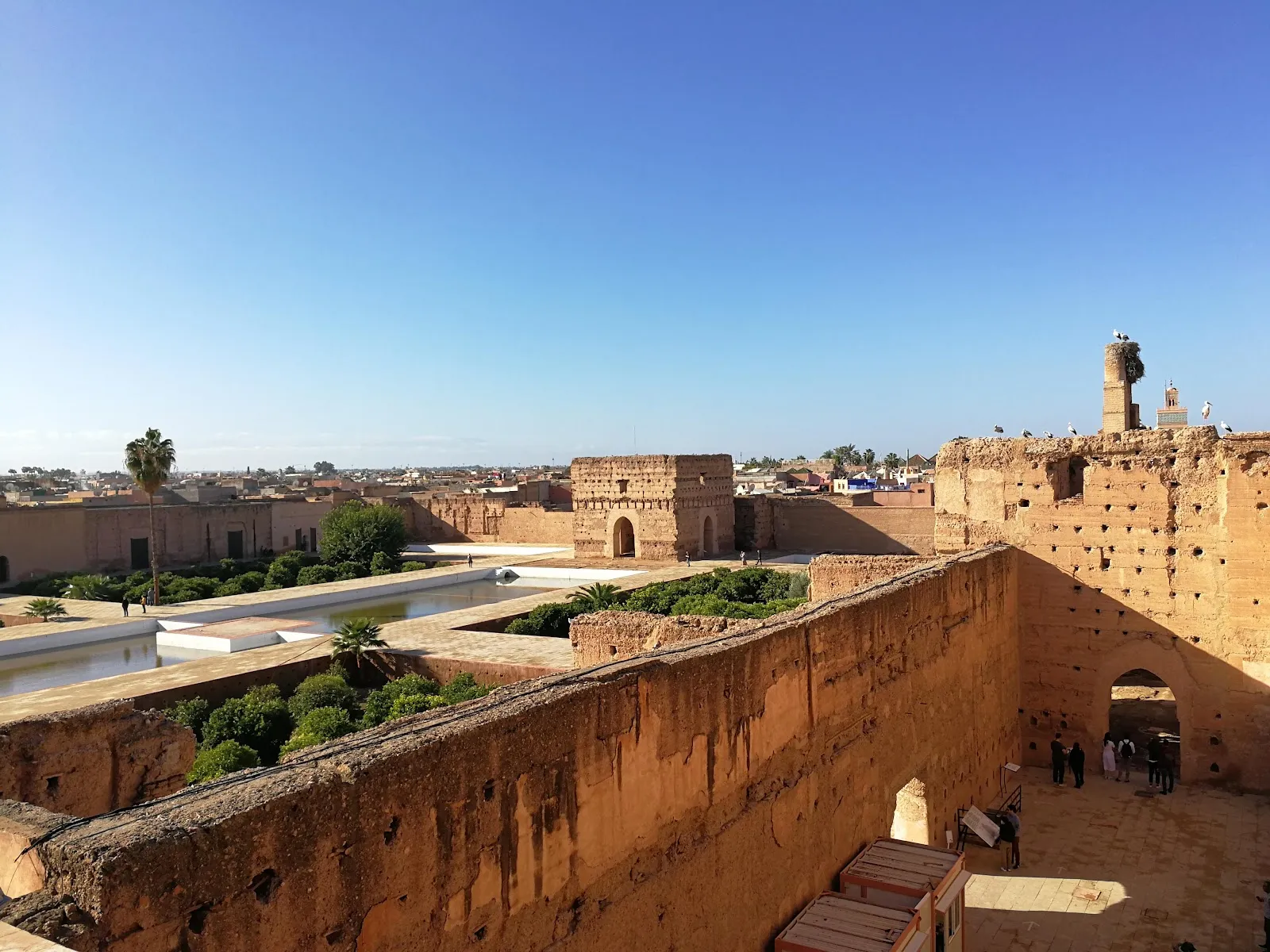
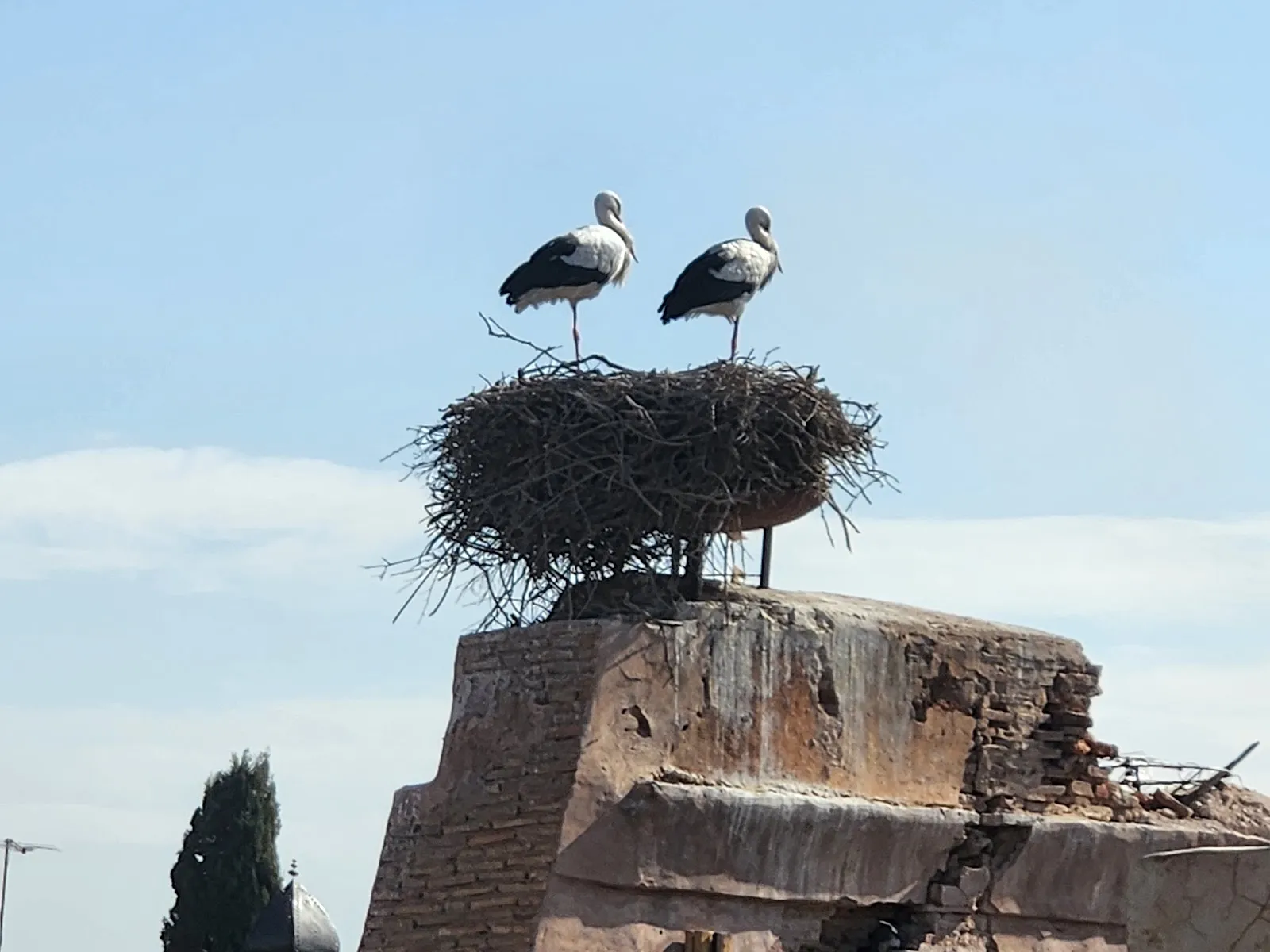
El Badi Palace is a vast 16th-century royal ruin in Marrakech’s Ksibat Nhass quarter. Sultan Ahmad al-Mansur commissioned it after the Saadian victory over the Portuguese in 1578; today, high walls, open courtyards and sunken gardens hint at the palace’s former scale. Look for storks nesting on the ramparts, then climb to the terrace for views across the city. The quiet grounds reward a slow walk, though restoration work can restrict what you see, so check conditions before you go.
A Saadian palace built after a victory
Sultan Ahmad al-Mansur commissioned El Badi Palace in the late 16th century, after the Saadian victory over the Portuguese at the Battle of the Three Kings in 1578. Its name is commonly translated as “the incomparable.” The scale and costly materials were intended to express the sultan’s power.
The palace was once a large royal complex with extensive courtyards and hundreds of rooms. Accounts differ on its exact size, but the surviving grounds still convey how much space the original design occupied. Imported materials included Italian marble and gold from Sudan, alongside onyx. The palace took years to build and was completed during al-Mansur’s reign.
What remains in the grounds
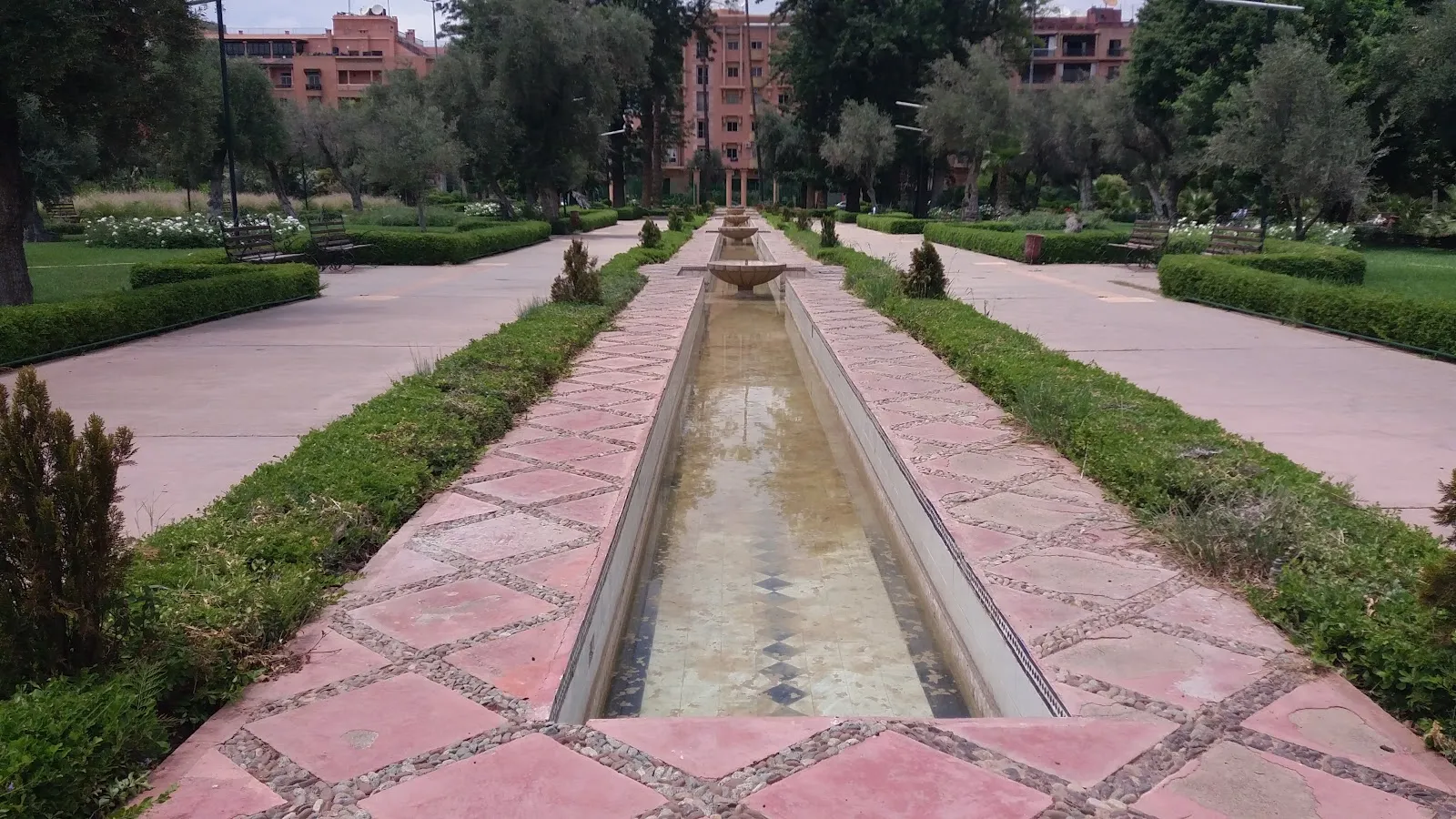
The palace is now a ruin, but its layout is still easy to read as you walk through the broad courtyard. Sunken planted areas and orange trees break up the open space, with pools and water features among the remains. High walls frame the grounds, and surviving fragments of decoration offer details to look for among the stripped-back stonework.
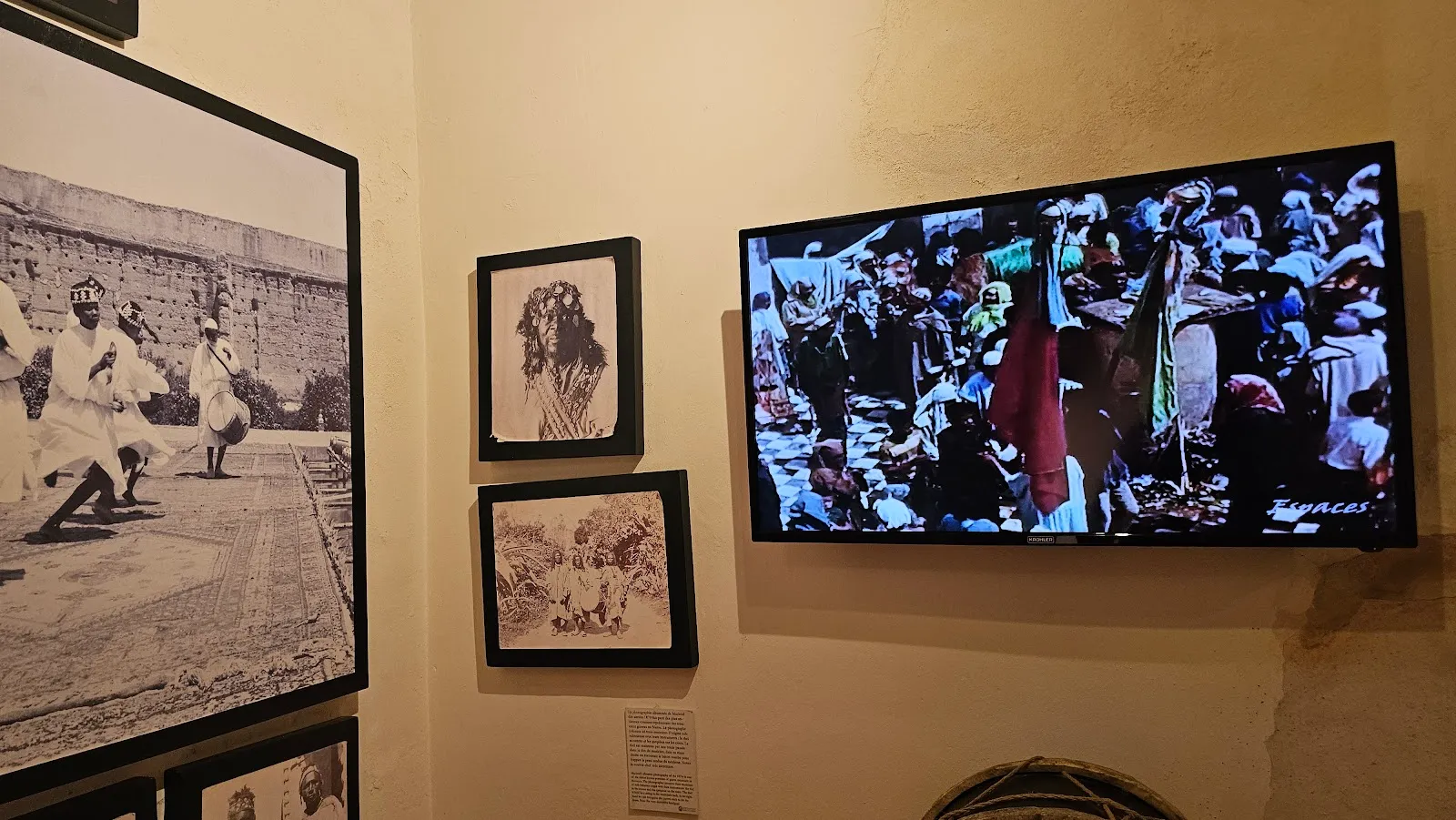
The site’s history also extends below the courtyard. Underground rooms and vaulted spaces form part of the route through the complex. Exhibits in some rooms include photographs and objects connected with work carried out at the site. The original wooden minbar from the Koutoubia Mosque is also displayed here; it was commissioned in the 12th century and made in Córdoba.
Storks and views from the ramparts
Storks build their nests on the palace walls and rooftops, making the upper parts of the complex a good place to watch them. From the terrace and ramparts, you can look across Marrakech. The elevated views give a sense of the palace’s scale and its position within the city.
Plan your route around the open grounds and allow time to look both overhead and down into the gardens. If you want more context for the remaining structures, a guide can explain the palace’s history as you walk. Restoration work has affected some areas, and construction equipment or coverings may obstruct views, so conditions on the day can change what is accessible.
FAQ
Where is El Badi Palace?
It is in the Ksibat Nhass quarter of Marrakech, Morocco.
How long should I allow for a visit?
Allow about 1 to 2 hours to explore the extensive grounds, underground rooms and upper viewpoints.
What can you see at El Badi Palace?
The site has ruined courtyards, sunken gardens, stork nests on the ramparts and terrace views over Marrakech. Its displays include the original minbar from the Koutoubia Mosque.
Is El Badi Palace undergoing restoration?
Restoration work has been reported at the site and may limit access or views. Check conditions before your visit.