Bahia Palace is a 19th-century residence in Marrakech’s medina, built for grand vizier Si Moussa and later expanded by his son. Its public rooms and courtyards reveal Moroccan craftsmanship in carved cedar, painted wood, stucco, mosaics and zellige tilework. Follow the visitor route through decorated halls and open-air spaces, including the Court of Honour, then look for fountains and gardens among the palace buildings. The complex is close to El Badi Palace and about 900 metres southeast of Jemaa el-Fnaa. Some areas may be under renovation.
A palace built in stages
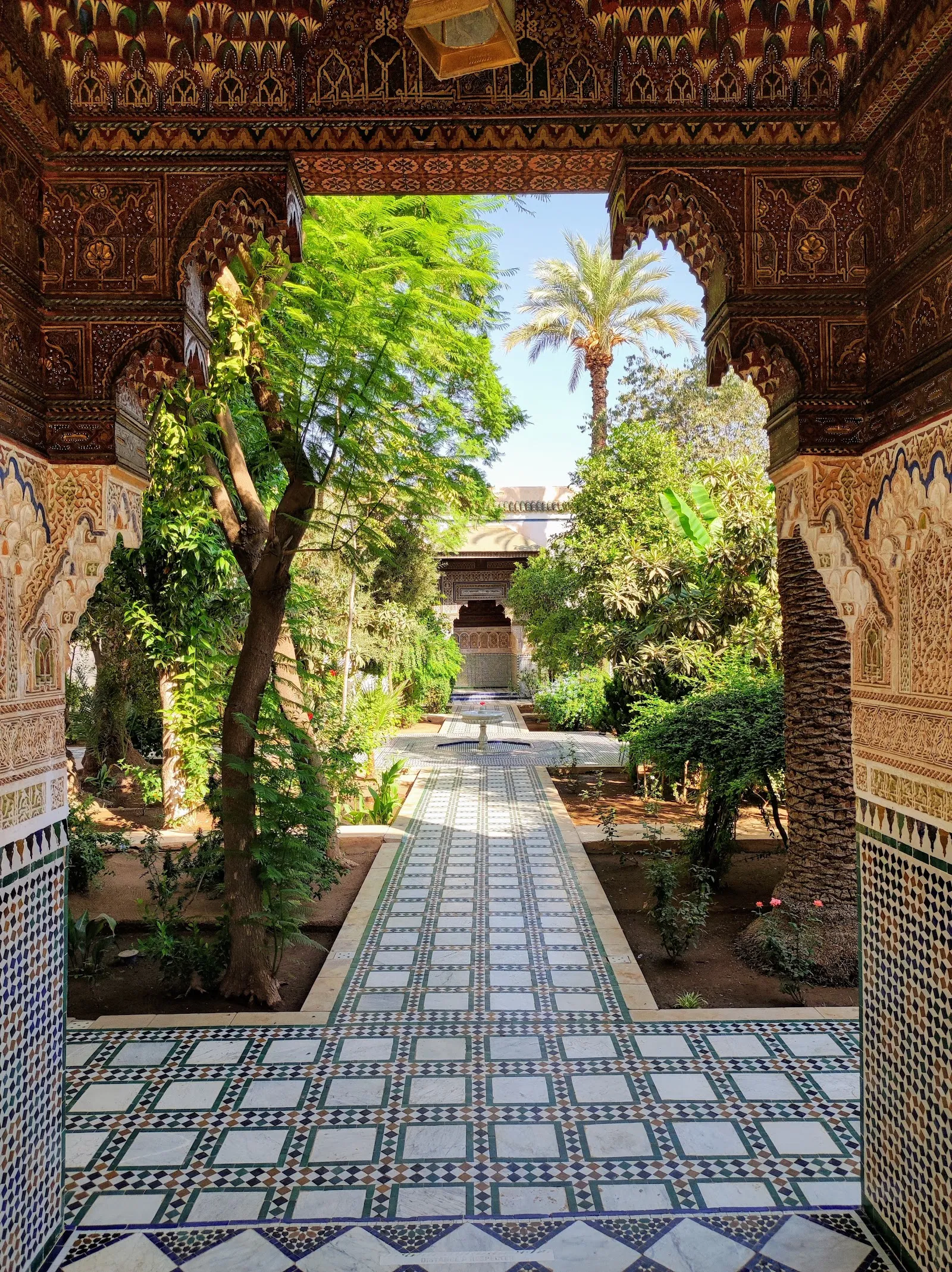
Bahia Palace took shape in the second half of the 19th century as a residence for Si Moussa, a grand vizier to the sultan. His son, Si Ba Ahmed, continued the work and enlarged the complex. Craftspeople from Fez contributed carved and painted wooden ceilings and reception rooms, alongside the decorative work that gives the palace its distinct character.
The name Bahia is commonly translated as “brilliance” or “beauty.” The palace was intended as a grand residence, with rooms arranged around courtyards and patios. Its buildings bring together Moroccan and Andalusian design influences, expressed through tile, carved plaster, painted wood and decorative arches.
Details to look for inside
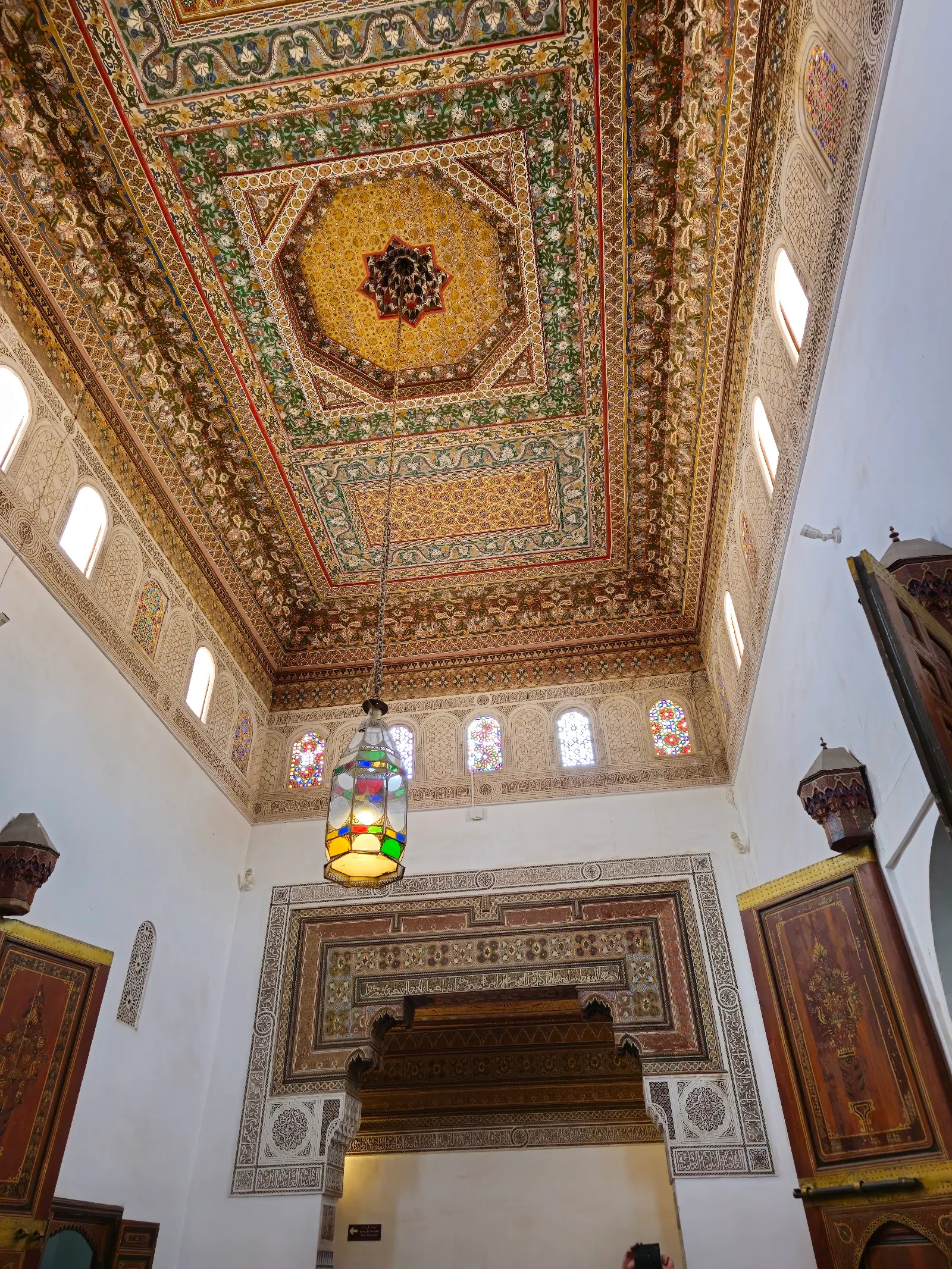
The visitor route passes through a selection of rooms rather than the entire complex. Look up at the ceilings, where carved cedar and painted patterns draw attention above the doorways and halls. Stucco ornament, geometric designs, mosaics and zellige tiles cover walls and surfaces throughout the rooms.
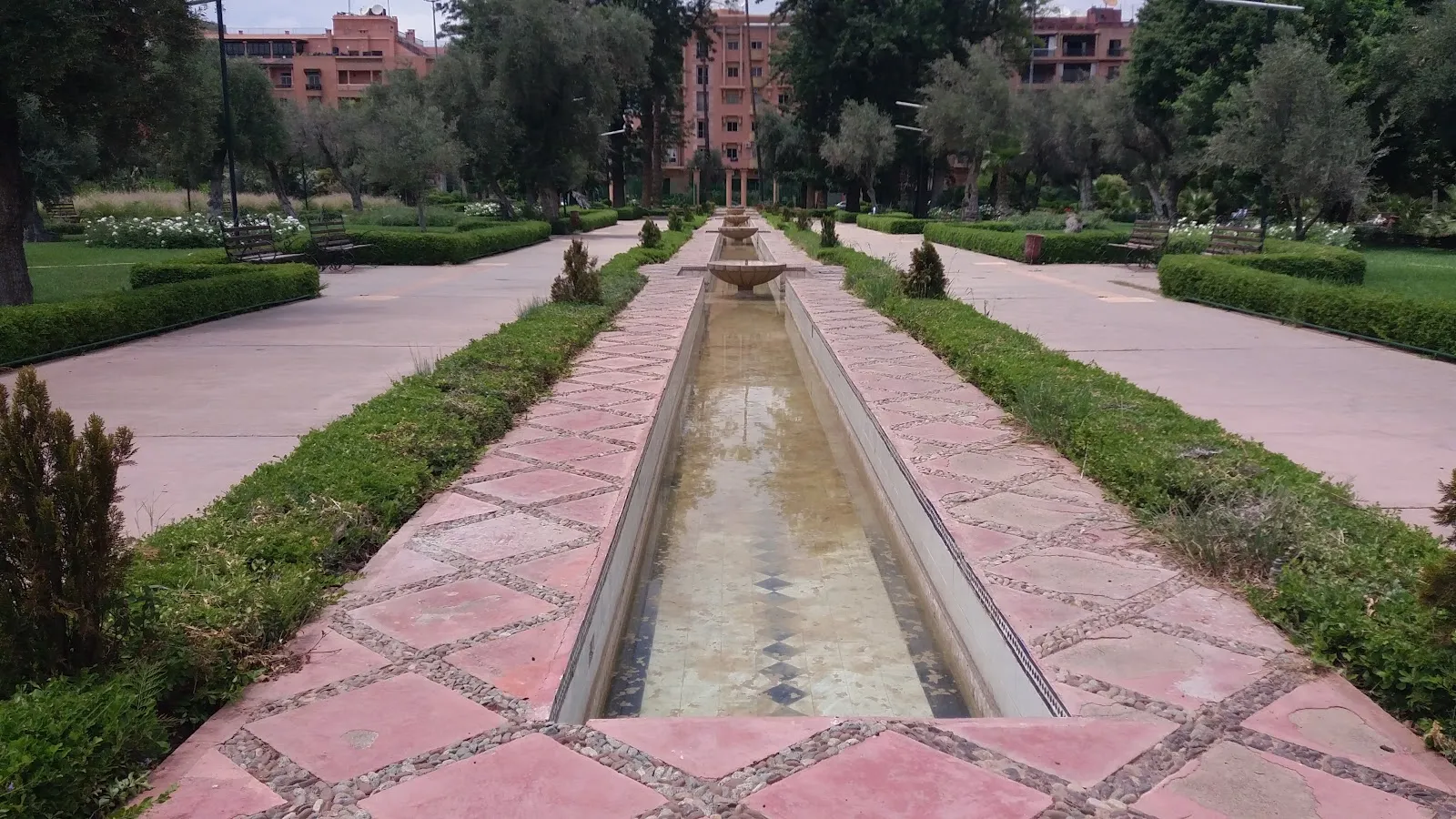
The Court of Honour is one of the palace’s most recognisable spaces, with a broad marble floor. Other courtyards and riads offer a change of scale, with fountains and planted areas set among the buildings. Coloured glass and finely worked wooden screens add detail to some of the interiors. The Petit Riad and Grand Riad are among the named areas visitors look for.
Planning the visit
Allow at least half an hour to follow the public route; extra time gives you room to pause in the courtyards and look closely at the decoration. The palace can draw crowds, so arriving early is a practical choice if you want more space to view the rooms and take photographs.
Renovation work may affect access to some areas. Not all of the palace is open to visitors, so the route gives a partial view of the larger complex. A guide can add historical context as you move between rooms, courtyards and gardens. Bahia Palace is near El Badi Palace, and it is about 900 metres southeast of Jemaa el-Fnaa.
FAQ
How long does a visit to Bahia Palace take?
Allow at least 30 minutes to walk through the public route. You may want longer to pause in the courtyards and study the decoration.
What should I look for at Bahia Palace?
Look for carved cedar ceilings, zellige tilework, stucco ornament, mosaics and coloured glass. The Court of Honour and the palace’s riads and courtyards are among the notable spaces.
Is the whole palace open to visitors?
No. The public route includes only some rooms, and renovation work may also affect access to areas.
When is a good time to visit Bahia Palace?
Arrive near opening time for a quieter visit, as the palace can become crowded.