The Zócalo is the main square of Veracruz's historic center, also known as Plaza de Armas and Plaza Lerdo. The cathedral and the Palacio Municipal stand on its edges, marble-floored arcades hold cafes and restaurants, and palm trees shade the benches near the central fountain. Evenings bring marimba, jarocha bands and mariachis, and couples dance danzón. Easels with local paintings and souvenir stalls line the sides. The square is open around the clock and free to enter, a good place to sit with a coffee or an ice cream and watch the city go by.
One square, three names
The main square of Veracruz is called the Zócalo, and also Plaza de Armas or Plaza Lerdo. It is the social center of the port city, which is often called Puerto de Veracruz and is described as the oldest European settlement on the North American mainland. The historic center around the square is one of the oldest in Mexico.
The square sits near the northern end of the Malecón, the waterfront promenade, and the port is a short walk away. A couple of restaurants that are about 200 years old are also within walking distance. Further sights nearby include the San Juan de Ulúa fortress, the Museo de la Ciudad de Veracruz and the Museo Naval.
The cathedral and the Palacio Municipal
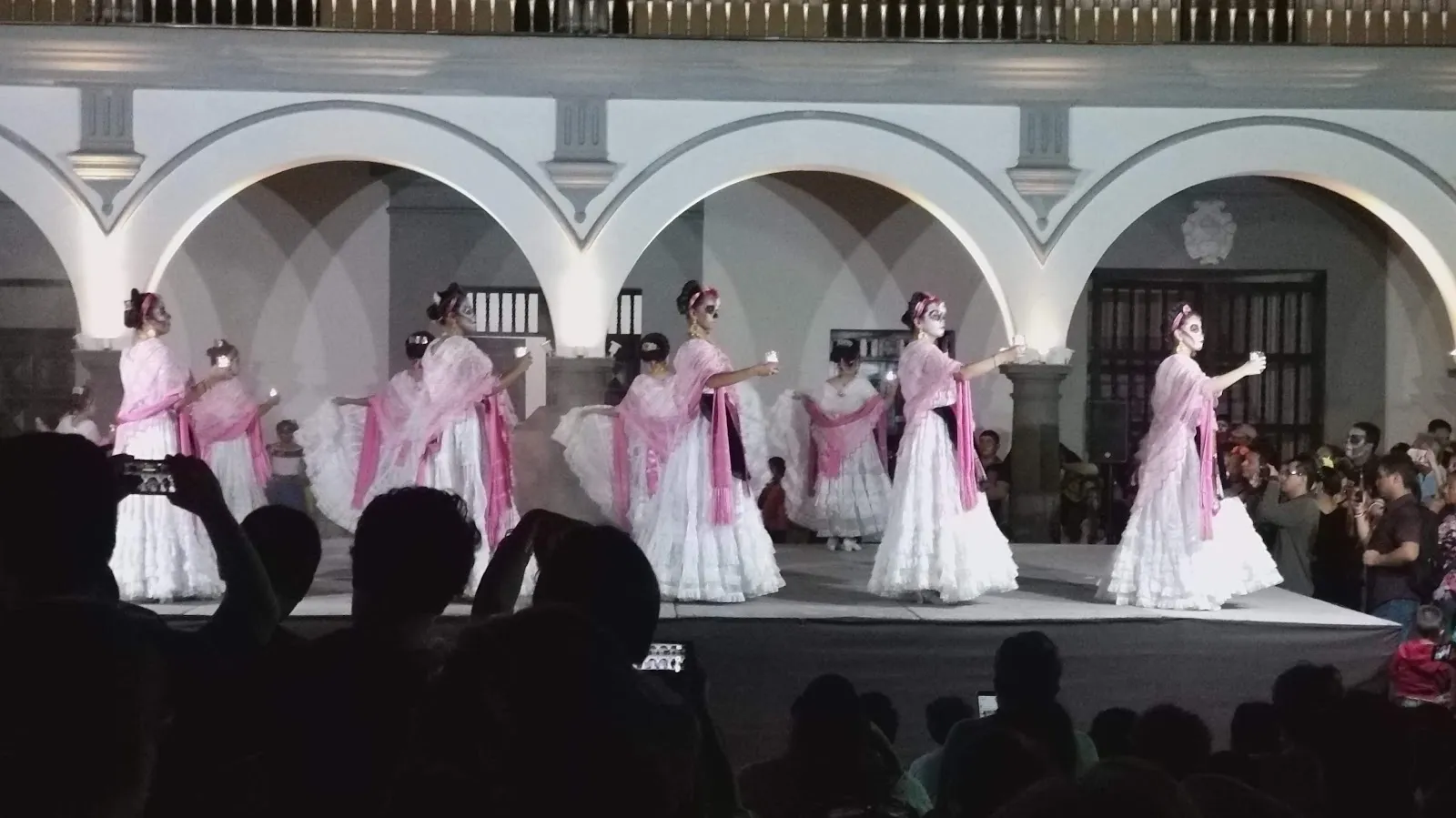
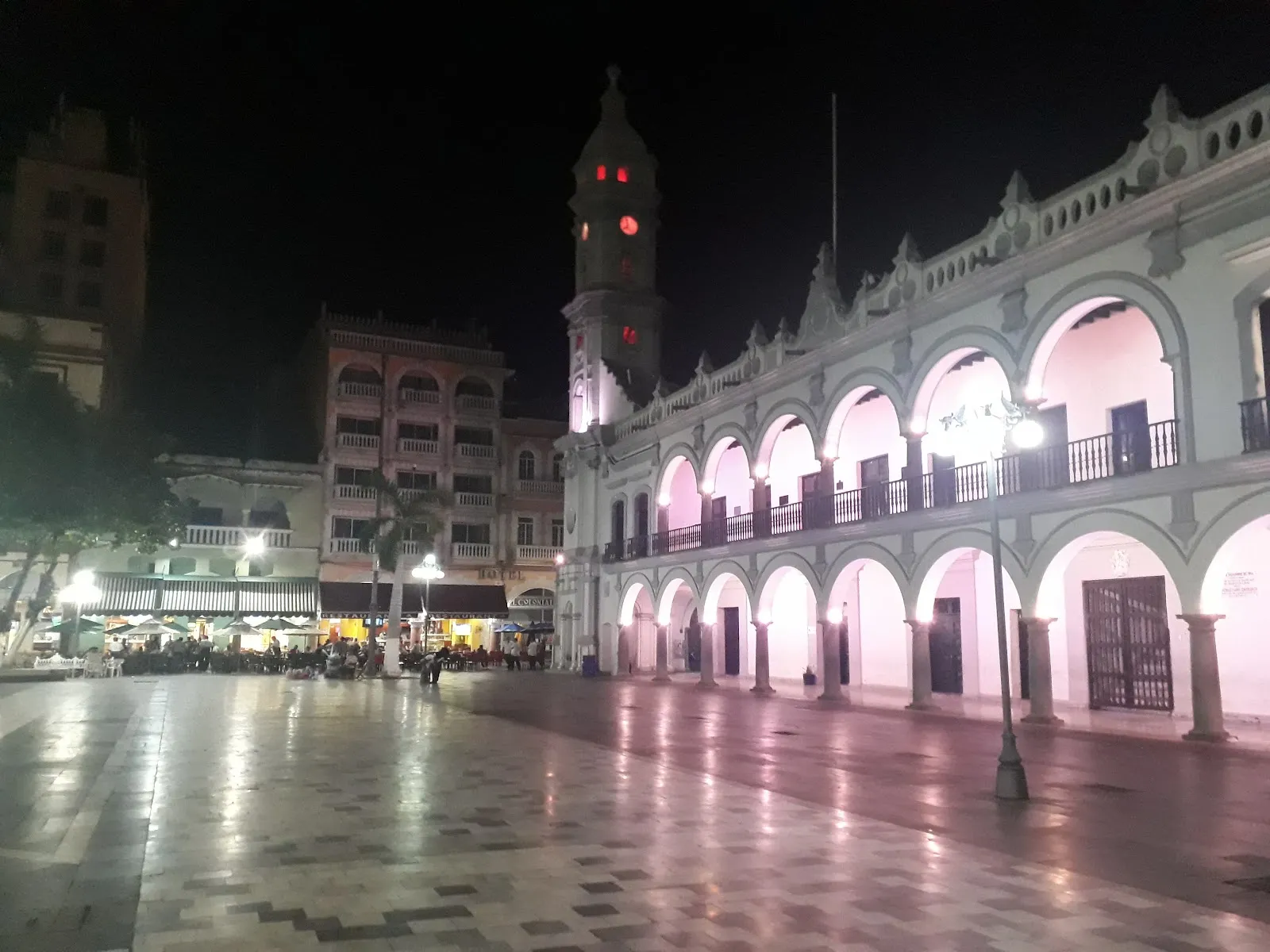
Two buildings define the square. The cathedral stands on one side, next to the Palacio Municipal, the city hall, whose white-washed facade faces the open space. The church is a quiet, serious place beside the busy square, and it is easy to step in between a walk under the palms and a coffee.
Arcades with marble floors run along the edges and give shade. The buildings around the square are colonial in style and well kept. The square is also well lit after dark.
Music and danzón after dark
Music is the main reason locals and visitors gather here. Marimba players, jarocha bands and mariachis perform on the square and often keep going well into the night. Buskers work around the edges, and the program can also include band concerts, clown acts and comedy sketches.
The square is the meeting point of the danzoneros, the dancers of danzón. This dance combines Cuban rhythms with ballroom dancing. It is most often danced on Thursday, Friday and Saturday evenings, usually near the cathedral and the Palacio Municipal. You can watch from a bench or from a table in the arcades. Watching costs nothing.
Cafes, stalls and places to stay
The Portales, the arcades on one side of the square, hold cafes and restaurants with outdoor tables. Breakfast here is a local habit, and the same tables work for an evening drink while the music plays. Ice cream is sold all around the square.
In the evening, local artists set up easels with brightly colored canvases, and souvenir and craft sellers work the edges. Prices for crafts are described as affordable. Three hotels face the central fountain, which makes the square an easy base. During the Cinco de Mayo holiday, rooms in and around the Zócalo can be fully booked.
Seasons, shade and access
Winter is the best season for a long stay on the square. In summer the evening heat passes 30 degrees Celsius with humidity around 80 percent. Palm trees give shade for sitting during the day, and the arcades offer more.
The entrance is wheelchair accessible and there is accessible parking. The square suits children, with open space, music and ice cream close by.
FAQ
Is there an entry fee for the Zócalo de Veracruz?
No. It is a public square and open 24 hours a day. Concerts and street performances here are free to watch.
When is danzón danced in the Zócalo?
Danzón is most often danced on Thursday, Friday and Saturday evenings. Dancers meet near the cathedral and the Palacio Municipal.
What is the best time of year to visit?
Winter, when temperatures are more comfortable. Summer evenings are hot and humid, with temperatures above 30 degrees Celsius.
Is the Zócalo close to the Malecón?
Yes. The square is near the northern end of the Malecón and within walking distance of the port.
Does the Zócalo have other names?
Yes. It is also called Plaza de Armas and Plaza Lerdo.