The Convento de San Bernardino de Siena is a 16th-century Franciscan complex at the end of Calzada de los Frailes, about a 10 to 15 minute walk from Valladolid's centre. Its thick stone walls, arched corridor and carved doorway give it a calm, weathered look, and the church holds a baroque altarpiece. Behind the convent, a garden leads to an opening of the Ziiz Ha cenote, and a small museum shows what was recovered from cenotes in the area. Many visitors return in the evening for the light show projected on the facade, which tells the story of the town.
Built by the Franciscans
The convent was founded by the Franciscan order in the 16th century. It is named after Saint Bernardine of Siena, an Italian Franciscan preacher known for his eloquence and for promoting devotion to the Holy Name of Jesus, which is the origin of the IHS symbol you may see on the building.
The Franciscans built the complex on a site the Maya considered sacred, directly over the Cenote Ziiz Ha. The name Sisal, which the neighborhood takes, comes from the Maya words for cold water.
The convent did not have an easy history. It was burned around 1562, and during the Caste War and later rebellions the Maya attacked it repeatedly, seeing it as a symbol of colonial rule. The complex was later used as a fort during the independence war and was abandoned for a time in the middle of the 19th century.
The church, the cloister and the facade
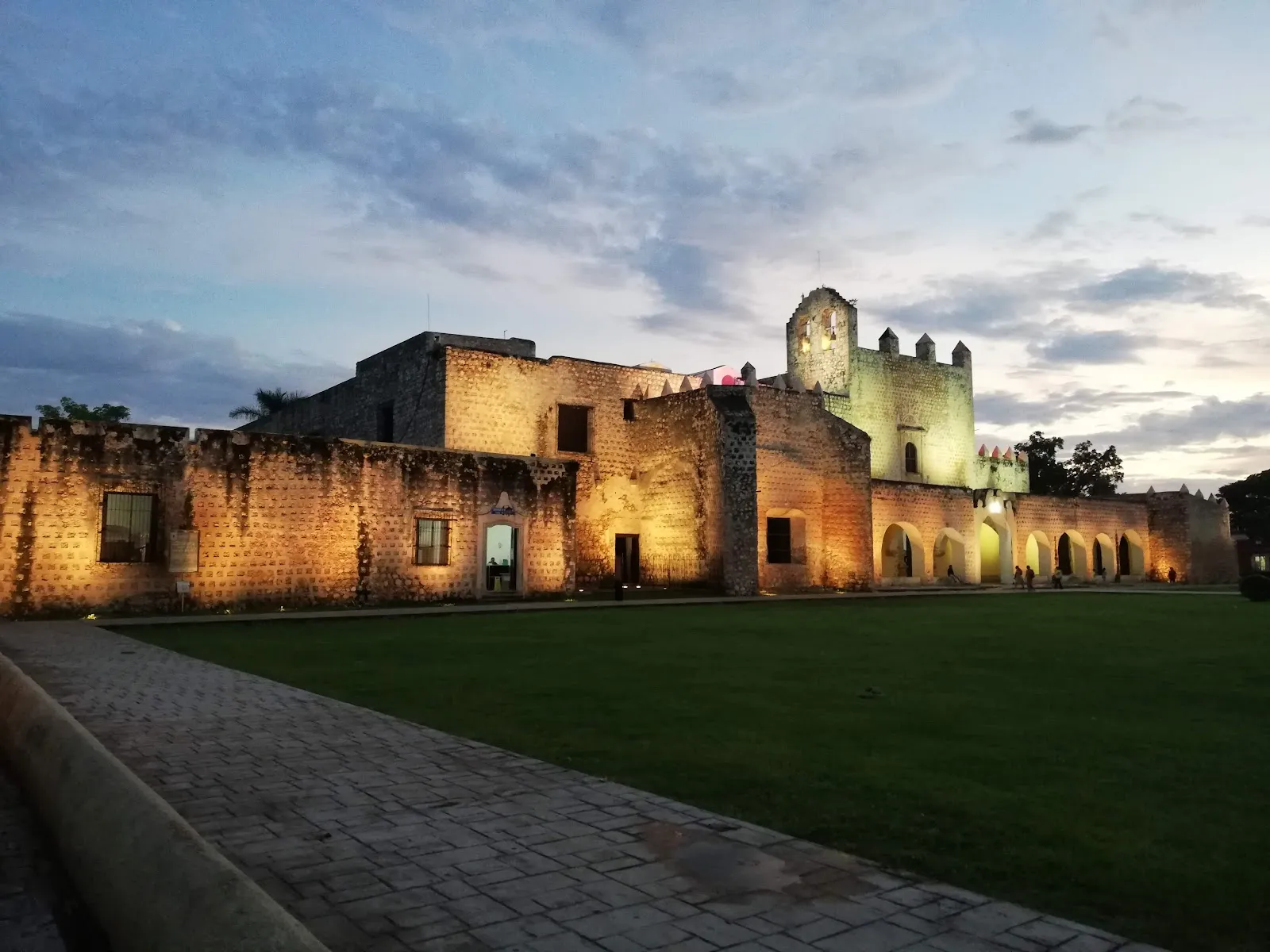
The front of the convent has a long arched corridor and a carved stone doorway in the Renaissance style. The walls are more than 50 centimeters thick, which helps explain why the building has lasted so long.
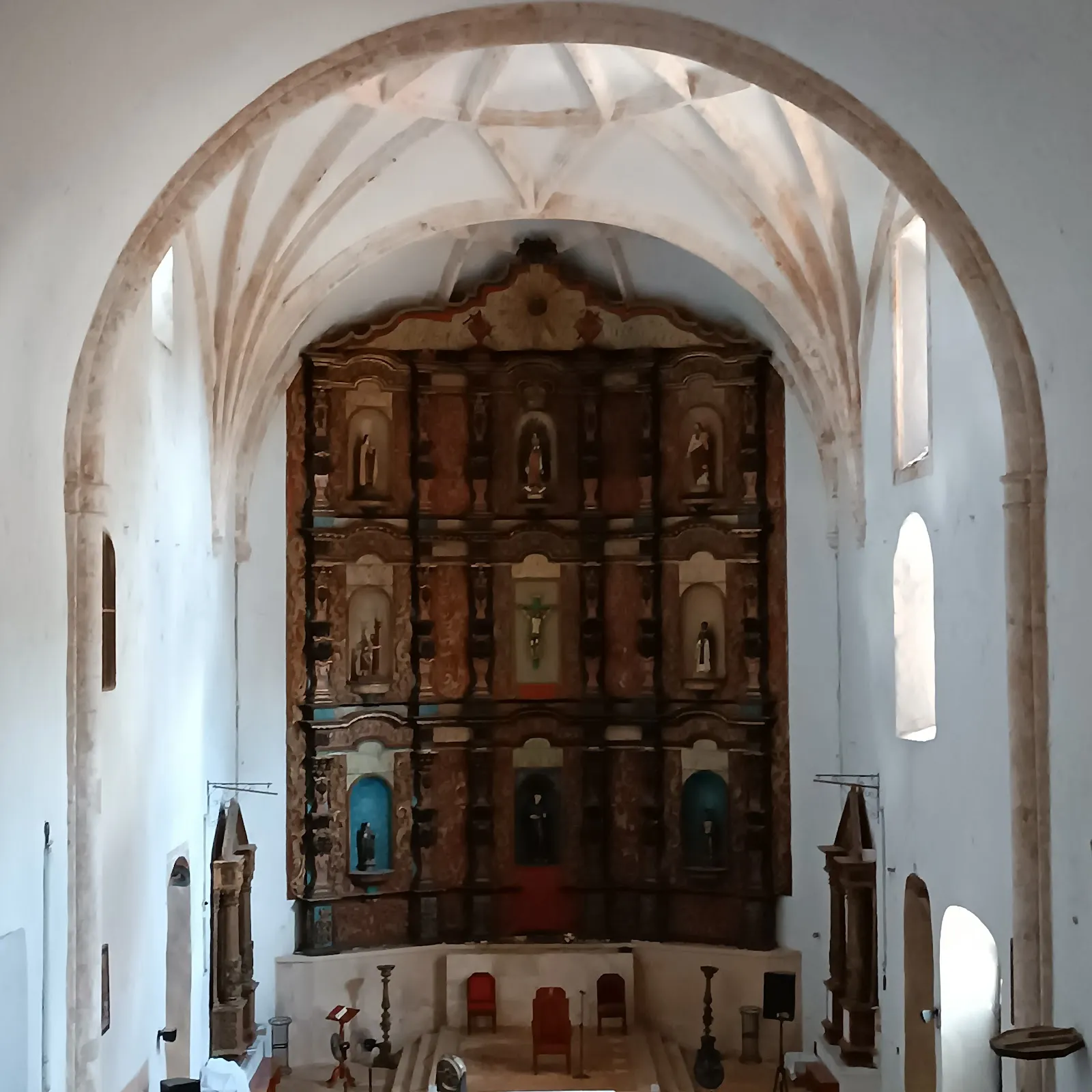
The church holds a large altarpiece in carved, gilded wood with the curving forms of the baroque. Off to one side, a two-story cloister is lined with massive stone colonnades. The stone and the building's rose and red tones give the complex its distinctive look, especially in the late light.
The building is wheelchair accessible at the entrance, and there is a wheelchair accessible parking lot nearby.
The garden and the cenote
Behind the convent, the garden leads to the cenote opening that is visible from the grounds. The cenote itself is closed to visitors, but you can see the structure and the clear water beside it.
The lawn outside the building is a good place to sit and rest. Many people use it for picnics, and it is also where the light show is watched in the evening.
The museum and the cenote finds
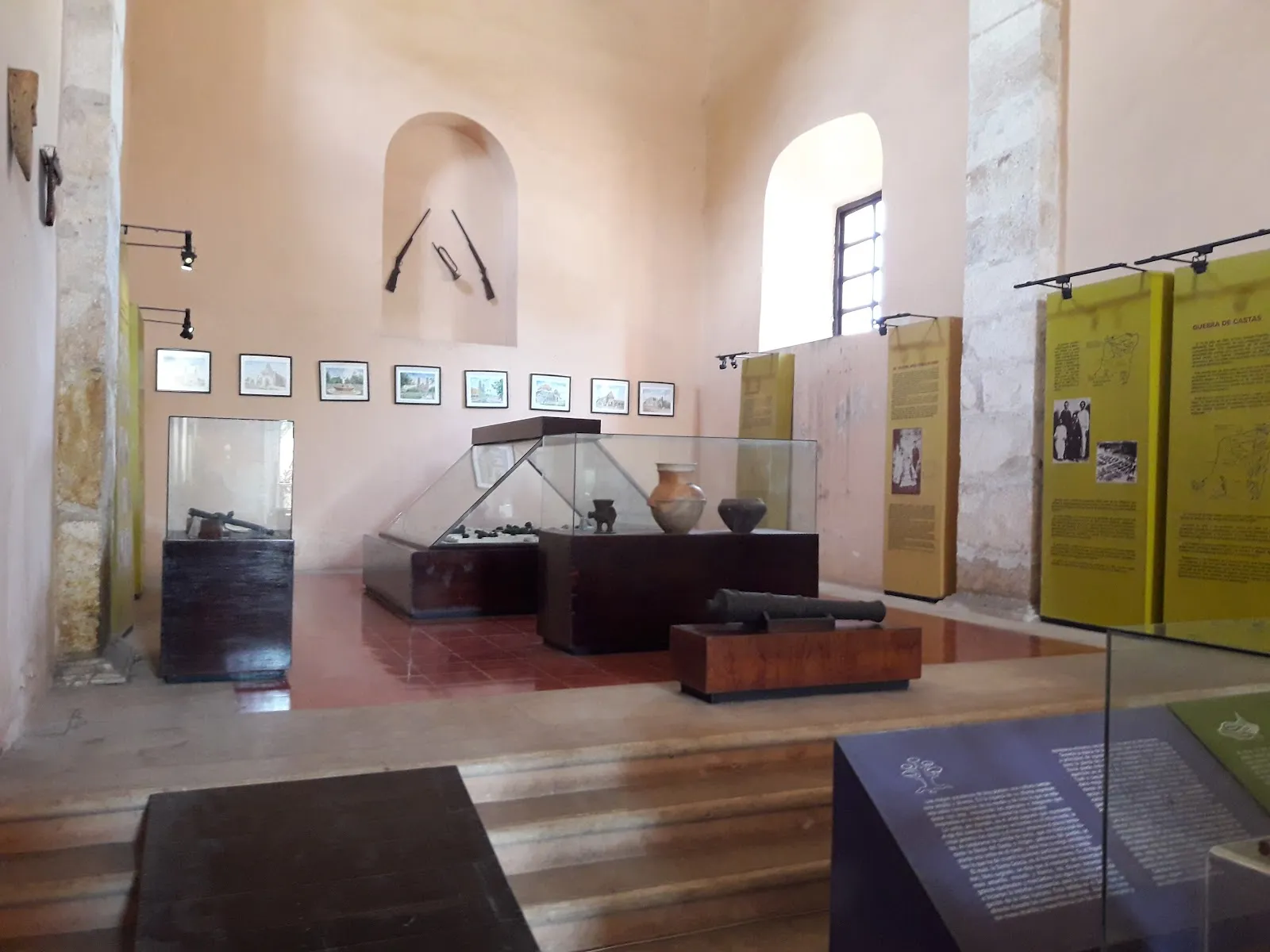
The museum displays objects and anthropological evidence recovered from the cenotes near Valladolid. Photographs show divers working in an underground water cave, which gives a sense of how the excavations were carried out.
The exhibition is small, so plan to spend time on the displays and then walk through the church and the cloister.
The evening light show
Most evenings, weather permitting, the facade becomes a screen for a video mapping show called Noches de la Heroica Valladolid. It recounts the history of the convent, of Valladolid and of the Maya and colonial heritage of the region. The narration is in Spanish first and then in English a short time later.
The light show is best seen from the grass outside the convent. Start the walk from the centre along Calzada de los Frailes before dusk so you arrive with time to find a place to sit.
FAQ
Is there an entry fee?
Yes, there is a small entrance fee to enter the convent. The amount is modest, so confirm the current price at the entrance.
How long do you need for a visit?
A typical visit takes 30 to 60 minutes, including the church, the cloister, the museum and the garden.
When does the light show run?
The light show is projected on the facade most evenings, weather permitting. The Spanish narration starts first and the English version follows a short time later.
Do you need to book tickets in advance?
Getting tickets in advance is recommended.
Is the convent wheelchair accessible?
The entrance is wheelchair accessible, and there is a wheelchair accessible parking lot.