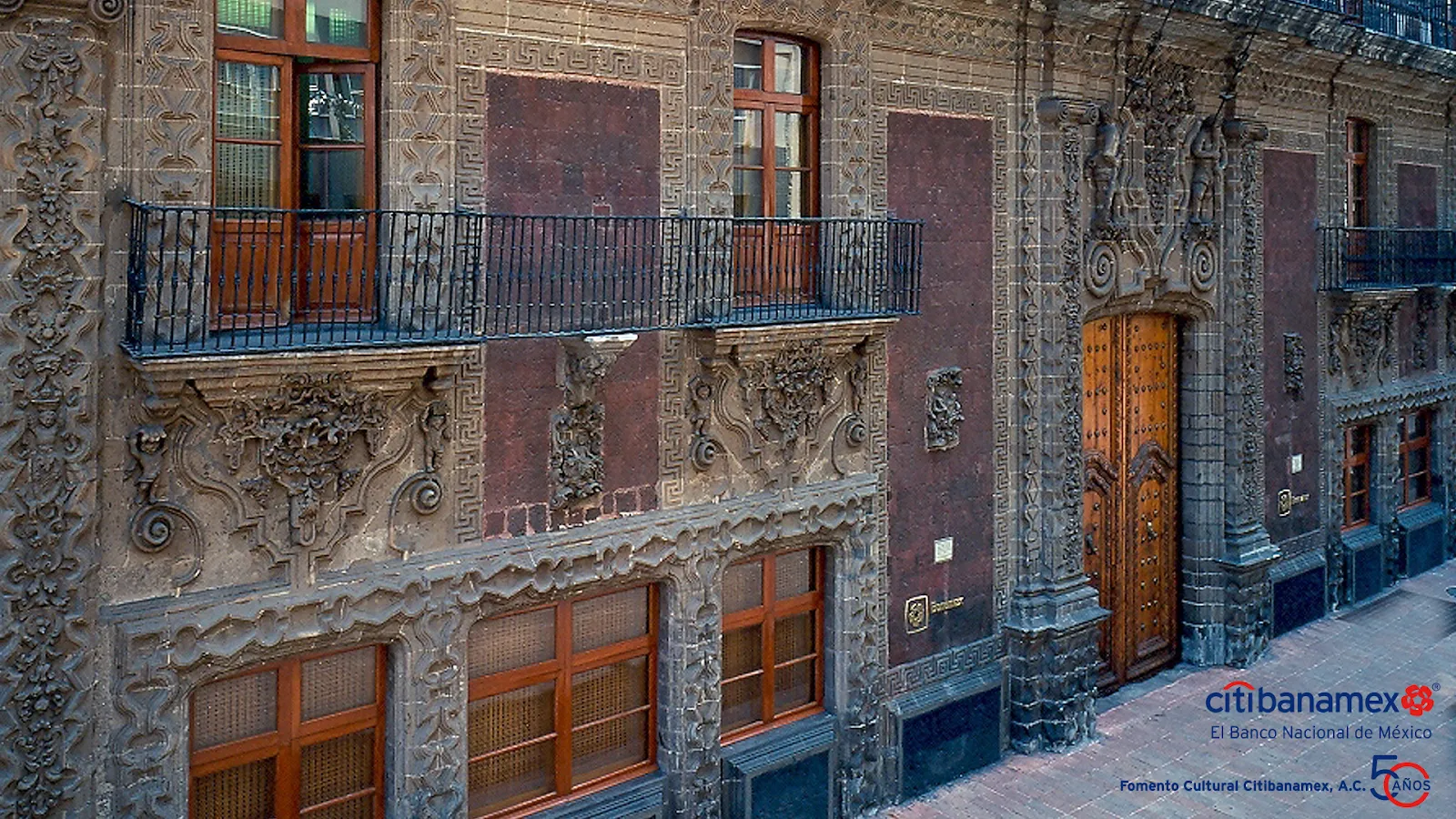
Palacio de Iturbide is a baroque palace on Avenida Francisco I. Madero, a few steps from the Zócalo in the historic centre. It was built between 1779 and 1785 and now houses the Banamex Culture Palace, where temporary exhibitions of Mexican art, photography and design rotate through its arcaded courtyards. Many exhibitions are free to enter. The facade, with its sandstone carvings and mythological figures, is worth a slow look before you go inside.
From a wedding gift to Iturbide's residence
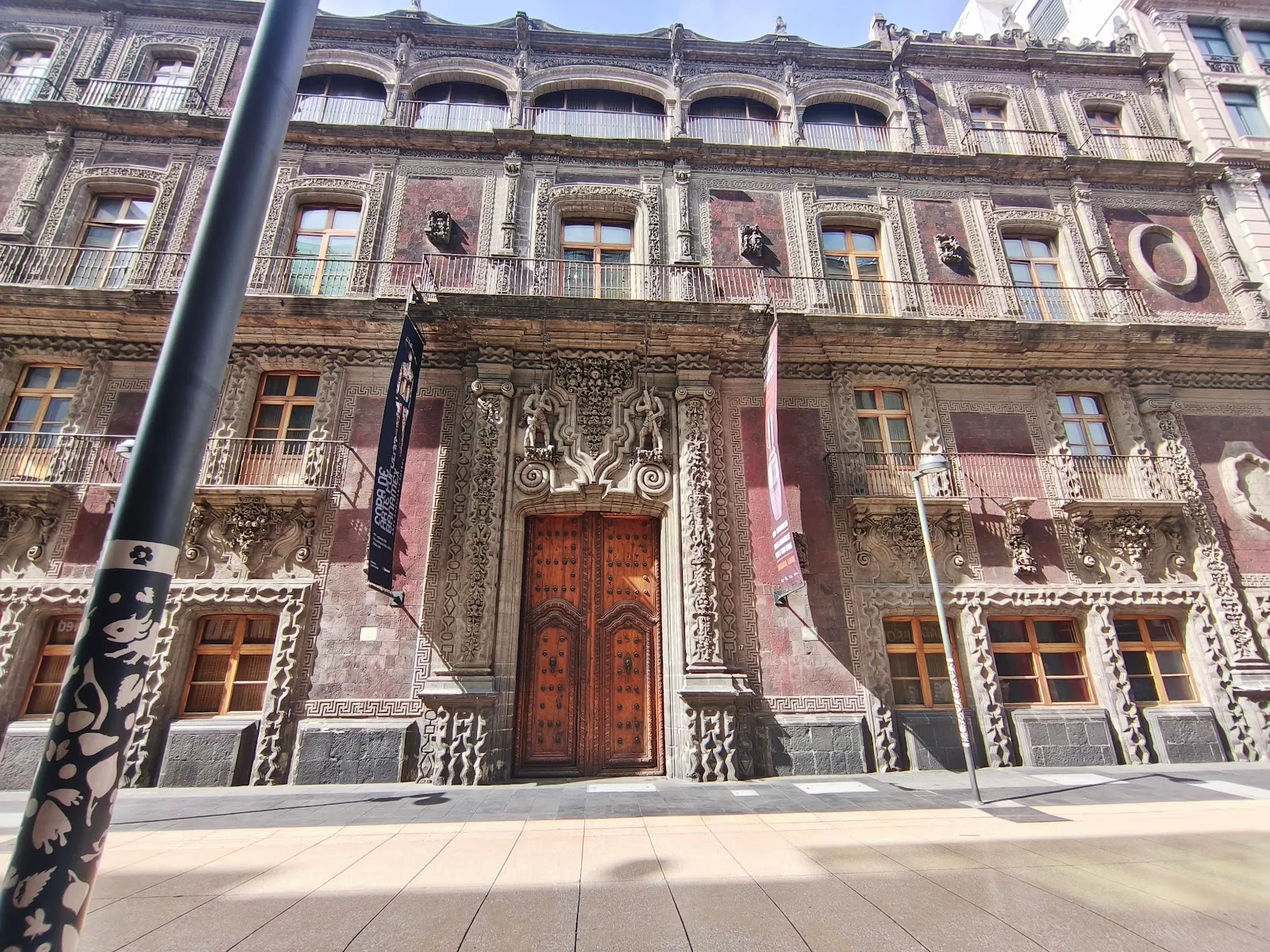
The palace was built between 1779 and 1785 to a design by Francisco Antonio Guerrero y Torres. Its first owner was Miguel de Berrio y Saldívar, a wealthy nobleman who was a direct descendant of Spanish conquistadors and also served as mayor of Mexico City. He reportedly had it built as an elaborate counterpart to his daughter's dowry, which was worth 100,000 pesos, a large sum at the time. The aim was to keep his new son-in-law, the Marquis of Moncada of Sicily, from spending her fortune.
The mansion was modelled on the royal palace in Palermo. Its later name comes from 1821, when General Agustín de Iturbide, the independence leader, lived here for a time. He was proclaimed emperor from this building, and the house has carried his name since.
Architecture and the facade
The building is Baroque with Italian influence, but the facade is built in tezontle, a dark volcanic stone that gives it a distinctly Mexican character. Sandstone carvings frame the windows and the main door. Towers frame the facade, and mythological figures appear in the moldings. Hercules is placed under the central balcony.
Inside, arches and arcaded courtyards organise the galleries. The wide halls make it easy to move from one room to the next, and the courtyards give natural breaks between the displays.
What the collection holds
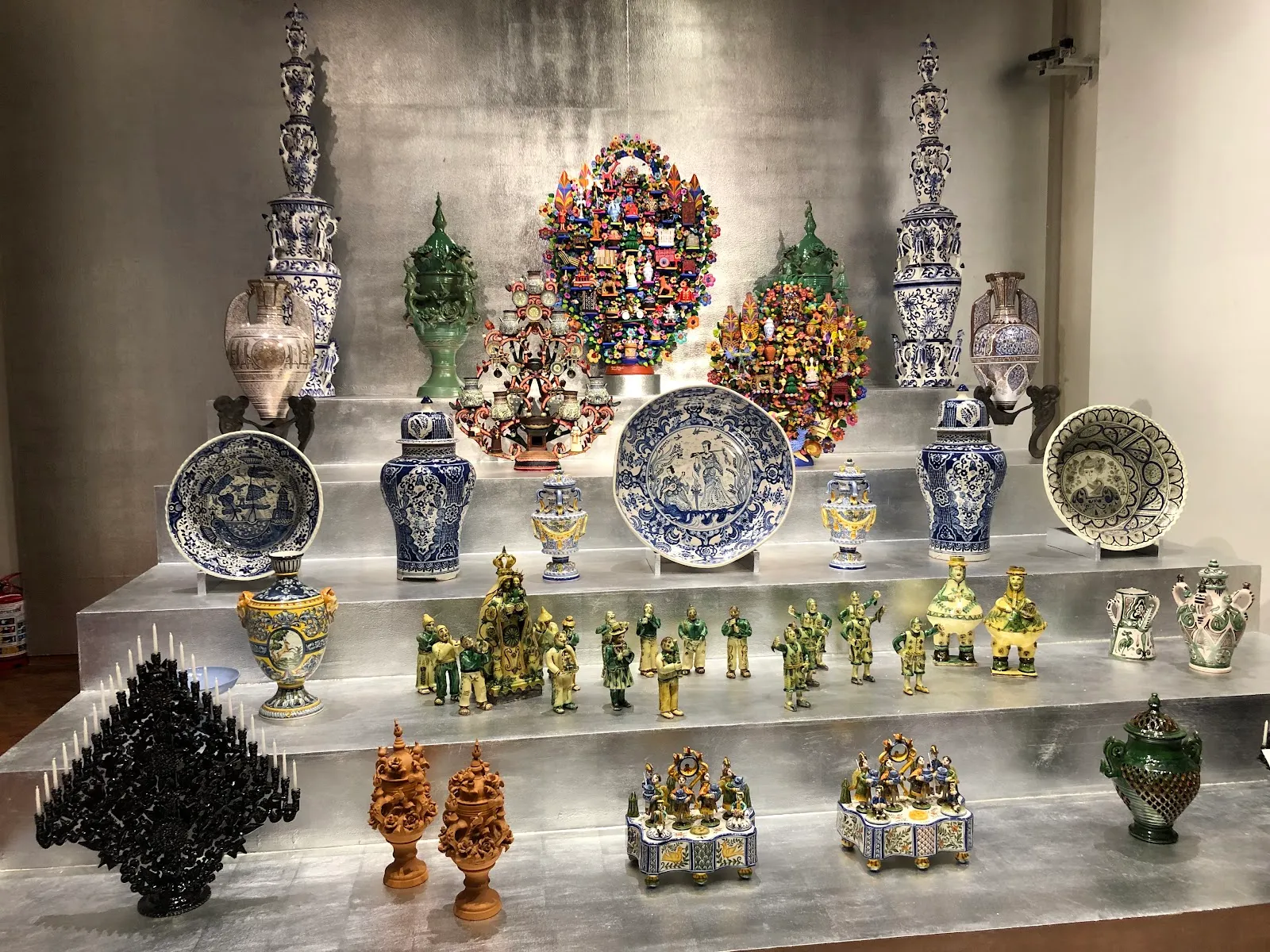
The Banamex collection has been housed here since 2004. It counts 4,300 works of art, including paintings by Diego Rivera, José Clemente Orozco, Dr. Atl, Joaquín Clausell and Frida Kahlo. Not all of it is on display at once. The palace also shows public and private collections on a temporary basis, so the programme changes through the year.
Recent temporary exhibitions have covered artesanal Mexican culture, with sculptures and dresses on show, and Spanish colonial art. Permanent displays cover Mexican history, including the independence period. Around the holidays, a nativity exhibition fills the palace with traditional scenes, and during Día de Muertos the altars and papel picado are a highlight. The museum also runs children's workshops, which makes it a good stop for families.
How a visit works
Many exhibitions are free to enter. Some exhibits include free guided tours, so ask at the entrance if you would like one. Tours run from about 25 minutes to 2 hours, depending on how many rooms are open for the current show. Ask at the entrance whether guides speak languages other than Spanish.
The palace has restrooms, including gender-neutral and wheelchair accessible ones. The entrance, elevator and seating are wheelchair accessible. Assisted listening devices and a hearing loop are available. There is a restaurant on site, and a changing table for families. The museum also hosts private events.
Getting there and nearby
The palace is at Avenida Francisco I. Madero 17, on the street that leads toward the Zócalo, a few steps from the square. Metro lines 2 and 3 are one option for getting there. Street Art Chilango is a few minutes away, so the two can be visited on the same outing.
FAQ
Is there an entry fee?
Many exhibitions are free to enter. The palace website is the place to check the current terms before you visit.
How long do you need?
Guided tours run from about 25 minutes to 2 hours, depending on how many rooms are open for the current exhibition.
Do I need to book ahead?
Getting tickets in advance is recommended.
Are guided tours available in English?
Some exhibits include free guided tours. Ask at the entrance whether guides speak languages other than Spanish.
Is the palace accessible for visitors with mobility needs?
The entrance, elevator, restroom and seating are wheelchair accessible. Assisted listening devices and a hearing loop are available.