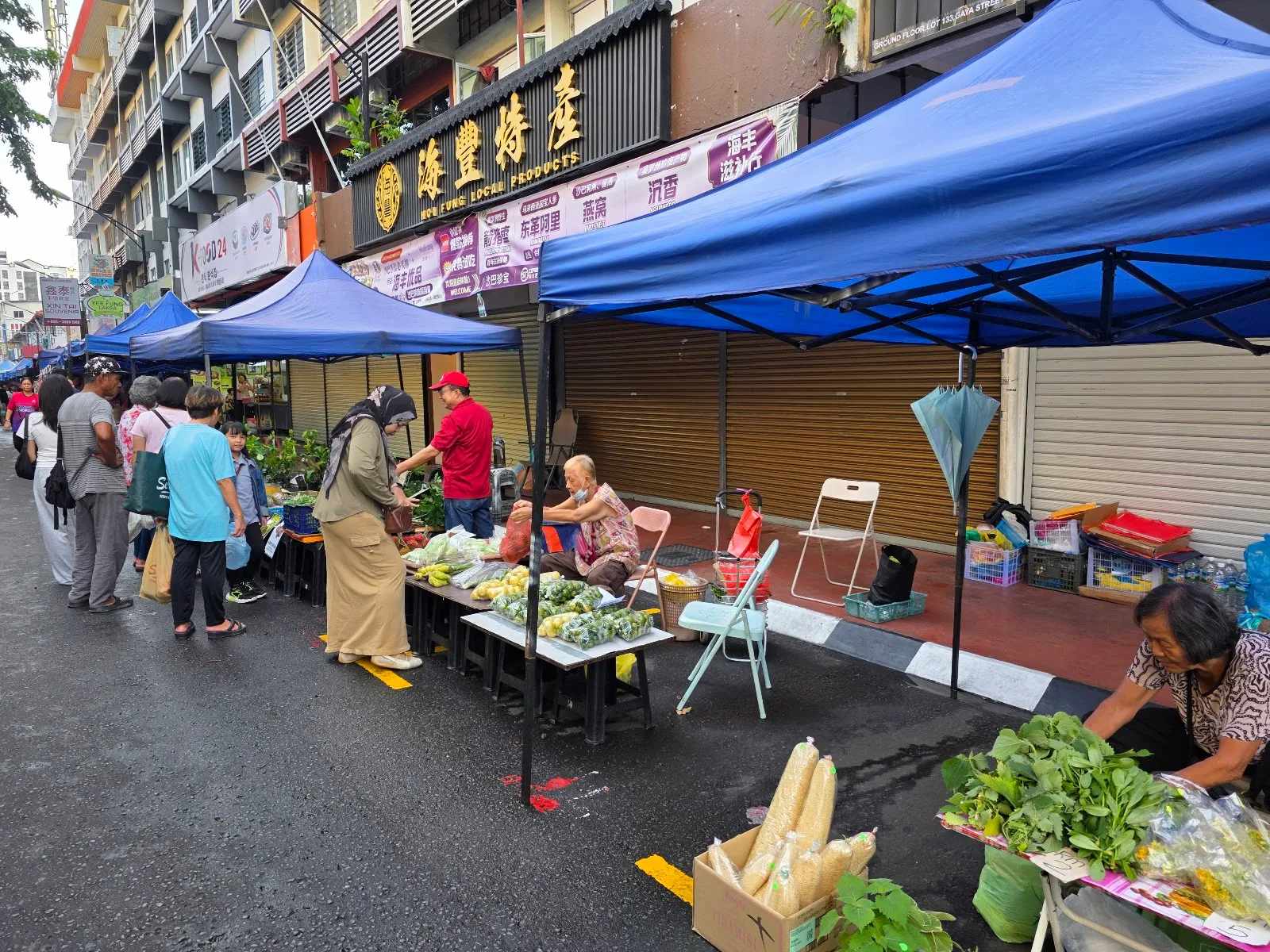
Gaya Street Sunday Market fills Gaya Street, the oldest street in Kota Kinabalu, every Sunday morning. Traffic is stopped, and hundreds of stalls spread out under shade trees and large umbrellas. You can buy batik sarongs, handicrafts, antiques, souvenirs, fresh fruit, flowers, plants and local food. Shops along the street are old family businesses run by Chinese families, and live animals are sold at some stalls. It is one of the easiest places in the city to see daily life in Sabah and to shop for local produce.
From Bond Street to a Sunday market
The street was first called Bond Street in the early 1900s, during the British colonial period. It is the oldest street in Kota Kinabalu and has been a business centre of the city for more than a century. Many of the shops along it are old family businesses run by Chinese families.
Every Sunday morning, traffic is stopped along the street so the market can take over the roadway. Farmers, fishermen and traders have used this street to sell their goods for more than a hundred years, and the market still draws local families along with visitors.
What the stalls sell
Plant sellers offer durian seedlings, cactus, ferns and herbs. Fresh fruit, vegetables and flowers fill other stalls. Local produce such as avocado, tuhau and bambangan is sold here, alongside Sabah coffee and tea.
You will also find batik sarongs, clothing, bags, footwear, copper bangles, antiques and musical instruments. Handicraft stalls sell souvenirs, and one of them has live chameleons where you can take photographs. Pets are sold at some stalls as well. Cultural performances are sometimes staged at the market, including a musician playing the gong.
How a visit works
The market runs along a stretch of roughly 350 metres, or about 0.5 km, so the whole route is short. Shade comes from large umbrellas and the old trees along the street. One visitor spent about two hours walking the full street with stops for cold sugar cane drinks and souvenirs, which is a good guide for planning your morning.
Prices are fair, but bargaining is part of the market. If you do not negotiate, you are likely to pay tourist prices. Ride-hailing drivers can drop you at the main entrance. Restrooms are on site, including a wheelchair accessible restroom.
Because the market finishes around midday, plan your breakfast or lunch with that in mind. Many eateries line the route, so you can stop to eat once you have browsed the stalls.
Eating along the street
Laksa noodle shops near the main entrance are a popular breakfast stop. Coffee-shop style eateries serve fried rice, noodles and iced coffee early in the day. A classic local breakfast is coffee or teh tarik, a silky milk tea, with roti kahwin, which is toast with butter and sweet coconut jam, sometimes with soft boiled eggs.
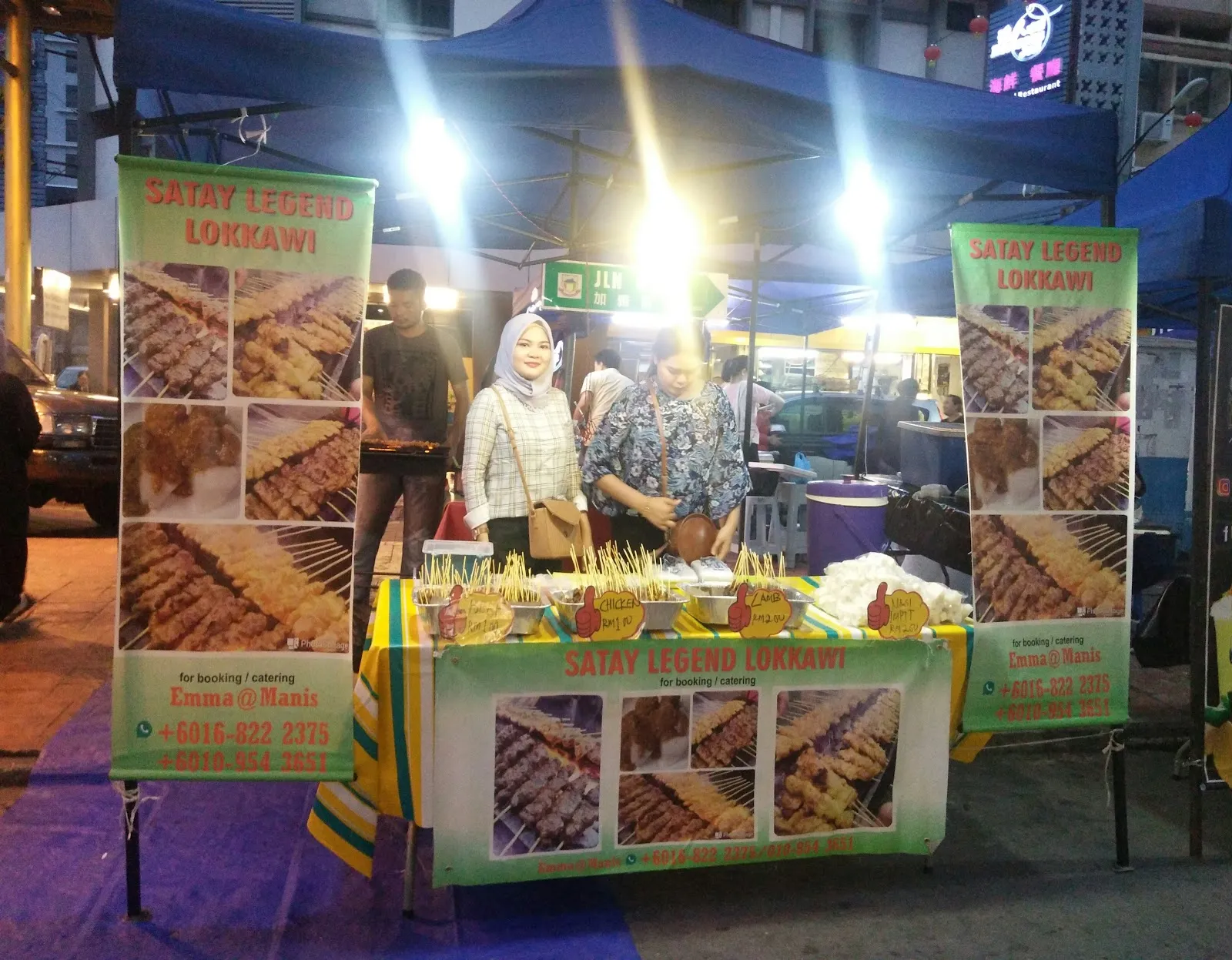
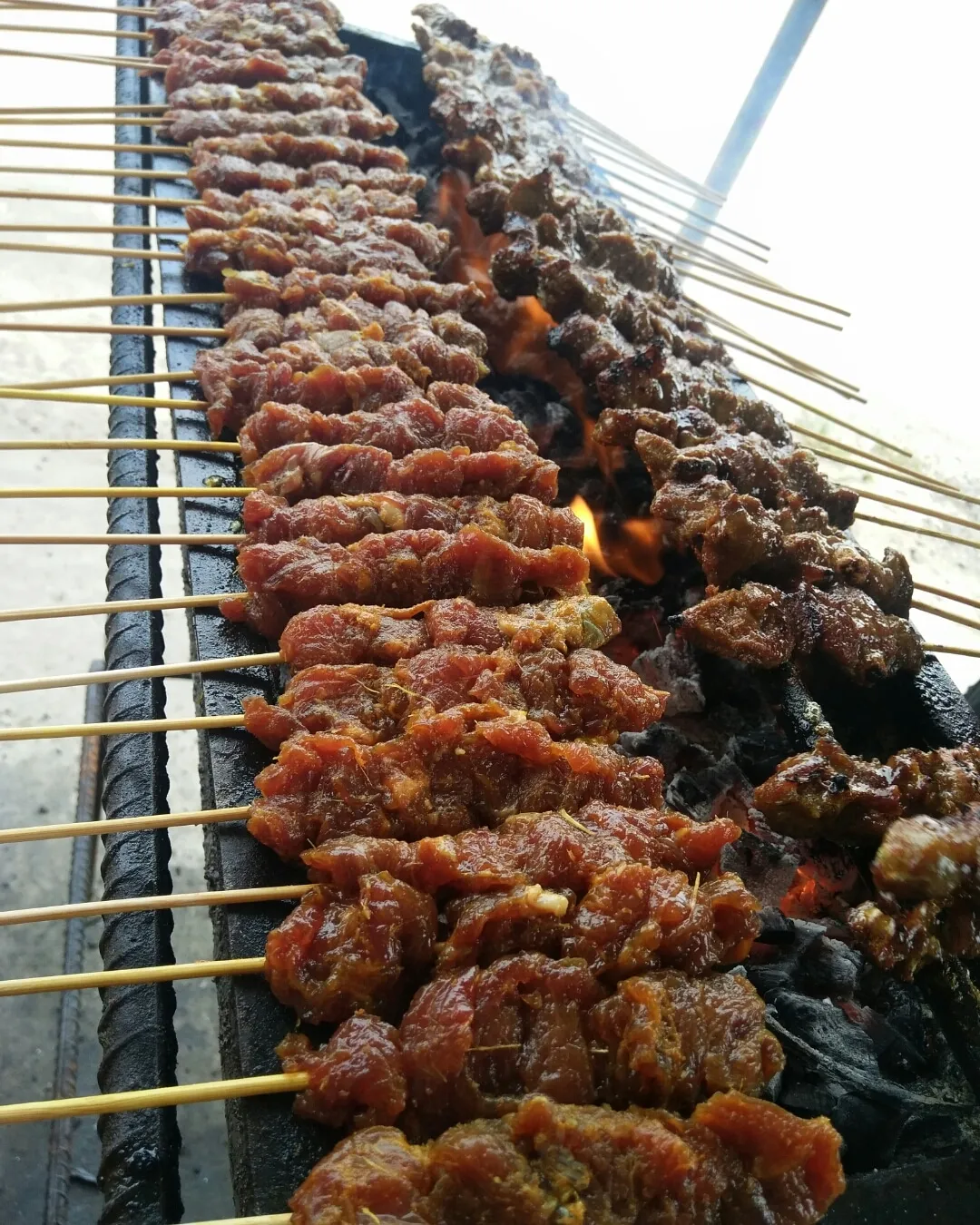
Stalls also sell takoyaki, steamed dim sum, fried snacks, pizza, donuts, mochi and cakes. Tenom coffee and kuih cincin are worth trying as you walk. Pineapple tarts and other kuih are sold along the street too.
FAQ
When is Gaya Street Sunday Market open?
It runs on Sunday mornings only, and the street is closed to traffic for the market. It finishes around midday.
How long do you need at the market?
Plan two to three hours. One visitor needed about two hours to walk the whole street with stops for drinks and souvenirs.
What time should I arrive?
Arrive around 8 to 9 am. It is warm by then, and the crowds are smaller earlier in the morning.
Do I need to bargain?
Bargaining is expected. Without it, you may pay tourist prices.
Are there restrooms and food stalls?
Yes. Food stalls line the market, and the site has a restroom and a wheelchair accessible restroom.