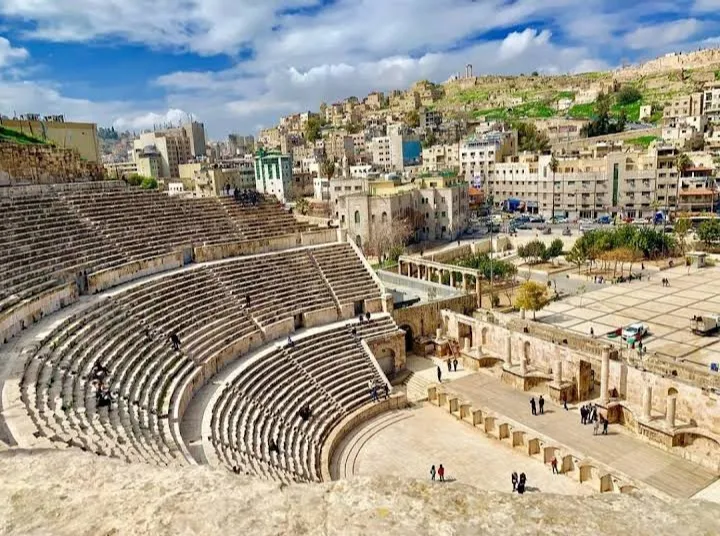
The Roman Theater is a second-century amphitheater in downtown Amman, cut into a hillside across from the Citadel. It was built under Emperor Antoninus Pius for Roman Philadelphia, as Amman was then called, and seats around 6,000 on steep stone tiers. Climb to the top for views over the city and the Citadel. Two small museums of Jordanian folk traditions sit beside the stage, with Bedouin clothing, jewelry and ceramics. Concerts and national events are still held here, and the plaza in front of the theater is the usual starting point for a walk through downtown.
Built under Antoninus Pius
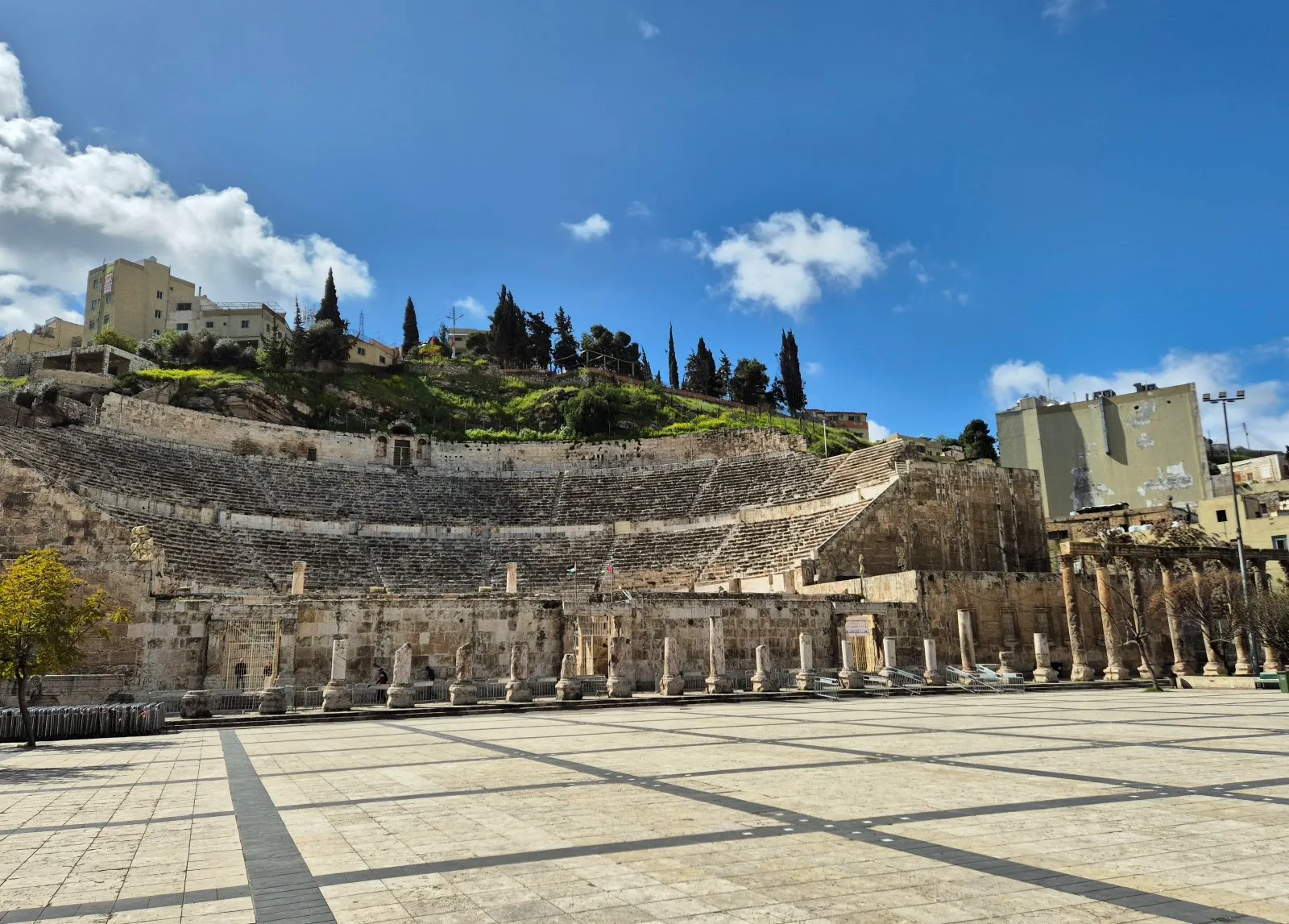
The theater dates to the second century AD, in the reign of Emperor Antoninus Pius, with construction usually placed between 138 and 161 CE. At that time Amman was the Roman city of Philadelphia, and the theater is the most visible remnant of it.
Like many Roman theaters, it was dug into a hillside, and the hill is said to have been a necropolis before. It was a public venue as well as a place for drama. Around 6,000 residents could gather here for cultural events, to hear politicians speak and to pick up news. Seating followed social class.
Design and acoustics
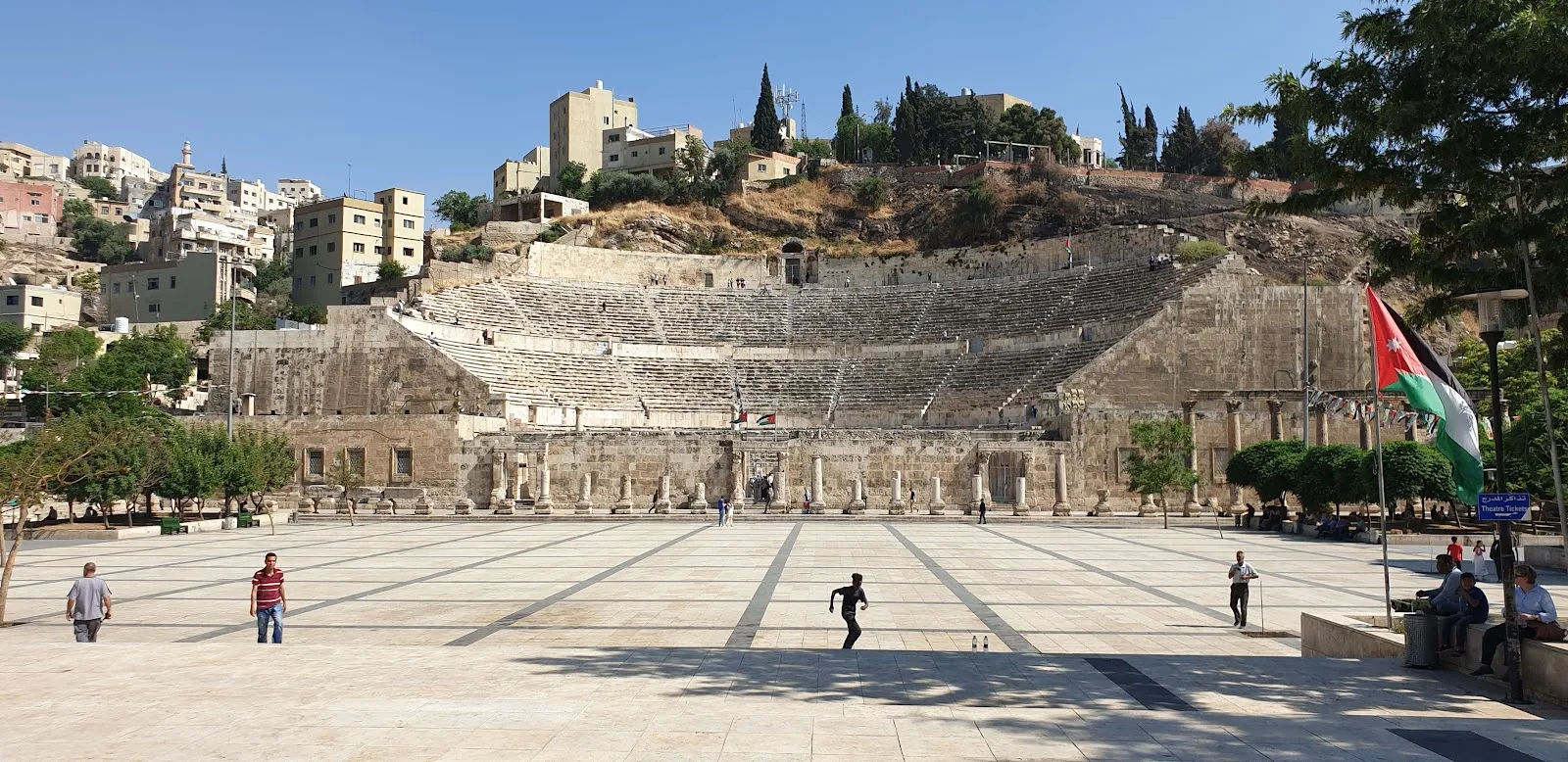
The seating area, known as the cavea, climbs the hill in three horizontal tiers. The whole structure faces north, so the sun stays out of the spectators' eyes during afternoon performances.
The stone carries sound well. One account says a whisper from the center of the stage can be heard at the top, and performances here need no electrical amplification to reach the upper rows. This is why the theater is still used for concerts, festivals and national events.
The stairs are steep. Take them slowly, particularly if the stone is worn smooth.
The two museums beside the stage
A small door at the side of the stage opens into the Jordan Museum of Popular Traditions. Its cases hold ceramics, traditional Bedouin clothing, jewelry and small everyday objects. The Jordan Folklore Museum is also on the site and shows traditional crafts and costumes.
The Odeon, a smaller Roman theater, is nearby.
The plaza and the old forum
After the ticket office you cross a large open square. This was once the Roman forum, one of the central places of Philadelphia. Today it is Hashemite Plaza, where locals gather, particularly towards sunset. The plaza has also hosted large public gatherings, together with the theater.
The forum and theater were built together in the second century, which explains why the two sit side by side.
Planning the visit
One account describes a small fee to enter the theater, with the courtyard open without a ticket, though you do not reach the full seating area from there. Tickets are described as quick to buy, with no wait.
The Citadel is about a 20-minute walk from the theater. Walking down from it brings you out at the theater, and the streets between them are part of old downtown. Rainbow Street and the Gold Souk are also within a walk of up to 30 minutes.
Photographers prefer the morning, when the light is soft. The views from the top tiers just before sunset are also good. The site has restrooms, changing tables, a wheelchair-accessible entrance and both free and paid parking.
FAQ
Is there an entry fee for the Roman Theater in Amman?
There is a small fee to enter the theater itself, and you can pay with cash. The courtyard in front can be entered for free, but it does not give access to the full theater. A Jordan Pass covers entry.
How many people does the Roman Theater hold?
It was built to seat around 6,000 people on steep stone tiers divided into three levels.
When was the Roman Theater built?
It was built in the second century AD, during the reign of Antoninus Pius, which is usually dated to 138 to 161 CE. At that time Amman was called Philadelphia.
Are there museums at the Roman Theater?
Yes. The Jordan Museum of Popular Traditions opens off the side of the stage, and the Jordan Folklore Museum is on the site as well. Both show traditional Jordanian clothing, crafts and everyday objects.
How far is the Roman Theater from the Citadel?
The Citadel is about a 20-minute walk away, and the route down from it leads to the theater.
Can you visit the Roman Theater at night?
No, the site is closed at night, so plan your visit for daylight.