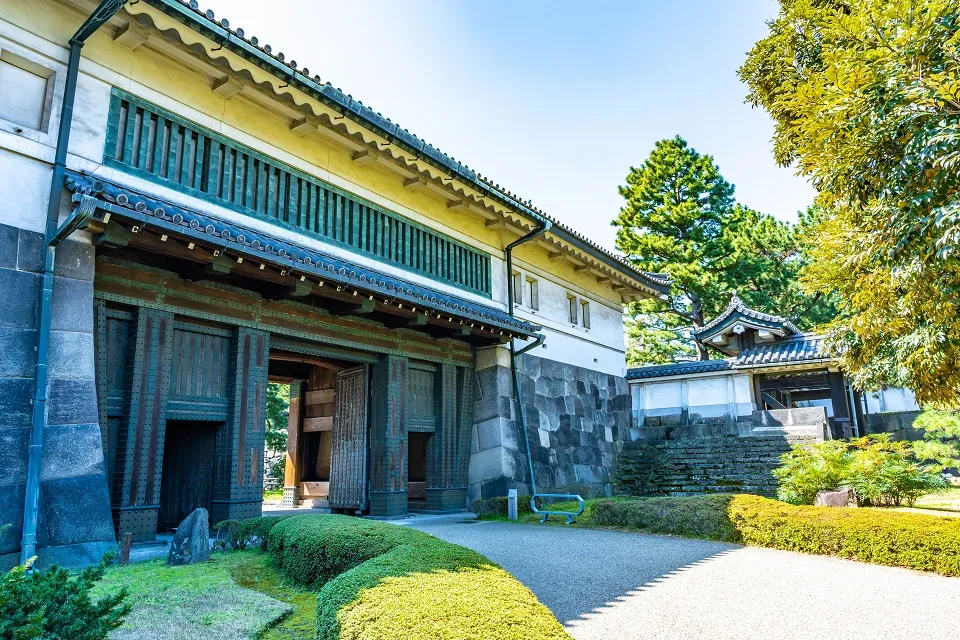
Fushimi-yagura is a historic watchtower in the Imperial Palace Gardens, near Nijubashi Bridge in central Tokyo. It is said to have been moved from Fushimi Castle in Kyoto in 1628. From the palace approach, the tower’s white walls rise behind the bridges, creating one of the area’s best-known views. Look for its stone base and traditional construction details. Access is limited, so you may see it from a distance unless you join a general palace tour.
A watchtower linked to Fushimi Castle
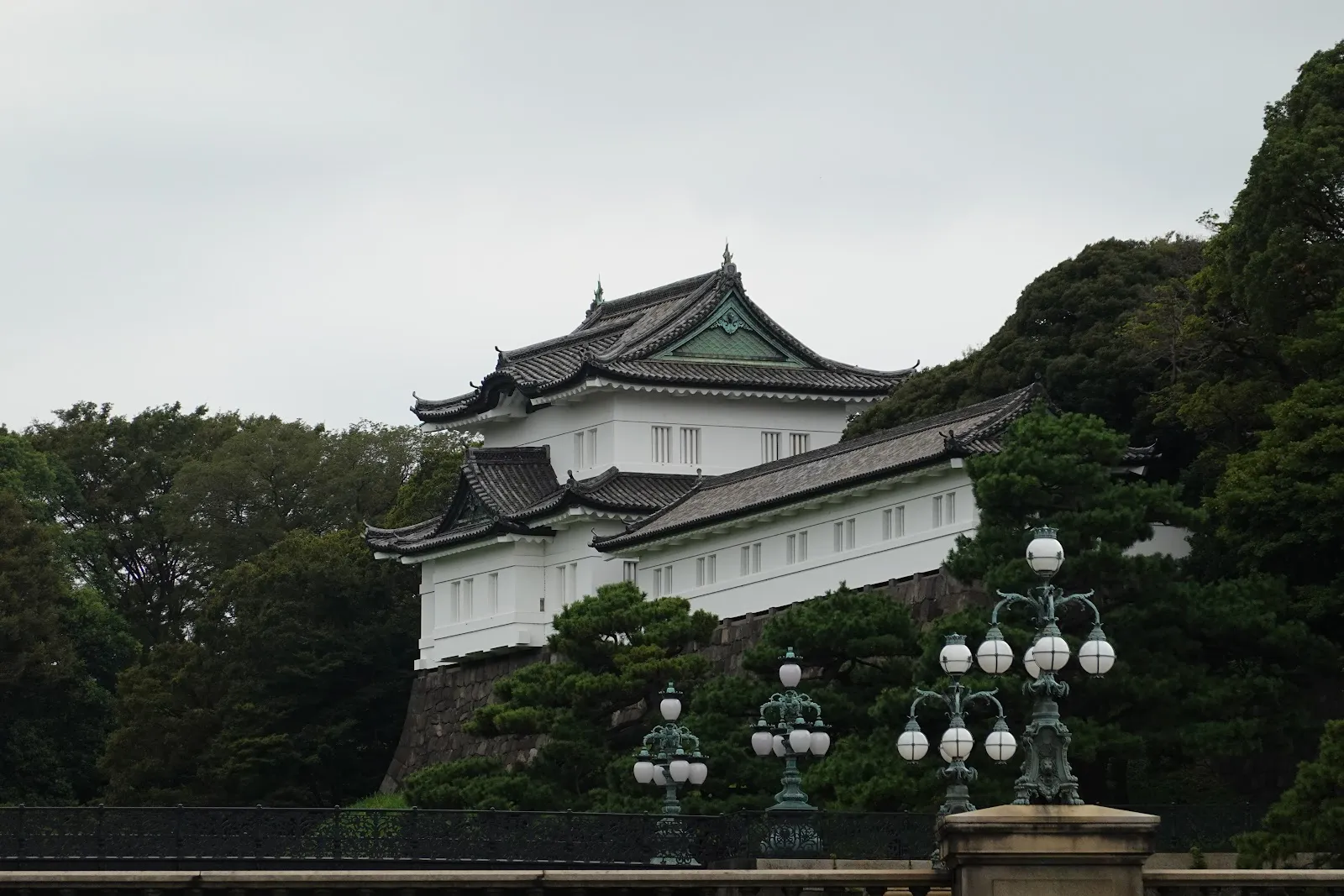
Fushimi-yagura is said to have been dismantled at Fushimi Castle in Kyoto and moved to Edo in 1628. The date and origin are part of the tower’s history as it is commonly told. Its white plaster walls and stone base distinguish it within the Imperial Palace grounds.
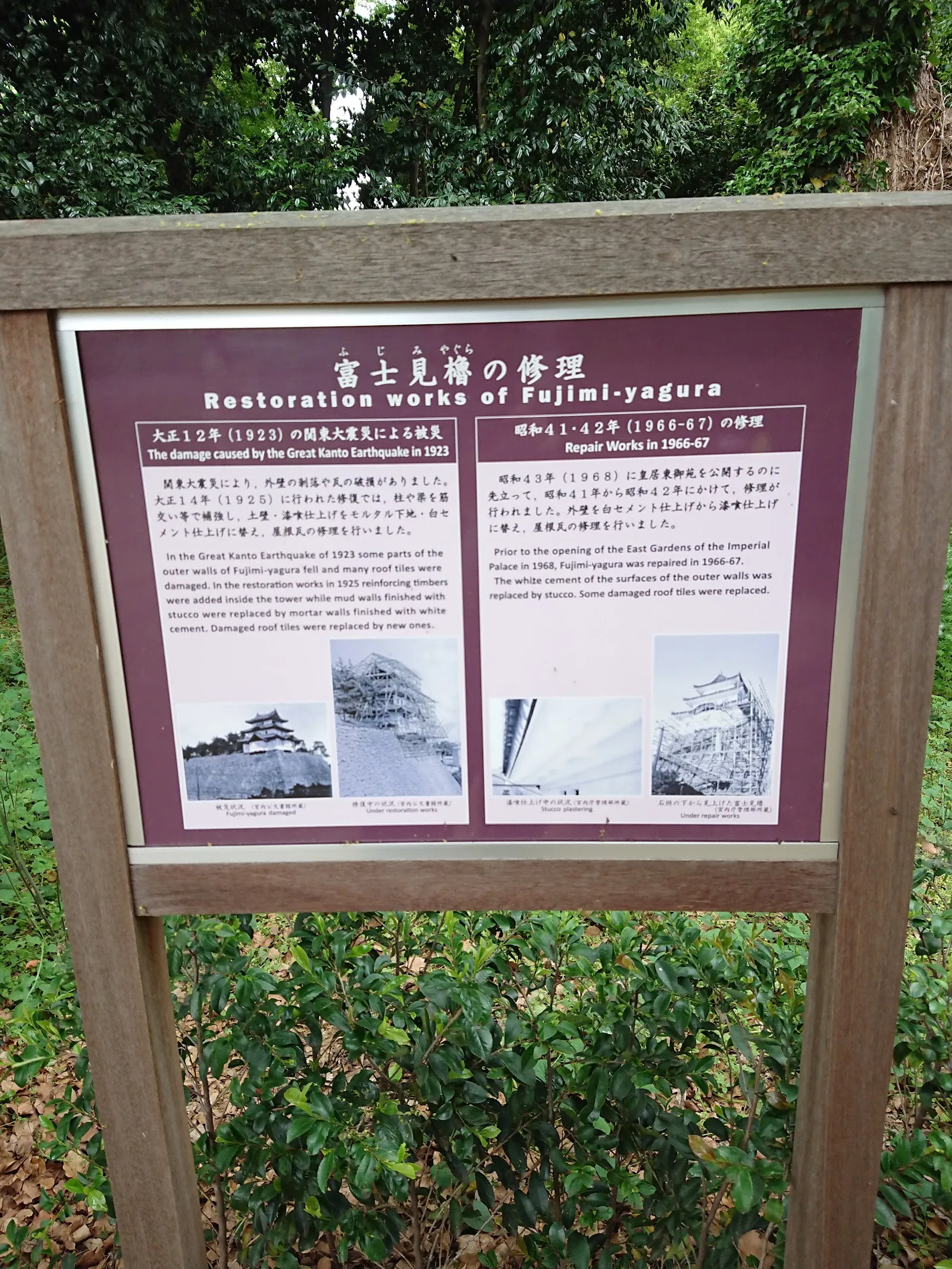
The structure was damaged in the Great Kanto Earthquake and later restored. Its repaired form preserves the watchtower’s place in the palace’s historic defensive architecture.
Viewing the tower and bridges
The tower is seen from the area around Nijubashi Bridge, where it stands beyond the bridges and adds a bright white feature to the view. From the Imperial Palace Outer Gardens, it is visible from near Nijubashi-mae, though you cannot approach the bridge closely from that viewpoint.
A general palace tour is an option for visitors who want to see more of the grounds. It can also include Jurokuken Tamon Yagura. Check the Imperial Household Agency’s visitor information and arrange tickets in advance.
FAQ
Where is Fushimi-yagura?
It is in the Imperial Palace Gardens in Chiyoda, Tokyo, near Nijubashi Bridge.
Can you get close to Fushimi-yagura?
From the Outer Gardens, the tower is visible near Nijubashi-mae, but access to the bridge area is limited. A general palace tour gives access to additional parts of the grounds.
Where did Fushimi-yagura come from?
It is said to have been moved from Fushimi Castle in Kyoto to Edo in 1628.