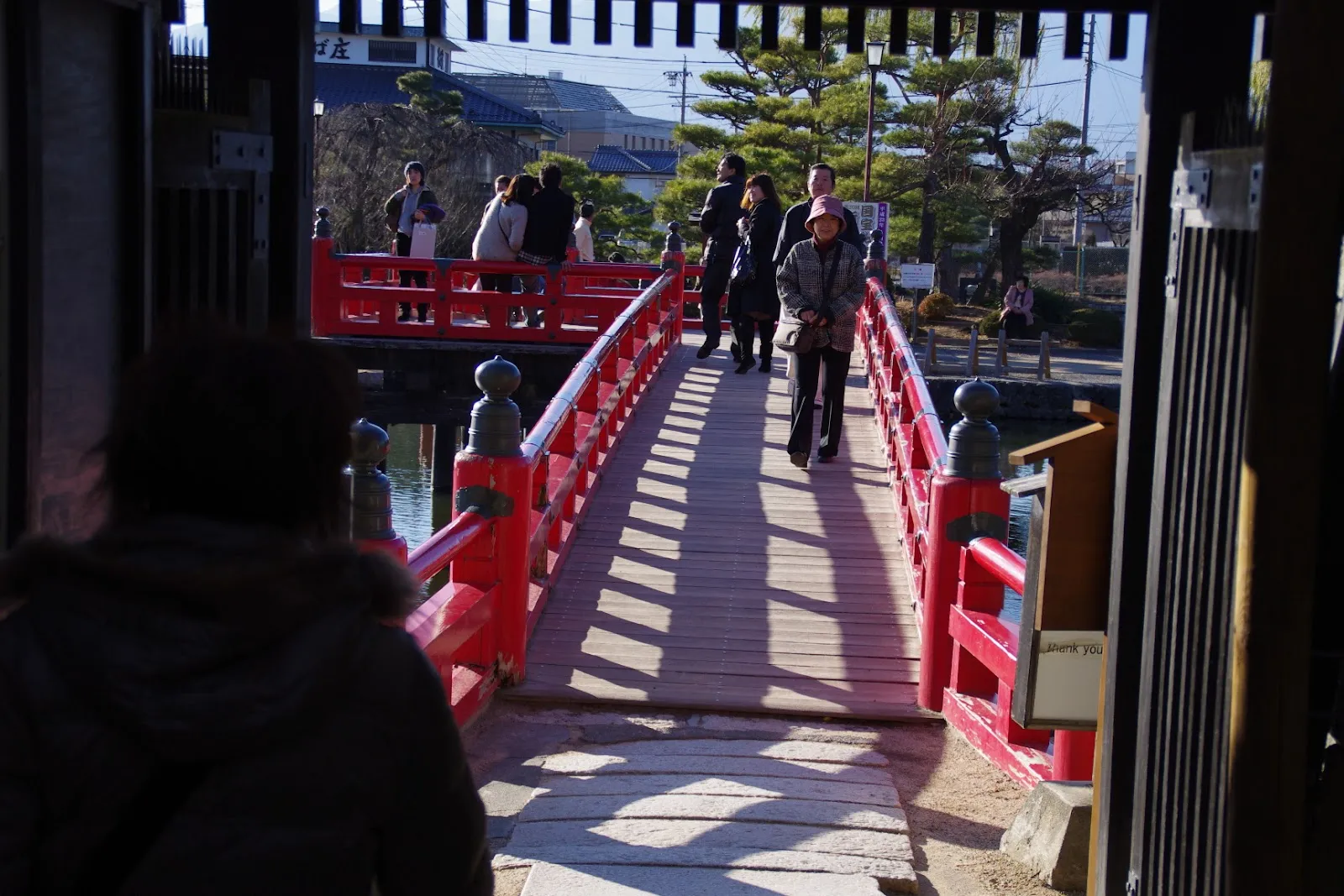
Matsumoto Castle stands in the centre of Matsumoto, about a 15-minute walk from the station. Its black and white keep, known as Crow Castle, is a National Treasure and one of only 12 original keeps left in Japan. It was built in the late 16th century on flat ground and is ringed by a moat, with the Japanese Alps behind. Inside, steep wooden stairs climb six floors past armor and weapons from the Sengoku period to a top floor that looks over the city and the mountains. The park around the keep is free to enter.
From Fukashi Castle to Matsumoto Castle
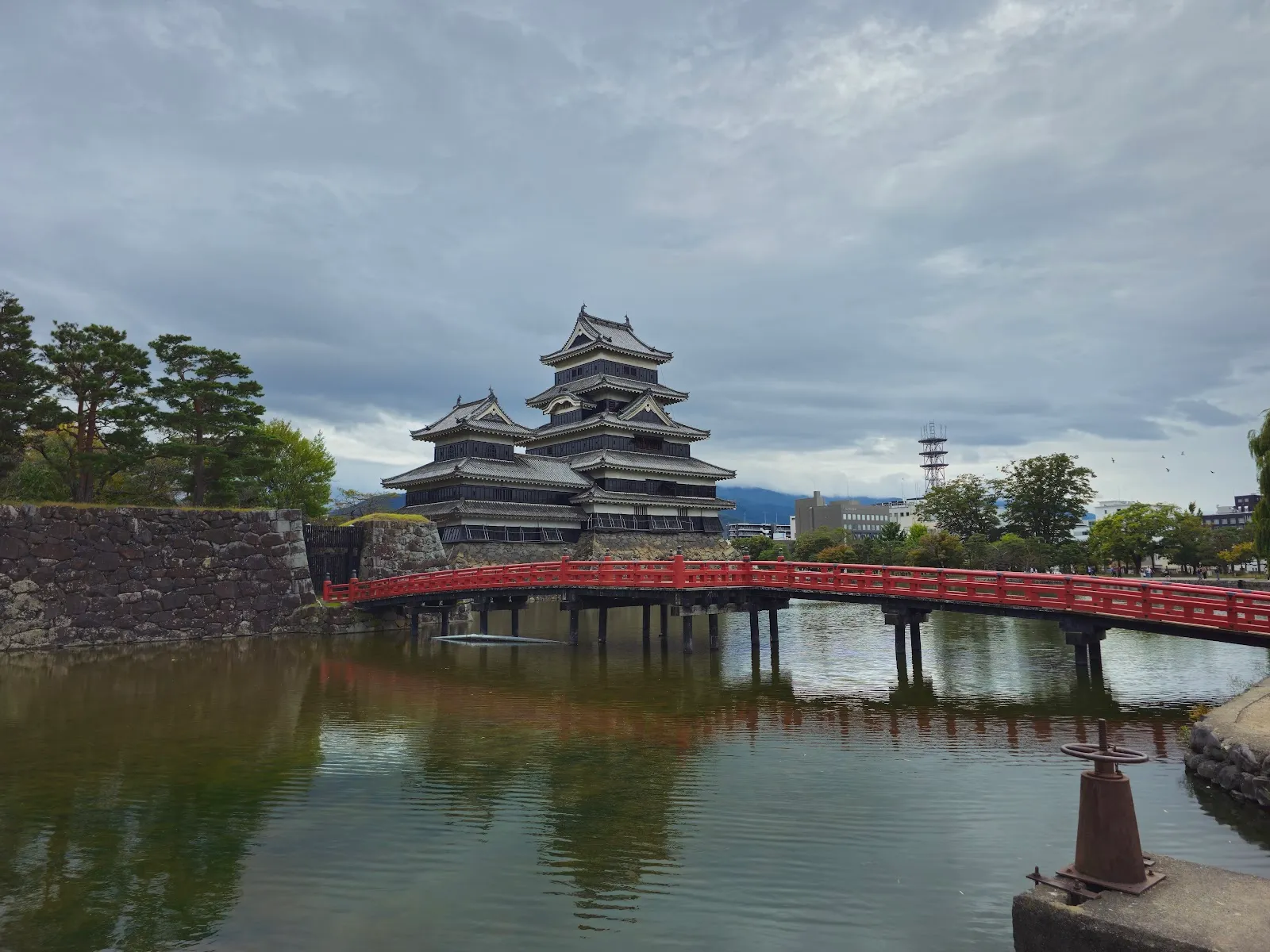
The site began as Fukashi Castle, a small fortress with moats built in 1504 under Shimadachi Sadanaga of the Ogasawara clan. At that time a marketplace already stood on the east side of the secondary citadel, while the whole west side was swampland.
The castle was later captured by Takeda Shingen. After the Takeda clan fell to Oda Nobunaga in 1582, it changed hands several times and finally came under supporters of Toyotomi Hideyoshi, who renamed it Matsumoto Castle. The Ishikawa family, who arrived as daimyo in the service of the Toyotomi, began full-scale construction of the present structure in the 1580s. They also planned the castle and the town around it, which is why Matsumoto still feels like a castle town.
The castle took its current three-turreted form between 1592 and 1614. The civil wars were ending and the peaceful Edo period was starting, so the fortress was finished just as medieval castles lost their purpose.
Why the keep looks the way it does
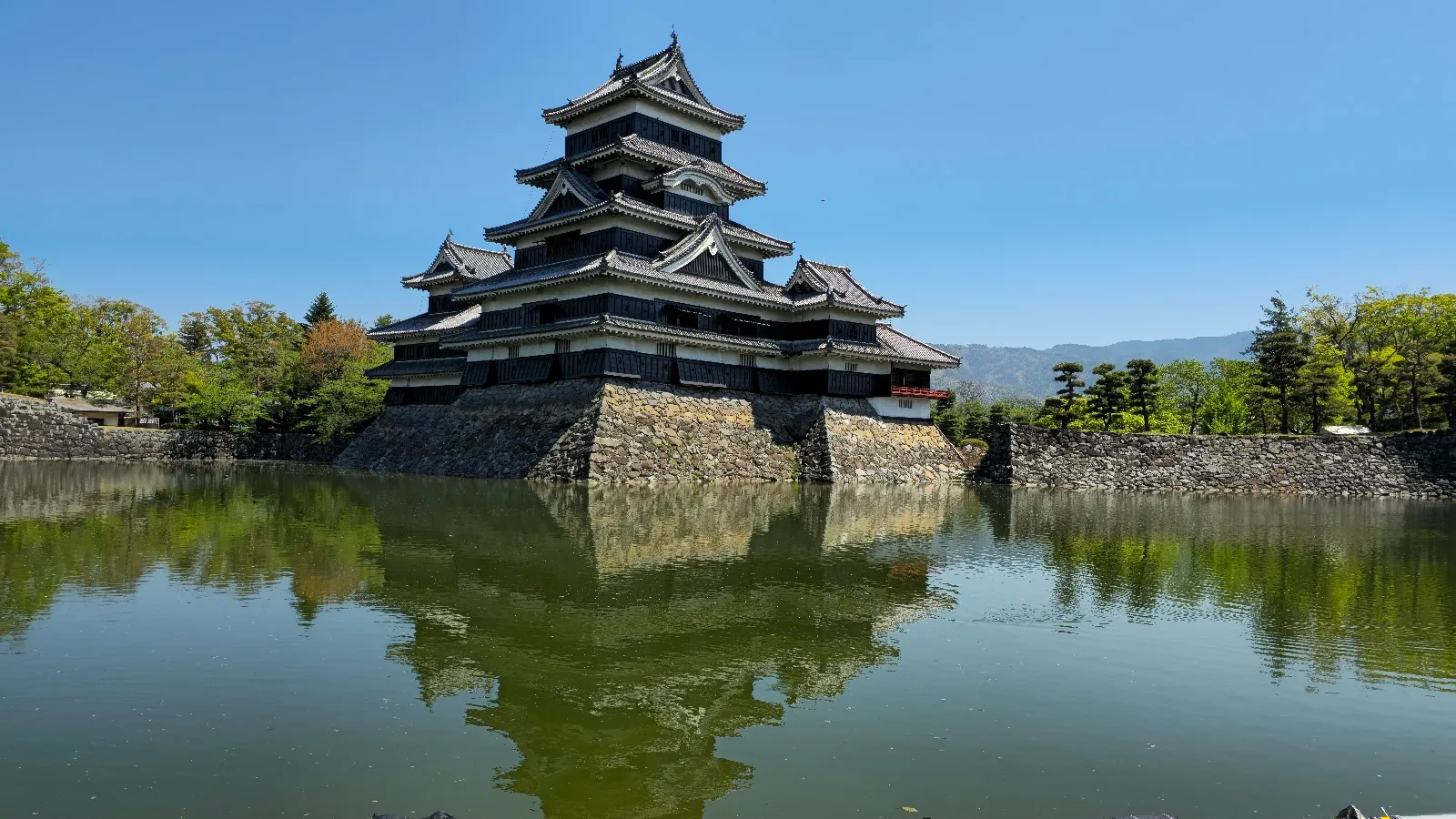
The black walls give the castle its nickname, Crow Castle, or Karasu-jo in Japanese. The lacquer was meant to intimidate enemies, and Matsumoto is the only castle in Japan where every wall of the main keep is coated in it. Against the white plaster, the dark siding makes a sharp outline, especially with the Northern Alps behind.
Matsumoto is a hirajiro, a castle built on a plain rather than a hilltop, so the moat does much of the defensive work. The keep shows its military purpose in other ways too. There are few windows but many narrow arrowslits. From outside it appears to have five tiers, yet it has six floors, because one is hidden within the roofs.
It is the oldest surviving five-tiered, six-floor keep in Japan, and one of only 12 castles in the country that still have their original keep.
Inside the keep
Visitors climb original wooden staircases that are steep and narrow, at points close to ladders. The ceilings are low. A total of 140 steps lead to the top floor.
The lower floors hold displays of armor and weapons from the Sengoku period, along with exhibits on how the castle was built, repaired and preserved, and on the legends connected to it. A small shrine is set into the ceiling of the upper floor.
From the top you look out over Matsumoto and across to the Japanese Alps. After the climb, the Tsukimi Yagura, the moon-viewing tower attached to the keep, is a place to rest and look over the castle gardens. Volunteer guides who speak English can explain the castle's defences and history as you go.
Surviving the Meiji era
In 1872 the new Meiji government ordered the destruction of former feudal fortifications. Residents of Matsumoto campaigned to save the castle, and the keep remained. It went through extensive renovation in the Meiji period and was designated a national treasure in 1936.
Today five buildings carry National Treasure status: the Great Keep, the Northwest Tower, the Roofed Passage, the Southeast Wing and the Moon-Viewing Tower. In its time the castle was a larger complex of baileys, moats, stone walls and gated entrances, and many of those structures were designated National Historic Sites in 1930. The first and second enclosures and the moats are listed as historic sites.
The grounds and the moat
Entering the keep costs money, but the park around it is free. Walking the moat is worthwhile even if you skip the interior. The view of the keep across the water is the one most visitors photograph, and a guide can point out the best spots.
A building on the grounds that is easy to miss is the former Nagano District Court Matsumoto Branch, built in 1908. It was moved to this site in 1982 after a community preservation effort, and its brick and iron fence is of the same period. It is the only building of its kind left in Japan.
In April, cherry blossom lines the avenues around the moat, and in autumn the gardens turn colour. In the evening the keep is lit, and when the air is still the moat holds its reflection. Nawate-dori, a street of around 50 shops and food stalls decorated with frog statues, is a short walk from the castle.
Getting there and planning the visit
Matsumoto is about 230 km from Tokyo. The Limited Express Azusa links Matsumoto Station with Shinjuku, and the Limited Express Shinano runs to Nagano and Nagoya. From the station the castle is a walk of about 15 minutes, on level ground.
There are free and paid car parks, and a wheelchair accessible parking lot. Weekends are busy with Japanese and foreign visitors alike. A weekday or an early arrival keeps the queue short, and an online ticket for a set time avoids the counter wait.
FAQ
Is there an entry fee for Matsumoto Castle?
Entering the keep costs money, but the park around it is free to walk. The castle's official website, matsumoto-castle.jp, lists current ticket prices.
How long do you need at Matsumoto Castle?
Plan on about 90 minutes to climb the keep and take in the exhibits. Add time if you want to walk around the moat and grounds.
How far is Matsumoto Castle from Matsumoto Station?
It is about a 15-minute walk from the station. The castle stands on flat ground, so the route is easy.
Should you buy tickets in advance?
On weekends the counter queue can take at least 30 minutes. An online ticket for a booked time lets you enter without that wait.
Is the castle easy to visit for older people or young children?
The stairs inside are very steep and narrow, with 140 steps to the top, and are difficult for people with knee problems, older visitors and small children. The grounds and moat are easier to enjoy.
Can you see Matsumoto Castle at night?
Yes. The keep is lit up in the evening, and on calm days it reflects in the moat.


