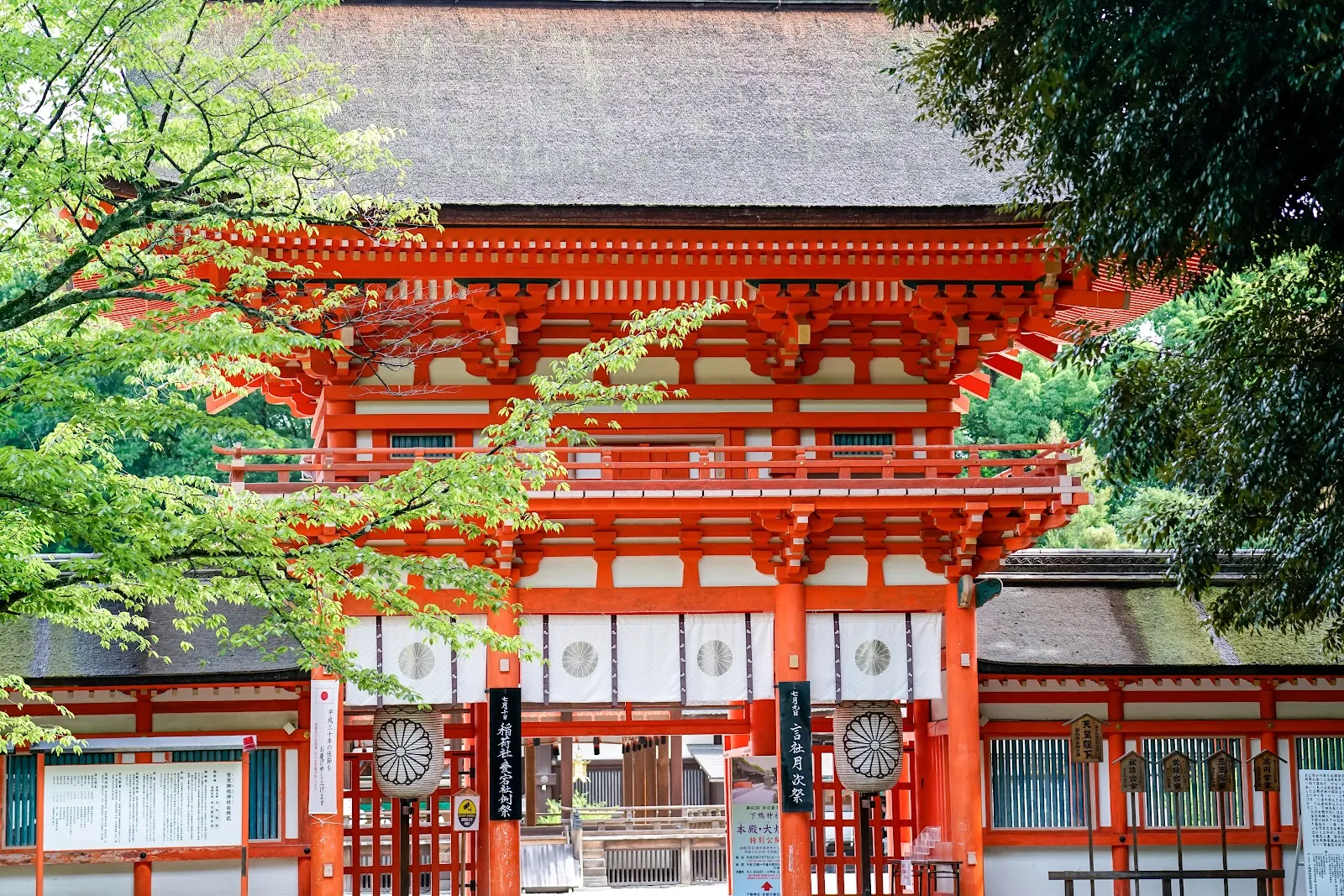
Shimogamo Shrine, officially Kamomioya-jinja, stands in northern Kyoto where the Kamo and Takano rivers meet. One of the city’s oldest Shinto shrines, it is part of a UNESCO World Heritage Site and sits within Tadasu-no-Mori, a forest that shades the walk to the shrine buildings. Look for the red torii gates, the arched bridge and the shrine’s white-and-vermilion architecture. Zodiac altars, water fortunes and seasonal omamori charms add smaller stops around the grounds. Go early to enjoy a quieter approach through the trees.
A shrine in Tadasu-no-Mori
Shimogamo Shrine, also known as Kamomioya-jinja, lies where the Kamo and Takano rivers meet in northern Kyoto. Its grounds include Tadasu-no-Mori, a forest that surrounds the shrine precincts. The tree-lined approach gives the visit a different pace from Kyoto’s built-up streets, with shade along the walk toward the buildings.
The shrine is part of the UNESCO-listed Historic Monuments of Ancient Kyoto. It is among Kyoto’s oldest shrines, and its history is tied to the Kamo clan, who lived in the area before Kyoto became the capital. The grounds are extensive, with smaller shrines set apart from the main complex.
The main shrine buildings
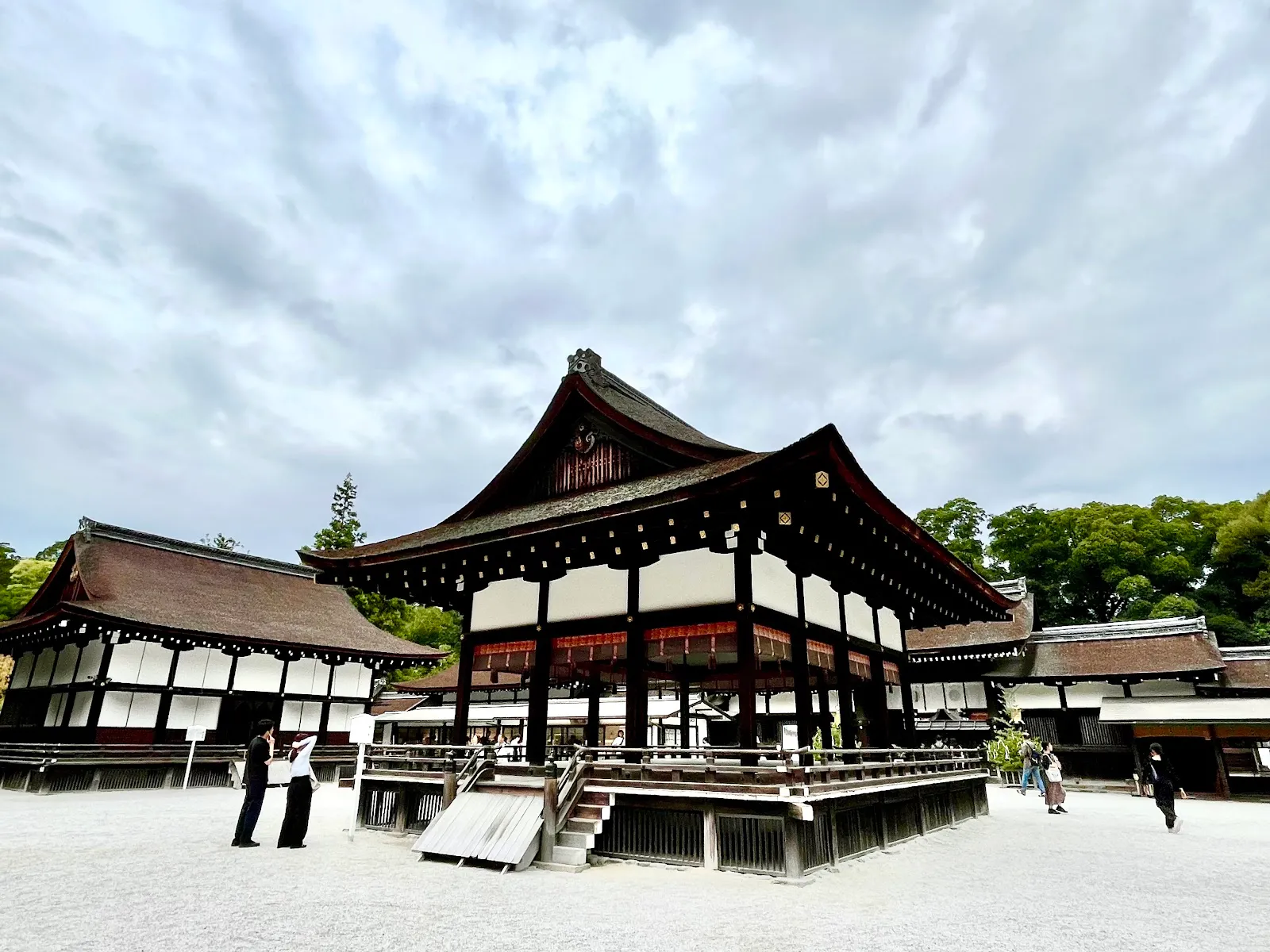
The main shrine consists of two buildings, one to the east and one to the west. Both are designated National Treasures. Their white and vermilion colors stand out against the surrounding greenery, while the long gabled roof and covered porch are characteristic of the nagare-zukuri style associated with the Heian period.
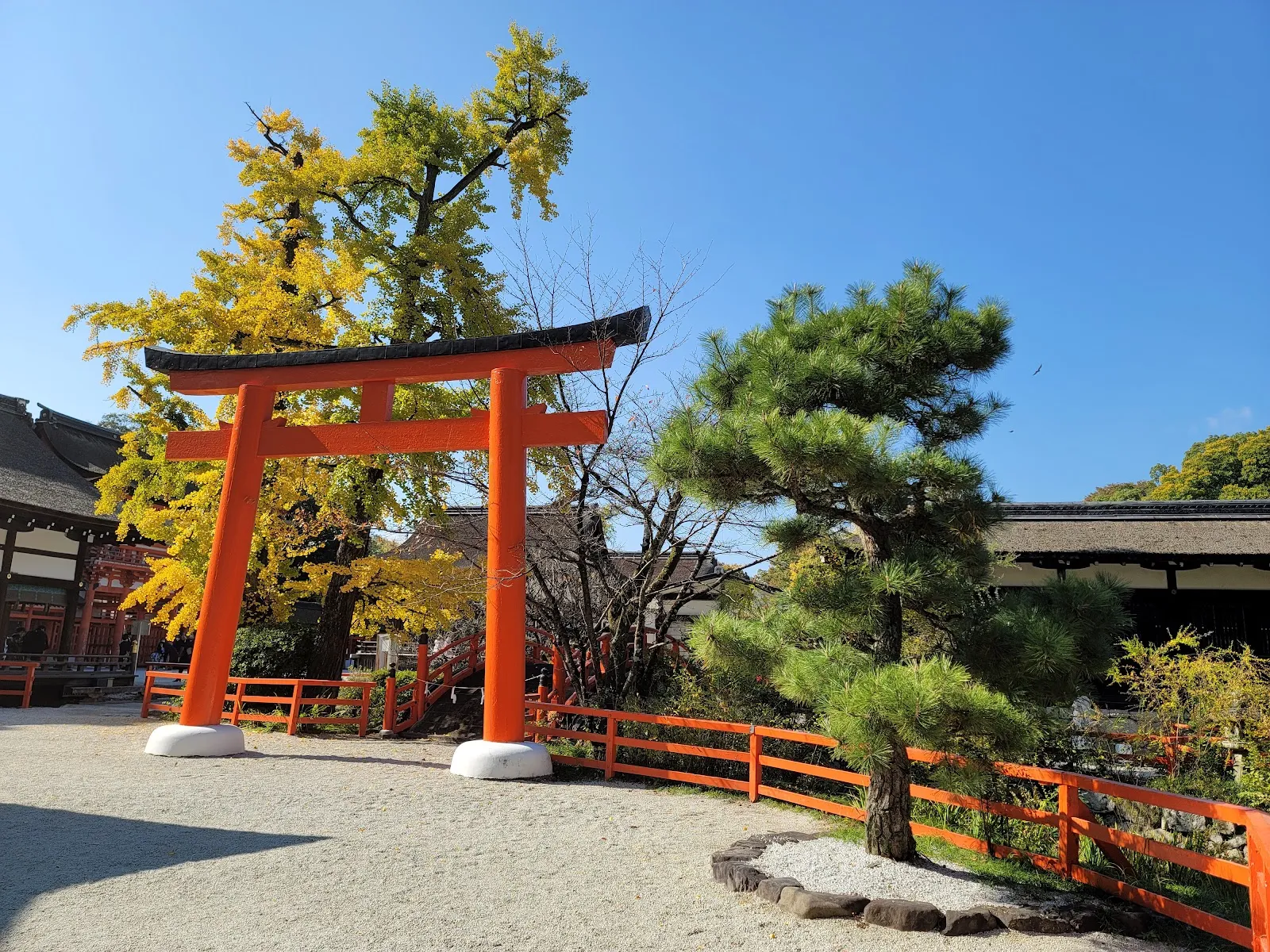
Take time to notice the approach as well as the buildings themselves. Red torii gates, an arched bridge and a stream through the forest add distinct details to the grounds. In autumn, the trees turn red and yellow, setting off the shrine’s bright architectural colors.
Small shrines, customs and seasonal events
The complex has several points of interest beyond the main buildings. Zodiac altars, wish tablets and water fortunes give visitors different ways to take part in shrine customs. The shops sell omamori, protective charms, including designs that change with the seasons. Smaller shrines associated with beauty and matchmaking are also found along the grounds.
Shimogamo Shrine is known for the Aoi Festival, whose procession travels from the Kyoto Imperial Palace through Shimogamo Shrine and on to Kamigamo Shrine. Events held on the grounds can bring larger crowds than a regular visit, so check the shrine’s official information if you are planning around a festival. The annual Kemari game, an old ball game associated with the Heian-era aristocracy, is another event held at the shrine.
FAQ
Where is Shimogamo Shrine?
It is in northern Kyoto, where the Kamo and Takano rivers meet. The shrine grounds are surrounded by Tadasu-no-Mori forest.
What should I see at Shimogamo Shrine?
Look for the two main shrine buildings, the red torii gates, the arched bridge and the smaller shrines. Zodiac altars, wish tablets and water fortunes are also found around the complex.
When is the best time to visit Shimogamo Shrine?
Early morning is a good choice for a quieter walk through the forest and grounds. Autumn brings red and yellow foliage; the best period for viewing the leaves is described as early to mid-December.
How do I get to Shimogamo Shrine on foot?
The shrine is about a 12-minute walk from Demachiyanagi Station. A separate scenic approach runs through the forest from Kyoto Concert Hall.


