
The Hakone Open-Air Museum pairs modern sculpture with mountain scenery across a large garden in Ninotaira, Hakone. Around 120 works by Japanese and international artists, including Henry Moore, Rodin and Joan Miró, are set among lawns, ponds and hillside paths. Inside, the Picasso Pavilion presents paintings, ceramics and other works from different stages of Picasso’s career. Children can explore interactive art and play structures, while a hot-spring foot bath gives you a place to rest between exhibits. Allow time to wander both outdoors and through the indoor galleries.
Sculpture across the hillside
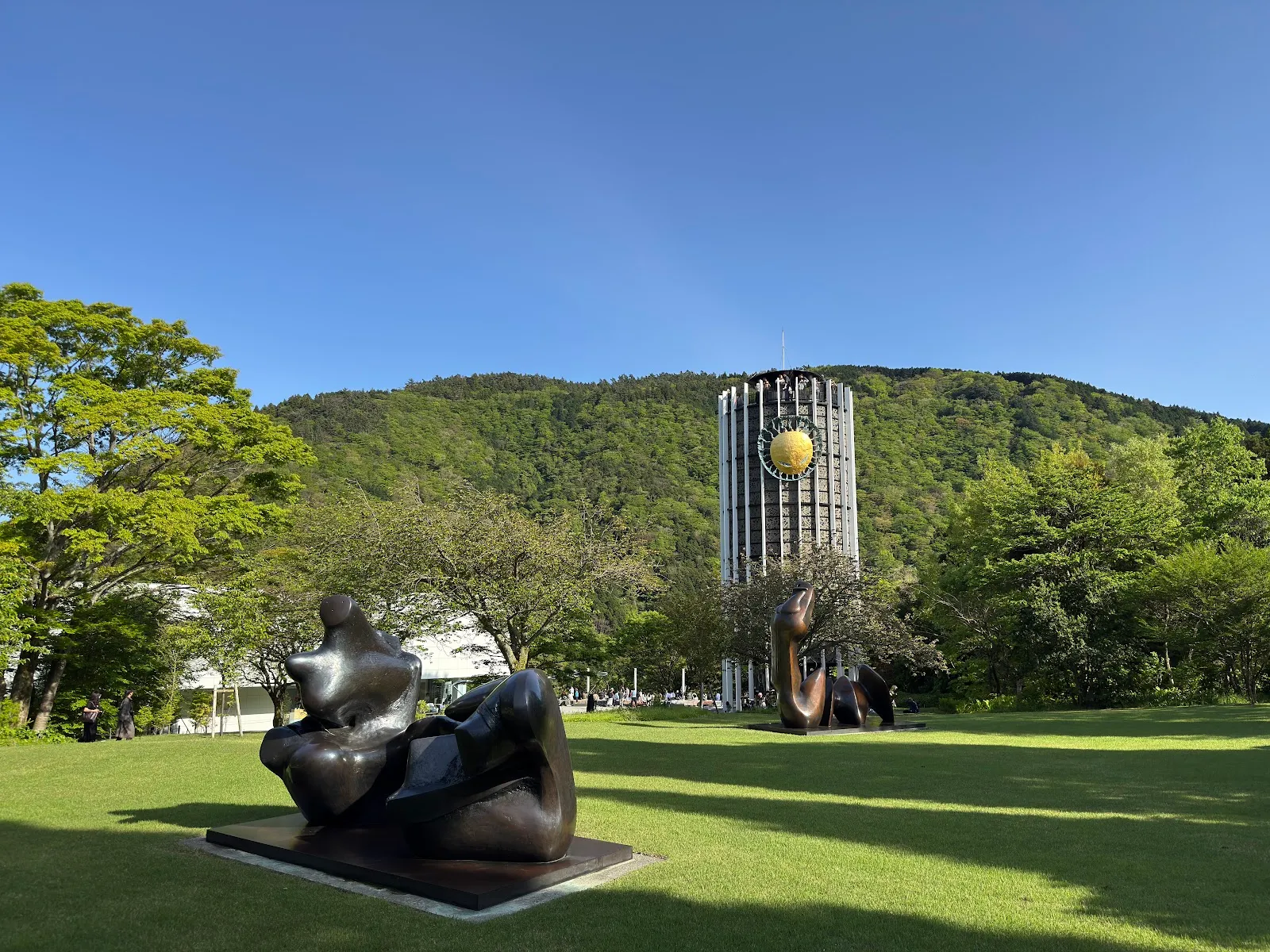
The museum opened in 1969 as Japan’s first outdoor art museum. Its roughly 70,000-square-metre grounds put sculpture in direct conversation with Hakone’s landscape: works stand on lawns and among trees, with valleys and mountains visible around them. Rather than viewing the collection only from inside galleries, you move along outdoor paths and encounter pieces at close range.
Around 120 works by modern and contemporary sculptors are on permanent display. The collection includes artists from Japan and abroad, among them Auguste Rodin, Henry Moore, Joan Miró, Niki de Saint Phalle and Taro Okamoto. Moore has a permanent exhibition area, where works are rotated periodically. The outdoor setting also means the appearance of the garden changes with the weather and the seasons.
Some sculptures are designed for interaction, and children can enter or play on selected works. The Woods of Net is a popular play space, while other installations include a maze and structures that invite visitors to climb. Follow the signs around the grounds and take your time: the museum is large, and the outdoor works are spread across its garden rather than concentrated in one building.
Inside the Picasso Pavilion
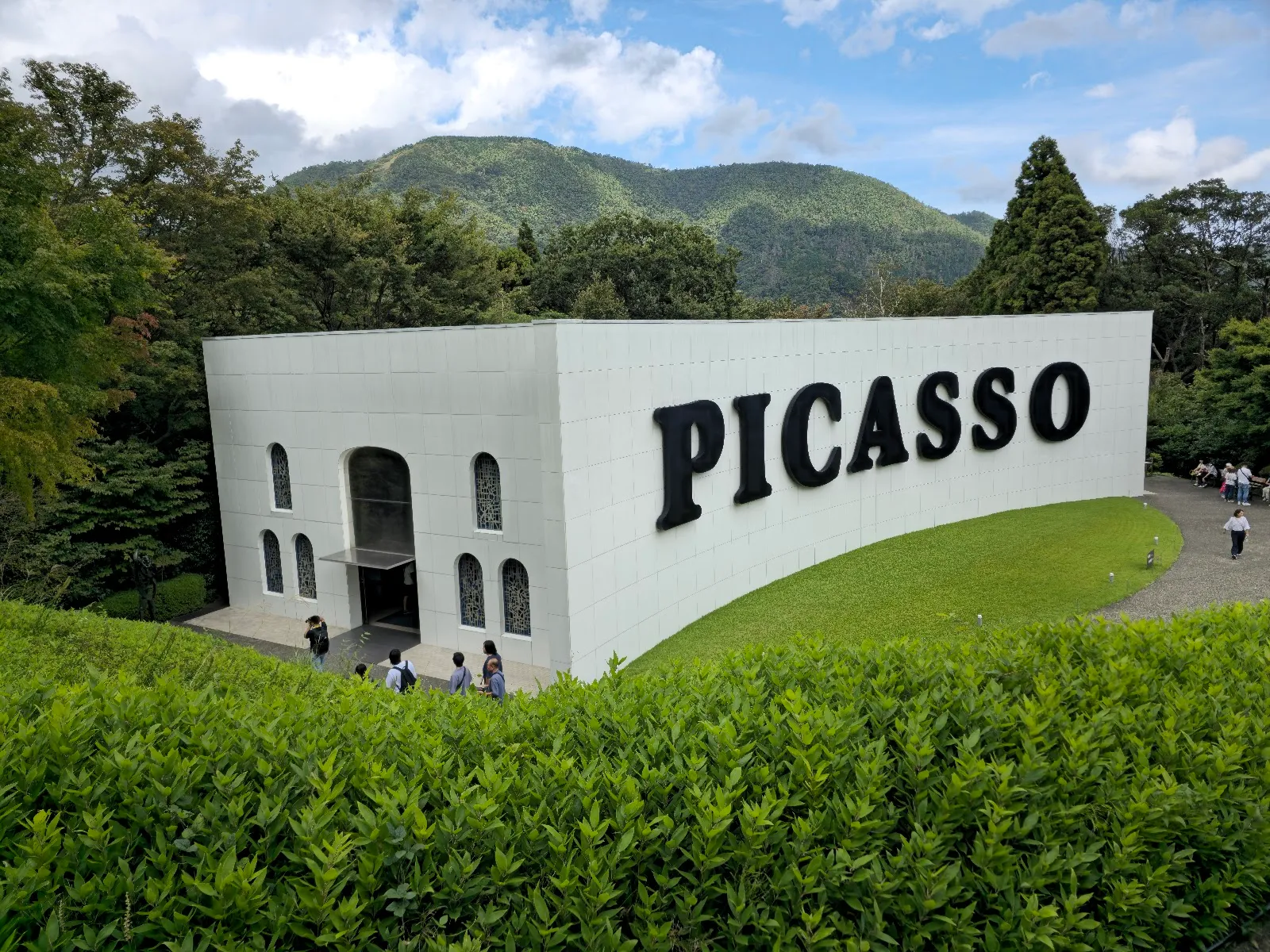
The Picasso Pavilion is devoted to Pablo Picasso and holds more than 300 works. The collection includes paintings, photographs and ceramics, with displays that trace changes in his work. Explanatory text in English helps visitors follow the different periods represented in the collection.
There are also indoor exhibition spaces beyond the Picasso Pavilion, including galleries for two-dimensional and three-dimensional art. These buildings give you another way to explore the collection and can provide a change of pace from the garden. If rain interrupts your walk, the indoor exhibitions are a useful part of the visit to plan around.
A pause at the foot bath
A hot-spring foot bath on the grounds offers a place to rest after walking among the sculptures. The water comes from the museum grounds. Small towels can be bought there, or you can let your feet air-dry after soaking.
The museum has a restaurant and cafés, along with benches and restrooms around the park. One restaurant has large windows overlooking the garden and surrounding scenery. These facilities make it easier to take a break without leaving the grounds during a longer visit.
Getting there and planning your visit
The museum is at 1121 Ninotaira in Hakone. Chokoku-no-Mori Station on the Hakone Tozan Railway is about a two-minute walk away; from Gora Station, the train journey takes about three minutes. English directions are posted near the station.
The grounds combine outdoor paths with indoor galleries, so allow enough time for both. Online ticket purchase is recommended, and visiting before noon can mean fewer people in the garden. If you are visiting with children, leave time for the interactive installations as well as the sculpture collection. The museum is open daily from 9 a.m. to 5 p.m.
FAQ
How long do you need at the Hakone Open-Air Museum?
Allow around two to three hours to explore the outdoor grounds and indoor galleries. The large site and children’s play installations can extend your visit.
How do you get to the Hakone Open-Air Museum?
Chokoku-no-Mori Station on the Hakone Tozan Railway is about a two-minute walk from the museum. From Gora Station, the train ride takes about three minutes.
Is the Hakone Open-Air Museum suitable for children?
Yes. Children can explore interactive installations and play structures, including the Woods of Net.
Can you visit the Hakone Open-Air Museum in the rain?
Yes. The outdoor garden is exposed to the weather, and indoor galleries, including the Picasso Pavilion, give you places to explore inside.


