Just outside Agrigento on Sicily’s southern coast, this archaeological park preserves the temples and other remains of the ancient Greek city of Akragas. Follow the ridge to see the Temple of Concordia, the site’s best-preserved temple, and the remains of the Temple of Olympian Zeus. The route also passes tombs, sanctuaries and gardens, with views toward the Mediterranean. The grounds cover a large area, so comfortable shoes, water and a plan for which sections to visit will make the walk easier.
Akragas and its temples
The site preserves part of Akragas, the Greek city founded in the 6th century BC. Its temples were built during the city’s period of prosperity, and the remains now stand along a ridge below modern Agrigento. The settlement later became known to the Romans as Agrigentum, the name behind the city’s present one.
The park contains more than temple ruins. Its archaeological remains include sanctuaries, burial grounds, fortifications, waterworks and parts of a Greek-planned urban quarter. The range of structures gives the visit a wider frame than a walk between temples: this was a city with religious, civic and residential areas.
What to look for on the ridge
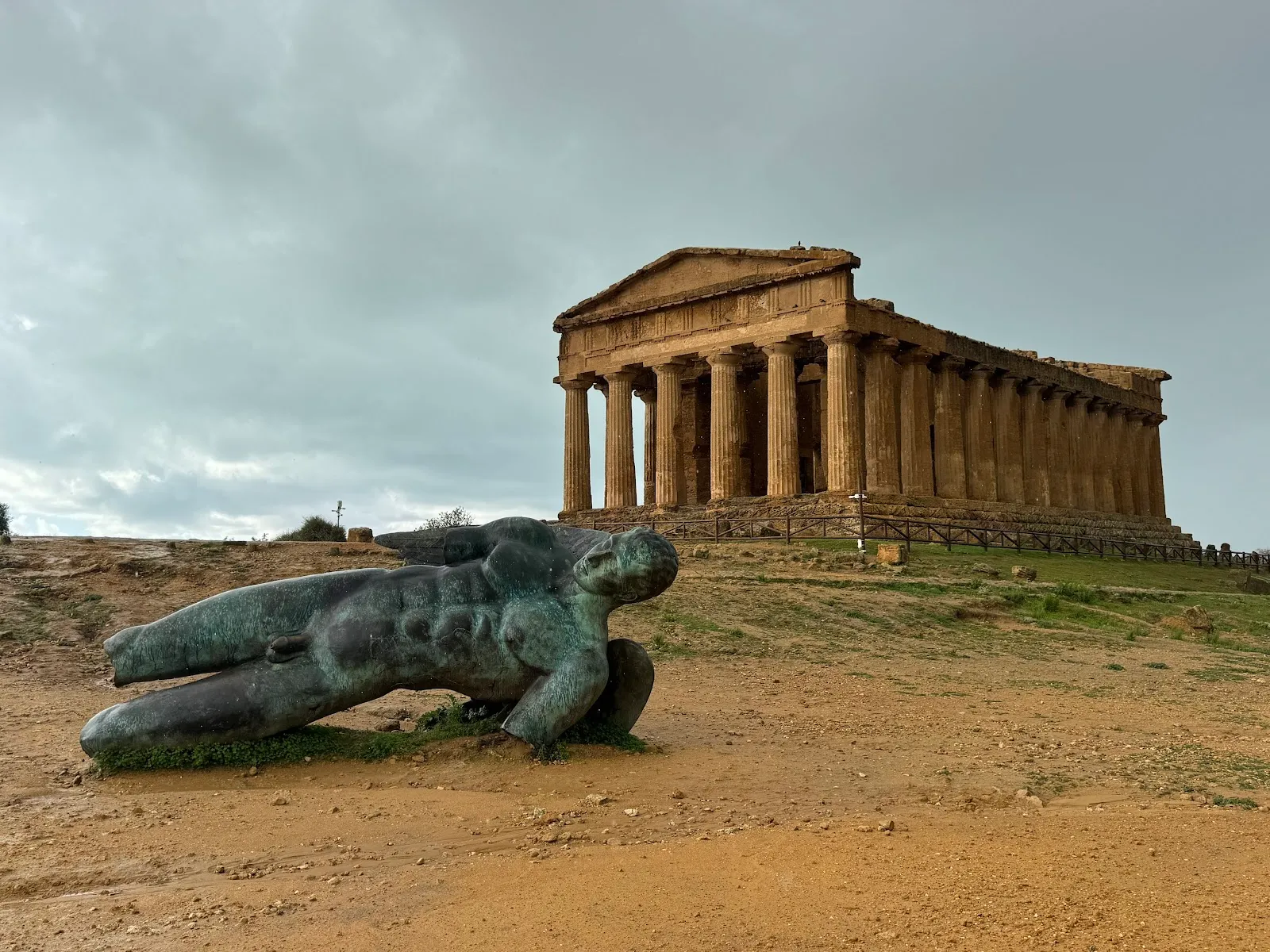
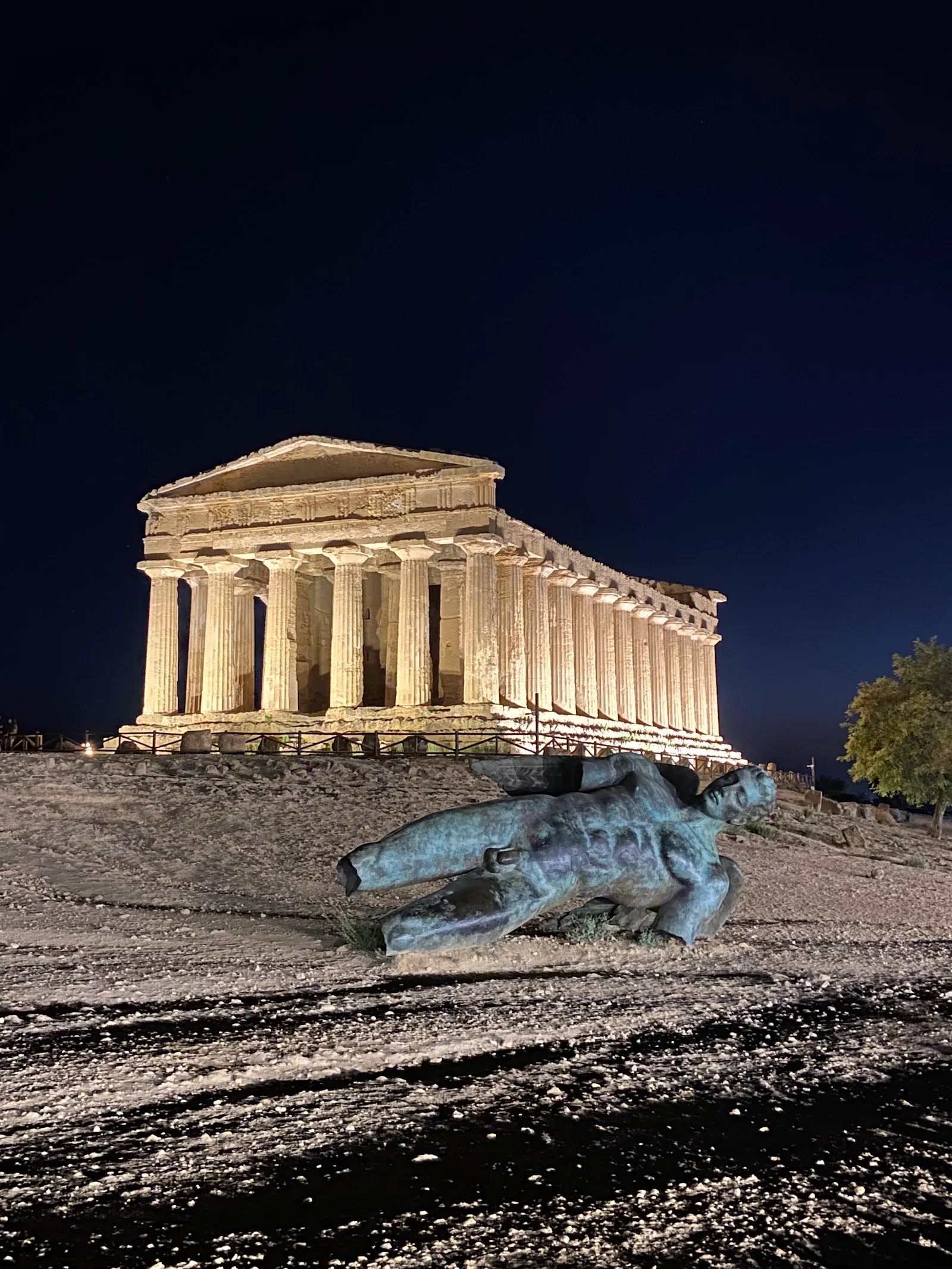
The Temple of Concordia is the most intact temple in the park and a natural point of focus. The Temple of Hera, also called Juno, stands at the higher end of the route. Its surviving columns and sections of the upper structure help convey the building’s original form. The Temple of Heracles is identified as the oldest on the site; eight of its columns remain standing.
The Temple of Olympian Zeus is now a large field of ruins, but its scale still marks it out. It was the largest temple in Magna Graecia. Other remains include the Tomb of Theron, a pyramidal tomb made of tuff, and the Kolymbetra garden. Together, these places show different aspects of the ancient city and its later history.
Planning a walk through the park
The archaeological area is extensive, and the walk runs between entrances at opposite ends of the site. One visitor route begins near the Temple of Juno, continues to the Temple of Concordia and then reaches the central area. This selective approach can suit anyone who wants to see the principal temples without covering every path. If you arrive by car, account for the distance between the entrances when choosing where to park; a taxi can take you back to your starting point.
A guide can add context to the buildings and help you follow the route through the site. In warm weather, the exposed paths can make a long visit tiring, so carry water and sun protection and take time to rest. Late-day light brings a different look to the temples, and evening visits can include illuminated paths. In February, almond blossom adds seasonal colour around the gardens.
FAQ
How long should I allow for the Valley of the Temples?
Allow about 2 to 4 hours, depending on how much of the archaeological park you want to explore.
What is the most well-preserved temple?
The Temple of Concordia is the best-preserved temple in the park.
Is the site a long walk?
Yes. The park is extensive, with paths between temples and entrances at opposite ends. Comfortable shoes and water are useful.
When is a good time to visit?
Late afternoon or evening gives you the temples in softer light, and the paths are illuminated in the evening. February brings almond blossom around the gardens.