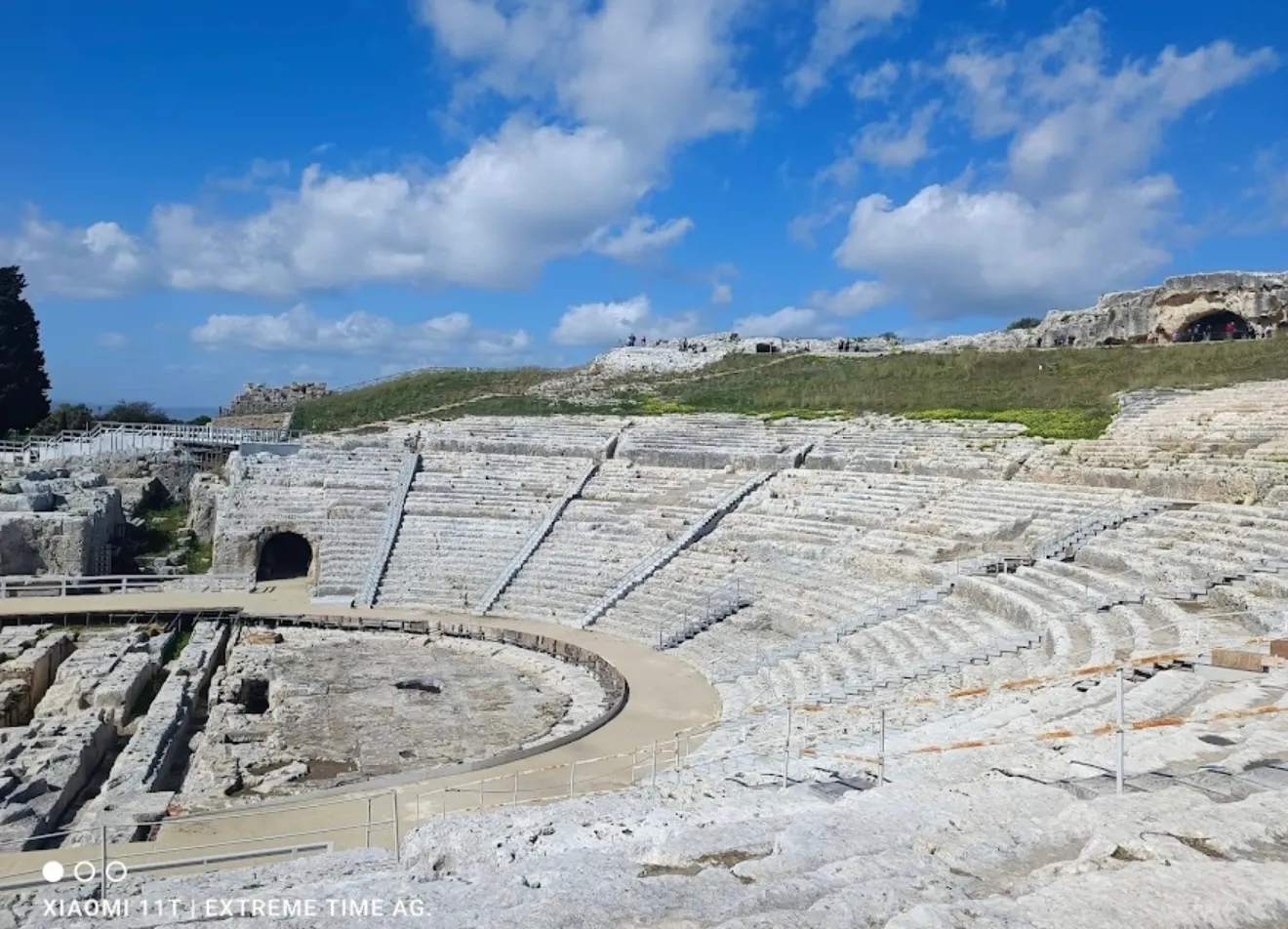
The Greek Theatre of Syracuse is carved into the rocky slope of Temenite Hill in the Neapolis Archaeological Park. Built in the 5th century BC and later altered, it was a place for performances and public gatherings; the semicircular seating, orchestra and stage follow the hillside. Classical plays still take place here through the INDA Foundation, with performances in May or June set against the changing evening sky. The surrounding park also contains other ancient sites. Check what parts of the theatre are accessible before visiting, as seating or closed areas can affect the view.
A theatre cut into the hillside
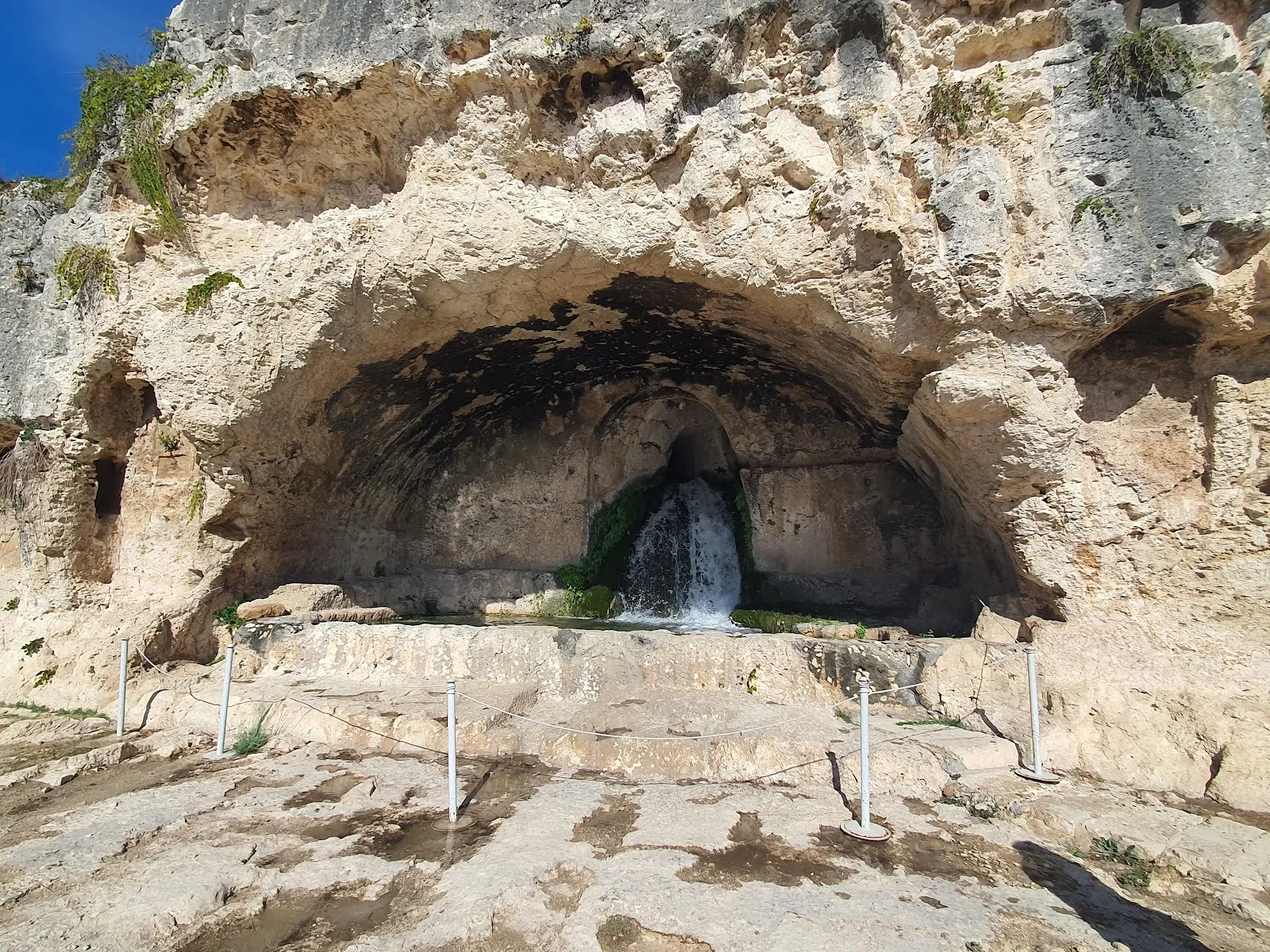
The Greek Theatre stands in the Neapolis Archaeological Park, on the rocky slope of Temenite Hill. Its semicircular seating, orchestra and stage were shaped around the hillside, making the rock itself part of the structure. Built in the 5th century BC, the theatre was modified over the centuries and used for performances and public assemblies.
The scale of the seating gives a sense of the theatre’s role in ancient Syracuse. One account describes 67 rows and a cavea, the tiered seating area, measuring 138.6 metres across. The theatre was associated with works by Greek tragedians including Aeschylus and Sophocles. The remains are part of a larger park where Greek and Roman sites sit close together.
What to look for in the park
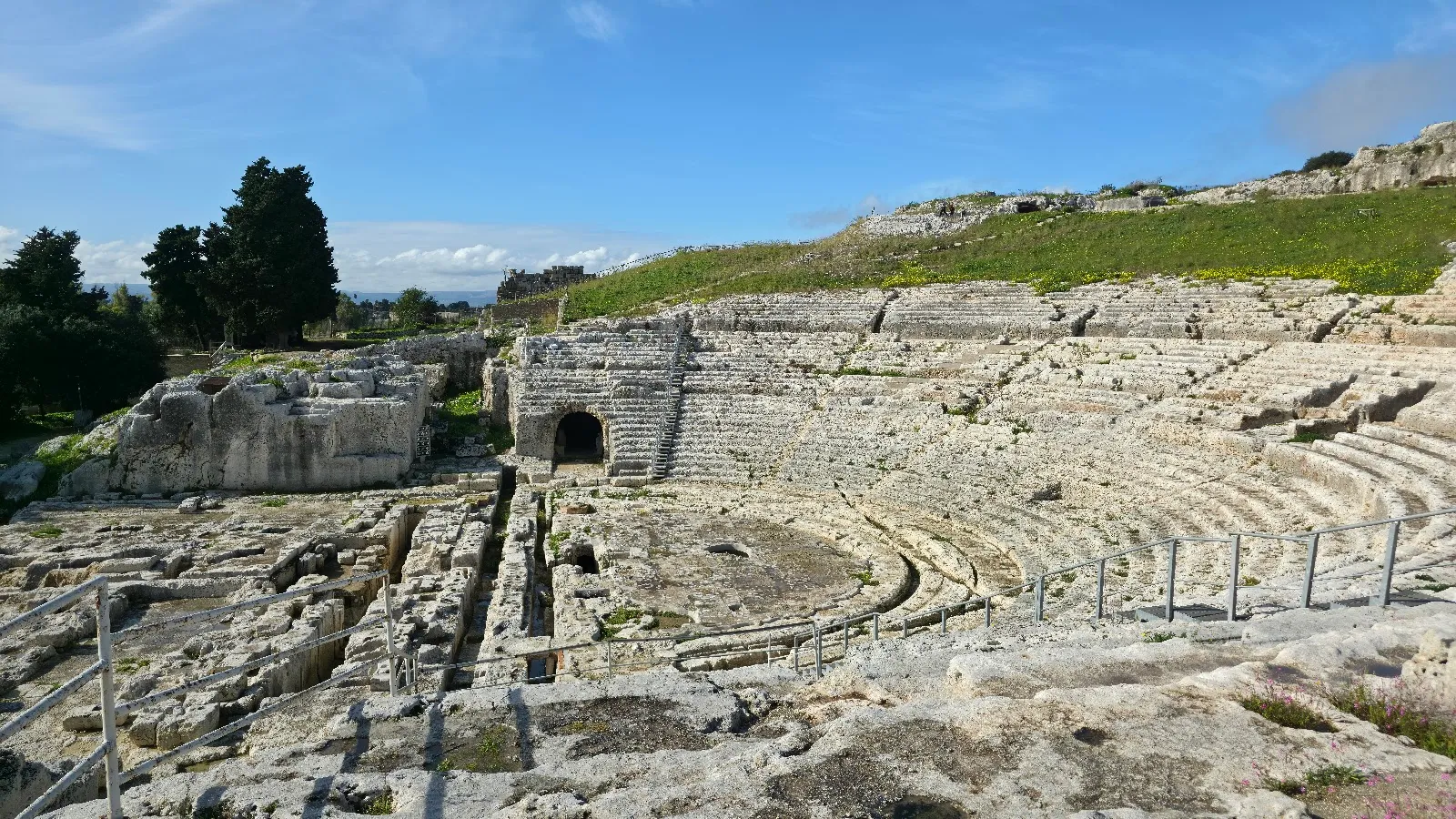
Take time to trace the semicircular outline and notice how the seating follows the stone slope. The orchestra and stage help explain how the space was arranged for performances. The wider archaeological area includes the Roman amphitheatre and the Latomia del Paradiso quarry; the Ear of Dionysius is another named site within the park. The Roman amphitheatre is a separate structure, a short walk from the Greek Theatre.
The view and access can change when the theatre is prepared for events. Modern seating or coverings have at times obscured parts of the ancient stonework, and some areas may be closed. Check which sections are open before setting out, particularly if seeing the original seating is your main reason for visiting.
Performances at the ancient stage
The theatre remains a performance venue. The INDA Foundation organizes classical plays, including Greek tragedies, and the archaeological setting becomes part of the evening. May and June are cited as months for these performances, with the changing light at sunset adding to the experience. Consult current event and access information before planning around a show.
If you attend a performance in Italian, reading about the play beforehand can help you follow the story. A light layer and something to sit on may be useful for an evening in the open-air theatre. For a daytime visit, comfortable walking shoes matter: the archaeological park involves walking, and the heat can be intense.
FAQ
Where is the Greek Theatre of Syracuse?
It is in the Neapolis Archaeological Park in Syracuse, on Temenite Hill.
When was the Greek Theatre built?
The theatre dates to the 5th century BC. It was modified over the centuries.
Are performances still held at the Greek Theatre?
Yes. The INDA Foundation organizes classical performances there, including Greek plays. May and June are cited as performance months; check current event details before visiting.
Can you see all of the ancient theatre?
Access can vary: sections may be closed, and seating or coverings for performances can obscure parts of the original stonework. Check current site conditions before your visit.