
Santa Cecilia in Trastevere is a basilica on Piazza di Santa Cecilia in Rome’s Trastevere district, built on the site traditionally linked to the home of the early Christian martyr. Inside, look for Stefano Maderno’s marble depiction of Cecilia beneath the altar, the medieval canopy above it and the ninth-century mosaic in the apse. A visit can also take you below ground to the crypt and Roman remains. The church’s art and layered history reward a quieter stop between exploring Trastevere’s lanes.
A church built over a Roman home
Santa Cecilia in Trastevere stands on a site traditionally identified with the Roman home of Cecilia, a Christian martyr associated with the early church. The exact history is layered with tradition: the church is linked to her residence and later became the resting place of her remains.
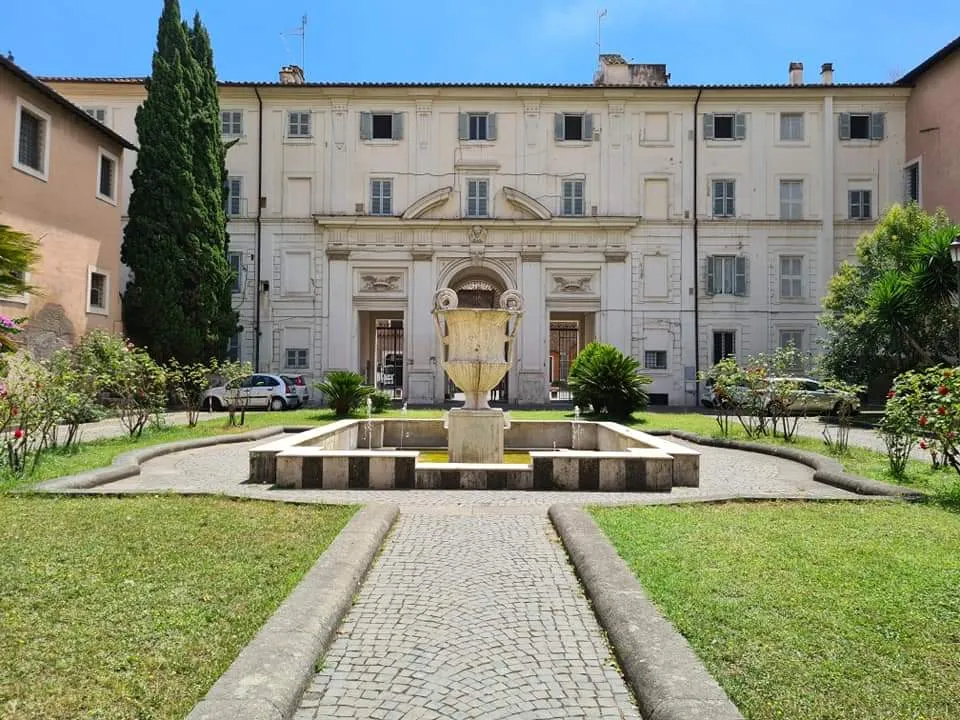
A church has stood here since the early centuries of Christianity. Pope Paschal I rebuilt it in the ninth century, and later changes added buildings including the cloister and bell tower. The present façade dates from an eighteenth-century restoration, so the exterior gives little indication of the age of the site. Enter through the atrium, where a fountain stands among greenery, then continue into the basilica.
Art around the altar
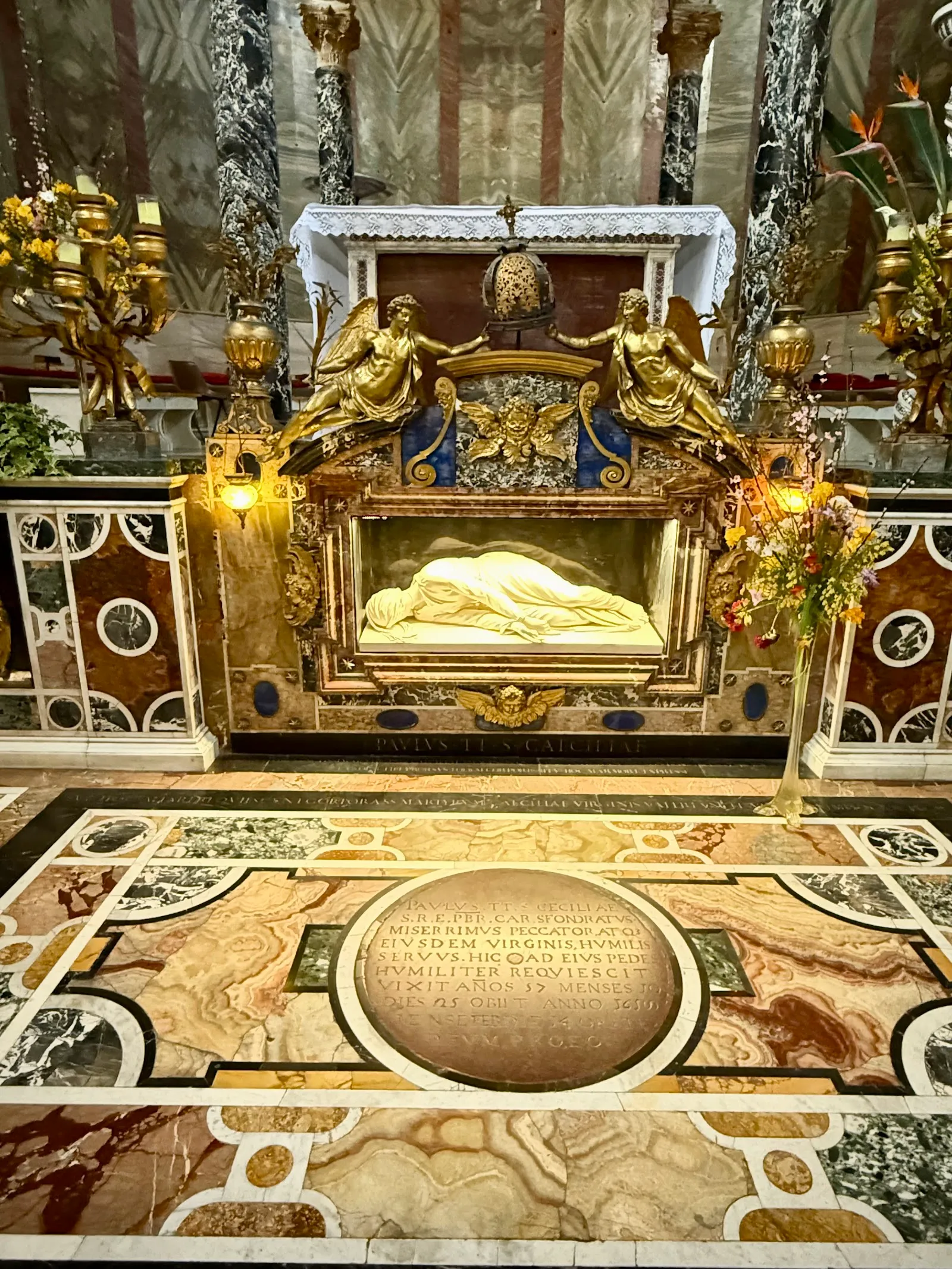
The central altar draws together several periods of the church’s history. Above it is a Gothic canopy by Arnolfo di Cambio. Beneath it, Stefano Maderno’s marble sculpture shows Saint Cecilia lying on her side. Maderno made the work after her tomb was opened in 1599 and her body was found there; the sculpture records the position in which he saw her.
At the far end of the nave, the apse mosaic dates to the ninth-century rebuilding under Paschal I. The composition includes the pope holding a model of the church and presenting it to Christ. Together, the mosaic, canopy and sculpture create a sequence of works from different centuries around the basilica’s central focus.
The fresco and the levels below
Pietro Cavallini’s thirteenth-century Last Judgement is in the nuns’ choir adjoining the church. Its location means it is separate from the main basilica interior, so ask about access during your visit.
Below the church, the crypt and excavated Roman remains reveal earlier layers of the site. The remains include Roman houses and an insula, a type of apartment building. A small underground chapel is reached through the bookshop; one account notes a requested donation of €2.50 for access. These lower spaces add a view of the site’s ancient built history to the Christian art above.
FAQ
Where is Santa Cecilia in Trastevere?
The basilica is at Piazza di Santa Cecilia, 22, in Rome’s Trastevere district.
What can you see inside Santa Cecilia in Trastevere?
Highlights include Maderno’s sculpture of Saint Cecilia beneath the altar, a ninth-century apse mosaic and a Gothic canopy. Cavallini’s Last Judgement is in the adjoining nuns’ choir.
Can you visit the Roman remains beneath the church?
The underground area includes a crypt and excavated Roman houses and an insula. A small chapel is accessed through the bookshop; one account notes a requested €2.50 donation.
When is Santa Cecilia in Trastevere open?
The listed visiting hours are 4:30pm to 6:30pm daily. A visit around 6pm is suggested for a quieter atmosphere.


