
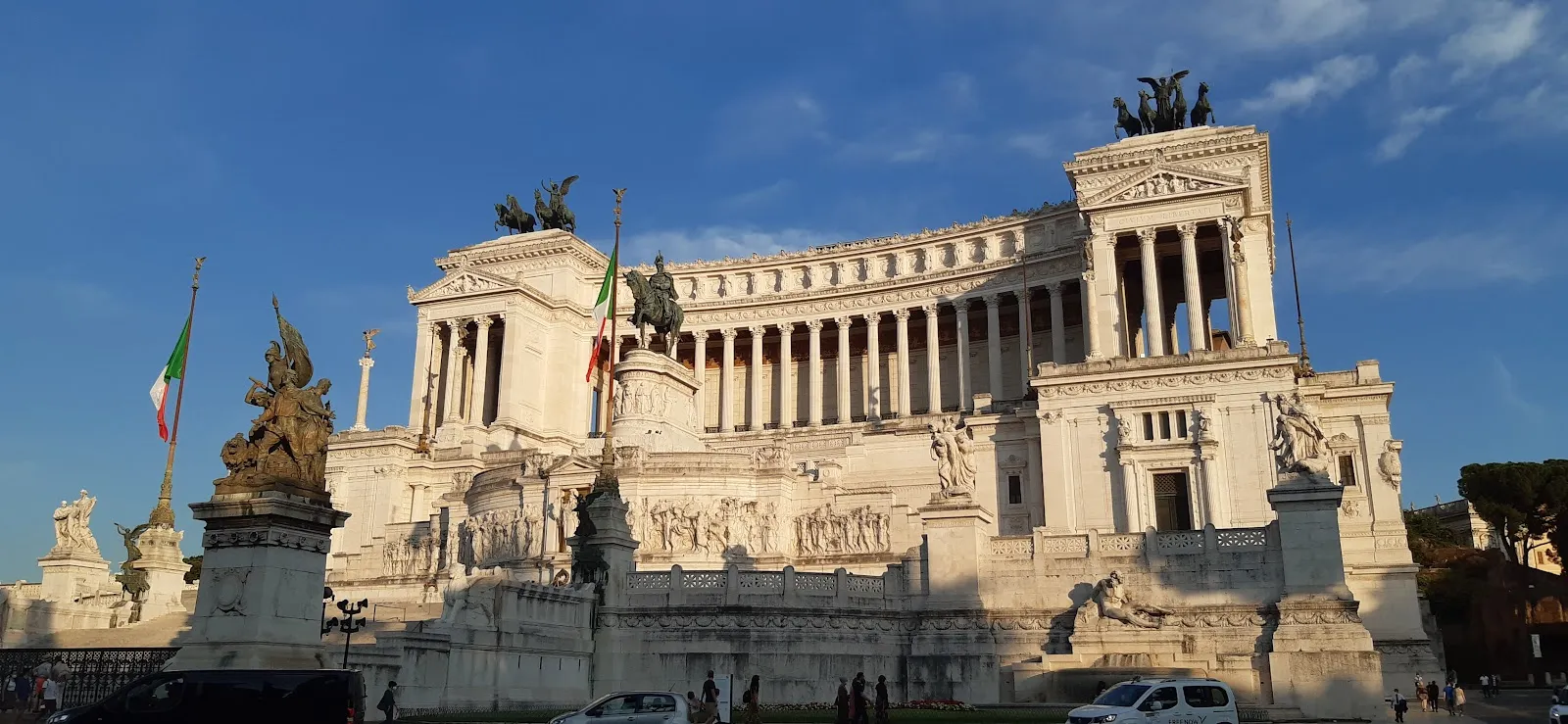
Piazza Venezia is a busy central square in Rome, dominated by the white-marble monument to Vittorio Emanuele II, also called the Vittoriano or Altare della Patria. Its monumental scale sits among historic buildings and modern traffic, making the square a striking place to pause while exploring the city. Inside the complex, you can see the permanent exhibition on the Italian Risorgimento and the Tomb of the Unknown Soldier. Climb to the rooftop for broad views over Rome; check ticket details before you go.
The Vittoriano and Italian unification
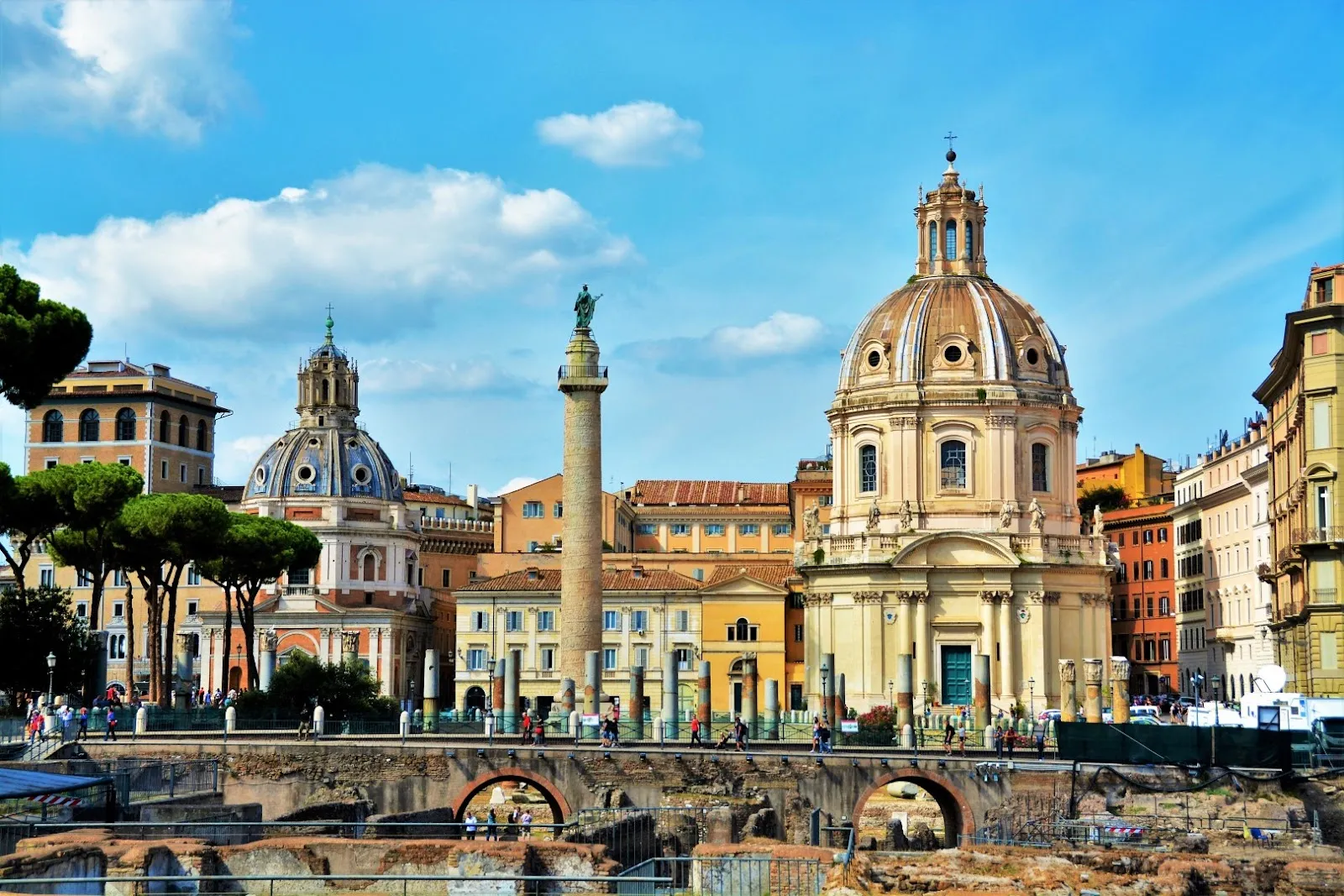
The monument at the centre of Piazza Venezia is the Vittoriano, named for Vittorio Emanuele II, the first king of unified Italy. It is also known as the Altare della Patria, or Altar of the Fatherland. Construction began in 1885 and ended in 1911.
The complex includes a permanent exhibition devoted to the Italian Risorgimento. The term refers to the wars, political manoeuvring and conflicts that led to Italy’s unification under the House of Savoy. Exhibitions on social, cultural and historical subjects are also held within the complex.
The Tomb of the Unknown Soldier
Since 1923, the Vittoriano has held the body of the Unknown Soldier. This part of the monument gives the site a commemorative purpose alongside its national and historical role. Take time to approach it with respect.
Palazzo Venezia and its balcony
Palazzo Venezia faces the square, and its balcony is tied to a difficult period in modern Italian history. From 1929 to 1943, Benito Mussolini used the palace as his headquarters and addressed crowds from the balcony. His speeches there included the 1936 proclamation of the Italian Empire and Italy’s declaration of war on Britain and France on 10 June 1940. The palace is now a museum.
Continuing on foot
Piazza Venezia connects with several of Rome’s main streets and sits along a walking route between the Pantheon and the Colosseum. The Campidoglio is only a short walk away; its Capitoline Museums contain Renaissance art and artefacts from ancient Rome. The square’s traffic and scale can make it feel hectic, so set aside a moment to take in the surrounding buildings before moving on.
FAQ
What is the main monument in Piazza Venezia?
The square is dominated by the Vittoriano, a national monument named after Vittorio Emanuele II, the first king of unified Italy. It is also called the Altare della Patria.
Can you go to the top of the Vittoriano?
Yes. The rooftop has views over Rome. Tickets may be required, so check in advance.
What can you see inside the Vittoriano?
The complex has a permanent exhibition on the Italian Risorgimento and the Tomb of the Unknown Soldier. It also hosts exhibitions on social, cultural and historical subjects.
How long should I spend at Piazza Venezia?
Allow about 30 to 60 minutes to see the square and monument. Add time if you plan to visit the exhibition or rooftop.


