
Palestra Grande is a large ancient gymnasium in Pompeii, behind the amphitheater. Its open central ground is enclosed by columned porticoes, giving a clear sense of the scale of this Roman sports complex. Residents used it for physical training and athletic activities. Rooms around the courtyard now display excavated objects, including carbonised seeds, food remains and jewellery. Look for historic graffiti on the walls, too. The site suits visitors who want to see both Pompeii’s architecture and objects connected with everyday Roman life.
The courtyard and porticoes
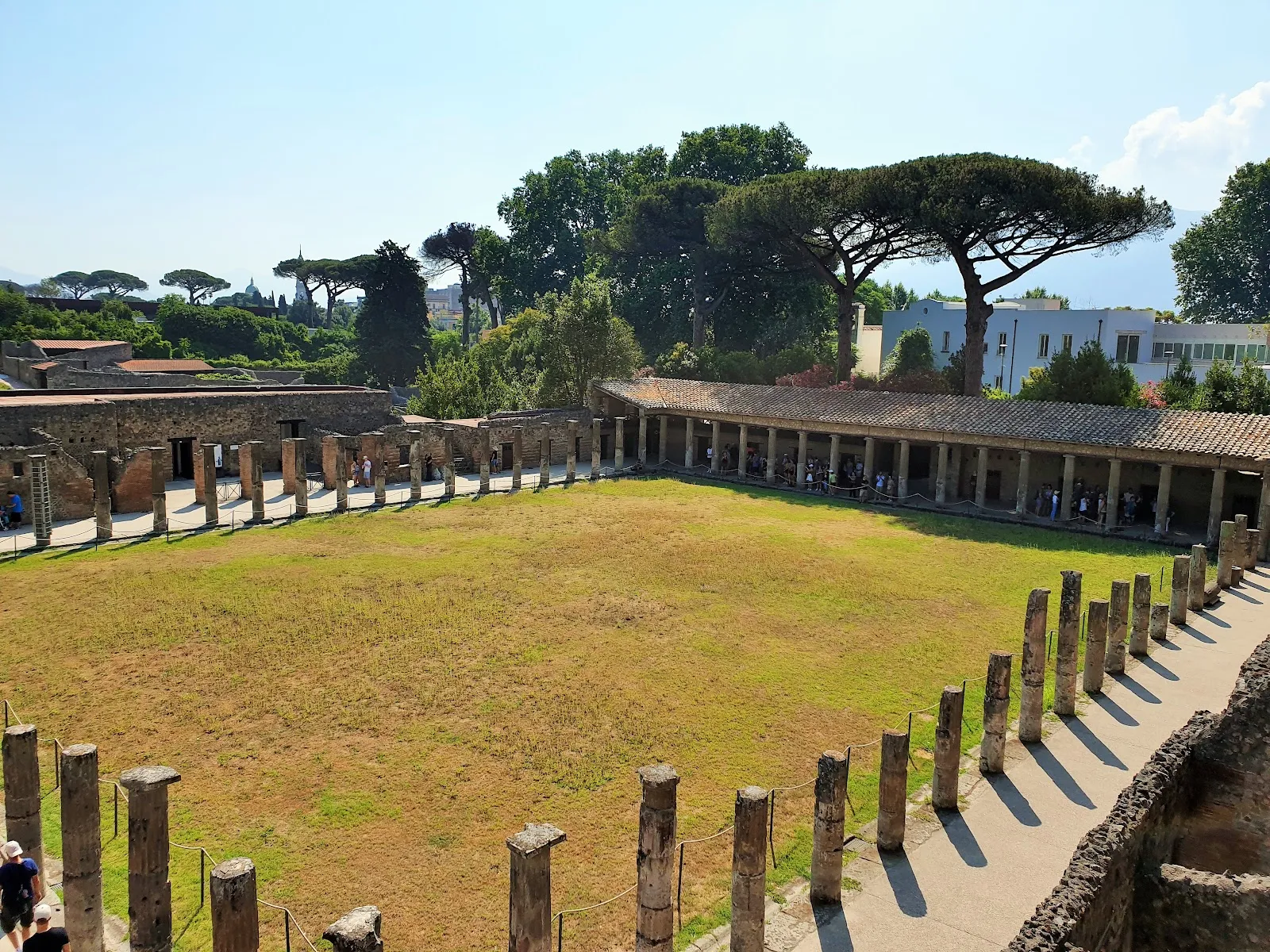
Palestra Grande is a large sports complex behind Pompeii’s amphitheater. Its broad open courtyard is enclosed on all four sides by columned porticoes. The complex dates to the Roman period and was used for physical training and athletic activities, including wrestling. It also hosted athletic competitions and other events.
The surrounding rooms served different purposes connected with exercise. These included training and changing rooms, as well as a heated room called a laconicum, used for warm-up exercises. The open ground and surrounding structures make it possible to see how the gymnasium was arranged.
Objects and traces of daily life
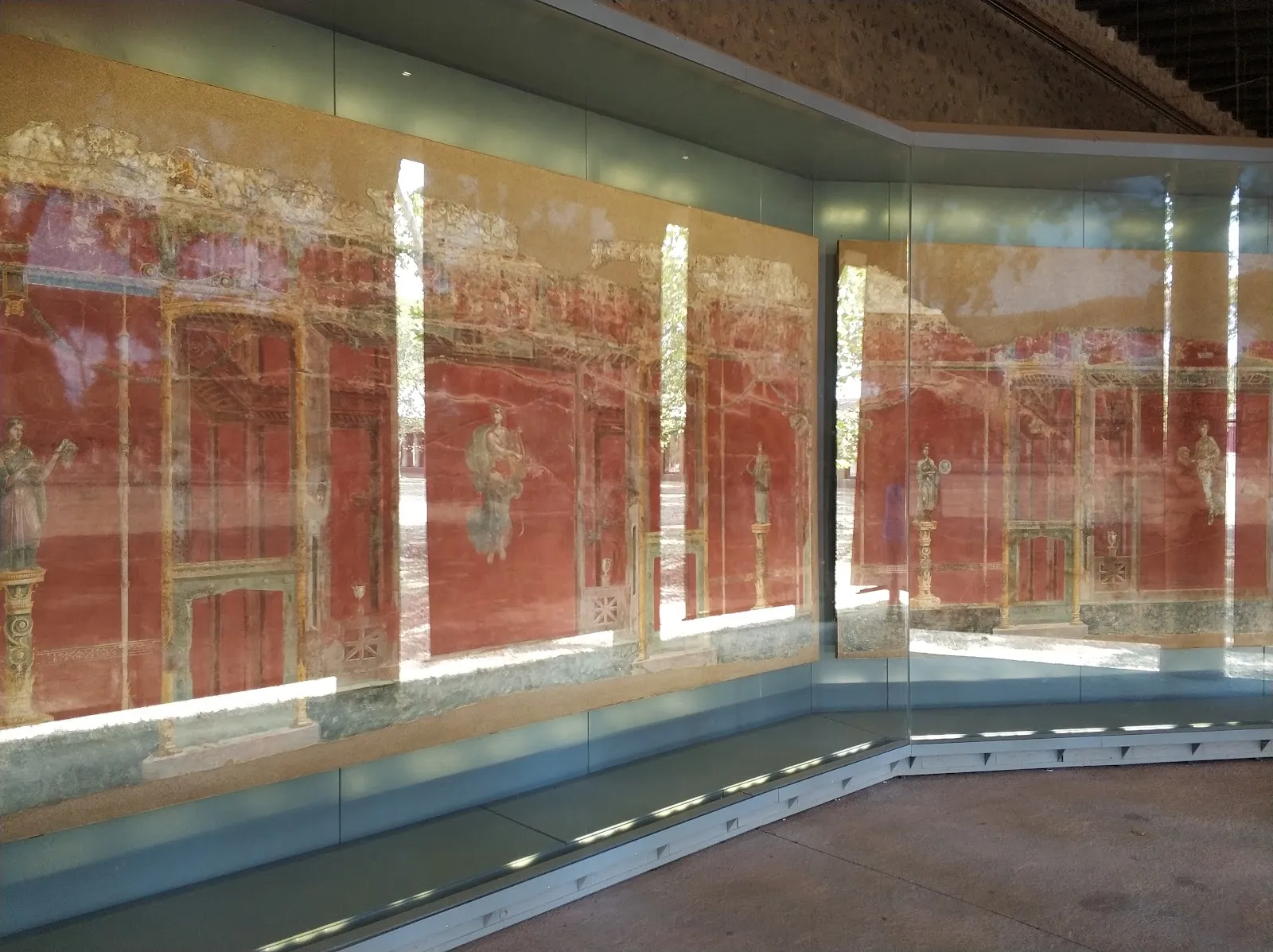
Some of the rooms now house excavated objects from Pompeii. Among the finds are carbonised seeds, food remains and jewellery, giving the displays a connection to the city’s daily life. Historic graffiti remains visible on the walls. Take time to look around the rooms and at the surfaces of the complex, not only across the central courtyard.
FAQ
Where is Palestra Grande in Pompeii?
It is behind the amphitheater in the ancient city of Pompeii.
What was Palestra Grande used for?
It was a public gymnasium and training ground for physical activities, including wrestling and athletics. The complex also hosted competitions and other events.
What can you see inside Palestra Grande?
The courtyard is surrounded by columned porticoes and rooms now used as a museum. Displays include carbonised seeds, food remains and jewellery, and historic graffiti can be seen on the walls.


