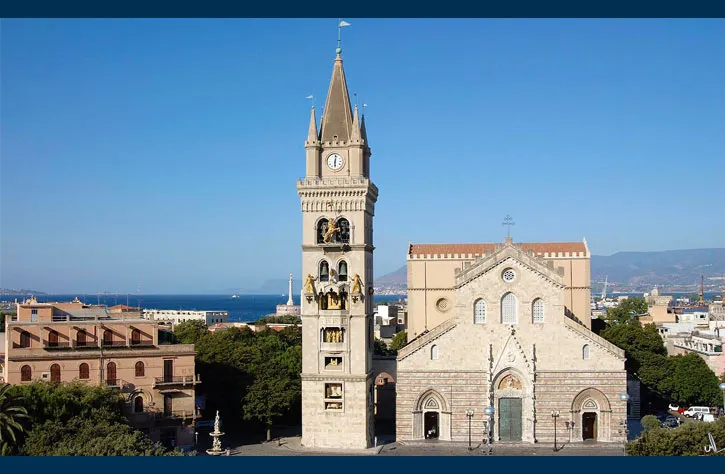
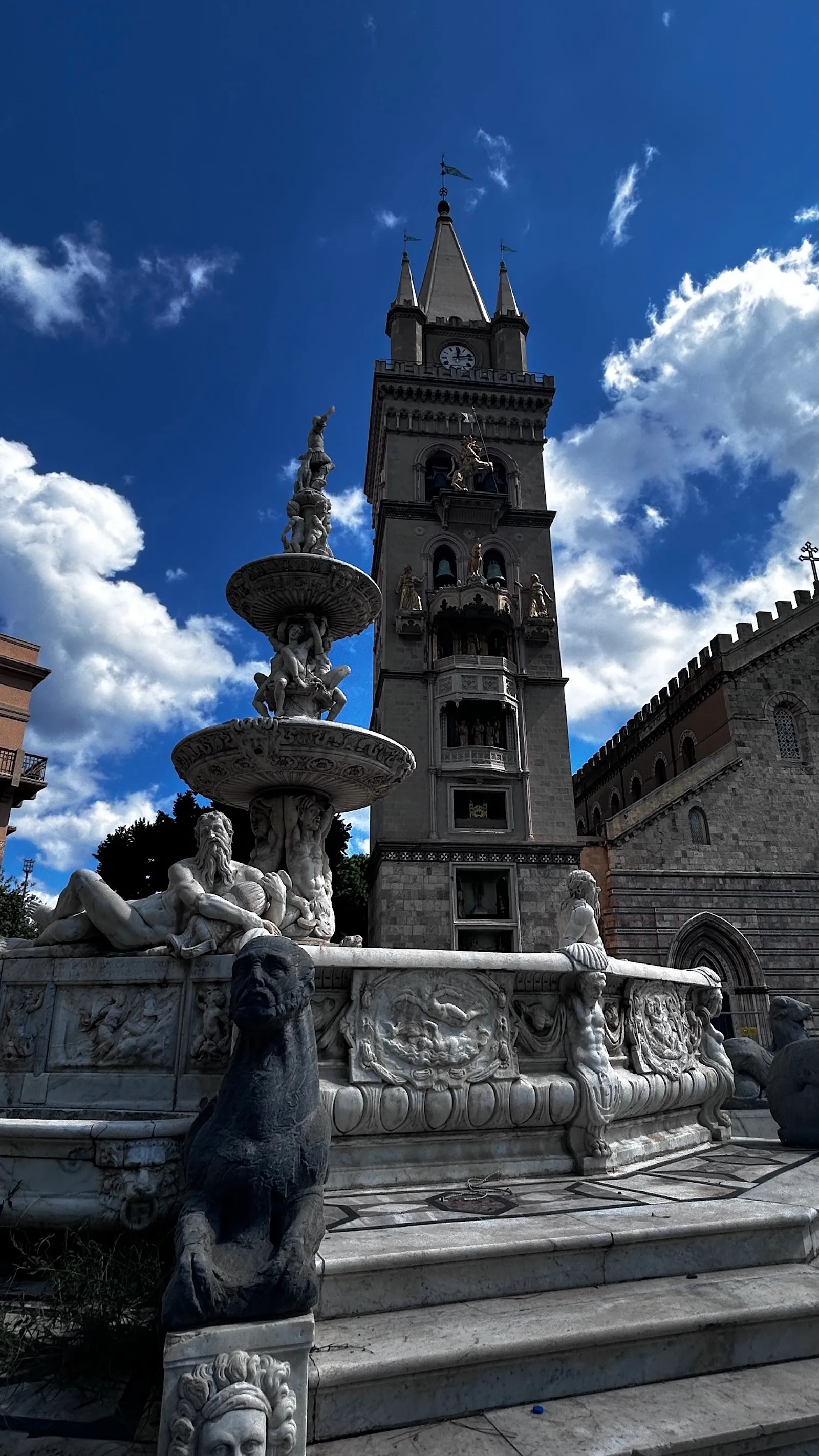
Messina's cathedral stands on the Piazza Duomo, the square that holds the city's most important church. Its origins are Byzantine, and later Gothic, Baroque and neo-Gothic work added to the building. The main draw is the clock tower: every day at noon its mechanical figures move and sound. Inside, you will find paintings, museum rooms and decorative work, and upstairs a display of religious objects. You can also climb the Clock Tower for views over the neighborhood.
Origins and rebuilding
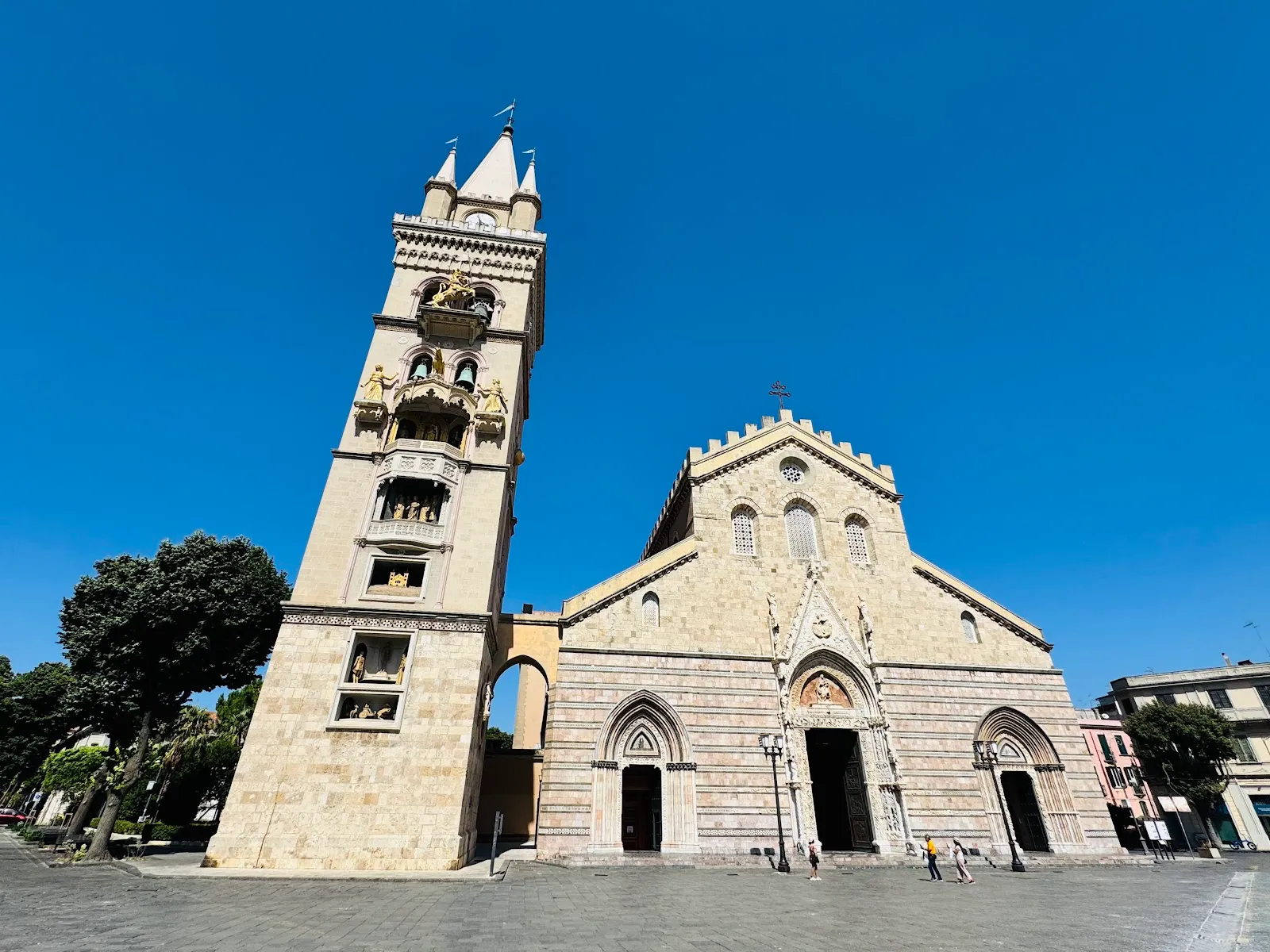
The cathedral was built in 1120 and consecrated in 1197. Its origins are Byzantine, and it is dedicated to Our Lady of the Assumption. Over the centuries Gothic, Baroque and neo-Gothic elements were added, so the styles can be read across the building.
Earthquakes have been the main cause of damage. The church has been destroyed and rebuilt at several stages, and many of its artworks were lost. Many monuments in Messina suffered the same fate, and the bell tower was no exception.
The bell tower through its rebuildings
Since the twelfth century the tower has served mainly decorative and liturgical purposes. In 1559 lightning struck it and set it on fire. Martino da Firenze rebuilt it, and work continued in 1564 under Andrea Calamech.
Until 1678 the base of the tower held parchment records of the city's history. After the anti-Spanish revolt ended and the Peace of Nijmegen was signed, these records were taken to Spain, to the monastery of El Escorial, along with other artworks.
The earthquakes of 1693 and 1783 caused serious damage, and in 1783 the upper levels of the tower collapsed. In 1863 the squat tower was demolished and two neo-Gothic towers were built above the side apses. After the 1908 earthquake, the current tower was rebuilt on its original site.
Inside the cathedral
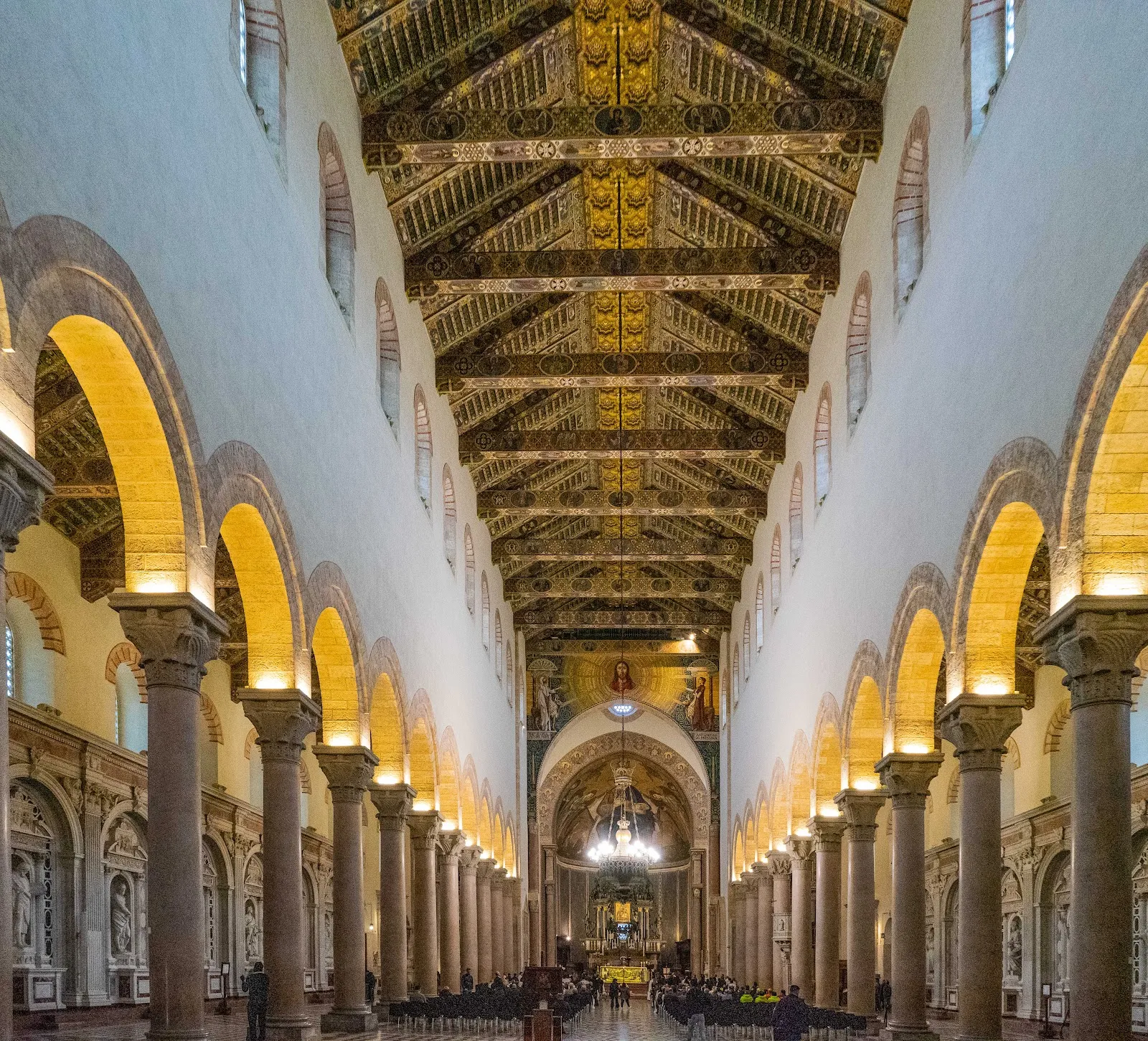
Inside, you will find paintings, museum rooms and decorative work. The organ is one of the church's notable features.
Upstairs, a museum area displays jewelry, chalices and other artifacts, some of them dating to the 10th century. The crypt lies below the church. On the left side of the church, a display describes the earthquake that destroyed much of Messina.
The noon clock show and the Clock Tower
Every day at noon the clock tower runs its show. Mechanical figures move, and the lion and the rooster roar three times. A short piece of classical music then plays for around five minutes.
The tower holds the largest mechanical clock in the world. You can climb the Clock Tower for views over the neighborhood.
Visiting an active church
The cathedral is still a working church. On one late-afternoon visit, the organ was being practised, and the Easter eve ceremony was open to anyone who wished to attend.
Lighting a candle is a traditional gesture, and visitors are welcome to do so inside the church.
FAQ
What time is the clock show?
The show runs every day at noon. Mechanical figures move, the lion and the rooster roar three times, and a short piece of classical music plays for around five minutes.
Do I need to book tickets in advance?
Advance tickets are recommended for visits to the cathedral.
Is the cathedral wheelchair accessible?
The entrance, restroom and seating are wheelchair accessible. Assisted listening devices and an assistive hearing loop are also available.
Can visitors light a candle inside?
Yes. Lighting a candle inside is a traditional gesture for visitors.