
On Piazza Maggiore, Basilica di San Petronio is Bologna’s vast Gothic church, dedicated to the city’s patron saint. Its façade stops partway through: carved marble covers the lower section, while brick remains exposed above. Inside, look for the long meridian line set into the floor, which tracks the sun’s position, and take time to explore the side chapels, where Gothic structure meets Renaissance detail. The basilica is a civic landmark as well as a place of worship, so dress modestly and move through the interior respectfully.
A civic church on Piazza Maggiore
Basilica di San Petronio stands on the south side of Piazza Maggiore, among the public and cultural buildings at the centre of Bologna. It is dedicated to Petronius, the city’s patron saint, who was a bishop of Bologna in the fifth century. Although it is the city’s principal church, it is not Bologna’s cathedral.
The decision to build the basilica was made in 1388, and the first stone was laid in 1390. Antonio di Vincenzo designed the project and oversaw its early construction. The church was planned as a civic and religious centre for Bologna, and its scale reflects that ambition. The building is among Europe’s largest churches.
Why the façade is unfinished
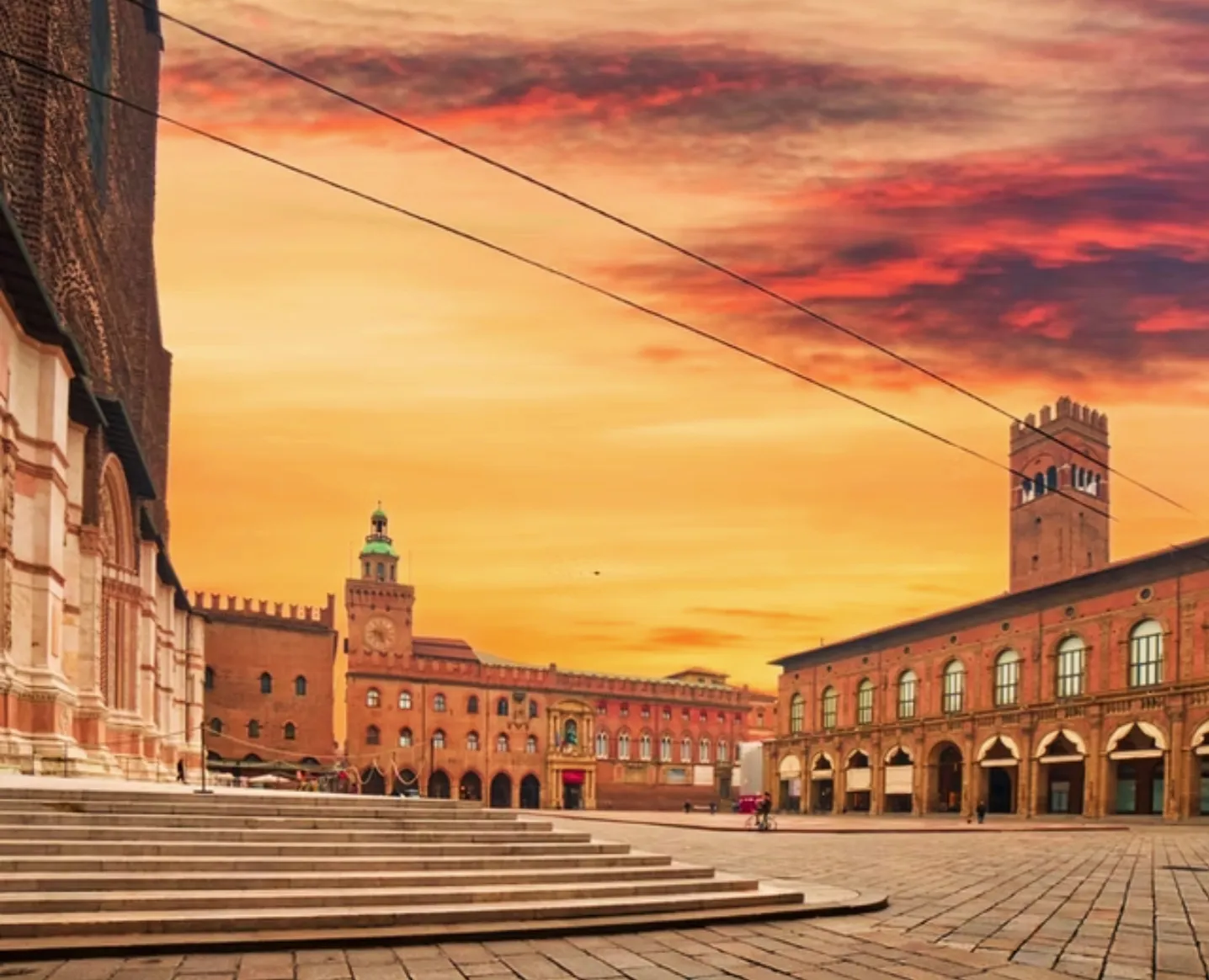
The front makes the basilica’s interrupted building history easy to read. Its lower portion is faced with coloured marble, while the upper part remains exposed brick. The contrast is part of the building’s character, not a finished design choice.
The original plans aimed for a church that would rival St Peter’s in Rome. The project was curtailed after Pope Pius IV redirected funds towards the Archiginnasio, Bologna’s historic university building. Construction continued over a long period, but the main façade was never completed as intended. From the square, look closely at the carved marble portal, which includes biblical scenes and figures by Jacopo della Quercia. Weathering has softened some of its detail.
The meridian line and the chapels
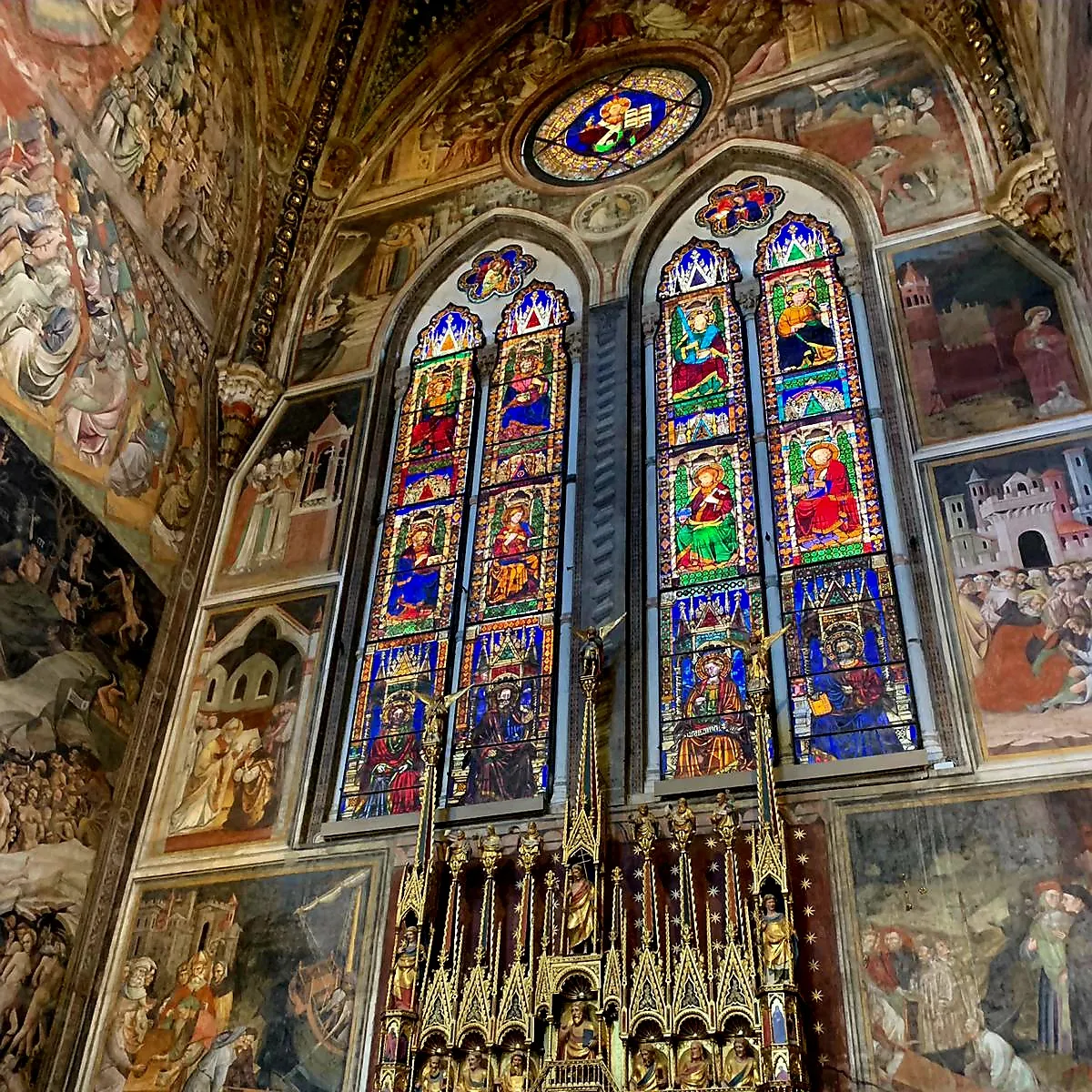
Inside, the enormous Gothic space contains a sequence of side chapels, each with its own art and decoration. Allow time to look into them rather than treating the nave as the only point of interest. The Cappella Bolognini is known for frescoes by Giovanni da Modena, including scenes connected with the afterlife.
A long meridian line crosses the floor of the basilica. Designed by the astronomer Giovanni Cassini with Domenico Guglielmi in the 17th century, it works as a sundial: sunlight marks the line at solar noon. Cassini used the instrument to study the calendar and the movement of the sun. Its position on the floor gives the visit a different focus from the painted chapels and soaring interior. Look down as you walk through the church.
Visiting respectfully
San Petronio remains a place of worship as well as a major sight. Cover your shoulders and knees before entering, and keep a quiet, considerate manner inside. If you want to understand the scenes in the chapels, researching them beforehand can help; plaques provide further historical details, and translating them may be useful.
The basilica is best explored at a measured pace: first take in the contrast between the exterior and the square, then look at the portal, chapels and floor. The church is free to enter, though a €2 photography charge is reported. Confirm the current photography rules at the entrance before taking pictures.
FAQ
Is Basilica di San Petronio Bologna’s cathedral?
No. It is Bologna’s principal church, but it is not the city’s cathedral.
Is there an entry fee for Basilica di San Petronio?
Entry is free. Photography is reported to carry a €2 charge, so check the current rules at the entrance.
What should I see inside the basilica?
Look for the meridian line in the floor, the side chapels and the frescoes in the Cappella Bolognini.
What should I wear to visit?
Cover your shoulders and knees before entering.


