The Four Courts is a working courthouse on Inns Quay, beside the River Liffey in Dublin. James Gandon’s neoclassical design is known for its large dome and imposing façade, which you can admire from outside. The building houses Ireland’s Supreme Court, Court of Appeal and High Court. Its history includes a role in the 1916 Easter Rising and severe damage during the 1922 Civil War, followed by restoration. Pair an exterior visit with nearby Christchurch Cathedral or the Brazen Head.
A courthouse on the Liffey
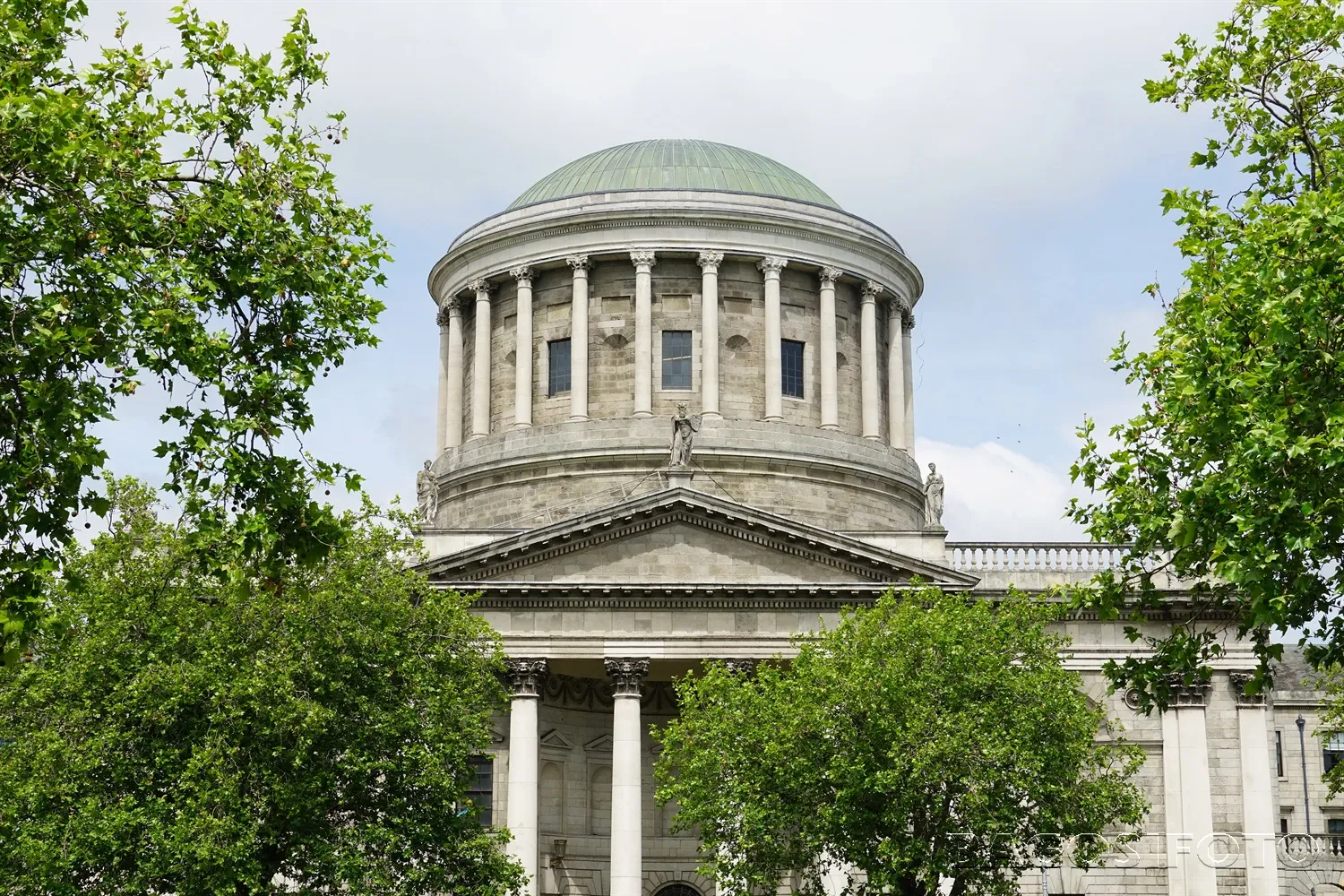
The Four Courts stands on Inns Quay, along the north side of the River Liffey. Work began in 1776 to designs by Thomas Cooley. After Cooley’s death, James Gandon took over the project. The building was completed in 1802 and became Ireland’s principal court complex.
Its name comes from four courts that once occupied the building: King’s Bench, Chancery, Common Pleas and Exchequer. The courts now housed there include the Supreme Court, Court of Appeal and High Court. The Four Courts remains a working judicial building, so an outside visit is the practical way to see its architecture.
The dome and façade
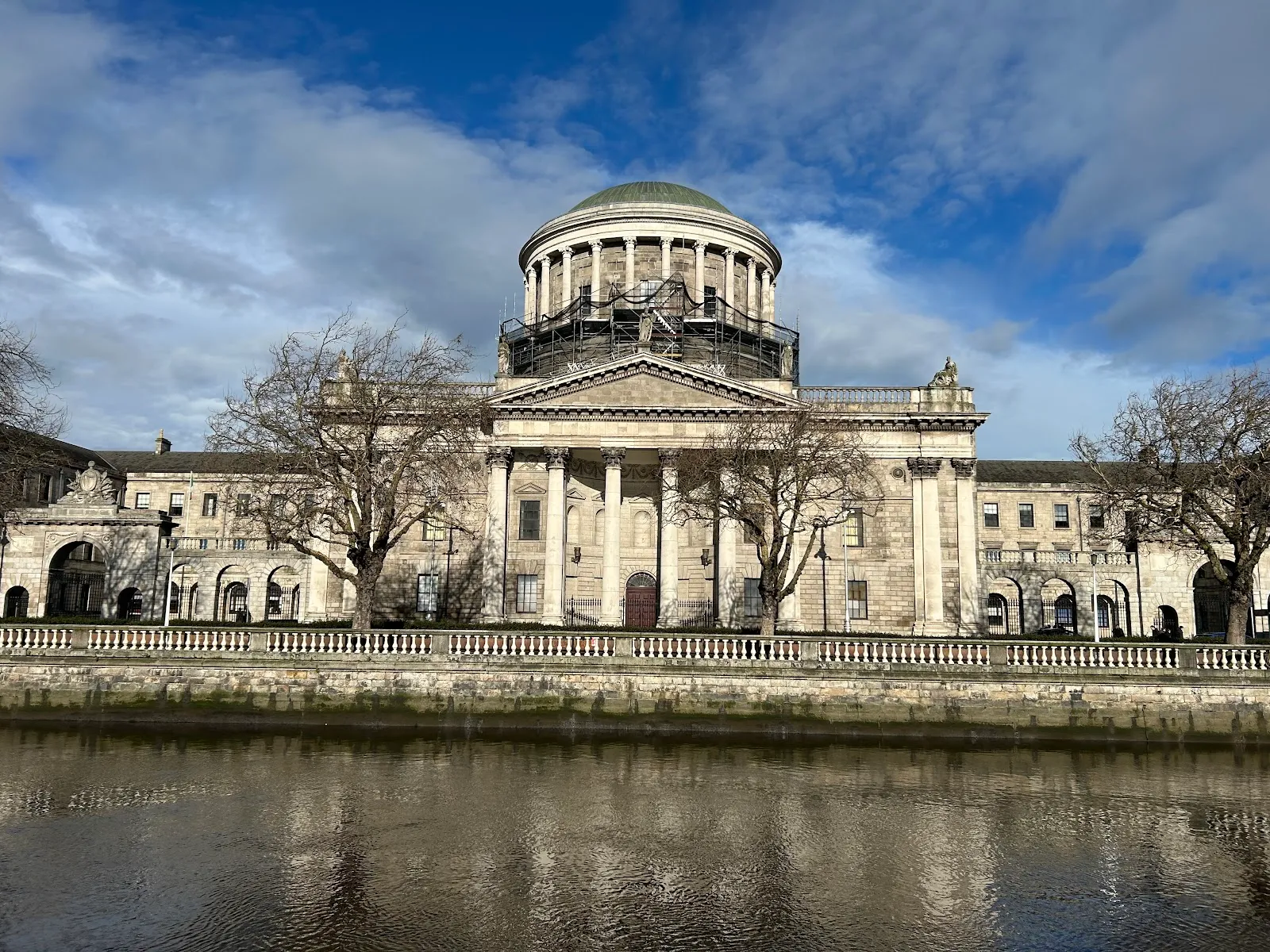
The building’s large dome and neoclassical façade give it a distinctive profile beside the river. Corinthian columns are among the details to look for from outside. The scale of the frontage is easiest to appreciate from the surrounding streets and the Liffey side.
The Four Courts is an architectural stop as well as a place tied to Ireland’s legal history. Since the building is not generally open to the public, plan around its exterior rather than expecting access to courtrooms. Check for renovations before you go, as work could affect the visitor experience.
From the Easter Rising to restoration
The Four Courts was caught up in two major conflicts. During the 1916 Easter Rising, Commandant Ned Daly and the 1st Battalion used it as their headquarters. The building was also the scene of fighting during the Irish Civil War in 1922. Anti-Treaty forces occupied it, and shelling by pro-Treaty forces led to a fire that destroyed historic records and left the structure severely damaged.
The courts were later restored and remain a central part of Ireland’s judicial system. The building’s history is visible in the contrast between its restored exterior and the events that took place there. For a longer walk, Christchurch Cathedral and the Brazen Head are nearby.
FAQ
Can you go inside the Four Courts?
The building is not generally open to the public. Plan to see the dome and façade from outside.
What courts are housed in the Four Courts?
The building houses Ireland’s Supreme Court, Court of Appeal and High Court.
Why is it called the Four Courts?
The name refers to the four courts that once occupied the building: King’s Bench, Chancery, Common Pleas and Exchequer.
What happened to the Four Courts in 1922?
It was occupied by anti-Treaty forces and shelled by pro-Treaty forces during the Irish Civil War. A fire caused severe damage and destroyed historic records; the building was later restored.